

They retain close involvement in the few areas where enterprise-wide judgement is essential, such as major capital allocation, leadership appointments, and ethical standards. They push other decisions outward to people who are closer to the customer, market, or operation.
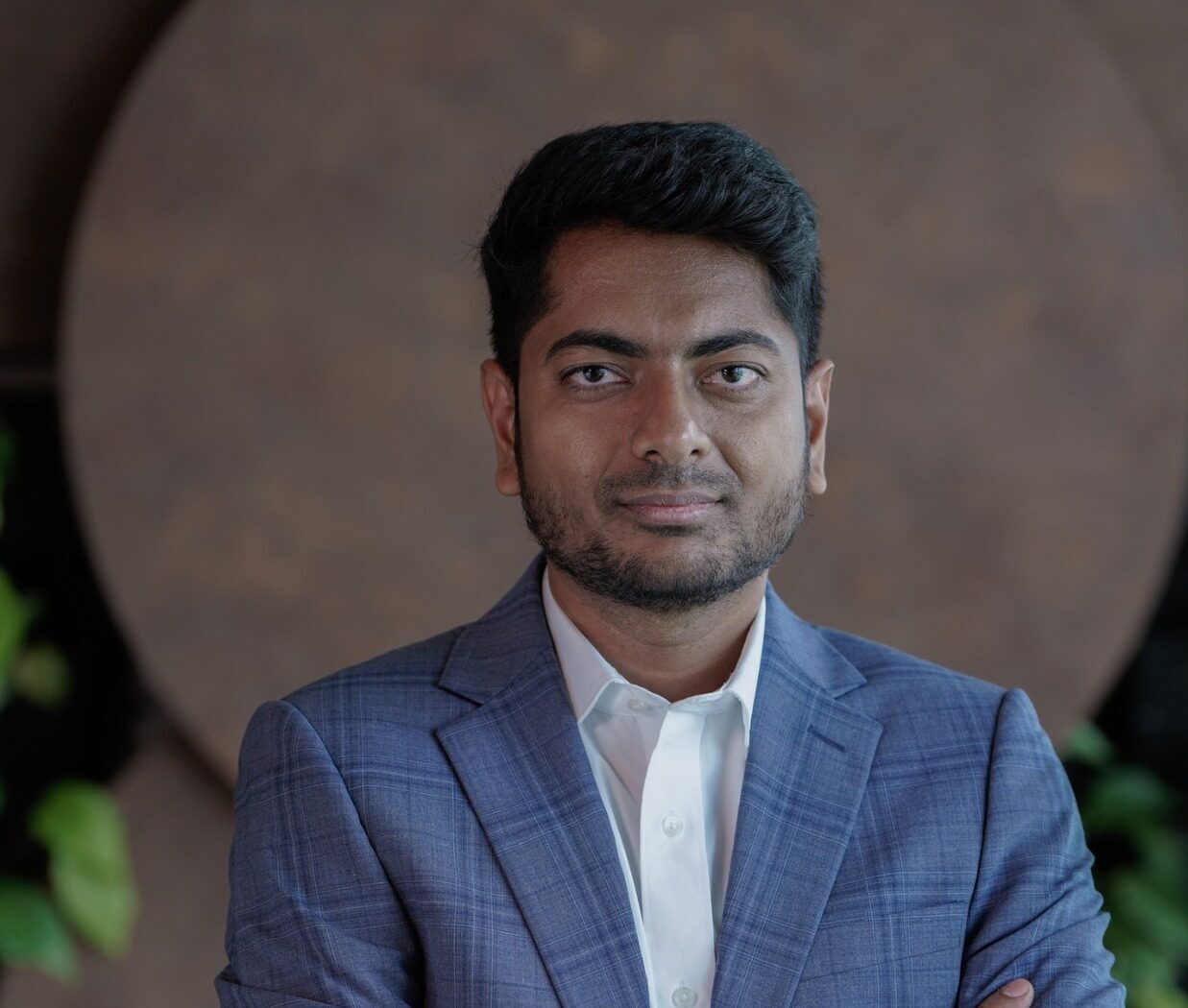
“I have spent more than thirty-five years as an operator, working inside businesses under pressure rather than observing them from the outside. I held senior roles across founder-led companies, family businesses, and multinationals, including global chief human resources officer at Aramex and vice president of human resources at Carrefour,” states Sadek El Assad, business transformation strategist and founder of Zeder Group, adding that during his time at Carrefour, El Assad was part of the regional leadership team as the business expanded from three hypermarkets to 37 across 11 countries, while detailing his career path.
“Over the years, that work took me into more than 50 companies, a dozen industries, and 30 countries. The common thread was never one sector or function. It was a question that kept appearing in very different settings: why do some businesses grow stronger as they scale, while others become larger, slower, and more fragile? Earlier in my career, I probably judged leaders too much by what they could personally carry. Over time, I became more interested in what they enabled other people and the wider organisation to carry,” says El Assad.
“That shift eventually led El Assad to establish Zeder Group. Today, according to El Assad, he works with founders, CEOs of growing companies, and leaders of family-owned businesses that have achieved commercial success but are beginning to feel the organisational strain that comes with scale.
“My role is to help them strengthen the business before complexity exposes the weaknesses beneath that success. Over time, that question, why some companies grow stronger while others grow heavier and more fragile, is what became Business Fitness. It is the standard I created to measure the structural readiness of a company to grow and the discipline of staying strong as it does. Most of what I do now sits under that idea,” mentions El Assad.
COMMONALITIES IN BUSINESS PRACTICES
Speaking about the commonalities in business practices that El Assad encountered when he worked alongside founders, family businesses, and global organisations, El Assad is emphatic that the surface differences can be considerable, but the underlying patterns are often similar. “In many successful companies, the early years depend on one person, or a small group, carrying an extraordinary amount in their heads: relationships, judgement, standards, commercial history, and an instinct for what constitutes a good decision,” details El Assad.
“That concentration is not necessarily a weakness, interprets El Assad. “In the beginning, it is often one of the reasons the business succeeds. Decisions are fast, standards are personally protected, and customers know exactly who to call,” says El Assad, adding that the challenge comes later.
“As the company grows, the same concentration can become a constraint. Decisions continue to return to the same desk. Important relationships remain personal rather than institutional. Standards hold when a particular leader is present but become less reliable at a distance,” explains El Assad.
Ruminating on his regional experience, El Assad mentions, “I have seen versions of this in Gulf family businesses and in multinational organisations operating across several continents. The scale may be different, but the mechanics are recognisable. The most capable companies can become heavily dependent on their most capable people. They are often slow to recognise the risk because, for a long time, that dependence looks like strength.”
El Assad adds, “I call that condition Heavy Growth: when a company scales in a way that adds drag, dependence, and fragility faster than it adds real strength. It looks like success from the outside, revenue and headcount rising, while inside decisions slow and the business leans on too few people. It is exactly the condition Business Fitness exists to detect and reverse.”
SUCCESSION PLANNING
Sharing his thoughts on the paradigm of succession planning that businesses in the region can follow, El Assad mentions, “Before deciding who should take over, founders need to understand what is actually being transferred.
Most succession planning focuses on preparing the successor. The harder task is preparing the business so that it can be inherited successfully. A company that cannot operate without the founder is not ready to be handed to anyone, regardless of how capable the successor may be.”
The practical work is structural, according to El Assad. He adds, “Founders should identify the decisions, relationships, and knowledge that still depend entirely on them. They should clarify where ownership ends and management begins, particularly when family members occupy both roles.”
The standards that live in the founder’s head also need to become visible. A successor cannot preserve principles that have never been clearly expressed. Nor can they lead effectively if authority is formally transferred but repeatedly reclaimed whenever their decisions differ from the founder’s, in the views of El Assad.
There are cultural differences, although they should not be overstated. In many Middle Eastern family businesses, succession is closely connected to family identity, stewardship, reputation, and relationships. In some Western markets, governance and management succession tend to become institutionalised earlier and are often discussed more directly.
There are many exceptions in both directions. The difference is often in how the conversation is conducted, not in the underlying risk. Whether the business is in Riyadh or Rotterdam; if too much authority, knowledge, or trust remains concentrated in one person, the handover will be fragile. Culture shapes the process, but it does not remove the need to reduce dependence.