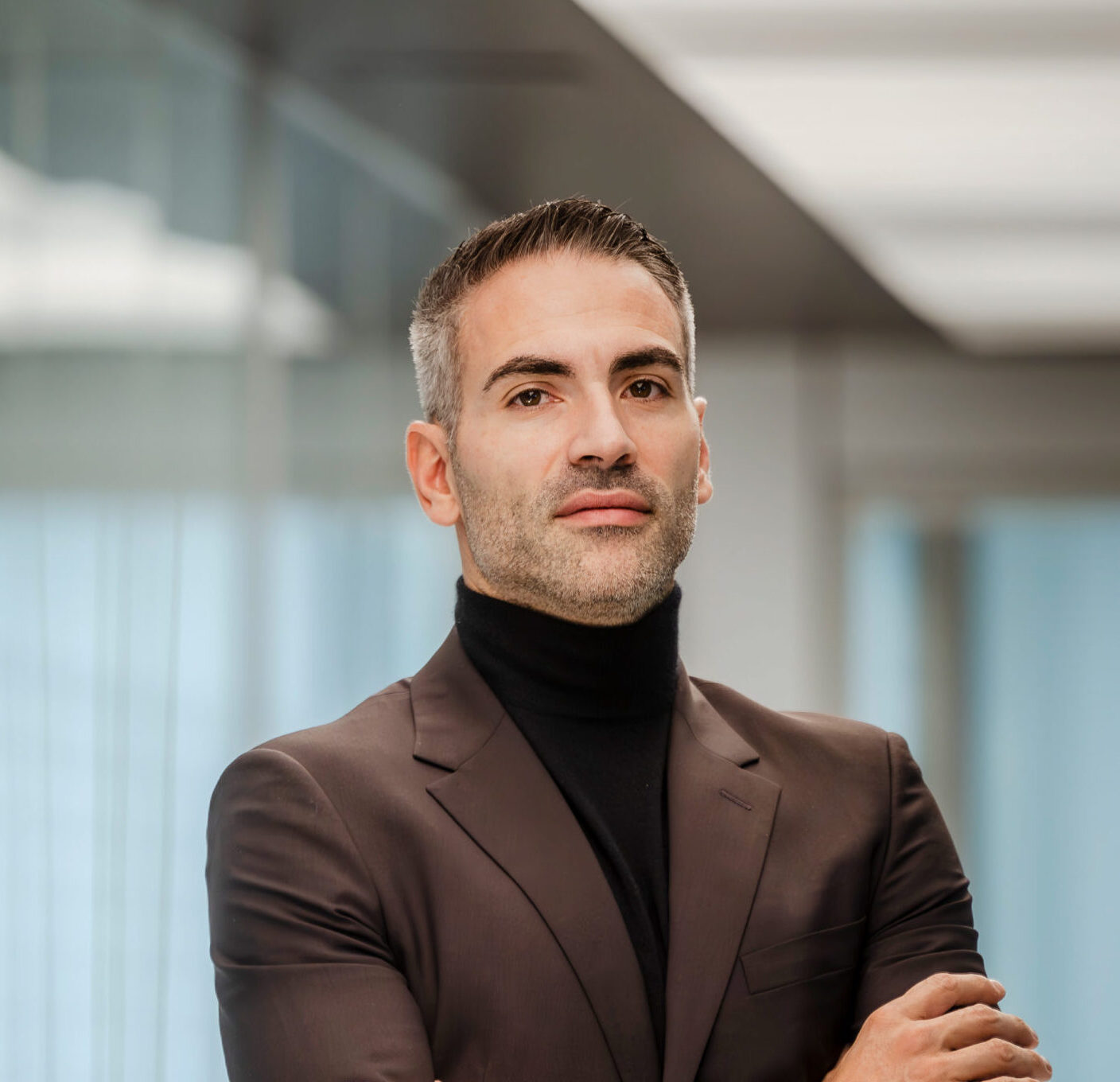

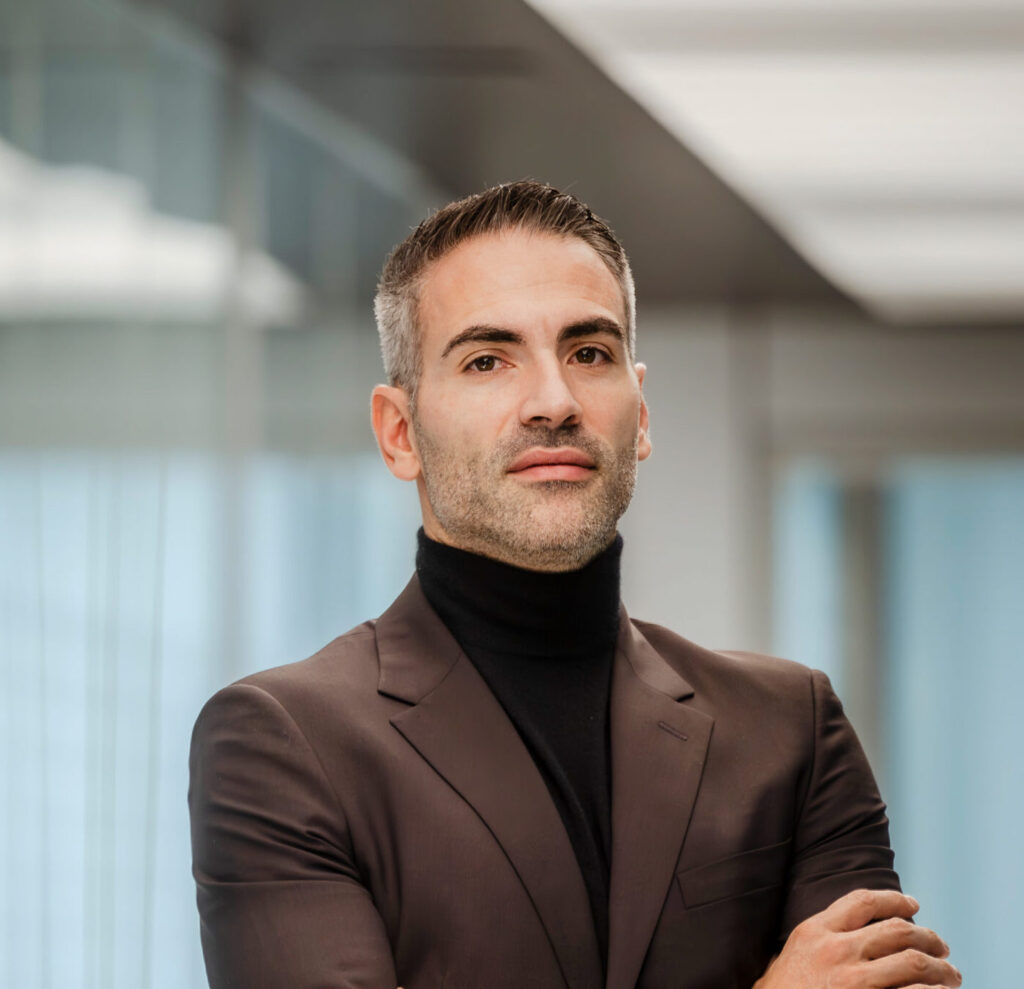
Stiven Muccioli, CEO at BKN301 has, in his own words, “built, scaled, and exited companies across e-commerce and financial services” – which gave him a first-hand view of how technology can transform established industries. This created his current venture – BKN301 in 2021. Muccioli shares his views on Qatar and its potential for entrepreneurship, fintech investment opportunities what the growth of stablecoins could mean for Qatar’s banks and financial institutions.
“We are actively building an ecosystem through targeted investments and acquisitions, especially around data and AI, to keep that execution advantage over time and scale exponentially in the medium term.”
“Qatar’s VC ecosystem is being deliberately built, and make yourself part of it. Programmes such as Startup Qatar provide funding and support for seed and growth-stage companies. There is a budding network of government grants, events, incubation programmes, and funding available for tech startups to establish or expand operations in this market. Founders should make a point of showing investors how their business can contribute to Qatar’s ambition to become a regional hub for innovation.”
“Cross-border infrastructure stands out because Qatar is well positioned as a bridge between established financial markets and faster-growing emerging economies. As interoperability becomes more important, there is a growing need for platforms that can connect different banks, payment systems, regulatory environments, and financial workflows without adding another layer of complexity.”
Talk us through your career path.
Muccioli: I’m a technology entrepreneur and investor. Over the years, I’ve built, scaled, and exited companies across e-commerce and financial services. One of my early ventures was Tippest, which became one of Italy’s leading e-commerce platforms, and I later built Ventis, which was acquired by Iccrea Banca Group.
Those experiences gave me a first-hand view of how technology can transform established industries, but also the complexity that often holds financial institutions back. That led me to found BKN301 in 2021.
BKN301 is financial data infrastructure layer focused on one central problem: complexity that slows execution. Banks and fintechs are under constant pressure to innovate and comply with regulation, but most are constrained by fragmented systems built over decades. We help institutions and newcomers modernise without breaking what already works, so they can launch faster, adapt to regulation more easily, and scale without adding disproportionate cost.
From there, the focus has expanded beyond the platform itself. We are actively building an ecosystem through targeted investments and acquisitions, especially around data and AI, to keep that execution advantage over time and scale exponentially in the medium term.
Today, I lead both BKN301 and SM Capital, with a focus on financial infrastructure, data, and AI-driven platforms. Alongside that, I serve as Special Envoy for Innovation & Economic Development for the Republic of San Marino, working where institutions, technology innovation, and global markets intersect.
Having been associated with venture capital as an industry, what top 5 lessons do you want to share for those who are looking for venture capital to start or scale up their business in the region.
Qatar is a fascinating, growing market that is, in many ways, leapfrogging other traditional financial centres. Its fintech story is particularly distinct as the groundwork has been laid in a way that allows firms to scale fundamentally differently from those in many older markets, where legacy infrastructure and regulatory fragmentation can hold them back.
There are decades of tech debt, dependencies, and layers of complexity, and all of that slows everything down. Even many digital-first challenger banks, which were built to circumvent these hurdles, are still tied to the same legacy infrastructure they originally set out to disrupt.
In terms of lessons for founders looking to attract venture capital, a few key areas stand out.
Firstly, tap into Qatar’s entrepreneurial spirit and understand the direction of travel. There’s a clear national vision around digital transformation, defined by initiatives such as the Qatar National Vision 2030 and the Qatar FinTech Strategy. Regulators are actively engaged with the market rather than reacting after the fact. In practice, that gives founders the opportunity to build with modern infrastructure and regulatory requirements in mind from day one, rather than retrofitting them later.
I’d also reinforce the importance of getting the foundations right early. In fintech especially, strong infrastructure, data capabilities, and compliance matter because they determine whether you can grow without costs and complexity increasing in tandem. Investors need to see that the architecture underneath the business is capable of supporting long-term scale.
In a similar vein, founders should build for execution, not experimentation. The market is moving beyond proofs of concept. Investors want to understand how an idea can actually be deployed, scaled and sustained, not simply whether it works in a pilot.
Founders should also be able to show investors how they can scale beyond one market. Its geographical position acts as a bridge between established financial markets and fast-growing emerging economies. For investors, the most compelling businesses will therefore be those that can demonstrate how a model proven in Qatar can expand into regional and cross-border use cases. Lastly, understand that Qatar’s VC ecosystem is being deliberately built, and make yourself part of it. Programmes such as Startup Qatar provide funding and support for seed and growth-stage companies. There is a budding network of government grants, events, incubation programmes, and funding available for tech startups to establish or expand operations in this market. Founders should make a point of showing investors how their business can contribute to Qatar’s ambition to become a regional hub for innovation.
Where do you see the strongest fintech investment opportunities emerging in Qatar, particularly as value moves away from consumer-facing applications and towards the infrastructure, data and compliance layers behind them?
I see the strongest investment opportunities in Qatar moving towards the infrastructure that allows financial institutions to scale. That includes orchestration platforms, real-time payments infrastructure, financial data layers, and compliance technology.
There are already signs of capital moving in this direction. By December 2025, Qatar Development Bank (QDB), through Qatar FinTech Hub and its investment arm, had provided more than QR73 million in investment and financing to the fintech sector. QDB has also introduced a FinTech Development Grant offering co-funding of up to QR1.5 million per company, linked to milestones including technical and regulatory readiness, product development, and market entry.
For investors, the opportunity increasingly sits in the connective layer. As more financial services become digital, banks must connect payments, compliance, data and different providers while maintaining control over the entire operation. Companies that can abstract that complexity and allow institutions to add services or enter new markets without rebuilding their architecture each time become increasingly valuable. That is where I think some of the most durable businesses will be built.
The opportunity for fintechs to expand across jurisdictions is also becoming increasingly important. In areas such as buy now, pay later for example, international expansion is an opportunity for firms seeking sustainable long-term growth. That makes scalability across jurisdictions a particularly important investment consideration, as investors will want to understand whether a fintech’s infrastructure can support expansion without creating a new layer of cost and complexity each time it enters a market.
Compliance and data sit at the centre of that challenge; as institutions connect more services and operate across more markets, compliance needs to be built into the underlying infrastructure. The opportunity is in platforms that combine automated controls with strong data foundations, giving financial institutions the ability to respond to regulatory requirements while continuing to scale.
Which areas of Qatar’s fintech market may currently be underappreciated by investors, including cross-border infrastructure, compliance automation, financial data and real-time operational intelligence?
In my view, some of the most underappreciated opportunities in Qatar are in the parts of fintech that sit behind the next high profile consumer app. The quieter, behind-the-scenes areas – particularly cross-border infrastructure, compliance automation, financial data, and real-time operational intelligence – are the areas where I expect to see real growth in the region.
Cross-border infrastructure stands out because Qatar is well positioned as a bridge between established financial markets and faster-growing emerging economies. As interoperability becomes more important, there is a growing need for platforms that can connect different banks, payment systems, regulatory environments, and financial workflows without adding another layer of complexity.
Compliance automation is another area investors should be paying attention to; as financial institutions operate across more products, providers, and jurisdictions, compliance becomes increasingly difficult to manage through disconnected systems. The opportunity is in platforms that can embed compliance into the underlying infrastructure and help institutions adapt across different regulatory environments. That is especially relevant in Qatar, where fintechs are being encouraged to design services with modern infrastructure in mind from the outset.
What are investors looking for from fintech businesses in Qatar today, from regulatory adaptability and data control to resilience and the ability to scale across borders?
Investors in Qatar are increasingly looking at whether a fintech has the infrastructure and operating model to remain resilient as it scales, particularly across different regulatory environments and markets.
Resilience is becoming more important because Qatar’s payment infrastructure is being asked to handle substantially more activity. Qatar Central Bank data for June 2026 showed that the country’s payment systems processed 75.135 million transactions worth QR99.101 billion during the month, up 21 percent and 40 percent respectively year on year. That kind of growth demands Fintechs to demonstrate that their technology, controls, and compliance processes can continue to perform as transaction volumes scale quickly.
The ability to expand into new markets without adding too much cost or complexity is also important. Fintechs that build products and services separately can find that each new launch adds more systems, processes and overhead. A platform model avoids some of that by using the same core capabilities, such as payments, onboarding, compliance, risk and data, across different products and markets. This is a key consideration for investors looking at how well a fintech can scale over time.
What would the growth of stablecoins could mean for Qatar’s banks and financial institutions?
The growth of stablecoins in Qatar should be viewed through the lens of the country’s regulatory framework. Stablecoins, and most cryptocurrencies, are currently excluded from permitted activity within the Qatar Financial Centre under the Digital Assets Framework.
However, the country has taken a more proactive approach to the tokenisation of regulated, real-world assets, so the immediate opportunity may look more like preparing financial infrastructure for a world in which traditional money and tokenised assets increasingly coexist.
This creates an infrastructure challenge; institutions will need systems capable to connecting new digital assets with existing payment rails and compliance processes, without creating another layer of fragmentation. Trusted data, governance, interoperability, and regulatory compliance thus become just as important as the underlying technology.
In that sense, stablecoins, at this stage, are part of a much bigger picture. This picture is being painted around institutions that can orchestrate digital and traditional finance securely and seamlessly.