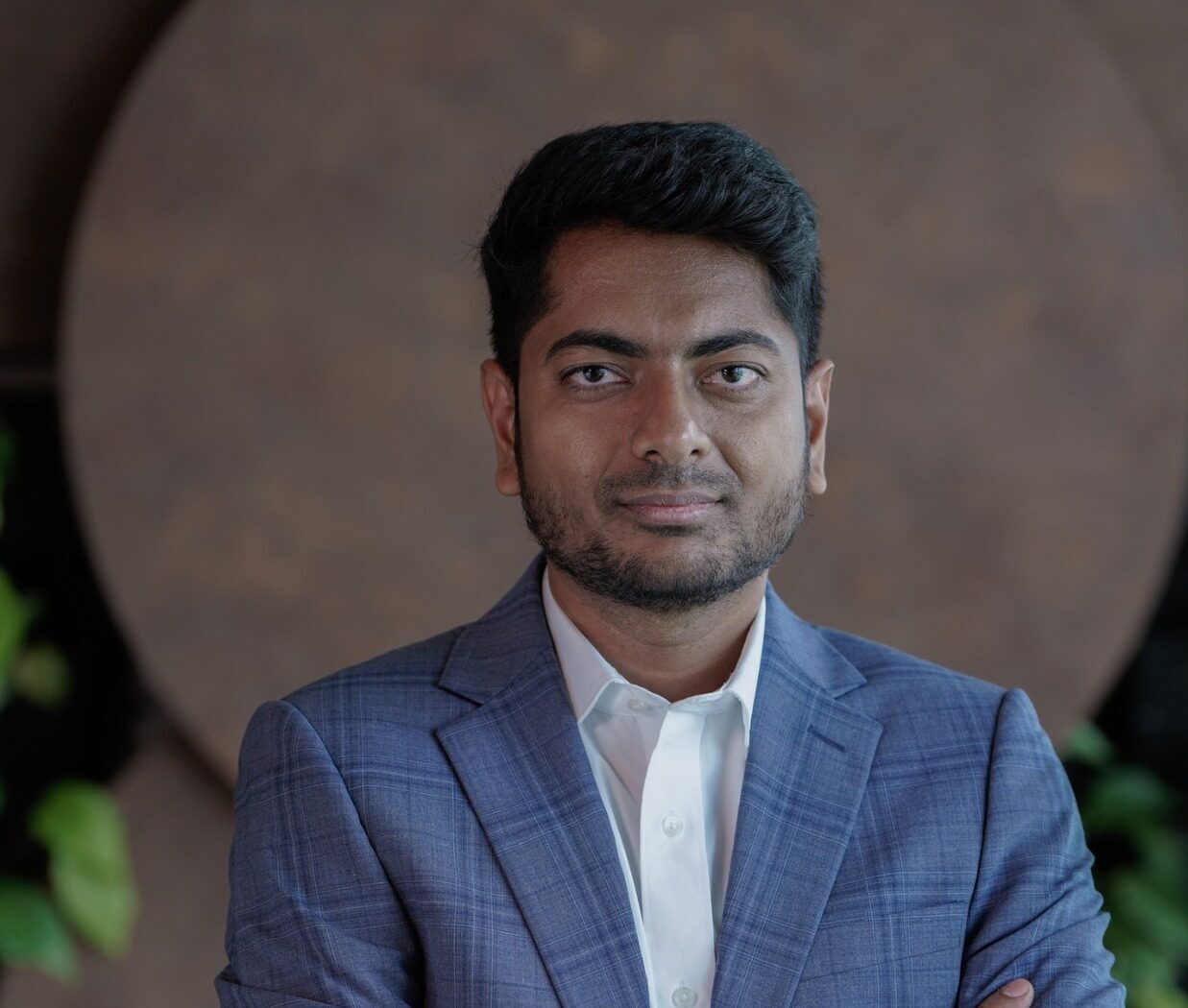

Saran B. Paramasivam, regional director, Middle East & Africa, Zoho, in conversation with Business Leaders ME, sheds light on a swathe of subjects – from productivity to decision intelligence, exploring how organisations across the Middle East are leveraging Artificial Intelligence (AI) to transform business operations, decision-making, and enterprise software, while maintaining responsible AI practices and governance. Paramasivam also examines AI adoption across enterprises and SMEs, regional trends, and the role of AI in supporting national digital transformation initiatives.
“An assistant answers when asked. In contrast, an agent acts without being asked, within boundaries that are pre-set. That’s a meaningful shift, and it’s also where the risk conversation gets real. An assistant giving a wrong answer is a nuisance. An agent taking the wrong action, updating a record, sending a payment, changing a customer status, has actual consequences.”
“We’ll see less talk about AI as a standalone feature and more about it as infrastructure, something that has to be governed, trusted, and verified, the same way we think about security or compliance today. And I think the businesses that win in this next phase won’t be the ones with the flashiest AI demo, they’ll be the ones who built AI on a foundation they can actually trust and control.”

“My path has been unconventional by most standards. I joined Zoho straight out of high school in 2005 as the first student selected into what is now known as Zoho Schools of Learning, so no traditional degree, no conventional route in,” says Saran B. Paramasivam, regional director, Middle East & Africa, Zoho, commenting on his career path.
Starting as a software developer, Paramasivam moved into product management, and spent a significant part of his career shaping Zoho Creator, the company’s low-code platform. That experience, according to Paramasivam, gave him a deep understanding of how businesses think about technology and what it takes to translate complex problems into real solutions.
Over nearly two decades, Paramasivam’s role evolved across product, customer engagement, and strategy and that journey brought him to where he is today, leading Zoho’s business across the Middle East and Africa as its regional director. “I often say I did not just work for Zoho; I grew up with Zoho. And honestly, that depth of experience is what I bring into every market conversation across the MEA region,” asserts Paramasivam
AI in day-to-day decision making of big businesses versus SMEs
In the opinion of Paramasivam, for large enterprises, AI has already shifted from a nice-to-have to something embedded in daily decisions, forecasting, resource planning, customer response times. “The difference isn’t whether AI matters, it’s how it’s being adopted. Big businesses often have the budget and internal teams to build custom AI solutions. SMEs don’t have that luxury, so their AI adoption has to come built into the tools they’re already using, not as a separate investment. That’s actually the more interesting story right now: SMEs adopting AI isn’t about” catching up” to enterprise, it’s about accessing the same intelligence without needing enterprise-level resources to get there,” explains Paramasivam
How, in Paramasivam’s view, is AI transforming modern business software and enterprise operations?
Software used to be a tool one operated, explains Paramasivam. “Now it’s becoming something that operates alongside you. The shift is from static systems where a person has to pull a report, interpret it, and act, to systems that surface the insight and, increasingly, take the next step themselves. The businesses getting real value aren’t the ones bolting AI onto old workflows, they’re the ones rebuilding their operations around the assumption that AI is part of the process, not an add-on to it,” adds Paramasivam.
The evolution from AI assistants to AI agents is something integral to Zoho. In the explanation of Paramasivam, an assistant answers when asked. In contrast, an agent acts without being asked, within boundaries that are pre-set. That’s a meaningful shift, and it’s also where the risk conversation gets real. An assistant giving a wrong answer is a nuisance. An agent taking the wrong action, updating a record, sending a payment, changing a customer status, has actual consequences.
“So this evolution isn’t just a capability story, it’s a trust and governance story. The businesses moving fastest here are the ones building the guardrails at the same time as the capability, not after. That’s also why, as we build AI agents within Zoho, our approach is governance-first, not capability-first,” opines Paramasivam.
Responsible AI strategies alongside privacy and governance
The businesses doing this well are treating governance as part of the AI architecture, not a policy document sitting separately from it, explains Paramasivam.
“That means permission layers that mirror the organisation’s actual structure, so AI only surfaces what a given person is already cleared to see. It means knowing exactly where data lives and who has access to it. And it means building recovery and accountability into the system from day one, not scrambling to add it after something goes wrong. Responsible AI isn’t a separate initiative from AI adoption, it has to be the same initiative,” mentions Paramasivam.
In the region, what kind of evolution have businesses undergone to adopt AI into their day-to-day operations?
In the opinion of Paramasivam, the shift being witnessed across the region is from AI being used for specific, isolated use cases to becoming embedded in everyday business operations. Companies are increasingly applying AI across functions, from customer service and sales to finance, HR, and operations, to improve productivity and decision-making.
Government-led investment and national AI strategies have helped accelerate this adoption, but the bigger shift is happening at the business level: the conversation is moving from whether to adopt AI to where it can create the most value and how it can be integrated responsibly into the way people already work, describes Paramasivam
In explaining the role AI will play in supporting the GCC’s digital transformation ambitions, Paramasivam says, “AI is the layer that makes a lot of the region’s broader digital transformation goals achievable at speed, not just on paper. National strategies around economic diversification and digital government depend on businesses being able to operate more efficiently, and AI is a big part of how that efficiency gets realized. But infrastructure and ambition alone don’t get you there, businesses need software that’s actually built to put that AI to work inside their real operations, not just AI as a separate initiative running alongside the business.
In hindsight, did businesses foresee that AI would grow into this juggernaut that it has become, even two years ago?
Paramasivam is unequivocal when he says, “Honestly, no, not at this scale. Two years ago, most conversations I had with businesses treated AI as an interesting experiment, something to keep an eye on. Very few people were planning for a world where AI would be making decisions inside core business processes this quickly. What surprised a lot of people isn’t that AI got better, it’s how fast the expectation shifted, from ‘AI is optional’ to ‘why don’t you have this yet’.”
Projecting AI and its impact over the next two years,Paramasivam mentions that
the next two years are less about AI getting smarter and more about AI getting more responsible and more embedded. “We’ll see less talk about AI as a standalone feature and more about it as infrastructure, something that has to be governed, trusted, and verified, the same way we think about security or compliance today. And I think the businesses that win in this next phase won’t be the ones with the flashiest AI demo, they’ll be the ones who built AI on a foundation they can actually trust and control,” signs off Paramasivam.