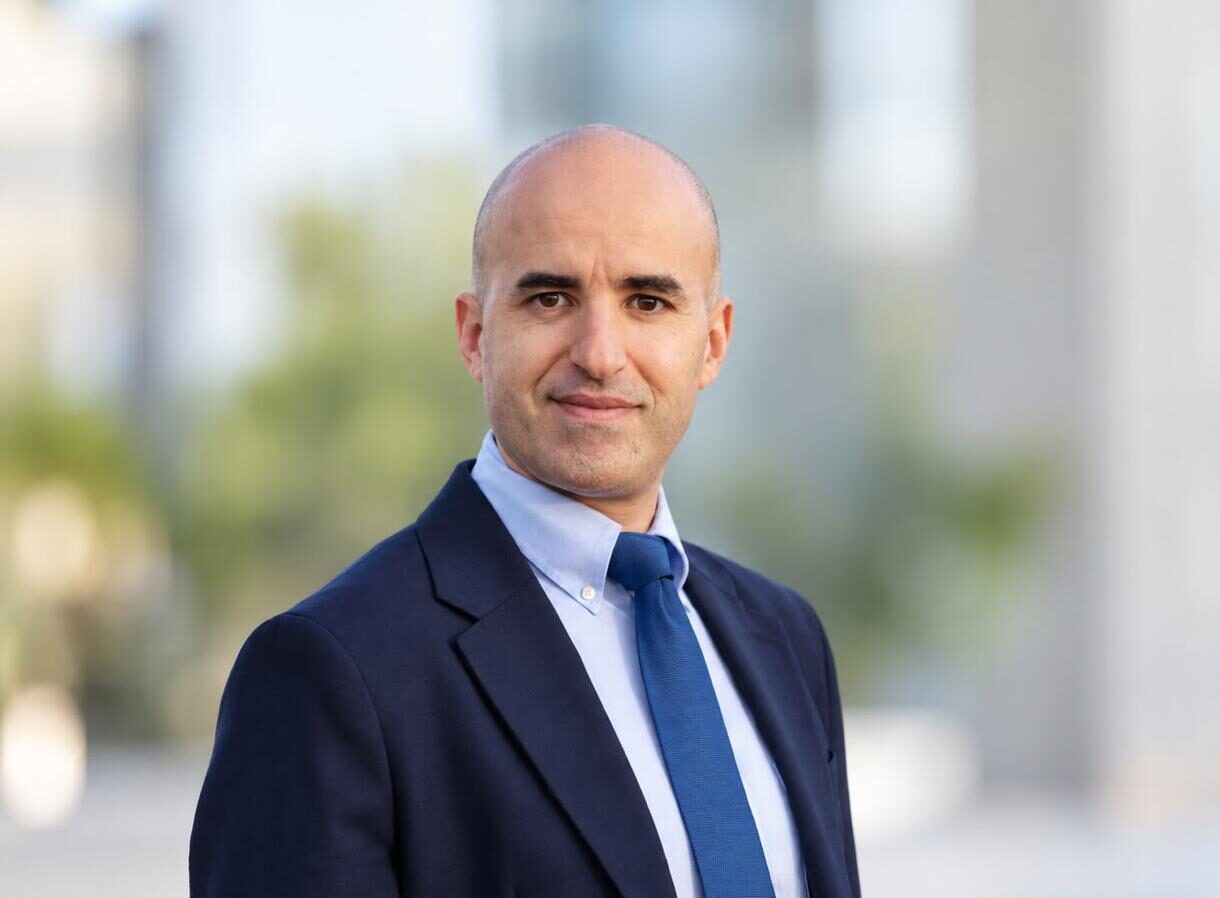

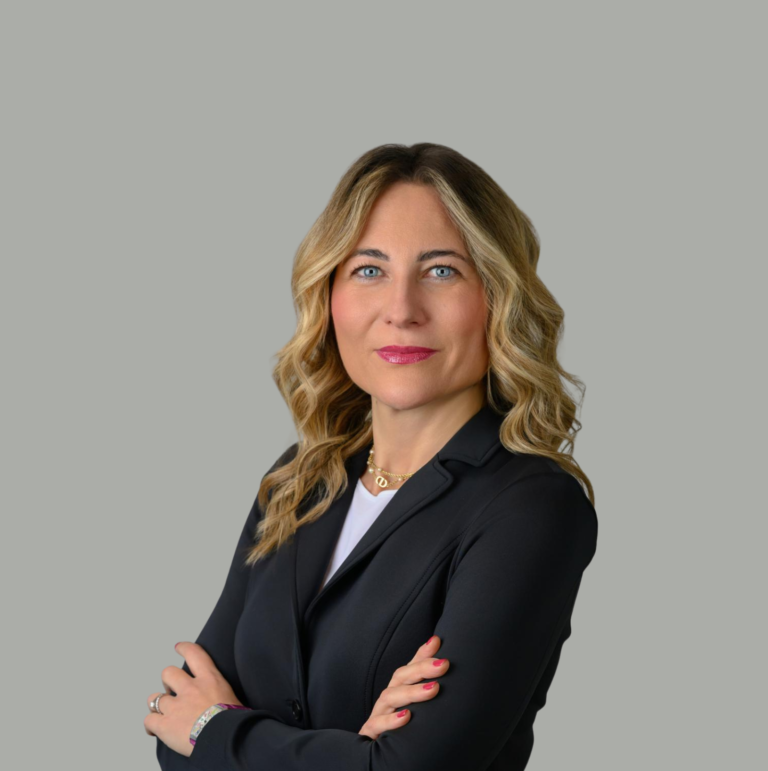
Laura Merlini, Managing Director EMEA, CAIA Association, speaks exclusively to Business Leaders Qatar.
CAIA Association's landmark global study, The World Rewired, reveals how geopolitics, technology, and organisational change are reconstructing the architecture of capital markets — and why Qatar sits at the centre of it all.
By Aparajita Mukherjee
About the interviewee : Laura Merlini, Managing Director EMEA, CAIA Association. Leading regional strategy since 2012, and a senior alternatives professional and frequent speaker on governance, responsible investing, and industry trends.
About the study: CAIA Association — a global network of investment professionals redefining the future of capital allocation — has released a new global study, The World Rewired, highlighting how the investment landscape is undergoing a “wholesale rewiring” as geopolitics, technology, and organisational capabilities reshape how capital is raised, allocated, and managed.
BL: How is the investment landscape of today distinct from what it was five years back?
Five years ago, most of us still assumed a world of low rates, ample liquidity, and relatively benign globalisation. Today, that framework no longer holds. We are operating with higher and more uncertain real rates, sharper geopolitical fault lines, and a more fragmented map of trade and capital flows.
At the same time, what we used to call “alternatives” has moved to the centre of many institutional portfolios. Value creation and governance are increasingly happening in private markets, often long before a company considers listing — if it lists at all. Public and private markets are converging, which challenges traditional 60/40 thinking and pushes us toward a genuine total portfolio mindset.
In developing The World Rewired report, we listened closely to senior leaders and CAIA members, and a consistent insight emerged: this is not just another cycle. The underlying logic of how markets work is shifting.
BL: How does the troika of geopolitics, technology, and organisational capabilities impact the investment landscape?
Geopolitics has moved from background noise to a core input in the investment process. It now influences which deals get done, where firms place talent, and how capital flows across regions. We see regional clusters of capital across the Middle East, Asia Pacific, and Latin America, each with distinct rules and sovereign priorities.
Technology is the second force. Two innovations are racing toward the same goal of broadening access to private markets. Semi-liquid fund structures work within today’s infrastructure, while tokenised products could redefine that infrastructure entirely. Whether these approaches ultimately complement each other or collide remains an open question.
The third force is organisational capability. Firms are moving toward flatter and more agile models to keep pace with regulatory and technological change. The skills gap is no longer just technical. It is about judgment under complexity, geopolitical awareness, and digital fluency. Many leaders quietly admit their organisations are not fully ready.
BL: Coming to Qatar and the wider GCC, what is the outlook on investments and capital raising today?
From an EMEA perspective, Qatar and the wider GCC are becoming central nodes in global capital — not peripheral markets.
In Qatar, policy anchored in Vision 2030 is channelling capital into technology, health, education, and digital infrastructure, supported by the Qatar Investment Authority and development bank platforms. Recent forecasts point to real GDP growth of around 4 percent in 2025, and above 5 percent in 2026, driven by LNG expansion and diversification into advanced industries, logistics, the digital economy, and financial services.
Across the Gulf, sovereign wealth funds have emerged as a new centre of gravity in state capital. In 2025, Gulf sovereign investors deployed approximately US$119 billion (QR422.16 billion) — roughly 43 percent of all capital invested by state-owned funds worldwide. By the end of that year, global sovereign wealth assets stood at around US$15 trillion (QR54.6 trillion), with Gulf-based funds accounting for an estimated US$6 trillion (QR21.8 trillion).
When you raise capital from a Gulf sovereign fund, you are aligning with returns, national development, and geopolitical positioning at the same time. The architecture of this capital is also evolving — as seen in Abu Dhabi’s restructuring into a three-pole system with distinct global, industrial, and domestic development mandates. For global investors and issuers, the GCC offers deep and increasingly sophisticated capital, but it demands serious engagement with local mandates and governance.
BL: What is the definition of long-term today, given that geopolitics is at its most delicate juncture?
In this environment, “long term” is less a fixed number of years and more a mindset and governance choice. It means being willing to stay invested through policy shifts, technological disruption, and geopolitical episodes instead of reacting to every headline.
Practically, that requires portfolios and institutions that can absorb shocks without being forced into pro-cyclical behaviour. Robust liquidity planning, diversified funding sources, and the thoughtful use of private markets across regions all play a critical role.
We need scenario-based thinking and investment committees empowered to lean into dislocations when risk premia widen. That might include long-dated infrastructure, energy transition projects, or digital assets in reforming markets — always with managers who understand local complexity. Long-term today is about resilience and flexibility.
BL: How will the IPO scenario be affected in this climate?
Higher rates, valuation discipline, and geopolitical uncertainty have made IPO markets more cyclical and selective. The GCC illustrates this well. In 2025, IPOs in the region raised approximately US$5.1 billion (QR18.6 billion) from around 40 deals — a clear step down from US$13.2 billion (QR48.04 billion) in 2024, despite the number of listings remaining reasonably healthy. The engine is still there, but investors are more demanding on quality and pricing.
Looking ahead, the outlook is cautiously positive. The GCC pipeline is broad — spanning energy-adjacent sectors, financials, logistics, technology, and consumer businesses supported by privatisations and family listings. Success will depend on timing, valuation, and post-listing execution.
Crucially, IPOs are now one of several liquidity options. Many companies will remain private longer, funded by private equity, venture capital, and sovereign investors. That reinforces a key theme from The World Rewired — public and private markets are converging, and investors need frameworks that encompass both.
BL: What would your advice be for those who feel overwhelmed tracking their investments today?
Feeling overwhelmed is understandable when markets and news flows are so intense. The first step is to anchor yourself to your goals and time horizon. If your objectives are long term, daily price movements and geopolitical headlines should not drive your behaviour. A simple written investment policy can help you stay grounded.
Focus on what you can control — diversification, costs, and your own reactions. Blending different asset classes, regions, and return drivers, including where suitable some private market exposure, tends to make portfolios more resilient. It may also help to check portfolios less frequently and ensure your short-term cash needs are covered by liquid holdings.
Remember that disruption also creates opportunity. The rewiring of markets means new sectors, regions, and structures for patient capital. Emotional discipline — avoiding both panic and euphoria — is as important as securities selection in achieving long-term results.
BL: What do you mean by “wholesale rewiring” of the investment landscape?
“Wholesale rewiring” means the underlying architecture of capital markets is being reconstructed. The World Rewired identifies three interconnected shifts — macro, industry, and organisational.
On the macro side, the map of private capital is being redrawn as regional blocs across the Middle East, Asia Pacific, and Latin America develop their own rules and sovereign agendas. At the industry level, the debate has moved from access to alternatives into a deeper question of whether semi-liquid structures or tokenised architectures will define the future — and whether today’s infrastructure could be rendered obsolete quickly. Organisationally, firms are rethinking hierarchies, decision-making, and talent. Ultimately, there will be demand for people who can exercise judgment under complexity, not just run models.
The evolving architecture of Gulf sovereign capital is a concrete example. How mandates are split across different vehicles has real implications for how and where global capital flows.
BL: What is your roadmap advice for those looking to invest in this environment?
I would caution investors against three habits. First, the assumption that the last decade’s pattern of ultra-low rates and benign globalisation will simply repeat. Second, underestimating geopolitical and policy risk when building portfolios. Third, relying too heavily on a single liquidity source or market.
The roadmap ahead favours curiosity, adaptability, and genuine long-term thinking. That means building total portfolio frameworks that integrate public and private markets, investing in better macro and geopolitical awareness, and strengthening governance so you can act when dislocations create opportunity. It also means developing capabilities around data, technology, and new market infrastructures such as tokenisation.
For those looking at Qatar and the GCC, partnering with local expertise and understanding sovereign mandates and national transformation agendas is essential. The most compelling opportunities will often be in real economy sectors — infrastructure, logistics, digital, and knowledge-based industries — where financial returns align with development and energy transition goals.
The Investment Paradigm Today — Six Key Takeaways
“Five years ago, most of us still assumed a world of low rates, ample liquidity, and relatively benign globalisation. Today, that framework no longer holds. We are operating with higher and more uncertain real rates, sharper geopolitical fault lines, and a more fragmented map of trade and capital flows.”
“Firms are moving toward flatter and more agile models to keep pace with regulatory and technological change. The skills gap is no longer just technical. It is about judgment under complexity, geopolitical awareness, and digital fluency. Many leaders quietly admit their organisations are not fully ready.”
“When you raise capital from a Gulf sovereign fund, you are aligning with returns, national development, and geopolitical positioning at the same time.”
“The rewiring of markets means new sectors, regions, and structures for patient capital. Emotional discipline — avoiding both panic and euphoria — is as important as securities selection in achieving long-term results.”
“Organisationally, firms are rethinking hierarchies, decision-making, and talent. Ultimately, there will be demand for people who can exercise judgment under complexity, not just run models.”
“For those looking at Qatar and the GCC, partnering with local expertise and understanding sovereign mandates and national transformation agendas is essential. The most compelling opportunities will often be in real economy sectors where financial returns align with development and energy transition goals.”