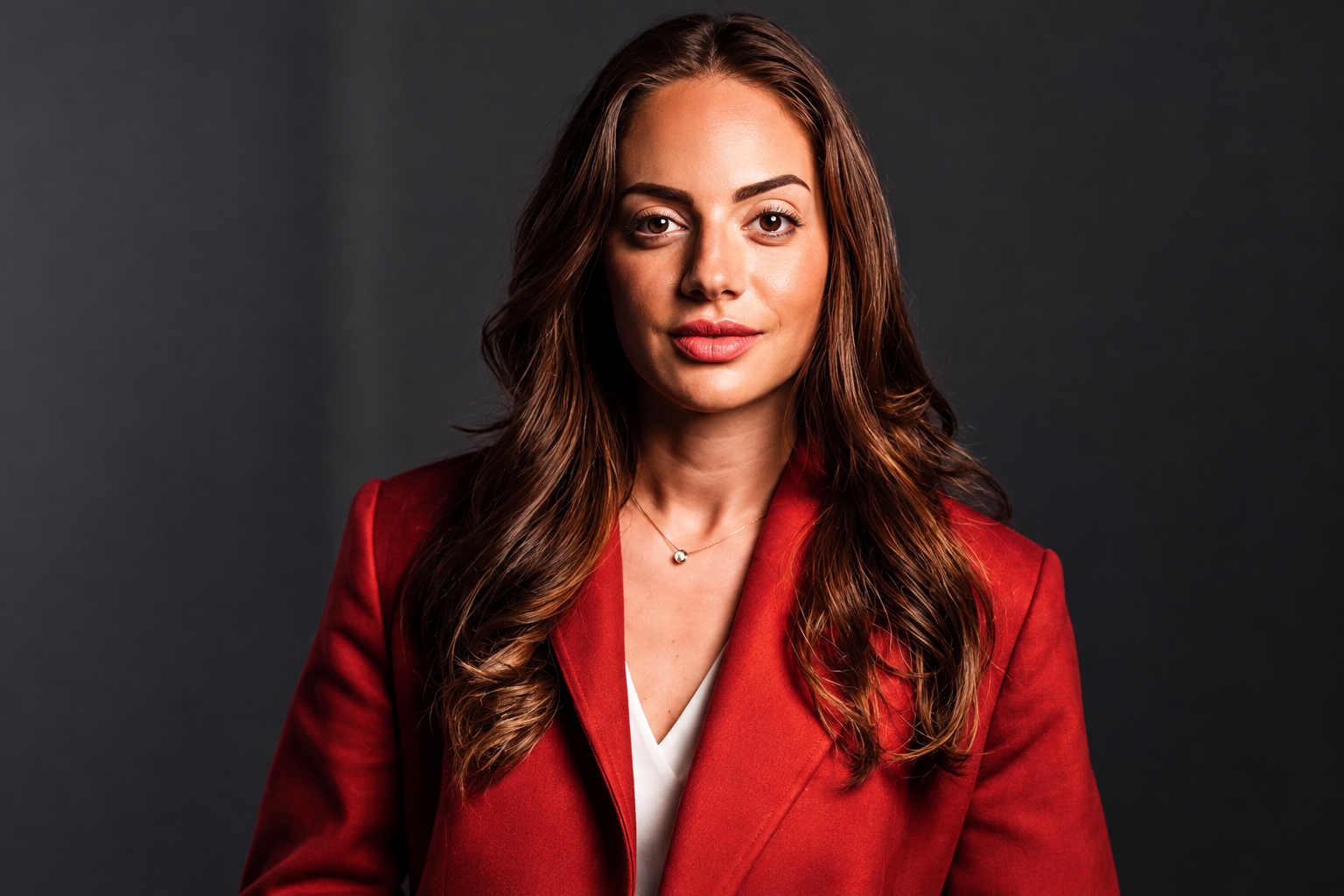

Niousha Ehsan, co-founder & chief energy officer, LINKVIVA, a leading event management company in the region, is no stranger to reinventing herself – as her designation amply suggests. In her view, it is ambition that drives the entire region host big-ticket events. Ehsan sheds a light on the regional event management scenario, especially on legacy building. By Aparajita Mukherjee
What I’d like to see shift is the industry and client mindset moving toward fewer agencies at the shortlist stage, then multi-year contracts once a partner wins. This makes it efficient for both sides.
Talk us through your career path, what is the story behind your designation as Chief Energy Officer?
Ehsan: I started my career very early in life. At sixteen, I was working full-time at an advertising agency while studying for my degree at university in the evenings. At nineteen, my business and life partner, Poorya Montaseri, and I co-founded LINKVIVA. From day one, our intention was to craft legacies, in whatever shape or form. We wanted to create events that changed how people feel and think.
As the company grew exponentially, I hit a wall as a leader. I went to my coach in despair and asked, what do I do? His answer was deceptively simple: do nothing. That shocked me. But then he explained something that shifted everything. He said a leader can either add energy or deplete energy from people. An organisation, like a car that needs fuel, needs energy. And he mentioned that this is what I do really well, I add energy. A leader’s real job is energy management. You set the tone, protect the culture, and bring the fuel. Manage the energy well and the results follow. That’s why I’m the Chief Energy Officer. And it’s why I say happiness is profitable.
Having run many high-profile events in the GCC, what are the characteristics of the entire region that help you run events successfully?
Ehsan: Ambition. The region thinks big, moves fast, and backs vision with real commitment. Governments here treat experiences as nation-building, not decoration, which makes them genuine partners, not just clients. Add a deeply diverse talent pool and an appetite for what’s never been done, and you have the ideal conditions to create something that lasts.
On the reverse side, what factors act as hindrances and you wish they were any different?
Ehsan: The pitch process. For an agency like ours, a single pitch costs real money and real time. We’re talking strategy, creative development, full renderings, concept decks, sometimes over a hundred pages. That’s two weeks of ten people working flat out. Then clients invite multiple agencies to pitch. It’s impractical and wasteful for everyone.
What I’d like to see shift is the industry and client mindset moving toward fewer agencies at the shortlist stage, then multi-year contracts once a partner wins. This makes it efficient for both sides. When an agency works on a project year after year, there’s continuity, learning, and real improvement. You build something that compounds.
With Dubai Economy and Tourism, our projects are now becoming multi-year. And with the Department of Culture and Tourism Abu Dhabi, we’re not only working on multi-year contracts, we also have the opportunity to co-invest in the projects. That’s the partnership model I believe in: win-win, long-term.
How is experiential marketing reshaping tourism and placemaking in the GCC?
Ehsan: Destinations no longer sell sights, they sell feelings and memories. That’s the shift. At Liwa Village, under the vision of the Department of Culture and Tourism Abu Dhabi, we turned an empty stretch of desert into a winter destination for adrenaline lovers that families return to year after year. That’s placemaking: giving a place a reason to be visited, remembered, and loved. Experience is what turns a location into a destination.
Has this changed in any way in the prevailing climate of uncertainty in the region since March 2026?
Ehsan: If anything, it’s made the case stronger. The government here is our biggest inspiration. Their vision is unwavering, their resilience is unshakable. Every time they’ve faced a challenge, 2008, COVID, regional uncertainty, they’ve used it to make this country better. We’re a byproduct of that leadership. When you’re surrounded by that kind of vision and determination, you thrive too.
This reminds me of the time I faced uncertainty and a setback in 2024 when the Kayan Wellness Festival was washed away by the biggest storm in 75 years, one day before launch. We rebuilt it stronger. That’s what we learned from watching our government lead: purpose travels through any challenge. When you’re grounded in meaning and vision, you don’t break. You build.
Every uncertainty brings light at the end of the tunnel. That’s the culture here, and it’s shaped how we respond.
“WHAT EXCITES ME IS THAT WELLNESS IS MOVING BEYOND THE SPA DAY, BEYOND BIOHACKING YOUR WAY INTO A QUICK FIX. IT’S BECOMING WHAT IT SHOULD ALWAYS HAVE BEEN: A HOLISTIC WAY OF LIVING WHERE THERE IS HARMONY BETWEEN MIND, BODY, AND SOUL.”
“THE GOVERNMENT HERE IS OUR BIGGEST INSPIRATION. THEIR VISION IS UNWAVERING, THEIR RESILIENCE IS UNSHAKABLE. EVERY TIME THEY’VE FACED A CHALLENGE, 2008, COVID, REGIONAL UNCERTAINTY, THEY’VE USED IT TO MAKE THIS COUNTRY BETTER. WE’RE A BYPRODUCT OF THAT LEADERSHIP.”
How do live events like the ones you run help in the business of legacy building?
Ehsan: Early on we brought the band Schiller to Dubai. Great show, but as people walked out, nothing had changed in them, and it left no trace. That taught me everything. A concert ends; a legacy doesn’t. Legacy is what people carry out the door: belonging, memory, a shift in how they see themselves. We build for the day after the event, not just the event.
What 5 things about legacy building have you learnt while being at the helm of LINKVIVA?
Ehsan: These map to our five values, the 5 Ps:
People come first. Legacy is built by people, never by projects.
Build to Last. Strong foundations beat quick wins, every time.
Let go. If it can’t outlive you, it isn’t a legacy, so empower others to carry it.
Setbacks build strength. Losing Kayan to the storm made the rebuilt festival far better.
Purpose over spectacle. Meaning is what remains after the lights go down.
Wellness and the understanding of wellness has also changed sharply in this century. Having run the Kayan Wellness Festival, what can you tell us about the industry, the learnings and what the region needs to learn from the West to be able to compete effectively?
Ehsan: True wellness is where East meets West. There is so much coming from the East that we need to honour: our heritage, our spirituality, our natural practices, the wisdom that’s been rooted in our culture for centuries. When we combine that with the latest technologies and research from the West, that’s where the real opportunity lies.
What excites me is that wellness is moving beyond the spa day, beyond biohacking your way into a quick fix. It’s becoming what it should always have been: a holistic way of living where there is harmony between mind, body, and soul. It’s not what you do once in a while. It’s what you do every single day.
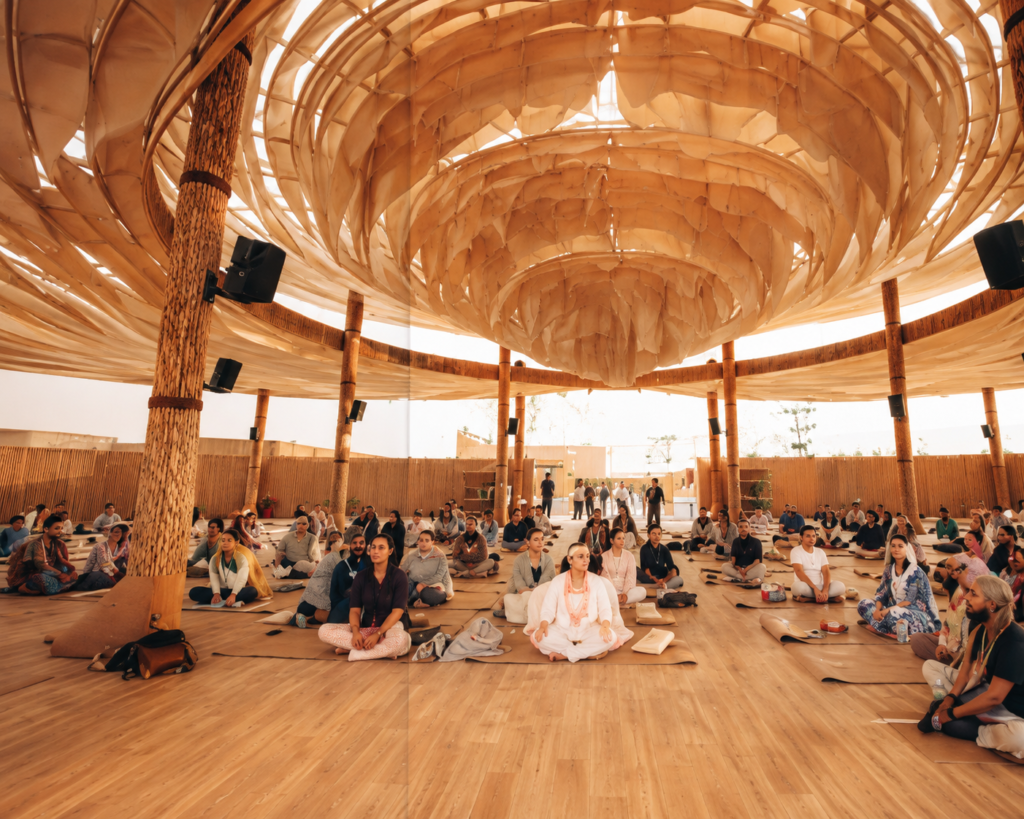
That’s the vision behind the Kayan Wellness Festival. It’s the largest wellness festival in the region, and our ambition is to take it global. It started in Abu Dhabi as its home, in partnership between LINKVIVA and the Department of Culture and Tourism Abu Dhabi. But beyond the scale, Kayan is about building a community of people who come together to create real impact in the region. It’s a place where people belong. A place that provides hope. A place that inspires. We want Kayan to become the wellness festival that becomes the benchmark for the world to follow.
Where do you see the company in 2 years’ time and how do you see your professional evolution in that time?
LINKVIVA will be regionally rooted and going global: systems that scale, a people-first culture, and Kayan expanding internationally. That’s what Build to Last means in practice. For me, the shift is from operator to institution-builder: more time coaching, mentoring, and shaping the wellness conversation, and less time doing. My job now is to enable others to create their own success stories. The company grows when I do less, not more.
QUICK FIRE
If not in this industry, what would you have done? Life coaching and psychology, helping people become the best version of themselves.
Two lessons in work-life balance that you learnt: Routine protects both. And letting go isn’t losing control; presence matters more than hours.
One go-to advice that you have received: Believe in people more than they believe in themselves.
One go-to method of recharge that you routinely use: Escape to an island and switch off completely: nature, family, no noise.
One mistake that has taught you the most: Working through my first pregnancy and missing my daughter’s early years. It taught me to let go.