
Sunday, May 17, 2026
The premier choice for executive insight. •
Big vision. Real influence. •
Leadership, in real time. •
Turning milestones into headlines. •
Executive insight—first, finest, and factual. •
Generic selectors
Exact matches only
Search in title
Search in content
Post Type Selectors
Home Sports & Health Startups & IT AI Trust Is the New Currency of AI in Financial Services

Trust Is the New Currency of AI in Financial Services

SAS’s Nader Kassir on why transparency, governance and responsible AI will define the next phase of banking, risk and financial transformation across Qatar and the wider region.

Trust is no longer a soft value in the financial sector. It has become a business requirement, a regulatory priority and a competitive advantage.

As artificial intelligence moves deeper into banking, risk management, fraud detection, compliance, and customer engagement, financial institutions are under growing pressure to prove that their AI systems are not only powerful but also transparent, explainable, and accountable.

This was the central message behind Data and AI Impact Report: The Trust Imperative, the latest report by SAS, which examined the critical relationship between data, AI and trust.

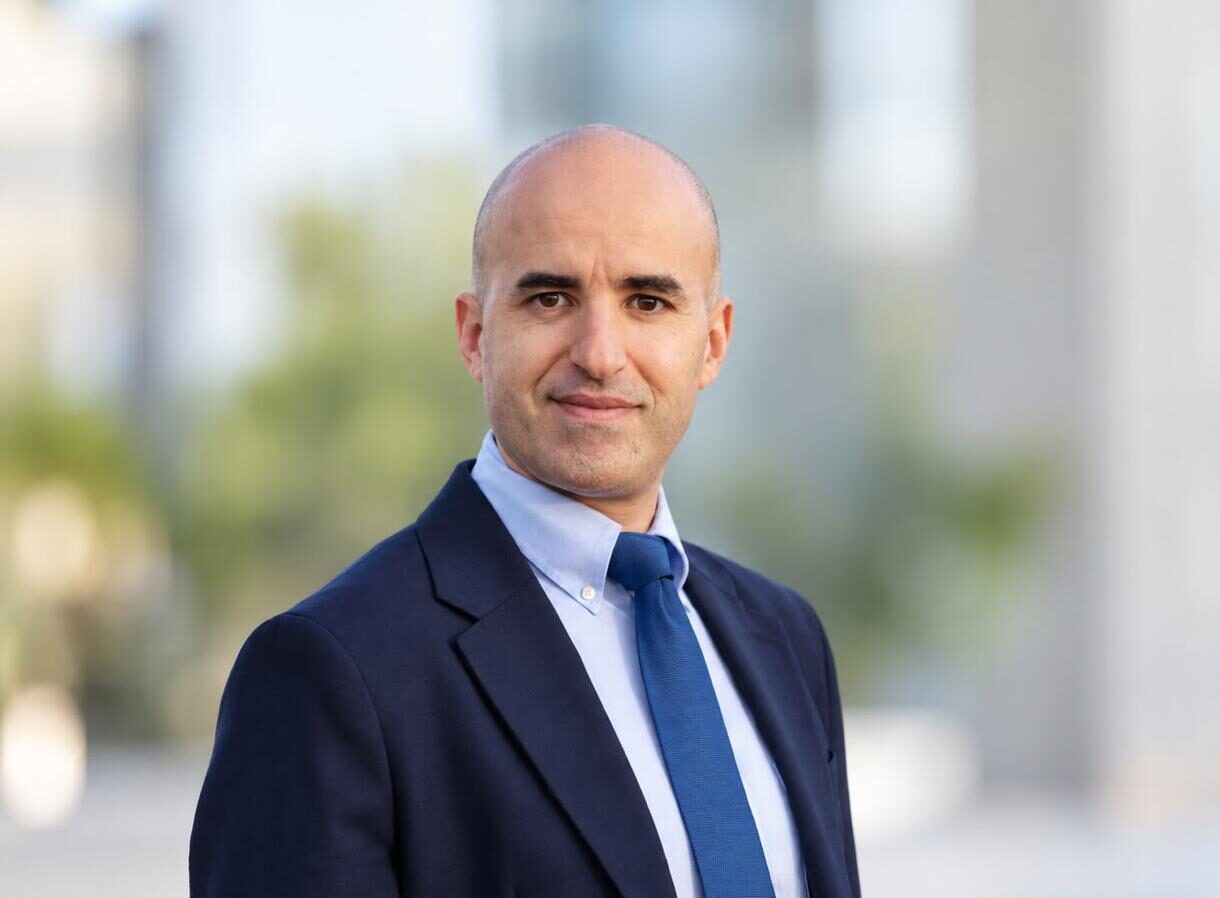
Speaking to Business Leaders, Nader Kassir, Regional Leader, Financial Services at SAS, said the future of AI in financial services would be shaped not only by technology but also by the ability of institutions to build confidence through transparency, controls, and continuous communication.

Technology With a Human Purpose

Kassir’s career has spanned more than two decades across enterprise technology, analytics and cybersecurity, including leadership roles at Broadcom and Commvault before joining SAS.

For him, the focus has never been technology for technology’s sake.

“My career has always been guided by a simple idea: using technology in a way that genuinely improves how organisations operate and serve people,” he said.

Today, Kassir leads financial services across several markets for SAS, including Qatar, Kuwait, Turkey and South Africa. Each market has its own pace of transformation, but the challenges are increasingly similar: regulation, competition, digital acceleration and the demand for trusted AI.

For business news in Qatar, finance news in Qatar, and the broader Qatar business ecosystem, this shift is especially relevant as financial institutions move toward smarter, faster, and more governed digital systems.

Trust Must Be Built, Not Assumed

As AI reshapes financial services, Kassir said trust has become the foundation of adoption.

In highly regulated Gulf markets such as Qatar and Kuwait, as well as fast-evolving economies such as Turkey and South Africa, financial institutions are being asked to prove that AI is being used responsibly.

“AI must be transparent, explainable and accountable,” Kassir said.

This is particularly important in markets where regulators are placing greater emphasis on governance, data protection and ethical AI. In Qatar, institutions such as the Qatar Central Bank are part of a broader regulatory environment in which responsible innovation is becoming central to the financial sector’s growth.

“Trust is no longer assumed,” Kassir said. “It must be built through transparency, strong controls and continuous communication.”

That message speaks directly to the future of investment in Qatar, Qatar Market News, Qatar Corporate News and the financial transformation underway in Doha, Lusail, Al Rayyan, Al Wakra and across the country’s business landscape.

Financial Institutions Must Educate Customers

According to Kassir, customer education is now a critical part of AI adoption.

Financial institutions are not only deploying AI systems. They are also responsible for helping customers understand how those systems are used, where human oversight remains in place and how decisions are made.

This means simplifying complex decision logic, explaining outcomes clearly and ensuring that employees and customers understand AI in practical terms.

“At SAS, we see trust as something built over time through consistent engagement, strong governance and responsible AI practices, not one-off initiatives,” Kassir said.

For banks and financial organisations, this makes communication just as important as infrastructure. AI adoption without customer understanding can create hesitation. AI adoption with clarity can build confidence.

Responsible AI Is No Longer Optional

Kassir said responsible AI has moved from being a technical discussion to becoming a business and regulatory imperative.

Financial institutions are operating in increasingly complex environments. AI systems must be explainable, auditable and aligned with both ethical and regulatory expectations.

Without that, AI can introduce risk instead of reducing it.

The pressure is even greater as financial crime becomes more advanced. Fraudsters are also using AI, including deepfakes, synthetic identities and automated manipulation techniques.

This makes responsible AI essential not only for compliance but for resilience.

“Responsible AI is not a compliance exercise,” Kassir said. “It is essential to building resilient and trusted financial systems.”

The Business Case for Responsible AI

The SAS report highlighted a powerful commercial point: organisations that invest in responsible AI and strong governance see higher returns on investment.

However, even advanced organisations underperform when governance is weak.

Key challenges slowing AI progress included:

49% — non-optimised cloud data environments
44% — insufficient data governance
41% — shortage of skilled specialists

These challenges are highly relevant for startups in Qatar, venture capital in Qatar, funding in Qatar, company formation in Qatar, and the wider Qatar economy, where digital infrastructure, data maturity, and talent development are increasingly linked to business growth.

Four Priorities for Organisations

Kassir said organisations looking to scale AI responsibly should focus on four strategic priorities.

First, they need strong data foundations. Many organisations still operate with fragmented or siloed data, making it difficult to generate reliable AI outcomes.

Second, governance must be built in from the start. It cannot be added later as an afterthought.

Third, organisations need a decision-centric mindset. AI must be embedded into real workflows such as risk, compliance, operations and customer service, rather than remaining isolated in experiments.

Finally, human oversight remains essential. Automation must be balanced with clear accountability, especially when AI supports high-impact decisions.

Together, these priorities allow organisations to scale AI in a controlled, reliable and responsible way.

Agentic AI: From Recommendation to Action

One of the most significant shifts Kassir identified is the rise of agentic AI.

Unlike traditional AI systems that analyse data and recommend actions, agentic AI can act autonomously within defined guardrails.

For financial institutions, this could be transformative.

Kassir said the most immediate impact would be seen in fraud detection, financial crime prevention and risk management. Instead of reacting after an incident, institutions could move toward proactive, real-time responses.

“As threats like deepfakes and synthetic identities grow, the ability to detect, decide and act in seconds becomes critical,” he said.

For Doha Business Leaders, Qatar CEO Interviews, Qatar Industry News and the wider Gulf Business conversation, this marks a major shift in how financial institutions may manage complexity in the years ahead.

The Real Barriers Are Trust and Governance

While AI is often discussed as a technology challenge, Kassir believes the biggest barriers are organisational.

“The biggest barriers are not technological,” he said. “They are related to trust, governance and operating models.”

Many organisations either hesitate to scale AI because they do not fully trust it, or they deploy it without sufficient governance, creating risk.

Another major challenge is the gap between proof of concept and real business value. AI initiatives often remain isolated because they are not embedded into decision-making processes or aligned with business priorities.

For Qatar’s financial and business sectors, this distinction matters. AI success will not come from experimentation alone. It will come from execution, governance and measurable impact.

Infrastructure, Talent and Data Governance Matter

Kassir said that infrastructure, governance, and talent challenges affect AI adoption across all markets, even if they manifest differently from one country to another.

Unoptimised cloud environments increase cost and complexity. Weak data governance undermines confidence in AI outputs. Talent shortages make it harder to connect data science, engineering, risk and business strategy.

Successful AI adoption requires collaboration across all these areas.

This is especially relevant to Qatar’s industries, economic policy, oil and gas in Qatar, financial services, real estate in Qatar, and emerging digital sectors supported by institutions such as the Qatar Foundation and Qatar’s broader innovation ecosystem.

The Future: Faster Decisions, Stronger Accountability

Looking ahead, Kassir said AI would increasingly move business management from insight-driven decision support to autonomous, decision-centric execution.

AI will become more deeply embedded into finance, risk, operations and customer engagement. It will help organisations make high-volume, time-sensitive decisions faster and more consistently.

But humans will remain central.

“The future will be defined by this balance,” Kassir said. “AI drives speed and scale, and people ensure trust and accountability.”

For Qatar and the wider Middle East, the message is clear: the future of AI in financial services will not be won by speed alone. It will be won by institutions that combine innovation with transparency, governance and trust.

BL Takeaway

AI is becoming one of the most powerful forces reshaping financial services. But without trust, even the most advanced systems will struggle to scale.

For banks, regulators, investors and business leaders, the next competitive edge will not only be who adopts AI first. It will be those who adopt it responsibly, explain it clearly, and govern it with discipline.

In the age of intelligent finance, trust is not a slogan. It is the infrastructure.


Share it :
ADD ENTREPRENEUR

Subscribe

Get free tips and resources right in your inbox, along with 10,000+ others
Top 5 This Week