

Artefact and malomatia Host AI Connect Summit in Doha
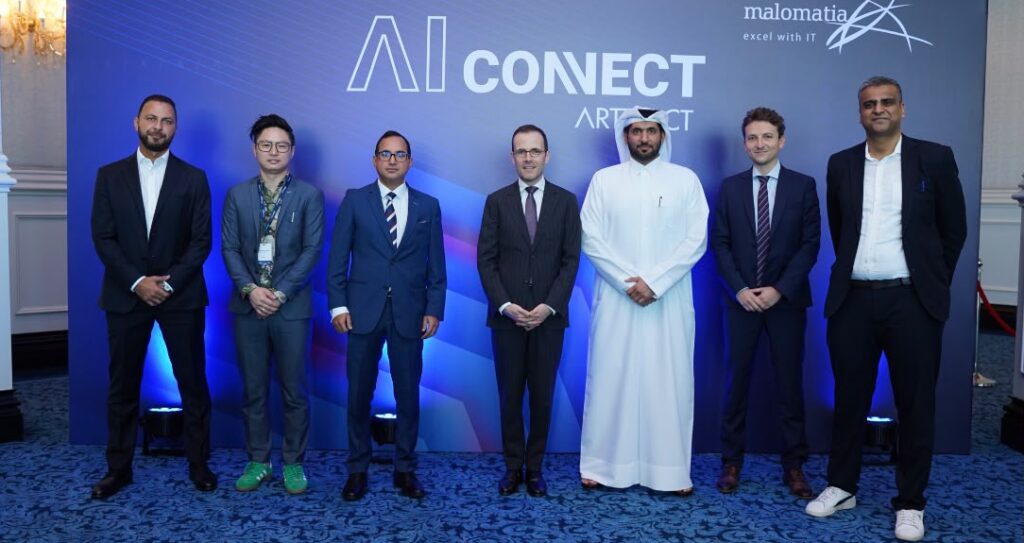
Artefact and Malomatia bring together Qatar’s public and private sector leaders to explore how AI is changing the way governments and businesses operate, make decisions, and redesign services. Artefact, a global leader in data and AI consulting, in partnership with malomatia, Qatar’s leading systems integrator and digital transformation provider, hosted the Artefact AI Connect Summit Doha 2026 at The Ritz-Carlton, Doha. The summit brought together senior government representatives and business leaders to examine how artificial intelligence is changing operations, decision-making, and service delivery across the public and private sectors. In his opening statement, H.E. Arnaud Pescheux, Ambassador of France to Qatar, said: “By bringing its global experience and AI expertise to Doha, Artefact is demonstrating how innovation can create new opportunities, new sources of value and strengthen strategic partnerships across the region. It also reflects the growing momentum of France-Qatar cooperation in technology and innovation fields.” Discussions focused on how AI can strengthen public-sector efficiency, support sound decision-making, and improve citizen services. Leaders also examined how AI is being applied across Qatar’s key industries to address practical opportunities and sector-specific challenges. Rahul Arya, CEO and Managing Partner, Artefact Middle East, Southeast Asia & India, said: “What stood out in Doha is the focus on moving from discussions about AI to where it can actually be put to work. Organizations are looking at practical questions around data, use cases and implementation. That is where Artefact’s experience can help. Artefact AI Connect Doha provided a space for those conversations, where we could share lessons from our work with organizations and hear the perspectives of leaders here in Qatar.” Artefact brings expertise across the data and AI transformation lifecycle, from AI strategy and governance and data foundations to advanced analytics, AI solutions, and deployment at scale. As Qatar’s trusted digital transformation partner, malomatia brings local knowledge and proven delivery capability to support practical and responsible AI adoption. Bassam Fadol, Chief Digital Services, malomatia said: “Our experience designing and running government systems in Qatar shapes how we approach AI. We start with who retains decision authority, where data is processed, and how the system stays correct when policies change. Our partnership with Artefact combines that experience with their data and AI expertise. We build the controls that make these systems trustworthy in everyday use. Our responsibility does not end at go-live.” The summit comes as Qatar accelerates investment in the infrastructure, capabilities, and partnerships required for a data- and AI-driven economy. Under Digital Agenda 2030, Qatar aims to generate approximately QAR 40 billion in cumulative economic impact and create 26,000 jobs in the ICT sector by 2030. Artefact has supported more than 1,000 clients globally. By combining this international experience with malomatia’s expertise as Qatar’s national IT leader, the partnership aims to help organizations identify practical use cases, implement appropriate solutions, and integrate AI responsibly into their operations.
AI is an organic part of businesses, not an add-on

Saran B. Paramasivam, regional director, Middle East & Africa, Zoho, in conversation with Business Leaders ME, sheds light on a swathe of subjects – from productivity to decision intelligence, exploring how organisations across the Middle East are leveraging Artificial Intelligence (AI) to transform business operations, decision-making, and enterprise software, while maintaining responsible AI practices and governance. Paramasivam also examines AI adoption across enterprises and SMEs, regional trends, and the role of AI in supporting national digital transformation initiatives. “An assistant answers when asked. In contrast, an agent acts without being asked, within boundaries that are pre-set. That’s a meaningful shift, and it’s also where the risk conversation gets real. An assistant giving a wrong answer is a nuisance. An agent taking the wrong action, updating a record, sending a payment, changing a customer status, has actual consequences.” “We’ll see less talk about AI as a standalone feature and more about it as infrastructure, something that has to be governed, trusted, and verified, the same way we think about security or compliance today. And I think the businesses that win in this next phase won’t be the ones with the flashiest AI demo, they’ll be the ones who built AI on a foundation they can actually trust and control.” “My path has been unconventional by most standards. I joined Zoho straight out of high school in 2005 as the first student selected into what is now known as Zoho Schools of Learning, so no traditional degree, no conventional route in,” says Saran B. Paramasivam, regional director, Middle East & Africa, Zoho, commenting on his career path. Starting as a software developer, Paramasivam moved into product management, and spent a significant part of his career shaping Zoho Creator, the company’s low-code platform. That experience, according to Paramasivam, gave him a deep understanding of how businesses think about technology and what it takes to translate complex problems into real solutions. Over nearly two decades, Paramasivam’s role evolved across product, customer engagement, and strategy and that journey brought him to where he is today, leading Zoho’s business across the Middle East and Africa as its regional director. “I often say I did not just work for Zoho; I grew up with Zoho. And honestly, that depth of experience is what I bring into every market conversation across the MEA region,” asserts Paramasivam AI in day-to-day decision making of big businesses versus SMEs In the opinion of Paramasivam, for large enterprises, AI has already shifted from a nice-to-have to something embedded in daily decisions, forecasting, resource planning, customer response times. “The difference isn’t whether AI matters, it’s how it’s being adopted. Big businesses often have the budget and internal teams to build custom AI solutions. SMEs don’t have that luxury, so their AI adoption has to come built into the tools they’re already using, not as a separate investment. That’s actually the more interesting story right now: SMEs adopting AI isn’t about” catching up” to enterprise, it’s about accessing the same intelligence without needing enterprise-level resources to get there,” explains Paramasivam How, in Paramasivam’s view, is AI transforming modern business software and enterprise operations? Software used to be a tool one operated, explains Paramasivam. “Now it’s becoming something that operates alongside you. The shift is from static systems where a person has to pull a report, interpret it, and act, to systems that surface the insight and, increasingly, take the next step themselves. The businesses getting real value aren’t the ones bolting AI onto old workflows, they’re the ones rebuilding their operations around the assumption that AI is part of the process, not an add-on to it,” adds Paramasivam. The evolution from AI assistants to AI agents is something integral to Zoho. In the explanation of Paramasivam, an assistant answers when asked. In contrast, an agent acts without being asked, within boundaries that are pre-set. That’s a meaningful shift, and it’s also where the risk conversation gets real. An assistant giving a wrong answer is a nuisance. An agent taking the wrong action, updating a record, sending a payment, changing a customer status, has actual consequences. “So this evolution isn’t just a capability story, it’s a trust and governance story. The businesses moving fastest here are the ones building the guardrails at the same time as the capability, not after. That’s also why, as we build AI agents within Zoho, our approach is governance-first, not capability-first,” opines Paramasivam. Responsible AI strategies alongside privacy and governance The businesses doing this well are treating governance as part of the AI architecture, not a policy document sitting separately from it, explains Paramasivam. “That means permission layers that mirror the organisation’s actual structure, so AI only surfaces what a given person is already cleared to see. It means knowing exactly where data lives and who has access to it. And it means building recovery and accountability into the system from day one, not scrambling to add it after something goes wrong. Responsible AI isn’t a separate initiative from AI adoption, it has to be the same initiative,” mentions Paramasivam. In the region, what kind of evolution have businesses undergone to adopt AI into their day-to-day operations? In the opinion of Paramasivam, the shift being witnessed across the region is from AI being used for specific, isolated use cases to becoming embedded in everyday business operations. Companies are increasingly applying AI across functions, from customer service and sales to finance, HR, and operations, to improve productivity and decision-making. Government-led investment and national AI strategies have helped accelerate this adoption, but the bigger shift is happening at the business level: the conversation is moving from whether to adopt AI to where it can create the most value and how it can be integrated responsibly into the way people already work, describes Paramasivam In explaining the role AI will play in supporting the GCC’s digital transformation ambitions, Paramasivam says, “AI is the layer that makes a lot of the region’s broader digital transformation goals achievable at speed, not just on paper.
WISE Policy Dialogue Explores AI and Teacher Readiness in K–12 Education
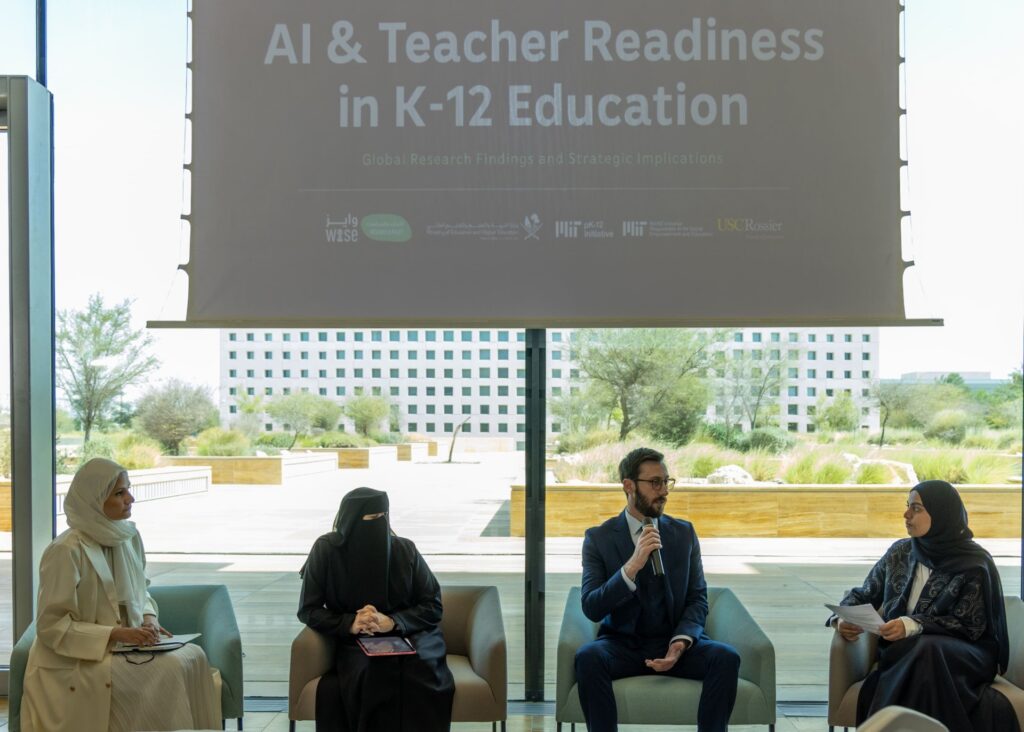
The World Innovation Summit for Education, WISE, an initiative of Qatar Foundation, hosted a policy dialogue event titled “AI & Teacher Readiness in K–12 Education: Global Research Findings and Strategic Implications”, bringing together education experts, policy voices and school practitioners to examine how artificial intelligence standards can be practically implemented in school environments. The discussion focused on one of the most urgent questions facing education systems today: how prepared are teachers to use AI meaningfully, responsibly and effectively in the classroom? As artificial intelligence continues to move rapidly into schools, the event highlighted the need for stronger teacher support, professional development, national evaluation frameworks and AI tools that reflect local language, culture and curriculum needs. AI Is Moving Faster Than Education Policy Opening the dialogue, Selma Talha-Jebril, WISE Research and Policy Director, said artificial intelligence is entering classrooms faster than schools and policy systems have had time to prepare for it. Her remarks set the tone for a discussion that moved beyond the excitement around AI and focused instead on implementation, readiness and long-term educational value. The event examined how teachers are currently engaging with AI, with many using it for administrative or preparatory tasks. However, panelists noted that the real opportunity lies in moving towards deeper, transformational classroom applications that directly support teaching, learning and student innovation. Teacher Agency and Professional Development Take Centre Stage Moderated by Maimoona Junjunia, Research and Policy Associate at WISE, the discussion emphasized the importance of teacher agency in the adoption of AI. Panelists stressed that AI in education cannot succeed through technology deployment alone. Teachers need sustained professional development, clear guidance, trusted tools and the confidence to integrate AI into pedagogy in ways that enhance learning outcomes. The dialogue also addressed the importance of evaluating AI tools rigorously before integrating them into schools at scale. In this context, national initiatives such as the WISE EdTech Testbed were highlighted as essential mechanisms for testing whether education technologies deliver real value in classroom environments. Shahd Dauleh, Innovation Manager at WISE, said the WISE testbed helps move the conversation beyond hype by ensuring that AI tools are genuinely effective for teaching and learning. AI Tools Must Reflect Language, Culture and Values A key theme emerging from the discussion was the need for AI systems in education to be contextually relevant. Lolwa Al-Nuaimi, Assistant Director of the E-Learning & Digital Solutions Department at the Ministry of Education and Higher Education, emphasized that for AI to succeed in education, it must reflect local language, culture and values while equipping teachers with the right tools. This point is particularly important for Qatar’s education sector, where strong digital infrastructure and national innovation ambitions have created a foundation for technology-led transformation. However, the discussion made clear that infrastructure alone is not enough. AI tools must be aligned with curricula, classroom realities, student needs and the cultural context in which learning takes place. Research Must Inform Policy and Practice The event also reinforced the broader purpose of the WISE Research & Policy Dialogue Series: ensuring that research findings do not remain confined to academic publications, but actively inform policy, practice and system-level decision-making. Selma Talha-Jebril noted that research only creates impact when it reaches the people with the power and responsibility to act on it. The dialogue series was positioned as a bridge between evidence, policy and education practice. This approach reflects a wider shift in education reform: moving from research as information to research as a tool for system transformation. From Classrooms to Innovation Labs Practical examples from schools offered a closer look at how AI can support student learning and innovation. Iyad Salameh, Teacher of Robotics and Automation at the Qatar Science and Technology Secondary School for Boys, shared how his students have used AI in hands-on projects. He noted that such projects show how students can use AI to build real-world solutions, turning classrooms into innovation labs. These examples highlighted the potential of AI to move beyond efficiency and automation. When implemented thoughtfully, AI can support creativity, problem-solving, applied learning and student-led innovation. For Qatar’s education ecosystem, this aligns closely with the country’s broader ambitions around digital transformation, innovation and future-ready skills. Qatar’s Teacher Readiness Gap One of the most important insights shared during the dialogue was the gap between teachers’ interest in AI and their understanding of how it works in education. According to Selma Talha-Jebril, WISE research found that 60% of teachers reported that AI helped them tailor instruction to meet diverse student needs. However, in Qatar, only 30% of surveyed teachers reported a strong understanding of how AI works in education. The finding points to a critical challenge for education systems: teachers are not necessarily resistant to AI, but many need tools, training and frameworks that are relevant to their classrooms. For Qatar, a country with advanced digital infrastructure and a strong national commitment to innovation, the opportunity is clear. The next phase of AI in education will depend not only on access to technology, but on building teacher confidence, capability and trust. Why It Matters The WISE policy dialogue placed teacher readiness at the centre of the AI education conversation. As AI becomes increasingly embedded in K–12 education, the success of these tools will depend on how well they serve teachers and students in real classroom settings. For Qatar, the discussion was especially significant. The country has invested heavily in education, digital infrastructure and innovation. The challenge now is to ensure that AI adoption in schools is guided by evidence, cultural relevance, teacher empowerment and measurable learning impact. The message from the dialogue was clear: AI can support the future of education, but only when teachers are prepared, supported and placed at the centre of the transformation.
Ooredoo Announces Launch of Strategic Digital & AI Transformation Programme
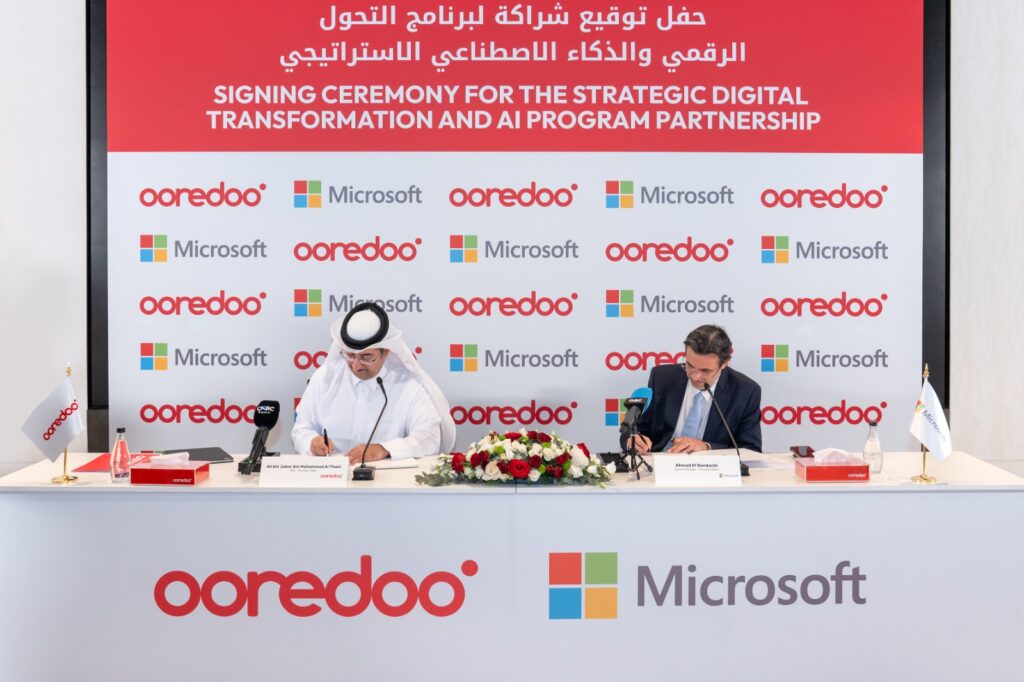
In Collaboration with Microsoft, Ooredoo is Shaping the Next Era of AI-Powered Connectivity and Digital Innovation Ooredoo Qatar has announced the launch of its Strategic Digital & AI Transformation Programme, supported by Microsoft, marking a major step in the company’s evolution into an AI-powered organisation and reinforcing Qatar’s ambition to build a future-ready digital economy. The programme has been designed to accelerate Ooredoo’s digital transformation at scale by focusing on sovereign and hybrid cloud capabilities, artificial intelligence enablement, and the development of a scalable digital foundation. Through this initiative, Ooredoo aims to enhance customer experiences, empower enterprises with advanced digital tools, and contribute to the growth of a resilient digital ecosystem aligned with Qatar National Vision 2030. The agreement was signed by Sheikh Ali bin Jabor bin Mohammad Al Thani, Chief Executive Officer of Ooredoo Qatar, and Ahmad El Dandachi, General Manager of Microsoft Qatar, in the presence of senior executives and representatives from both organisations. A Major Step in Qatar’s AI and Digital Transformation Journey The collaboration brought together Ooredoo’s advanced connectivity and digital infrastructure capabilities with Microsoft’s expertise in cloud, data, and artificial intelligence. The partnership aimed to create a strong foundation for the accelerated adoption of AI across telecom operations, customer engagement, enterprise solutions, and future digital platforms. For Qatar’s telecommunications and business sectors, the programme represented more than a technology upgrade. It reflected a broader shift towards AI-driven operations, intelligent infrastructure, and digital-first services that could strengthen competitiveness across industries. The initiative was expected to support Ooredoo’s transformation across its entire value chain, from intelligent network operations and predictive optimisation to personalised customer experiences and AI-powered enterprise services. This positioned Ooredoo to move beyond the traditional role of a telecom operator and further establish itself as a technology-driven company serving Qatar’s evolving digital economy. Supporting Businesses and Customers in Qatar As companies across Qatar continued to adopt cloud, data, and AI-powered solutions, Ooredoo’s collaboration with Microsoft aimed to provide businesses with stronger digital capabilities and scalable technology frameworks. The programme focused on enabling smarter enterprise services, improving operational efficiency, and delivering more proactive digital solutions to customers. For businesses in Qatar, this could mean improved access to advanced AI-enabled services, stronger connectivity solutions, and new opportunities to innovate in areas such as customer service, automation, analytics, and digital platforms. The collaboration also established a long-term co-innovation model between Ooredoo and Microsoft. This model was designed to support the development of scalable AI use cases and repeatable innovation frameworks powered by Microsoft’s advanced AI, cloud, and data technologies. Ooredoo Qatar CEO: A Strategic Transformation, Not Just a Technology Upgrade Commenting on the collaboration, Sheikh Ali bin Jabor bin Mohammad Al Thani, CEO of Ooredoo Qatar, said the Strategic Digital & AI Transformation Programme marked an important milestone in Ooredoo Qatar’s journey towards becoming a more agile and future-ready organisation. He described the programme as more than a technology upgrade, calling it a strategic transformation focused on sovereign and hybrid cloud capabilities, AI enablement, and the development of a scalable digital foundation. He added that the programme was designed to deliver innovative digital solutions and services that meet evolving market demands, provide more personalised and proactive customer experiences, empower enterprises with advanced digital capabilities, and support the development of a resilient digital ecosystem aligned with Qatar National Vision 2030. Microsoft Qatar: AI Can Unlock New Opportunities Across Industries Ahmad El Dandachi, General Manager of Microsoft Qatar, said Ooredoo’s transformation into an AI-powered organisation was a strong example of how technology could unlock new opportunities across industries. He noted that the collaboration brought together cloud, data, and AI to help accelerate innovation at scale, while supporting the development of a more resilient and dynamic digital ecosystem in Qatar. Strengthening Qatar’s Digital Economy The Ooredoo-Microsoft collaboration came at a time when Qatar continued to position itself as a regional leader in digital transformation, AI adoption, cloud infrastructure, and future-ready business innovation. By investing in sovereign and hybrid cloud capabilities, AI-enabled telecom operations, and scalable digital platforms, Ooredoo’s programme could play a key role in supporting Qatar’s digital economy and helping enterprises prepare for the next phase of technological growth. The partnership also reflected the growing importance of AI in Qatar’s business landscape, especially as organisations looked for smarter ways to improve efficiency, enhance customer engagement, and build more resilient operating models. Through this collaboration, Ooredoo and Microsoft aimed to accelerate the adoption of AI-driven technologies across connectivity, operations, customer engagement, and enterprise services, helping shape a more agile and innovation-led digital future for Qatar and the wider region.
Snoonu Invests in Qatari Startup HASIF Through Startup Factory Initiative
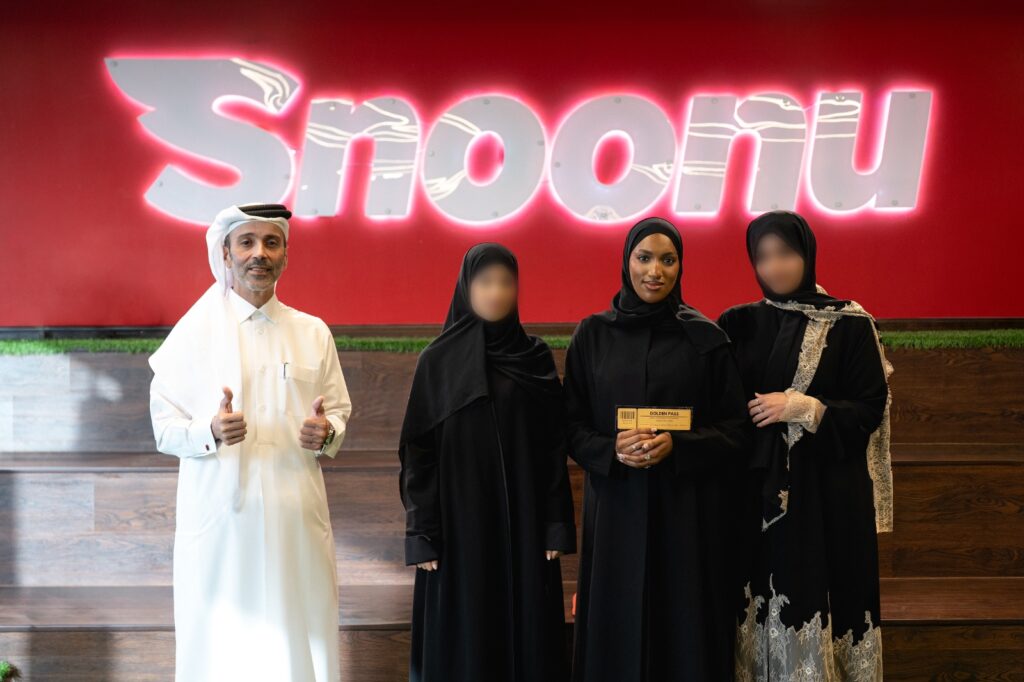
Snoonu has announced its investment in HASIF, a Qatari startup focused on smart accounting and financial compliance solutions for small and medium-sized enterprises (SMEs), as part of the company’s Startup Factory initiative designed to empower entrepreneurs and accelerate innovation in Qatar. The investment follows the successful Startup Factory competition and showcase held in Doha last week, where emerging startups presented technology-driven solutions addressing key business and market challenges across multiple sectors. Founded by Qatar University graduates and young Qatari entrepreneurs Noof Alhbabi, Maryam Eisa, and Dana Alwadaani, HASIF is developing an AI-powered digital platform to simplify financial operations for SMEs. The platform enables businesses to manage accounting, invoicing, financial reporting, and compliance processes more efficiently through automation and intelligent financial tools. In addition to streamlining operations, HASIF connects companies with accounting professionals and helps businesses prepare for future VAT implementation and evolving digital compliance requirements in Qatar and across the region. The investment marks the second startup supported through the Snoonu Startup Factory initiative, following the company’s earlier investment in Sufra AI. The move reflects Snoonu’s broader strategy to strengthen Qatar’s startup ecosystem, support local talent, and contribute to the country’s transition toward a knowledge-based economy aligned with Qatar National Vision 2030. As Qatar continues to position itself as a regional hub for entrepreneurship, technology, and innovation, initiatives such as Startup Factory are playing an increasingly important role in creating opportunities for young founders and in scaling homegrown businesses that address real market needs. The latest investment also highlights growing momentum in Qatar’s startup landscape, particularly in fintech, AI, and SME-focused digital solutions — sectors expected to continue growing as businesses across the Gulf accelerate digital transformation and compliance modernisation. With startups like HASIF entering the spotlight, Qatar’s entrepreneurial ecosystem continues to demonstrate its ability to produce scalable, innovation-driven companies with regional potential.
Qatar Unveils Major Tech & Investment Reforms as Prime Minister Opens Web Summit Qatar 2026

Qatar’s ambition to become a leading global technology and innovation hub accelerated yesterday as HE Sheikh Mohammed bin Abdulrahman bin Jassim Al Thani, Prime Minister and Minister of Foreign Affairs, officially inaugurated the third edition of Web Summit Qatar, the MENA region’s fastest-growing technology event. The summit runs until 4 February at the Doha Exhibition and Convention Center, gathering global tech leaders, investors, founders, and policymakers. The opening ceremony marked a milestone moment for Qatar’s digital transformation agenda, with the government announcing a series of high-impact initiatives designed to expand the nation’s technology, entrepreneurship, AI, and investment ecosystems. USD 2 Billion Expansion of the Fund of Funds Programme In one of the summit’s most significant announcements, Qatar confirmed a USD 2 billion expansion of its national Fund of Funds programme, which supports venture capital firms and high-growth startups across strategic sectors. This expansion strengthens Qatar’s position as a global capital hub and sends a clear signal to international investors seeking a stable, innovation-driven market. 10-Year Residency for Entrepreneurs & Executives Qatar also announced a long-term 10-year residency scheme for: This new visa category aims to attract world-class talent and incentivise founders to build and scale their companies from Qatar — a major step in advancing the country’s competitiveness on the global innovation map. Faster, Simplified Company Registration As part of ongoing reforms to improve the ease of doing business, Qatar introduced accelerated company registration procedures, enabling startups and investors to establish operations faster and more efficiently. These improvements reinforce Qatar’s goal of becoming one of the world’s most business-friendly jurisdictions, especially for early-stage and scaling companies. Launch of Qai — Qatar’s National AI Company Another headline announcement was the launch of Qai, Qatar’s new national AI company, signalling a powerful move to position the nation at the center of global AI development. Qai will focus on: The initiative aligns with Qatar’s broader national strategy to integrate AI across education, industry, energy, healthcare, mobility, and smart cities. A Transformational Edition of Web Summit Qatar With thousands of global delegates, investors, and startups converging in Doha, Web Summit Qatar 2026 is on track to become the region’s most influential gathering for: This year’s edition cements Qatar’s rise as one of the world’s most dynamic markets for entrepreneurship, digital transformation, and investment.
QIA and Goldman Sachs Sign Landmark MoU Targeting $25 Billion Investment, Strengthening Qatar’s Global Financial Influence
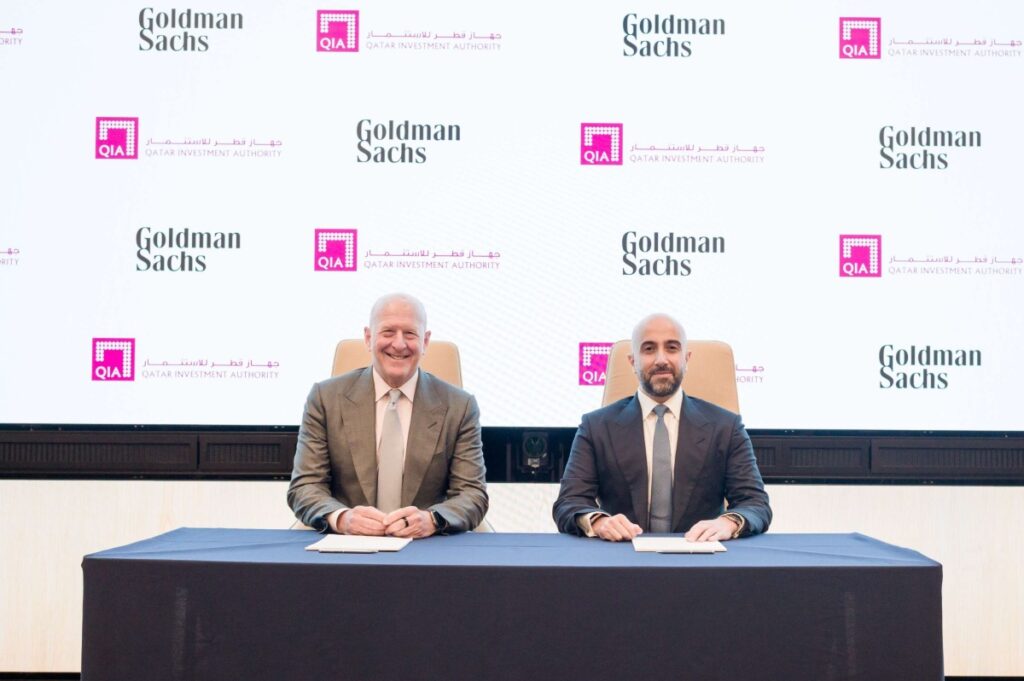
In one of the most significant financial announcements of 2026, the Qatar Investment Authority (QIA) and Goldman Sachs Asset Management have signed a major Memorandum of Understanding (MoU) aimed at expanding their strategic partnership and unlocking a combined investment target of $25 billion. The agreement marks a pivotal moment for Qatar’s growing stature as a regional and global financial hub, reinforcing the nation’s long-term strategy to drive economic diversification, attract foreign investment, and strengthen private-sector growth. According to a statement released by QIA, the sovereign wealth fund intends to commit capital across Goldman Sachs’ flagship funds, innovative alternative investment strategies, and selected co-investment opportunities. The partnership expands QIA’s role as an anchor investor across multiple Goldman Sachs Asset Management platforms, giving Qatar preferential access to global deal flow in future-forward sectors, including: This move solidifies Qatar’s position as a leading institutional investor in high-growth global markets. As part of the expanded cooperation, Goldman Sachs will enhance its presence in Doha, building out its capabilities as a strategic asset management hub for the region. Through its global Value Accelerator network, Goldman Sachs will support Qatar in: This partnership aligns closely with Qatar’s ambitions to become a regional leader in alternative investments, innovation-led industries, and financial services. Commenting on the agreement, Mohammed Saif Al Sowaidi, CEO of QIA, highlighted the strategic importance of the collaboration: “QIA is pleased to partner with Goldman Sachs in this landmark agreement. It provides QIA with premium deal flow in sectors critical to our investment strategy, including AI, fintech, digital infrastructure and private credit. This partnership extends beyond capital deployment and reinforces Doha’s position as a regional financial center.” He further noted that Goldman Sachs’ commitment to expanding its Doha presence will support job creation, specialized skills development, and long-term economic value for Qatar. David Solomon, Chairman and CEO of Goldman Sachs, emphasized Qatar’s strong momentum: “Qatar is on an exciting path of economic diversification, developing its capital markets, strengthening its talent base, and expanding its ecosystem of national champions. This creates substantial opportunity to widen Qatar’s global connectivity and impact as a multi-faceted investment partner.” Goldman Sachs stands among the world’s leading alternative investment managers, with: Its Value Accelerator Network will now work closely with Qatari institutions and the wider ecosystem to build enduring, globally competitive businesses. The QIA–Goldman Sachs MoU represents more than a financial partnership—it positions Doha as a rising global center for asset management, sovereign investment, and cross-border financial collaboration. With a $25 billion target fueling this strategic alliance, Qatar is poised to accelerate high-impact investments and strengthen its role in shaping the future of global finance.
ROBOTECH 26
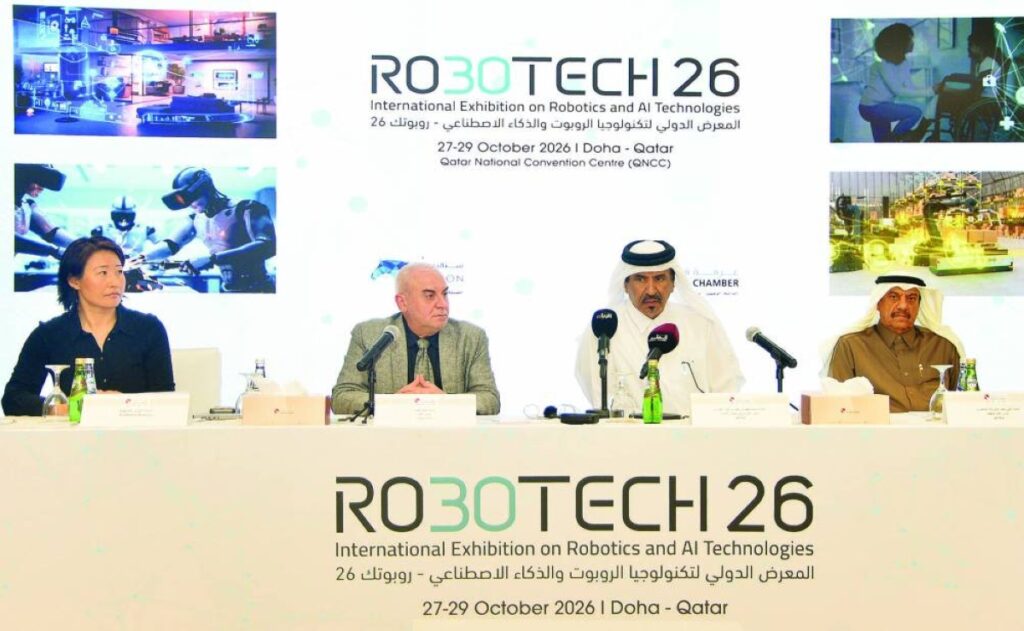
Positioning Qatar as a Regional Hub for Advanced Technology Investment Qatar is set to strengthen its leadership in advanced technology and digital innovation with the launch of ROBOTECH 26, the international exhibition dedicated to robotics, artificial intelligence, and emerging technologies. The landmark event will take place in Doha from 27–29 October 2026, bringing together global innovators, investors, policymakers, and industry leaders. Aligned with Qatar National Vision 2030 and the Digital Agenda 2030, ROBOTECH 26 reflects the country’s strategic focus on building a resilient digital economy and expanding long-term capabilities in artificial intelligence, robotics, automation, and smart technologies. A Strategic Platform for Innovation and Investment ROBOTECH 26 is designed as a high-impact platform to attract regional and international technology investment, foster cross-border partnerships, and accelerate the adoption of next-generation technologies across key sectors. With participation from more than 200 specialised companies, the exhibition will showcase cutting-edge solutions spanning: The event will offer live demonstrations, hands-on technology experiences, expert panels, and business matchmaking—enabling stakeholders to explore both the opportunities and challenges shaping the future of AI and robotics. Leadership Perspectives Speaking at the official press conference, Haitham Shehab, General Manager of the organising company Stallion, highlighted the significance of hosting the first edition of ROBOTECH in Qatar. He noted that the exhibition creates a rare opportunity for businesses, professionals, and the wider community to engage directly with robotics and AI technologies, discuss real-world applications, and address both the positive and critical dimensions of artificial intelligence alongside global experts. Shehab also emphasised Qatar’s rapid progress under the Digital Agenda 2030, underscoring the importance of transforming toward digital platforms and knowledge-based industries as core drivers of sustainable economic growth. Global Participation and Knowledge Exchange ROBOTECH 26 will welcome international pavilions and country-led delegations, positioning Doha as a convening point for global technology leaders. The exhibition is open to companies from across the world specialising in AI, robotics, automation, and advanced digital systems—ensuring strong international representation alongside Qatari innovators. A dedicated education pavilion will feature universities, research centres, and academic institutions, reinforcing Qatar’s commitment to talent development, research, and future-ready skills in advanced technologies. Qatar’s Growing Digital Competitiveness Qatar’s hosting of ROBOTECH 26 builds on its rising global standing in digital performance. In 2025, Qatar ranked among the top 20 countries worldwide in the World Digital Competitiveness Ranking published by the International Institute for Management Development (IMD), reflecting strong progress in technology adoption, infrastructure, and innovation readiness. Globally, the artificial intelligence market continues to expand at unprecedented scale, with projections estimating growth towards USD 826 billion by 2030, while the global robotics market is expected to exceed USD 189 billion by 2027. ROBOTECH 26 arrives at a critical moment, positioning Qatar at the forefront of this transformation. Driving the Future from Doha Drawing parallels with Qatar’s successful hosting of the FIFA World Cup Qatar 2022, organisers believe ROBOTECH 26 will further demonstrate the country’s capability to lead large-scale, high-impact international initiatives—this time within the technology and innovation landscape. By bringing together government entities, global technology leaders, investors, educators, and entrepreneurs, ROBOTECH 26 is set to play a defining role in establishing Doha as the GCC’s next hub for artificial intelligence, robotics, and advanced technology investment.
MCIT Renews Its Framework Agreement with Google Cloud at MWC25 Doha, Strengthening Qatar’s Digital Transformation Agenda
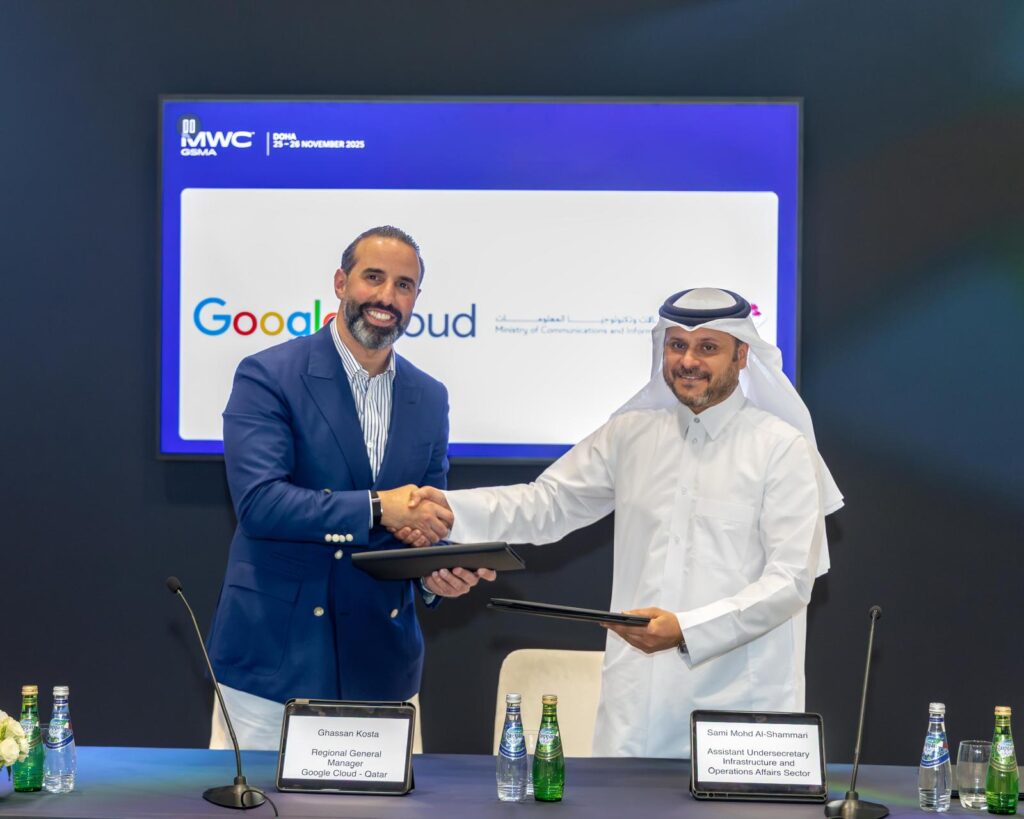
• Renewal of the Ministry of Communications and Information Technology’s (MCIT) master framework agreement with Google Cloud announced at MWC25 Doha• Agreement enhances secure cloud computing, AI integration, and data-driven government services across Qatar The Ministry of Communications and Information Technology (MCIT) has officially renewed its strategic framework agreement with Google Cloud during MWC25 Doha, reinforcing Qatar’s commitment to accelerating digital transformation and building a world-leading smart government ecosystem. The renewed agreement empowers Qatar’s government entities to continue adopting secure cloud solutions, generative AI technologies, and advanced data analytics, all supported by Google Cloud’s local region in Doha. This collaboration strengthens operational efficiency, ensures resilient digital infrastructure, and enhances public service delivery in alignment with Qatar National Vision 2030 and the country’s Digital Agenda 2030. Mr Sami Mohammed Al Shammari, Assistant Undersecretary for Infrastructure and Operations Affairs at MCIT, and Mr Ghassan Kosta, Regional General Manager for Google Cloud across Qatar, Oman, Bahrain, and Iraq, signed the agreement. Driving Qatar’s Next Era of Digital Government Commenting on the renewed collaboration,Mr Sami Mohammed Al Shammari stated: “Our reinforced collaboration with Google Cloud has been instrumental in advancing Qatar’s digital landscape. Today, I am pleased to announce the renewal of this critical framework agreement at MWC25 Doha. This action is a clear testament to our successful partnership and Google Cloud’s tangible contributions to our nation’s technological advancement. By providing cutting-edge, secure cloud solutions—particularly in AI and data analytics—we are empowering government entities to enhance services, drive efficiency, and accelerate digital progress across all sectors. We look forward to continuing this fruitful partnership as we build Qatar’s digital future and realise the ambitious goals of Qatar National Vision 2030.” Google Cloud: A Strategic Partner in National Digital Transformation Mr Ghassan Kosta emphasised Google Cloud’s long-term commitment to Qatar: “We are deeply honoured and strategically committed to the renewal of our Master Framework Agreement with MCIT. Announcing this alliance at MWC25 Doha is a defining moment. MCIT’s continued confidence in Google Cloud—delivered through our local Doha region—affirms the unmatched value of our intelligent cloud infrastructure. From AI to robust security, we are committed to accelerating Qatar’s digital transformation, empowering public services, and supporting its dynamic, knowledge-based economy.” Building a Future-Ready Digital Ecosystem This renewed partnership is one of several high-impact digital initiatives unveiled during MWC25 Doha, all aimed at strengthening Qatar’s position as a leading regional hub for innovation, cloud technology, and AI adoption. MCIT continues to drive the development of an integrated national digital ecosystem, ensuring government entities have access to the best tools, global expertise, and world-class cloud infrastructure needed to deliver efficient, scalable, and citizen-centric services.
Qatar’s MCIT and GSMA Advance Partner to Accelerate National Digital Skills Development
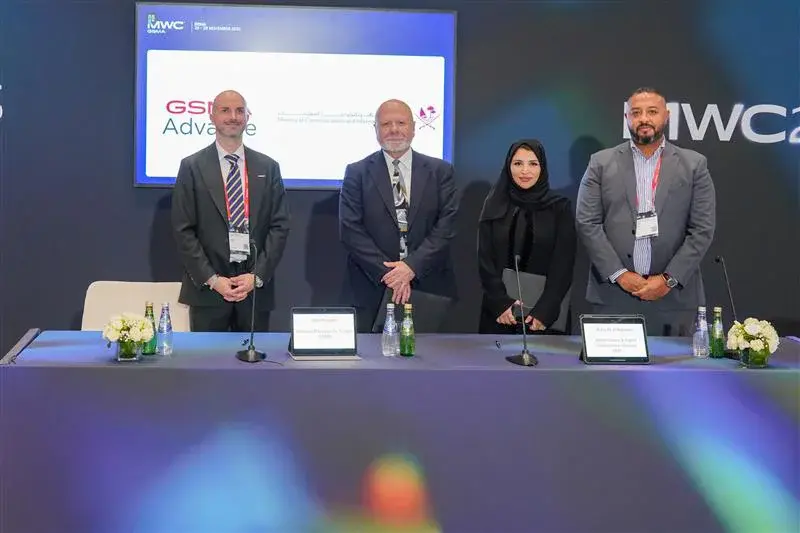
The Ministry of Communications and Information Technology (MCIT) has announced a landmark five-year partnership initiative with GSMA Advance to strengthen Qatar’s digital workforce and accelerate the country’s digital transformation. The collaboration supports the Qatar Digital Academy (QDA) and aligns directly with the nation’s Digital Agenda 2030. As Qatar drives toward a knowledge-based economy, the Digital Agenda outlines an ambitious plan to create 26,000 new ICT jobs and generate an additional 40 billion QAR in economic value by 2030. Strengthening digital competency across the workforce is central to this mission. Empowering Qatar’s Workforce Through Advanced Digital Skills Under the new partnership, GSMA Advance — the global mobile industry’s training and skills division — will deliver enhanced, accredited education programs for QDA participants. These programs will feature flexible learning pathways spanning in-person, virtual, and blended formats, ensuring accessibility for professionals across sectors. As part of the collaboration, the QDA will join the GSMA Advance People Excellence Partner Programme, co-designing innovative training modules to cultivate next-generation expertise in technology, connectivity, and digital innovation. A Strategic Move Towards Qatar’s Digital Future Duha Al Buhendi, Director of Digital Society and Digital Competencies at MCIT, emphasized the initiative’s national importance: “The partnership with GSMA Advance strengthens Qatar Digital Academy’s efforts in developing competencies and promoting continuous learning. We aim to empower our workforce with the latest technological skills to drive innovation and achieve the objectives of the Digital Agenda 2030, reinforcing Qatar’s position as a regional hub for digital excellence.” Dr. Drew MacFarlane, Head of GSMA Advance, highlighted the transformative impact of the programme: “Alongside MWC Doha, GSMA Advance’s partnership with the QDA will help create a long-lasting legacy for the country, aligned with Qatar’s Digital Agenda 2030. By equipping the country’s ICT workforce with the latest digital skills and knowledge, we will further drive digital transformation and economic growth.” Driving Innovation, Competitiveness, and Inclusive Growth Through the partnership, GSMA Advance will bring world-class training methodologies informed by the GSMA’s global leadership in telecom policy, standards, and technological innovation. With a portfolio of expert-led, sector-specific accreditations, GSMA Advance aims to bridge skills gaps, nurture innovation, and foster workplace diversity. The initiative strengthens Qatar’s position as a digital leader in the region — empowering professionals, enabling industry excellence, and supporting the nation’s long-term transformation into a globally competitive digital hub.