

GSMA MWC26 Doha: New agenda-setting speaker and exhibitor line-up revealed
The GSMA has announced an agenda-setting speaker and exhibitor line-up for MWC26 Doha, MENA’s premier connectivity event, which returns to the Doha Exhibition and Convention Center (DECC) on 8-10 November 2026, co-located with the opening days of ITU’s Plenipotentiary Conference (PP-26). The second edition of MWC26 Doha will bring together leaders in 5G, AI, digital infrastructure and policy to define the region’s next phase of connectivity and digital transformation. The programme will feature voices from AI, policy, satellite and digital infrastructure, with speakers from BYD, Es’hailSat – Qatar Satellite Company, Eutelsat Group, ITU, Khalifa University, Napster, Nokia, Oliver Wyman, Ooredoo Group, SAMENA Telecommunications Council, VEON, and Vora. In addition, exhibitors and sponsors – from operators, cloud and AI leaders, to security specialists, satellite providers and infrastructure companies – include Accenture, Cisco Systems, Ericsson, Fadaat Media, Fortinet, Google Cloud, Huawei Technologies, MEEZA, Microsoft Doha, PwC, Qatar University, Scale AI, Strategy&, Trend Micro, and Vodafone Qatar. Vivek Badrinath, Director General, GSMA, said: “As the international connectivity community gathers in Doha for the co-located MWC26 Doha and ITU PP-26, the city will become a focal point for global dialogue on connectivity, AI and digital transformation. Across MENA, momentum around AI, advanced networks and digital infrastructure is accelerating, creating new opportunities for economic growth and societal impact. MWC26 Doha will showcase this progress and foster the partnerships needed Setting the agenda for the IQ Era The MWC agenda will be anchored around The IQ Era, with programme themes that reflect the issues now shaping boardroom and policy conversations across MENA and beyond: AI in Action: Practical AI deployment, from intelligent data centres and AI-ready networks to connected healthcare and new productivity models. Intelligent Economies: How governments and businesses can use technology to support competitiveness, inclusion and national transformation. Connected Infrastructure: The networks, satellite systems and secure digital infrastructure required to support resilient regional growth. In partnership with Qatar’s Ministry of Communications and Information Technology (MCIT), MWC26 Doha will build on a debut edition in 2025 that drew more than 9,000 attendees from 110 countries and territories. GSMA and the International Telecommunication Union (ITU) joining forces MWC26 Doha will run alongside the opening days of the ITU Plenipotentiary Conference (PP-26). Together, they bring industry leaders, policymakers and innovators together to explore critical digital issues transforming society. Separately, and in addition to its exhibition and conference programme, MWC26 Doha will also host the GSMA Ministerial Programme, convening ministers and regulators to shape the next phase of digital growth across the Middle East and beyond. Register now Registration for MWC26 Doha is now open. Media are invited to apply for an MWC Media Pass here and an ITU PP-26 accreditation here.
Qatar’s HMC Delivers 25 Million Healthcare Services in H1 2026

Hamad Medical Corporation (HMC) continued to expand and strengthen its healthcare services in the first half of 2026, with a focus on advanced care, digital transformation and greater access for patients. The latest figures highlight HMC’s central role in Qatar’s healthcare system and its continued investment in people and technology to deliver more integrated and sustainable healthcare. During the first six months of 2026, HMC provided 25 million healthcare services, including 1.5 million outpatient appointments, 40,000 surgical procedures, 700,000 cases treated across emergency departments and 50,000 home visits, according to statistics released by HMC on its social media platforms recently. According to HMC, the figures highlight the scale of its operations and its central role as Qatar’s primary public healthcare provider, supporting the country’s efforts to build a more sustainable and integrated healthcare system. “Hamad Medical Corporation’s key figures reflect the scale of its services and capabilities, highlighting its central role in Qatar’s healthcare system and its contribution to improving community health and quality of life, in support of the Third National Development Strategy,” it said. HMC oversees 14 hospitals, comprising specialist and community hospitals, in addition to the Ambulance Service and home care services. The corporation has around 30,000 employees, with 99 percent of its leadership positions held by Qataris. The healthcare provider said its continued investment in people, technology and advanced services is aimed at delivering high-quality care while improving the patient experience and strengthening community health. As part of its digital transformation, HMC provides patients with access to digital services, including health records covering up to 10 years. The Lbaih application has also reached 400,000 subscribers. HMC said the average waiting time for a first specialist appointment has been reduced significantly, from 58 days to 16 days. In the area of blood services, rare blood types are frozen and stored for up to 30 years to ensure their availability when needed. More than 400 blood donation campaigns have also been conducted during 2026. HMC said it is focused on providing high-quality care while continuing to invest in its people and technology to support more sustainable healthcare.
Parenting in the Age of AI: Navigating New Challenges
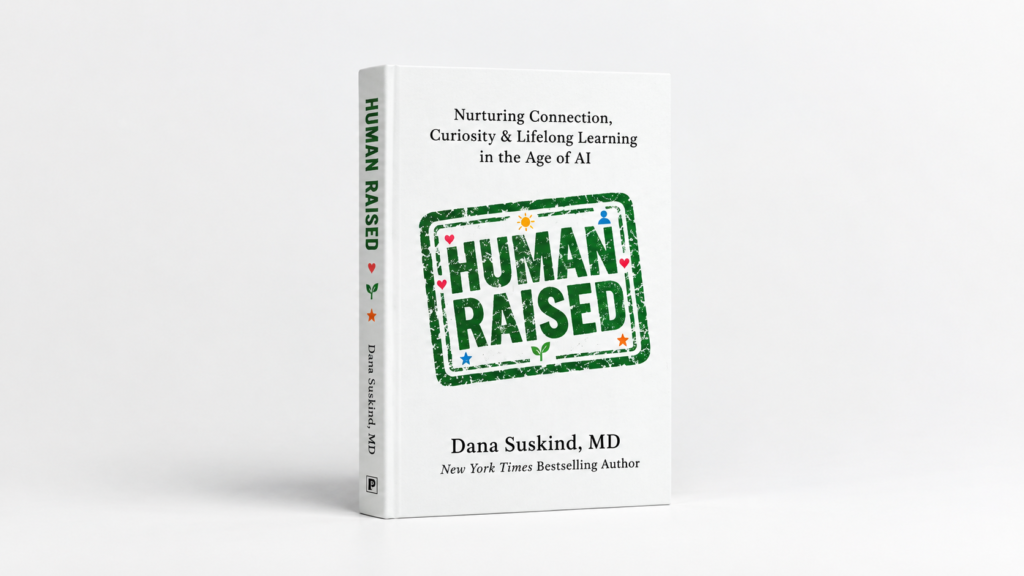
From New York Times bestselling author Dana Suskind, a timely, urgent guide to parenting in the age of artificial intelligence (AI) – and protecting what matters most in childhood As AI enters nurseries, playrooms, and classrooms, parents are being sold a “smart” childhood at every turn. This book is a guide to protecting the most important label of all: human raised. Dr. Suskind writes here to set forth some templates about how to keep your parenting (especially) guided toward making human connections, so that your children end up more human-focused than digitally guided people as adults. After all, the goal is not “good kids,” but adults capable of thriving in the world around them. Some folks will likely fault Dr. Suskind’s work because she does not come out flatly against using AI-tools in parenting, including exposing children to the products of AI. While there are valid ethical critiques of many AI-systems, she approaches the situation with the realism that says: “There will be AI, so how do we deal with it?” You have basic guidance on researching AI and what you should and should not use it for. There are several chapters first establishing the very real need for parents and caregivers to be human-first in their interactions with children. Suskind makes plain that imperfect human interaction far supersedes algorithmic perfection. Each chapter in this book ends with a helpful TLDR section, giving you, the reader, the main takeaways from each chapter. One should still read the chapters! However, life gets busy. You will see the value of each chapter as you check these chapters out. If you see this book on a bookstore shelf and want to know if it’s worthwhile, take a peek at any of those chapter endings. Finally, almost worth the price of purchase itself, she walks the reader through an investigative framework using DETEK as an acronym. This shows up in the body of the text starting in chapter 8, but then is helpfully pulled-out into an appendix for easy reference. FOUR GUIDING PRINCIPLES FOR RAISING CHILDREN ALONGSIDE AI Human connection is irreplaceable Own your imperfections Protect the early years Enhance don’t replace connection
Artefact and malomatia Host AI Connect Summit in Doha
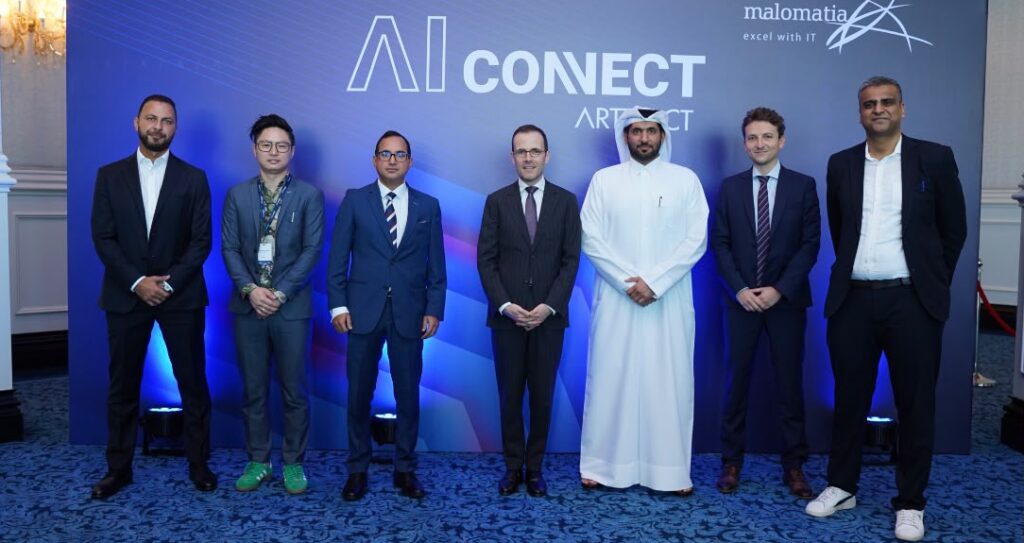
Artefact and Malomatia bring together Qatar’s public and private sector leaders to explore how AI is changing the way governments and businesses operate, make decisions, and redesign services. Artefact, a global leader in data and AI consulting, in partnership with malomatia, Qatar’s leading systems integrator and digital transformation provider, hosted the Artefact AI Connect Summit Doha 2026 at The Ritz-Carlton, Doha. The summit brought together senior government representatives and business leaders to examine how artificial intelligence is changing operations, decision-making, and service delivery across the public and private sectors. In his opening statement, H.E. Arnaud Pescheux, Ambassador of France to Qatar, said: “By bringing its global experience and AI expertise to Doha, Artefact is demonstrating how innovation can create new opportunities, new sources of value and strengthen strategic partnerships across the region. It also reflects the growing momentum of France-Qatar cooperation in technology and innovation fields.” Discussions focused on how AI can strengthen public-sector efficiency, support sound decision-making, and improve citizen services. Leaders also examined how AI is being applied across Qatar’s key industries to address practical opportunities and sector-specific challenges. Rahul Arya, CEO and Managing Partner, Artefact Middle East, Southeast Asia & India, said: “What stood out in Doha is the focus on moving from discussions about AI to where it can actually be put to work. Organizations are looking at practical questions around data, use cases and implementation. That is where Artefact’s experience can help. Artefact AI Connect Doha provided a space for those conversations, where we could share lessons from our work with organizations and hear the perspectives of leaders here in Qatar.” Artefact brings expertise across the data and AI transformation lifecycle, from AI strategy and governance and data foundations to advanced analytics, AI solutions, and deployment at scale. As Qatar’s trusted digital transformation partner, malomatia brings local knowledge and proven delivery capability to support practical and responsible AI adoption. Bassam Fadol, Chief Digital Services, malomatia said: “Our experience designing and running government systems in Qatar shapes how we approach AI. We start with who retains decision authority, where data is processed, and how the system stays correct when policies change. Our partnership with Artefact combines that experience with their data and AI expertise. We build the controls that make these systems trustworthy in everyday use. Our responsibility does not end at go-live.” The summit comes as Qatar accelerates investment in the infrastructure, capabilities, and partnerships required for a data- and AI-driven economy. Under Digital Agenda 2030, Qatar aims to generate approximately QAR 40 billion in cumulative economic impact and create 26,000 jobs in the ICT sector by 2030. Artefact has supported more than 1,000 clients globally. By combining this international experience with malomatia’s expertise as Qatar’s national IT leader, the partnership aims to help organizations identify practical use cases, implement appropriate solutions, and integrate AI responsibly into their operations.
AI is an organic part of businesses, not an add-on
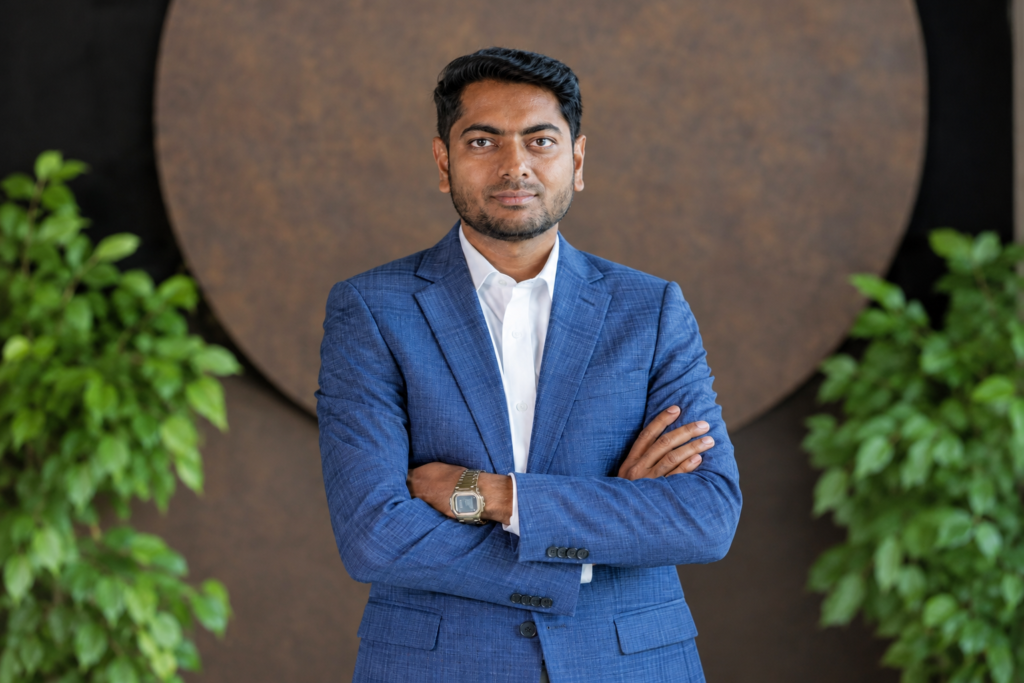
Saran B. Paramasivam, regional director, Middle East & Africa, Zoho, in conversation with Business Leaders ME, sheds light on a swathe of subjects – from productivity to decision intelligence, exploring how organisations across the Middle East are leveraging Artificial Intelligence (AI) to transform business operations, decision-making, and enterprise software, while maintaining responsible AI practices and governance. Paramasivam also examines AI adoption across enterprises and SMEs, regional trends, and the role of AI in supporting national digital transformation initiatives. “An assistant answers when asked. In contrast, an agent acts without being asked, within boundaries that are pre-set. That’s a meaningful shift, and it’s also where the risk conversation gets real. An assistant giving a wrong answer is a nuisance. An agent taking the wrong action, updating a record, sending a payment, changing a customer status, has actual consequences.” “We’ll see less talk about AI as a standalone feature and more about it as infrastructure, something that has to be governed, trusted, and verified, the same way we think about security or compliance today. And I think the businesses that win in this next phase won’t be the ones with the flashiest AI demo, they’ll be the ones who built AI on a foundation they can actually trust and control.” “My path has been unconventional by most standards. I joined Zoho straight out of high school in 2005 as the first student selected into what is now known as Zoho Schools of Learning, so no traditional degree, no conventional route in,” says Saran B. Paramasivam, regional director, Middle East & Africa, Zoho, commenting on his career path. Starting as a software developer, Paramasivam moved into product management, and spent a significant part of his career shaping Zoho Creator, the company’s low-code platform. That experience, according to Paramasivam, gave him a deep understanding of how businesses think about technology and what it takes to translate complex problems into real solutions. Over nearly two decades, Paramasivam’s role evolved across product, customer engagement, and strategy and that journey brought him to where he is today, leading Zoho’s business across the Middle East and Africa as its regional director. “I often say I did not just work for Zoho; I grew up with Zoho. And honestly, that depth of experience is what I bring into every market conversation across the MEA region,” asserts Paramasivam AI in day-to-day decision making of big businesses versus SMEs In the opinion of Paramasivam, for large enterprises, AI has already shifted from a nice-to-have to something embedded in daily decisions, forecasting, resource planning, customer response times. “The difference isn’t whether AI matters, it’s how it’s being adopted. Big businesses often have the budget and internal teams to build custom AI solutions. SMEs don’t have that luxury, so their AI adoption has to come built into the tools they’re already using, not as a separate investment. That’s actually the more interesting story right now: SMEs adopting AI isn’t about” catching up” to enterprise, it’s about accessing the same intelligence without needing enterprise-level resources to get there,” explains Paramasivam How, in Paramasivam’s view, is AI transforming modern business software and enterprise operations? Software used to be a tool one operated, explains Paramasivam. “Now it’s becoming something that operates alongside you. The shift is from static systems where a person has to pull a report, interpret it, and act, to systems that surface the insight and, increasingly, take the next step themselves. The businesses getting real value aren’t the ones bolting AI onto old workflows, they’re the ones rebuilding their operations around the assumption that AI is part of the process, not an add-on to it,” adds Paramasivam. The evolution from AI assistants to AI agents is something integral to Zoho. In the explanation of Paramasivam, an assistant answers when asked. In contrast, an agent acts without being asked, within boundaries that are pre-set. That’s a meaningful shift, and it’s also where the risk conversation gets real. An assistant giving a wrong answer is a nuisance. An agent taking the wrong action, updating a record, sending a payment, changing a customer status, has actual consequences. “So this evolution isn’t just a capability story, it’s a trust and governance story. The businesses moving fastest here are the ones building the guardrails at the same time as the capability, not after. That’s also why, as we build AI agents within Zoho, our approach is governance-first, not capability-first,” opines Paramasivam. Responsible AI strategies alongside privacy and governance The businesses doing this well are treating governance as part of the AI architecture, not a policy document sitting separately from it, explains Paramasivam. “That means permission layers that mirror the organisation’s actual structure, so AI only surfaces what a given person is already cleared to see. It means knowing exactly where data lives and who has access to it. And it means building recovery and accountability into the system from day one, not scrambling to add it after something goes wrong. Responsible AI isn’t a separate initiative from AI adoption, it has to be the same initiative,” mentions Paramasivam. In the region, what kind of evolution have businesses undergone to adopt AI into their day-to-day operations? In the opinion of Paramasivam, the shift being witnessed across the region is from AI being used for specific, isolated use cases to becoming embedded in everyday business operations. Companies are increasingly applying AI across functions, from customer service and sales to finance, HR, and operations, to improve productivity and decision-making. Government-led investment and national AI strategies have helped accelerate this adoption, but the bigger shift is happening at the business level: the conversation is moving from whether to adopt AI to where it can create the most value and how it can be integrated responsibly into the way people already work, describes Paramasivam In explaining the role AI will play in supporting the GCC’s digital transformation ambitions, Paramasivam says, “AI is the layer that makes a lot of the region’s broader digital transformation goals achievable at speed, not just on paper.
Education Above All Foundation and Place Vendôme Celebrate Olympic Day in Qatar

Education Above All Foundation and Place Vendôme Celebrate Olympic Day Through “Let’s Move for Education” Community Walk Education Above All Foundation, in collaboration with Place Vendôme, brought together youth, families, athletes, and community members for an indoor walk and jog celebrating movement, wellbeing, and youth empowerment in Qatar. Education Above All (EAA) Foundation, in collaboration with Place Vendôme, hosted Let’s Move for Education, a community movement activation held in celebration of Olympic Day 2026 and in support of the International Olympic Committee’s global Let’s Move campaign. The event brought together hundreds of participants, including youth, families, Team Qatar athletes, community members, partners, representatives of Education Above All Foundation and Place Vendôme, and invited guests, for an indoor community walk and jog at Place Vendôme Mall. Following a guided warm-up session, participants completed up to five laps around the mall, covering approximately five kilometres. The activation created an inclusive environment where people of different ages and abilities could participate at their own pace, reinforcing the message that every journey begins with a single step. Through its participation in the IOC’s Let’s Move campaign, Education Above All Foundation highlighted the role of sport as more than physical activity. Sport can help young people develop confidence, resilience, teamwork, leadership, and communication skills that support their growth inside and outside the classroom. The event also reflected EAA Foundation’s commitment to innovative partnerships that connect education, sport, and social development, while promoting active lifestyles and stronger community engagement in Qatar. Al Jazi Darwish, Director of Communications & Engagement at the Education Above All Foundation, said: “Sport has the power to bring people together and inspire young people to recognise their potential. Through Let’s Move for Education, we are proud to support a global movement that promotes active lifestyles, wellbeing, and community connection, while reinforcing our belief that education and sport can work together to empower young people and help them build the skills they need for life.” The event also built on EAA Foundation’s collaboration with Qatar Foundation and the International Olympic Committee through the Circle In initiative, which harnesses the power of sport to create safe and inclusive spaces that support learning, healing, and personal growth. Sanjay Mehta, Group Director of Marketing at United Developers, said: “We are pleased to collaborate with Education Above All Foundation in hosting Let’s Move for Education at Place Vendôme. This activation reflects our commitment to providing a welcoming community space where families, young people, and partners can come together to celebrate health, movement, and positive social engagement.” By bringing together sport, education, and community participation, Let’s Move for Education showcased Qatar’s commitment to inclusive community initiatives that promote healthy lifestyles, youth development, and social wellbeing. The activation further strengthens the role of community-focused partnerships in supporting Qatar’s broader social development goals, while positioning education and sport as powerful tools for empowerment, connection, and long-term impact.
AI Finance Startup GRO Establishes Doha Headquarters Following GrowthX Capital Investment
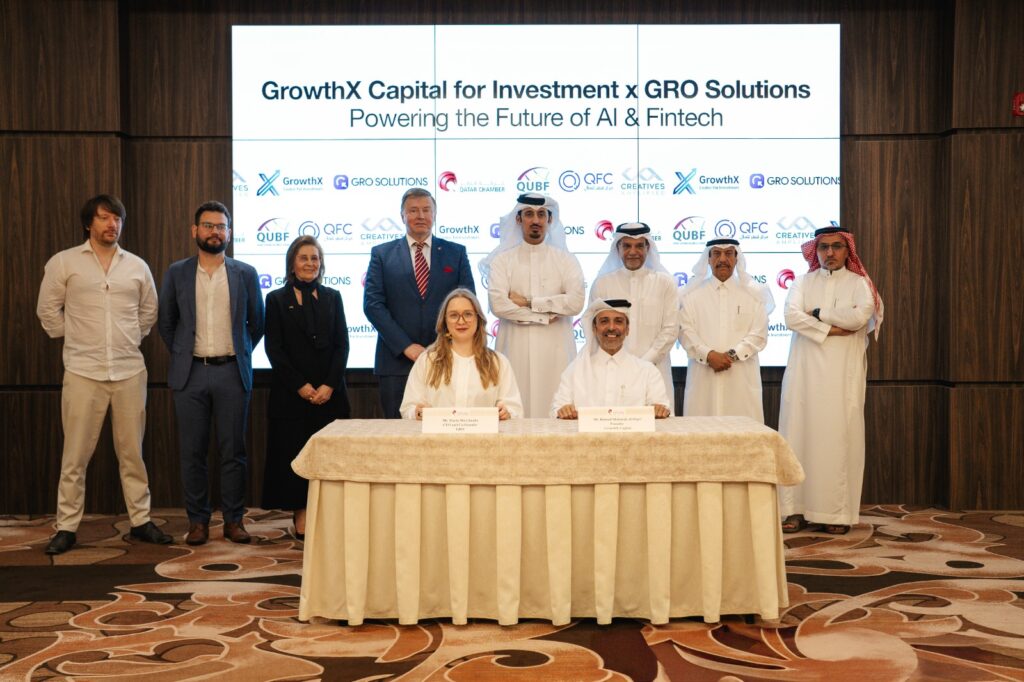
GRO, an emerging artificial intelligence-powered financial wellness platform, has selected Doha as its global headquarters following a pre-seed investment from GrowthX Capital, a newly launched venture capital fund founded by entrepreneur Hamad Al-Hajri. The announcement coincided with the unveiling of GrowthX Capital’s ambitious QAR 500 million investment strategy, aimed at supporting innovative startups and scale-ups over the next five years. The announcement was made during an event hosted at Qatar Chamber and attended by prominent figures from Qatar’s business, investment, and diplomatic communities. Among those present were Qatar Financial Centre (QFC) CEO Mansoor Rashid Al-Khater, Ukraine’s Ambassador to the State of Qatar H.E. Andrii Kuzmenko, and Dr. Olga Revina, Founder and Chairperson of the Qatar–Ukraine Business Forum (QUBF). The investment marks an important milestone for both GRO and Qatar’s growing startup ecosystem, reinforcing the country’s position as a destination for international founders seeking access to regional markets, investment capital, and innovation-driven growth opportunities. From FinTech Incubator to Regional Expansion GRO’s connection with Qatar began through its participation in the Qatar FinTech Hub (QFTH), an accelerator programme developed by Qatar Development Bank (QDB). The startup successfully completed the programme’s seventh cohort and gained recognition after securing the “Best Pitch” award during the final showcase. The achievement opened doors to conversations with investors and ecosystem partners, ultimately leading to support from GrowthX Capital and the company’s decision to anchor its operations in Doha. Founded by Mariia Shevchenko alongside a team of Ukrainian and German entrepreneurs, GRO is focused on leveraging artificial intelligence to simplify personal finance management and improve financial literacy among individuals and families. Redefining Financial Education Through AI The company’s platform combines AI-driven insights with financial education tools designed to help users better understand spending behaviour, improve budgeting habits, and make more informed financial decisions. According to Shevchenko, the vision behind GRO is to make financial knowledge accessible to a broader audience rather than limiting it to those with access to specialised expertise or financial advisers. As financial products and digital payment systems become increasingly sophisticated, GRO aims to equip users with practical tools that help them navigate their financial lives with greater confidence while developing long-term money management skills. Strengthening Qatar–Ukraine Innovation Cooperation GRO’s decision to establish its headquarters in Doha reflects a broader trend of growing collaboration between Qatar and Ukraine in technology, entrepreneurship, and innovation. Recent years have seen increasing engagement between stakeholders from both countries, with organisations such as the Qatar–Ukraine Business Forum actively working to create opportunities for startups, investors, and technology companies. The relationship gained further momentum following high-level diplomatic engagements and growing interest in cross-border innovation partnerships. Dr. Olga Revina noted that the investment demonstrates the strong potential for collaboration between Ukraine’s entrepreneurial talent and Qatar’s rapidly evolving innovation ecosystem. She highlighted the complementary strengths of both countries and the opportunities they create for building globally competitive businesses. Ukraine’s Ambassador to Qatar, H.E. Andrii Kuzmenko, also welcomed the development, describing it as an example of how innovation-driven partnerships can strengthen economic ties and create new opportunities for international cooperation. GrowthX Capital’s Vision for Startup Development The investment in GRO represents the first publicly announced venture backed by GrowthX Capital since the fund’s launch. Founded by Hamad Al-Hajri, the entrepreneur behind Qatar’s technology success story Snoonu, GrowthX Capital has been established to support founders building scalable businesses with regional and global ambitions. The fund plans to deploy up to QAR 500 million across promising ventures operating in sectors such as artificial intelligence, fintech, digital services, and emerging technologies. Al-Hajri expressed confidence in GRO’s growth potential, citing the strength of its leadership team, product vision, and market opportunity. He emphasised that the fund’s objective is to help high-potential startups scale from Qatar while contributing to the country’s innovation economy. Looking Ahead With its headquarters now established in Doha, GRO is preparing for the next phase of growth. The company has launched an early-access programme ahead of its beta release and is actively building partnerships across the financial services, education, and technology sectors. The move adds another international startup to Qatar’s expanding innovation landscape and reflects the country’s continued efforts to attract entrepreneurs, investment, and technology-driven businesses aligned with Qatar National Vision 2030. As Qatar continues to strengthen its position as a regional hub for startups and venture capital, investments such as GrowthX Capital’s backing of GRO highlight the growing confidence in the country’s ability to nurture globally relevant innovation from the heart of the Gulf.
Sidra Medicine and Zulal Wellness Resort by Chiva-Som Sign MoU to Elevate Wellness Programs
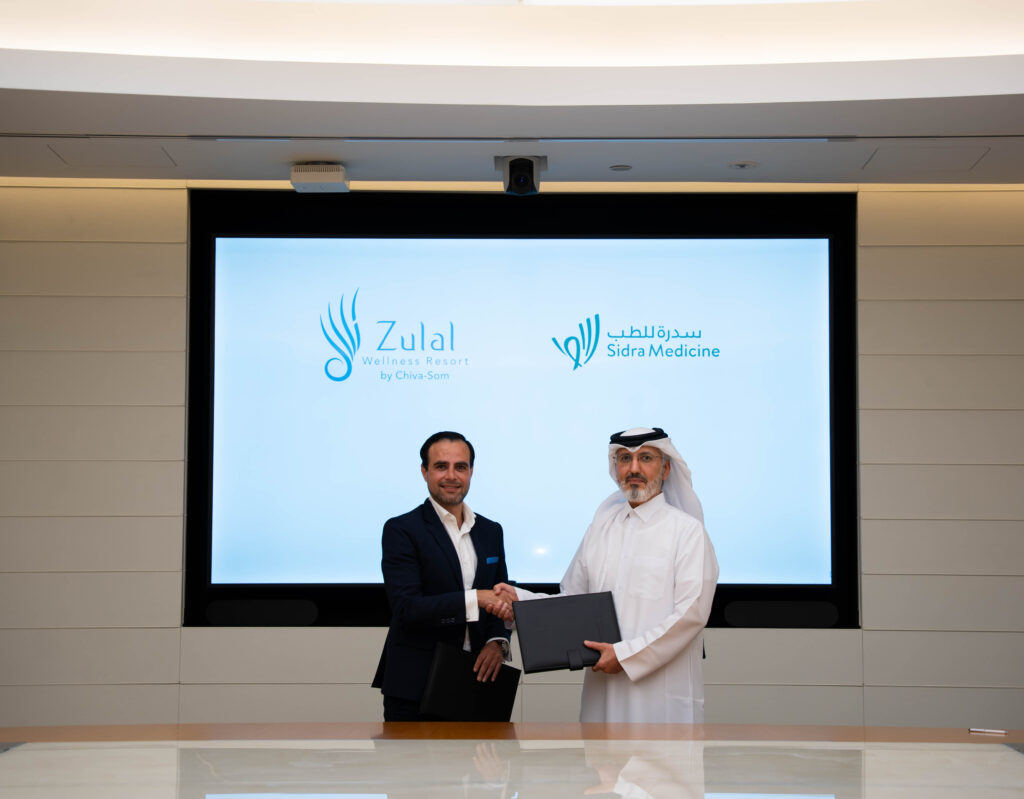
Partnership combines wellness expertise and medical excellence to create transformative health and recovery experiences Sidra Medicine and Zulal Wellness Resort by Chiva-Som, members of Qatar Foundation, officially signed a Memorandum of Understanding (MoU) to collaborate on the development of integrated wellness and preventive health programs. The signing ceremony on 1 June 2026, was attended by Mr. Mohammed Khalid Al Mana, Acting Chief Executive Officer and a Member of the Board of Governors at Sidra Medicine and Mr. Ammar Samad, General Manager of Zulal Wellness Resort by Chiva-Som. The collaboration aims to combine Sidra Medicine’s clinical expertise with Zulal Wellness Resort’s holistic wellness approach to create medically supported wellness and holistic wellbeing programs for Sidra Medicine’s patients. Through this partnership, both organisations will explore opportunities to introduce wellness-focused programs supported by clinical oversight; lifestyle and nutrition initiatives; diagnostic and preventive health services; as well as professional education and training programs. Being the first wellness resort dedicated to Traditional Arabic and Islamic Medicine (TAIM), the partnership with Zulal Wellness Resort will also seek to create a personalized range of wellness, therapeutic and lifestyle enhancement treatments; incorporating TAIM’s healing wisdom with Sidra Medicine’s state-of-the-art health services and therapies. Mr. Mohammed Khalid Al Mana, Acting Chief Executive Officer and a Member of the Board of Governors at Sidra Medicine, said: “Our partnership with Zulal Wellness Resort by Chiva-Som represents an important step in integrating clinical excellence with wellness innovation. By working together, we can further enhance patient and family wellbeing through comprehensive and personalized care experiences.” The first phase of the program, part of an expansion of Sidra Medicine’s Women’s Services, will include postpartum recovery experiences, mental and preventive health services, wellness education, referral pathways, and in-hospital wellness offerings. Mr. Ammar Samad, General Manager of Zulal Wellness Resort by Chiva-Som, said: “This collaboration reflects our shared vision of elevating wellness and preventive healthcare through a holistic and evidence-based approach, aligned with the goals of Qatar National Vision 2030. Together with Sidra Medicine, we aim to create meaningful wellness experiences that support long-term wellbeing for our guests and the wider community.” The MoU marks the beginning of a strategic collaboration focused on advancing wellness, recovery, and preventive healthcare offerings in Qatar while supporting innovation across both medical and wellness sectors.
Qatar Winter Sports Programme Continues with Public Activities in Doha

The Qatar Winter Sports Committee, in collaboration with Years of Culture, will continue the Qatar Canada and Mexico 2026 Year of Culture Winter Sports Development Programme with a new series of public activities at Ali Bin Hamad Al Attiyah Arena from 24 to 26 May 2026. The May programme will invite families, young people, sports enthusiasts, and members of the wider community to experience a range of winter sports, including curling, ice hockey, skating, and short track. The activities have been designed to introduce winter sports to the public in an accessible and welcoming environment, while strengthening connections between Canadian, Qatari, and expat communities in Doha. Launched in April, the Winter Sports Development Programme will run throughout 2026 as part of the Qatar Canada and Mexico 2026 Year of Culture. The initiative aims to expand participation in winter sports in Qatar by focusing on grassroots engagement, youth development, coach education, and competitive opportunities. The programme also highlights the role of sport as a platform for cultural exchange, community participation, and long-term collaboration between Qatar, Canada, and Mexico. Public Winter Sports Activities in Doha The three-day programme will begin with a Curling Open House on Sunday, 24 May 2026, from 4:00 PM at Ali Bin Hamad Al Attiyah Arena. The session will offer introductory curling experiences for all ages, giving members of the public the opportunity to learn more about the sport in a friendly and informal setting. On Monday, 25 May 2026, the arena will host the Canada–Qatar Expat Ice Hockey Series from 7:00 PM to 8:00 PM. Members of the public are invited to attend as spectators and experience the energy of ice hockey as part of the wider community sports programme. This will be followed by the Short Track & Skating Open House from 8:20 PM to 9:50 PM, offering open skating experiences and introducing participants to short track disciplines. The programme will conclude on Tuesday, 26 May 2026, with the Canadian–Qatar Expat Curling Game from 6:00 PM to 8:00 PM. The friendly curling matches will bring together Canadian, Qatari, and expat communities as part of the season-long programme. Teams of four may take part, with one captain required to register the team at the registration desk on the day. Open to the Public Registration and attendance are open to all at the venue. Activities will be held on a first-come, first-served basis, with rotating slots available throughout the sessions. The programme reflects Qatar’s growing commitment to expanding sports participation beyond traditional disciplines, while creating inclusive spaces for cultural exchange and community engagement. As Doha continues to host major sports and cultural initiatives, the Winter Sports Development Programme adds a distinctive dimension to Qatar’s year-round calendar of public activities. It also supports the broader objectives of the Years of Culture initiative by using sport to build stronger people-to-people connections and promote shared experiences. Further details on upcoming events will be announced through the Years of Culture website and official social media channels.
WISE Policy Dialogue Explores AI and Teacher Readiness in K–12 Education
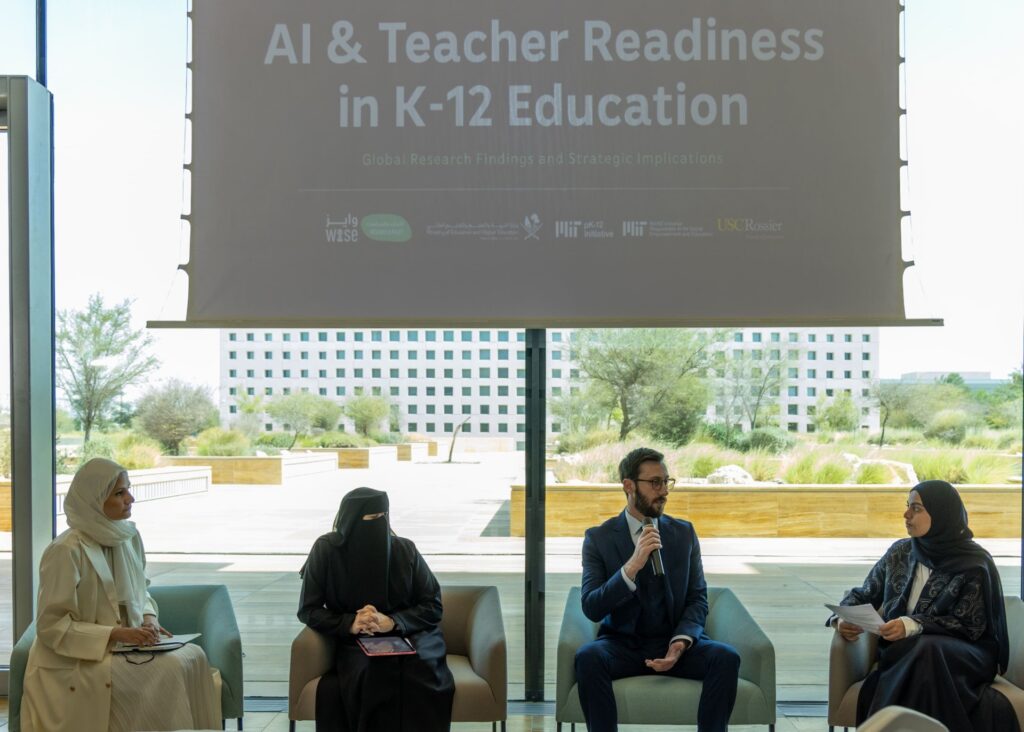
The World Innovation Summit for Education, WISE, an initiative of Qatar Foundation, hosted a policy dialogue event titled “AI & Teacher Readiness in K–12 Education: Global Research Findings and Strategic Implications”, bringing together education experts, policy voices and school practitioners to examine how artificial intelligence standards can be practically implemented in school environments. The discussion focused on one of the most urgent questions facing education systems today: how prepared are teachers to use AI meaningfully, responsibly and effectively in the classroom? As artificial intelligence continues to move rapidly into schools, the event highlighted the need for stronger teacher support, professional development, national evaluation frameworks and AI tools that reflect local language, culture and curriculum needs. AI Is Moving Faster Than Education Policy Opening the dialogue, Selma Talha-Jebril, WISE Research and Policy Director, said artificial intelligence is entering classrooms faster than schools and policy systems have had time to prepare for it. Her remarks set the tone for a discussion that moved beyond the excitement around AI and focused instead on implementation, readiness and long-term educational value. The event examined how teachers are currently engaging with AI, with many using it for administrative or preparatory tasks. However, panelists noted that the real opportunity lies in moving towards deeper, transformational classroom applications that directly support teaching, learning and student innovation. Teacher Agency and Professional Development Take Centre Stage Moderated by Maimoona Junjunia, Research and Policy Associate at WISE, the discussion emphasized the importance of teacher agency in the adoption of AI. Panelists stressed that AI in education cannot succeed through technology deployment alone. Teachers need sustained professional development, clear guidance, trusted tools and the confidence to integrate AI into pedagogy in ways that enhance learning outcomes. The dialogue also addressed the importance of evaluating AI tools rigorously before integrating them into schools at scale. In this context, national initiatives such as the WISE EdTech Testbed were highlighted as essential mechanisms for testing whether education technologies deliver real value in classroom environments. Shahd Dauleh, Innovation Manager at WISE, said the WISE testbed helps move the conversation beyond hype by ensuring that AI tools are genuinely effective for teaching and learning. AI Tools Must Reflect Language, Culture and Values A key theme emerging from the discussion was the need for AI systems in education to be contextually relevant. Lolwa Al-Nuaimi, Assistant Director of the E-Learning & Digital Solutions Department at the Ministry of Education and Higher Education, emphasized that for AI to succeed in education, it must reflect local language, culture and values while equipping teachers with the right tools. This point is particularly important for Qatar’s education sector, where strong digital infrastructure and national innovation ambitions have created a foundation for technology-led transformation. However, the discussion made clear that infrastructure alone is not enough. AI tools must be aligned with curricula, classroom realities, student needs and the cultural context in which learning takes place. Research Must Inform Policy and Practice The event also reinforced the broader purpose of the WISE Research & Policy Dialogue Series: ensuring that research findings do not remain confined to academic publications, but actively inform policy, practice and system-level decision-making. Selma Talha-Jebril noted that research only creates impact when it reaches the people with the power and responsibility to act on it. The dialogue series was positioned as a bridge between evidence, policy and education practice. This approach reflects a wider shift in education reform: moving from research as information to research as a tool for system transformation. From Classrooms to Innovation Labs Practical examples from schools offered a closer look at how AI can support student learning and innovation. Iyad Salameh, Teacher of Robotics and Automation at the Qatar Science and Technology Secondary School for Boys, shared how his students have used AI in hands-on projects. He noted that such projects show how students can use AI to build real-world solutions, turning classrooms into innovation labs. These examples highlighted the potential of AI to move beyond efficiency and automation. When implemented thoughtfully, AI can support creativity, problem-solving, applied learning and student-led innovation. For Qatar’s education ecosystem, this aligns closely with the country’s broader ambitions around digital transformation, innovation and future-ready skills. Qatar’s Teacher Readiness Gap One of the most important insights shared during the dialogue was the gap between teachers’ interest in AI and their understanding of how it works in education. According to Selma Talha-Jebril, WISE research found that 60% of teachers reported that AI helped them tailor instruction to meet diverse student needs. However, in Qatar, only 30% of surveyed teachers reported a strong understanding of how AI works in education. The finding points to a critical challenge for education systems: teachers are not necessarily resistant to AI, but many need tools, training and frameworks that are relevant to their classrooms. For Qatar, a country with advanced digital infrastructure and a strong national commitment to innovation, the opportunity is clear. The next phase of AI in education will depend not only on access to technology, but on building teacher confidence, capability and trust. Why It Matters The WISE policy dialogue placed teacher readiness at the centre of the AI education conversation. As AI becomes increasingly embedded in K–12 education, the success of these tools will depend on how well they serve teachers and students in real classroom settings. For Qatar, the discussion was especially significant. The country has invested heavily in education, digital infrastructure and innovation. The challenge now is to ensure that AI adoption in schools is guided by evidence, cultural relevance, teacher empowerment and measurable learning impact. The message from the dialogue was clear: AI can support the future of education, but only when teachers are prepared, supported and placed at the centre of the transformation.