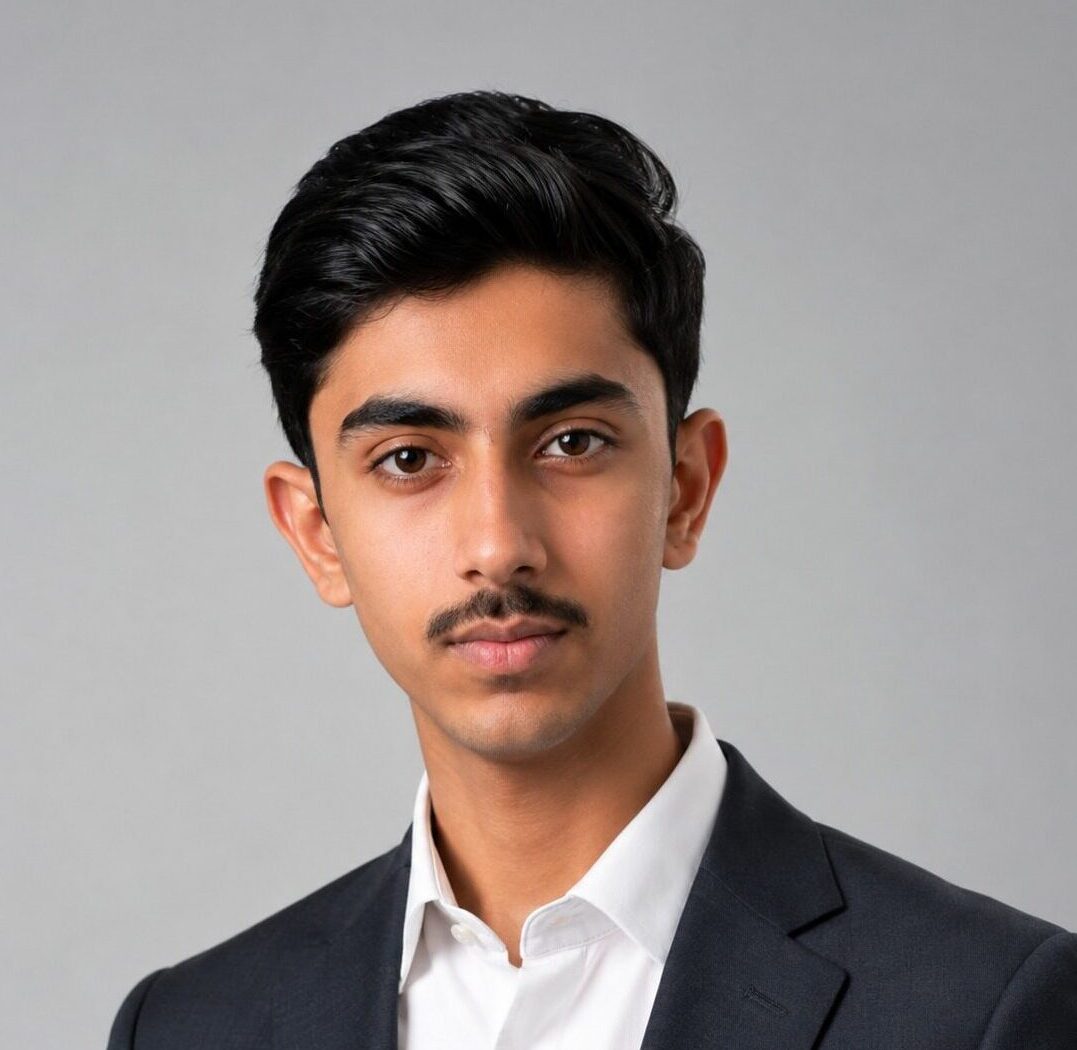

“I’ve learnt to work in whatever gaps I can find. If I have an hour, I’ll use it. If I have 20 minutes, I’ll use that too. I also try to separate the urgent from the important.”
Talk us through the inspiration that led to Thrust.
The inspiration for Thrust came from something that honestly felt a little ridiculous to me. I realised that booking a flight to another country could be easier than organising a game of sport with a few friends.
For a flight, I can open an app, choose where I want to go, pick a time, pay, and I’m done. But if I want to play a game of football, tennis or squash, suddenly I’m messaging five different people, trying to find a court, figuring out timings and hoping everyone is available.
And the funny thing was, all the pieces already existed. There were players who wanted to play, coaches who wanted students, and courts that had availability. They just weren’t connected.
That was the thought that led to Thrust: if we can make booking a flight this simple, why can’t we make playing a sport just as easy?
So I wanted to build one place that brings players, coaches and sports venues together and takes away all that unnecessary back-and-forth.
How do you manage your time and energy being a student and running Thrust?
I don’t. I negotiate with myself.
There are days when I have an exam the next morning, a school event, and someone from Thrust messaging me asking for something, and somehow all three expect me to believe they’re the priority.
I’ve learnt to work in whatever gaps I can find. If I have an hour, I’ll use it. If I have 20 minutes, I’ll use that too. I also try to separate the urgent from the important, because otherwise I’ll spend three hours answering messages and convince myself I’ve had a productive day.
And honestly, Thrust has become pretty good revision avoidance. Sometimes I’ll tell myself, I’ll just work on this for 20 minutes before studying… and suddenly it’s midnight.
So I wouldn’t say I’ve found the perfect balance. I’ve just become very good at convincing myself that there is one.
As a sports matchmaker, between players, coaches and courts, what has it taught you on logistics, negotiation and trying to match schedules?
Even with an app like Thrust, where the whole idea is to connect players, coaches and courts in one place, you first have to build trust.
When I started approaching coaches and venues, I was 15 and telling them about this platform I’d built. Naturally, some people were a little sceptical. Before asking someone to put their business onto your platform, you have to prove that you’re actually going to add value.
Then there is the interesting logistics problem on the venue side. A lot of sports courts don’t have automated booking systems. Someone might walk into a venue and book a court in person, while someone else is looking at Thrust and sees that same court as available.
So keeping what happens offline at the venue connected with what’s happening online on the app becomes a challenge.
That’s taught me that building a sports platform isn’t just about writing code. You have to understand how sports actually work on the ground and then figure out how technology can fit into that reality, rather than expecting everyone to change the way they already work.
Talk us through how it all works to eventually bring a sporting event on the ground.
I think the way I’d look at it is slightly different. Thrust isn’t really an event organiser. We’re the infrastructure that helps make the activity happen.
For example, if someone wants to play a game, they can use Thrust to find other players, discover a coach or find a venue. Instead of having to separately message people, call courts and figure everything out themselves, the idea is to bring those pieces together in one place.
So we’re not necessarily the ones running the event. We’re making it easier for the people who want to play to actually get on the court and play.
And that’s really what I want Thrust to become: not the organiser of every sporting activity, but the platform that makes organising it almost effortless.
How do you manage the manpower for running this venture?
In the beginning, it was pretty much just me cold calling and messaging coaches and venues. I’d explain Thrust, get ignored a few times, get “not interested” a few times, and then occasionally find someone who was willing to give it a shot.
As Thrust grew, I realised I couldn’t keep doing everything myself. I now work with a small team, including people older than me, who help with things like promotions and getting Thrust in front of more people.
That’s actually been an interesting experience. I’m still a student, so I’m working alongside people who have more professional experience than I do. I’ve had to learn that being the founder doesn’t mean I have to be the most experienced person in the room. If someone knows more about something than I do, I’d rather listen to them and learn.
At the same time, I still have to be comfortable making the final call when it’s my responsibility. I think that’s taught me a lot about leading people who may actually be older and more experienced than me.
Looking forward, where do you see Thrust in 2 years’ time?
In two years, I’d love Thrust to be the platform that comes to mind when someone thinks about playing sport.
Like, if you need to search for something, you instinctively think of Google. I’d love someone who wants to play a sport to instinctively think, I’ll check Thrust.
That obviously sounds ambitious, and I’m very aware we’re still a long way from that. But I’d rather set a goal that feels slightly crazy and work towards it than set one I already know we can reach.
I’d also like to see Thrust expand further across the Middle East, with a stronger team behind it and a much bigger network of players, coaches and venues.
I’m not expecting to have conquered sports in two years. But if we’ve built something that people across the region genuinely rely on to play, find a coach or find a venue, I’d be pretty happy.
I guess I’d rather shoot for the moon. Even if I miss, at least I’ll have aimed pretty high.