

Distilling Qatar Through the Lens: How Khalifa Al Obaidly Is Preserving a Nation’s Story Through Photography
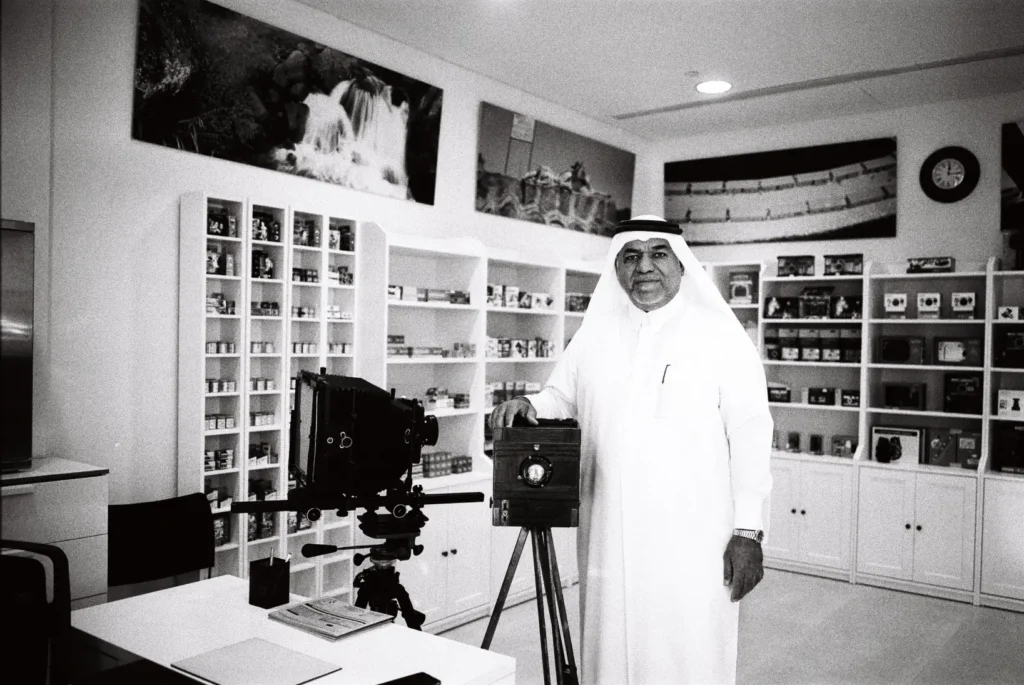
“The word camera came from the Arabic word Qumra, meaning room or chamber, discovered by Ibn Al Haytham.” — Khalifa Al Obaidly For Khalifa Al Obaidly, photography is far more than the art of taking pictures—it is a way of documenting history, preserving identity, and connecting generations. As Director of the Tasweer Qatar Photography Festival, photographer, marine biologist, educator and artist, Al Obaidly has spent decades capturing Qatar’s transformation while championing photography as a cultural language across the region. His remarkable journey mirrors Qatar’s own evolution—from humble beginnings to becoming a global centre for culture, creativity and innovation. From a Kodak Camera to a Lifelong Calling Al Obaidly’s passion for photography began long before museums, exhibitions and international festivals entered the picture. His father introduced him to photography while he was still in primary school, gifting him a Kodak 110 camera purchased from Souq Waqif during the 1970s. Soon, the young Khalifa became known as the unofficial photographer of his neighbourhood, documenting family gatherings, local celebrations and everyday life. What began as childhood curiosity gradually evolved into a serious passion during his years travelling with the Qatar National Volleyball Team, where photography became his constant companion. A defining moment arrived in 1989 while studying Marine Biology at Qatar University, when he joined the Qatar Photographic Society and learned from some of Qatar’s pioneering photographers, including Abdulrahman Obedan, Mohammed Al Manai and Hussain Al Jaber. Seeing Two Worlds: Above and Beneath the Sea Few photographers have experienced Qatar through as many perspectives as Al Obaidly. Working as a marine biologist at the National Museum of Qatar introduced him to underwater photography, where he developed a fascination with marine ecosystems and nocturnal diving. For him, the ocean represents an entirely different world—one that teaches patience, respect and observation. He explains that understanding underwater light, colour and marine behaviour transformed not only his photography but also his outlook on life. Watching species cooperate in perfect harmony beneath the sea became lessons in coexistence that extended far beyond photography. Building Qatar’s Cultural Memory Photography eventually led Al Obaidly into museum leadership. He established the photography department for the Museum of Islamic Art, documenting priceless collections under the direction of Sheikh Saoud Al Thani before helping develop the cultural narrative of Msheireb Museums. Later, at the Fire Station: Artist in Residence, he played a pivotal role in nurturing emerging artists while helping transform the institution into one of the region’s leading creative platforms. Today, alongside leading Tasweer Photo Festival, he continues mentoring photographers, teaching at university level and supporting Qatar’s growing creative economy. The Desert and the Sea: Two Landscapes, One Identity Ask Al Obaidly what inspires him most and the answer is simple: Qatar itself. Growing up by the sea left a lasting impression that later inspired projects documenting the country’s transition from pearl diving and fishing to a modern global economy. The desert, meanwhile, became a visual metaphor for resilience, adaptation and the enduring relationship between people and the land. Through both landscapes, his work tells the story of a nation that has embraced progress without losing sight of its heritage. Tasweer: More Than a Photography Festival For Al Obaidly, Tasweer represents something much larger than exhibitions. Founded in 2021 by HE Sheikha Al Mayassa bint Hamad Al Thani, Tasweer was created to support photographers and photographic art throughout the West Asia and North Africa (WANA) region. The biennial festival serves as a platform for exhibitions, grants, workshops, portfolio reviews, talks and competitions, bringing together established and emerging photographers while showcasing stories that might otherwise remain unseen. Among its most celebrated exhibitions has been After The Game, documenting the FIFA World Cup Qatar 2022 through uniquely Qatari perspectives. Why Qatar’s Story Matters Al Obaidly believes Qatar contains countless untold stories waiting to be discovered. Rather than simply recording landmarks, photographers become researchers—finding narratives hidden within people, traditions, architecture and everyday life. Photography, he says, helps preserve national identity while allowing audiences around the world to understand Qatar beyond headlines. His philosophy perfectly reflects Tasweer’s mission: celebrating authentic storytelling through the camera lens. Looking Ahead Despite decades of achievements, Al Obaidly remains focused on slowing down. In an era of instant content and digital overload, he is returning to analogue photography, spending more time in the darkroom and embracing a slower, more thoughtful creative process. His advice for aspiring photographers is deceptively simple: “Look at things from different angles.” It is a philosophy that has defined not only his career, but also his lifelong commitment to documenting Qatar’s past, present and future.
Peter Mrkic on the Future of Streaming: Why Customer Experience Will Define the Next Era of Digital Entertainment
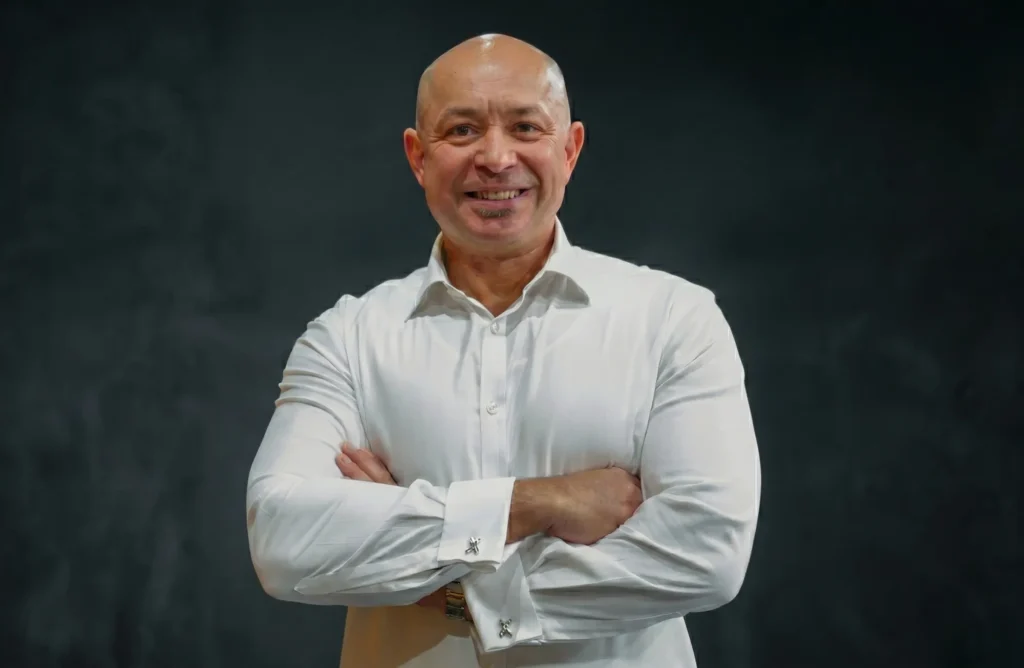
From Technology and Telecommunications to Transforming Digital Entertainment Across MENA Peter Mrkic, Managing Director of TOD by beIN MENA, has built his career at the intersection of technology, media, telecommunications, and business transformation. Throughout his professional journey, a consistent theme has remained: driving growth through innovation and helping organisations navigate periods of significant change. Today, that experience is shaping the future of one of the region’s fastest-growing streaming platforms. As Managing Director of TOD by beIN MENA, Mrkic is focused on strengthening the platform’s position as the leading destination for sports and entertainment streaming across the Middle East and North Africa. “Our ambition is to increase awareness, personalise engagement, deliver continuous platform innovation, and expand TOD by beIN’s footprint across the MENA region through the widest array of sports and entertainment content, while delivering the best product and customer experience,” says Mrkic. The Streaming Industry Is Entering a New Era According to Mrkic, the streaming landscape is evolving at an unprecedented pace. Consumers today expect far more than access to content. They want flexibility, convenience, personalisation, and seamless experiences that fit naturally into their daily lives. “The streaming industry is evolving faster than ever, and audiences are becoming more demanding in the best possible way,” explains Mrkic. “They expect choice, flexibility, seamless access, and content that fits into their lives, whether that’s short-form content, long-form entertainment, live sport, or family-friendly programming.” This shift has fundamentally changed how streaming platforms compete. Success is no longer determined solely by the size of a content library. Instead, platforms must continuously innovate and adapt to changing consumer behaviours. “For us, the priority is to listen, learn, and grow because customers are central to everything we do,” he adds. Beyond Content: The Future of Digital Entertainment For Mrkic, the future of digital entertainment extends beyond simply delivering content online. Modern audiences increasingly expect platforms to provide personalised, interactive, and immersive experiences tailored to individual preferences. “Today, platforms are expected to offer experiences beyond the basic,” says Mrkic. “Audiences are looking for content that is personalised, interactive, seamless, and built around how they actually live.” This philosophy has shaped the evolution of TOD by beIN’s latest innovations. Features such as TOD360, MultiView, FanZone, interactive timelines, and automatic match highlights are designed to give viewers greater control over how they engage with content, particularly live sports. For sports fans, this means watching multiple matches simultaneously, participating in real-time predictions and polls, and becoming active participants rather than passive viewers. Why MENA Is a Strategic Growth Market The opportunity is particularly significant across the MENA region. The region’s population is young, digitally connected, mobile-first, and increasingly demanding sophisticated digital experiences. In Qatar alone, internet penetration has reached approximately 99%, while mobile connections exceed 150% of the population. “With so much of daily life now happening digitally, viewers increasingly expect experiences to match this reality,” says Mrkic. “They want multilingual experiences, personalised recommendations, premium content, and platforms that understand cultures.” This creates significant opportunities for streaming providers capable of delivering highly localised experiences while maintaining global standards of technology and content delivery. The Rise of OTT Platforms Across the Middle East The rapid growth of Over-The-Top (OTT) platforms across the Middle East continues to reshape the entertainment industry. According to Mrkic, changing consumer habits, increasing smartphone penetration, stronger digital infrastructure, and growing demand for on-demand entertainment have accelerated adoption across the region. Consumers now expect premium content to be available anytime, anywhere, and across multiple devices. This transformation has encouraged streaming platforms to move beyond traditional broadcasting models and invest heavily in technology, personalisation, and user experience. “The growth of OTT platforms in the Middle East has been remarkable and continues to accelerate,” says Mrkic. Additional factors such as expanding Smart TV adoption, telecom partnerships, and growing demand for premium sports content are further supporting the sector’s growth trajectory. How AI Is Reshaping Streaming Artificial Intelligence is emerging as one of the most transformative technologies in the streaming industry. Mrkic believes AI is already changing how audiences discover and consume content. AI-powered recommendation engines, content discovery tools, advanced analytics, adaptive streaming technologies, and multilingual capabilities are helping platforms create more personalised experiences. “AI is helping platforms improve personalisation, content discovery, and recommendations, which is clearly what audiences are increasingly seeking,” he explains. AI is also enabling advancements in subtitling and dubbing, allowing viewers to access content in a broader range of languages while improving accessibility across diverse markets. “We are also seeing a clear shift towards more interactive viewing,” says Mrkic. “Looking ahead, streaming will be defined by smarter, more personalised, and more immersive experiences.” Building Deeper Relationships Through Data and Personalisation For streaming platforms, the challenge is no longer providing access to content. The challenge is helping users find the right content quickly and effortlessly. According to Mrkic, audiences no longer want to spend time searching through extensive catalogues. Instead, they expect platforms to understand their preferences and deliver highly relevant recommendations. “The stakes are higher for platforms today,” he says. “We need to understand audience preferences, recommend the right content, and curate more tailored experiences.” This represents a shift from content distribution to relationship building. “The real value lies in using technology to make the experience easier, more intuitive, and more personal while still keeping the viewer in control.” The Evolution of TOD by beIN 2.0 To meet evolving consumer expectations, TOD by beIN recently introduced a significantly enhanced platform experience. The upgraded platform focuses on speed, personalisation, navigation, content discovery, and interactive engagement. “We introduced a faster and more intuitive interface designed to improve navigation, personalisation, and content discovery,” explains Mrkic. Interactive features such as MultiView and FanZone have also been expanded to encourage deeper audience participation and engagement. These innovations reflect a broader industry trend where streaming services are evolving into interactive entertainment ecosystems rather than traditional viewing platforms. Sports Content Remains a Powerful Growth Driver While technology continues to evolve, premium sports content remains one of the strongest drivers of digital subscription growth
Qatar–Poland Economic Partnership Gains Momentum as Bilateral Trade Reaches US$1.4 Billion
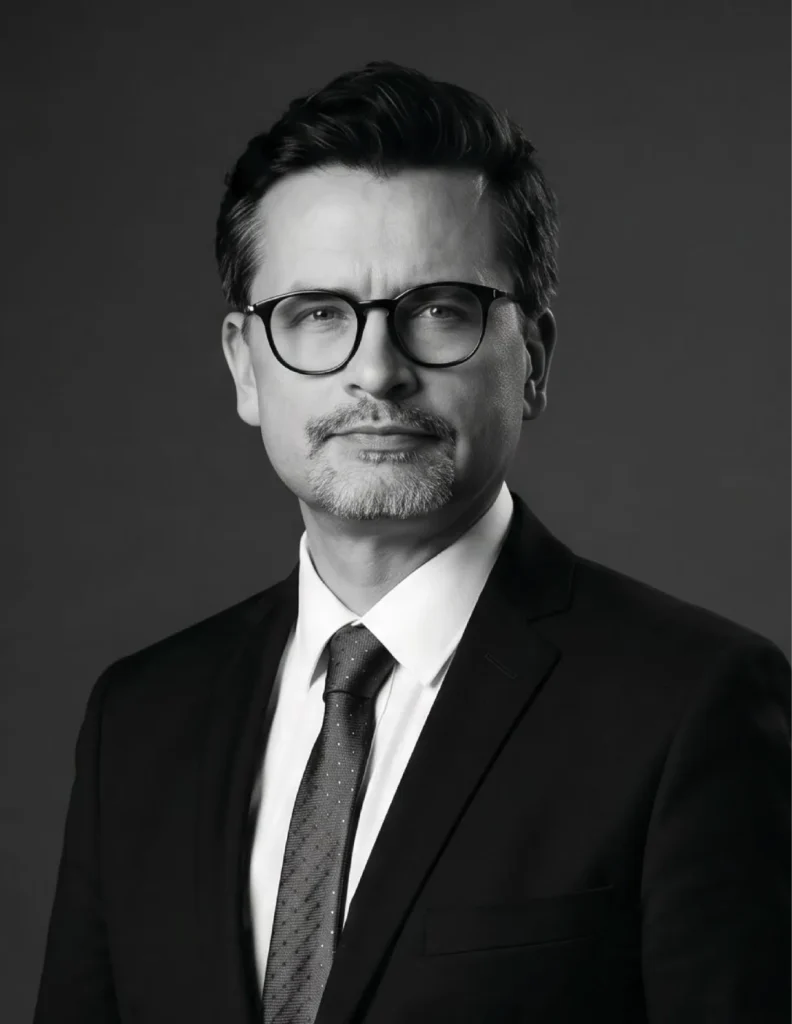
Doha, Qatar: The economic partnership between Qatar and Poland continues to gain momentum, with bilateral trade reaching nearly US$1.4 billion in 2025, reflecting the growing depth of cooperation between the two countries across energy, investment, logistics, tourism, startups and scientific exchange. In an exclusive conversation with Business Leaders Magazine, His Excellency Tomasz Sadziński, Ambassador of the Republic of Poland to the State of Qatar, discussed the strength of Qatar–Poland relations, Poland’s economic rise, the strategic role of LNG cooperation, and the opportunities ahead for both countries. A Stronger Qatar–Poland Business Corridor According to H E Sadziński, the economic partnership between Qatar and Poland remains vibrant and increasingly strategic. Bilateral trade in 2025 reached almost US$1.4 billion, equivalent to approximately QR5.1 billion. Qatari data also showed that exports from Poland to Qatar reached around US$240 million, equivalent to QR873.6 million, during the same year. The Ambassador noted that the relationship between the two countries has grown beyond traditional diplomacy, supported by high-level political engagement, business forums, direct connectivity and stronger private-sector interest. The visit of His Highness The Amir Sheikh Tamim bin Hamad Al Thani to Poland in July 2024, accompanied by a large business forum, marked an important milestone in strengthening bilateral relations. Poland’s Economic Rise Poland has emerged as one of Europe’s strongest economic performers. Since its transition to a market economy in the 1990s, the country has recorded significant long-term growth, supported by its accession to NATO in 1999 and the European Union in 2004. H E Sadziński highlighted that since 1990, Poland’s GDP has increased seven-fold, while exports have grown 30 times in volume. In terms of GDP per capita based on purchasing power parity, Poland has also surpassed the United Kingdom — a development that would have been difficult to imagine decades ago. Despite global uncertainty and geopolitical tensions, Poland’s economy grew by 3.5 percent in 2025, around two percentage points above the EU average. The year also marked a major milestone as Poland joined the group of US$1 trillion economies. Looking ahead, Poland — a market of around 38 million consumers — is expected to be the fastest-growing economy in the European Union in 2026, with growth estimated at 3.7 percent. Energy as the Strategic Cornerstone Energy remains one of the most important pillars of Qatar–Poland cooperation. Poland imports almost 3 billion cubic metres of LNG from Qatar annually, making Qatari LNG a key part of Poland’s energy security strategy. In 2025, the value of LNG delivered from Qatar to Poland exceeded US$960 million, equivalent to approximately QR3.5 billion. H E Sadziński noted that Qatar played an important role in helping Poland diversify its energy supply. Qatar delivered the first non-Russian gas shipment to Poland in December 2015, helping the country move away from full dependence on Russian supplies. Poland is also expanding its LNG import capacity from the current 8 bcm to 14.4 bcm by 2028, underlining the continued importance of LNG in the country’s energy mix. At the same time, the Ambassador pointed to major opportunities for Qatar and Poland to cooperate in renewable energy. Between 2000 and 2023, Poland’s electricity generation from solar and wind rose from zero to 35 TWh, accounting for 21 percent of total electricity production. Poland plans to invest around US$250 billion in its energy sector by 2036, including renewable energy, energy storage, nuclear power and distribution networks. Investment Opportunities Across Key Sectors Beyond energy, Poland and Qatar are looking at new areas of cooperation in investment, logistics, food security and technology. Poland has long been a regional leader in attracting foreign direct investment, receiving around US$400 billion in FDI since 1989. At the same time, Polish outward investment is also rising, exceeding US$40 billion so far. In 2025 alone, Polish companies announced 22 acquisitions in Western Europe, reflecting the growing international confidence and ambition of Polish businesses. H E Sadziński said this is an opportune moment for Qatar and Poland to accelerate joint investments. In November 2025, the Embassy of Poland in Doha hosted the Poland–Qatar Investment Forum, in cooperation with business entities including the Qatari Businessmen Association. During the forum, Invest Qatar and the Polish Investment and Trade Agency signed an MoU to strengthen cooperation. Further momentum followed in 2026, with an Invest Qatar delegation visiting Poland to attend the European Economic Congress and network with Polish businesses in Warsaw. Representatives of Qatar’s investment sector also participated in the ElevenLabs Summit in Warsaw. Food Security and Logistics Food security is another growing area of cooperation between Qatar and Poland. The launch of Lulu Group’s regional sourcing centre in Poland in April 2026 was highlighted as an important sign of Poland’s growing relevance to Qatar’s food security ecosystem. Poland’s logistics ambitions are also gaining attention. The country is developing Port Polska, a major international communications and logistics hub valued at US$32.5 billion, designed to link air, rail and road routes in central Poland. This project could strengthen Poland’s role as a gateway between Europe, the Gulf and wider international markets. Poland’s Startup Strength Poland is also positioning itself as a major startup and innovation hub in Europe. According to H E Sadziński, there are more than 3,500 startups across Central and Eastern Europe, with almost a quarter based in Poland. Since early 2024, early-stage Polish companies have raised more than €165 million, the highest level in the region. By the first quarter of 2025, their combined value had climbed to €58 billion, ahead of neighbouring countries. Poland’s startup ecosystem is supported by a strong technology workforce. The country has around 600,000 software developers, with thousands more entering the labour market every year. In 2023, more than 70,000 students were enrolled in ICT-related disciplines. The Ambassador highlighted successful Polish innovation companies such as ElevenLabs, CD Projekt, Brainly, DocPlanner, Booksy, BLIK, IceEye and InPost as examples of Poland’s growing global technology profile. He said Poland’s ambition is clear: to become the Silicon Valley of Europe. Academic and Scientific Cooperation Education, research and youth mobility are also becoming important
Arabic Authenticity Is Building a Future While Staying Rooted in Legacy: Dr Khalid Abdulla Al Binali
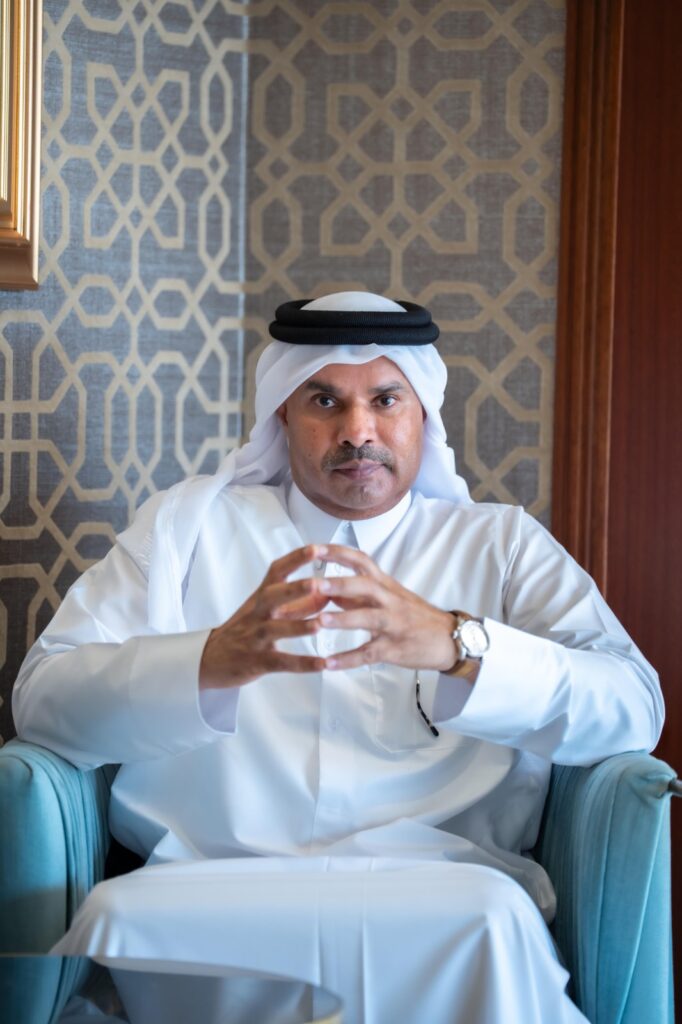
Businessman, philanthropist and cultural ambassador Dr Khalid Abdulla Al Binali speaks to Business Leaders about discipline, leadership, philanthropy, Qatar’s cultural identity and the responsibility of building lasting impact. Dr Khalid Abdulla Al Binali’s journey cannot be defined by one title alone. A businessman, global philanthropist, community leader and passionate ambassador of Qatar’s tourism, art and cultural landscape, he represents a leadership model rooted in purpose, heritage and service. In an exclusive conversation with Business Leaders, Dr Al Binali speaks with Aparajita Mukherjee about the discipline behind running diverse businesses, the role of philanthropy in shaping stronger communities, and why Qatar’s future remains deeply connected to its cultural legacy. An honorary doctorate holder, member of the Human Rights Committee, recipient of the Medal of Honour from Equatorial Guinea, and founder of the FIFA World Cup and Asian Cup visitors’ welcome initiative in Qatar, Dr Al Binali was also honoured with the Qatar Tourism Award in the category of Outstanding Community Contribution, presented by Qatar Tourism in collaboration with UN Tourism. A Journey Defined by Purpose For Dr Al Binali, leadership has never been about a single sector or designation. His career has moved across business, culture, tourism, sport and community initiatives, with each chapter offering a new lesson in impact. “My journey has never been defined by a single title or sector — it has been defined by purpose,” he says. He reflects that some of his most important turning points were not planned. Many opportunities arrived as challenges, requiring him to step into unfamiliar territory and build something meaningful from the ground up. “One consistent thread throughout my journey has been the belief that success becomes more meaningful when it contributes to people, identity and legacy — and above all, earning the contentment of one’s parents,” he says. That guiding question remains central to his work: How can this create lasting value? The Discipline Behind Diverse Business Leadership Running a diverse business portfolio requires more than ambition. For Dr Al Binali, it requires a set of principles that do not change with circumstance. The first is integrity. “Trust is earned over years and lost in moments,” he says. The second is discipline — the belief that consistency matters more than motivation, and that sustainable success is built through habits. His third principle is placing people before process. Great institutions, he believes, are built by empowered individuals. The fourth is long-term thinking, because quick wins may be tempting, but meaningful impact requires patience. The fifth is adaptability. “The world changes rapidly, and leadership today requires humility and the willingness to evolve,” he says. Together, these principles shape the way he approaches business, community work and national contribution. Qatar’s Message to the World As a passionate advocate for Qatar’s tourism, art and cultural identity, Dr Al Binali believes the country carries a powerful message to the world. “The most important message is that Qatar is a nation deeply rooted in heritage while confidently shaping the future,” he says. He notes that many visitors arrive expecting modernity — and they certainly find it. But what stays with them most deeply is authenticity. “Qatar offers something increasingly rare in today’s world: a genuine sense of identity, generosity and cultural pride. We welcome the world while remaining true to who we are.” This balance between progress and heritage has become central to Qatar’s global identity, especially as the country continues to expand its role in tourism, sport, culture, business and international dialogue. The Human Side of Qatar’s Sporting Ambition Dr Al Binali’s role as founder of the visitors’ welcome initiative during the FIFA World Cup and Asian Cup gave him direct insight into the power of sport as a platform for human connection. “One of the greatest lessons was understanding the power of human connection,” he says. He believes major sporting events are often judged by infrastructure, logistics and organisation. Yet what people remember most is emotional: how they were welcomed, how they were treated and how they were made to feel. During the FIFA World Cup and Asian Cup, Qatar’s hospitality, volunteerism and community spirit became part of the country’s global image. “The lesson moving forward is clear: sport should not only entertain — it should unite communities, inspire younger generations, and strengthen national pride while building lasting international relationships,” he says. Philanthropy as Responsibility In uncertain times, philanthropy offers something rare: steadiness. For Dr Al Binali, giving has shaped not only his public work but also his sense of purpose. “Philanthropy teaches humility,” he says. He views giving not simply as financial support, but as a wider responsibility. It includes time, mentorship, opportunity and presence. Communities become stronger, he believes, when people invest in one another — especially during difficult periods. “Leadership is not only about achievement — it is about responsibility,” he says. For him, strong societies are built when people feel seen, supported and valued. Looking Ahead When asked where he sees himself in two years, Dr Al Binali points to continuity rather than reinvention. Professionally, he hopes to continue contributing to initiatives that create long-term impact for Qatar, particularly across culture, tourism, sport and community development. Personally, his focus is balance. “Leadership means little without perspective, family, health and meaningful relationships. Success should expand your sense of purpose — not narrow it,” he says. Quick Fire With Dr Khalid Abdulla Al Binali One line that best describes you — the person, not the title:A builder of ideas, relationships and meaningful impact. If you could rewrite one chapter of your life, what would you change — and why?I believe every chapter — including the difficult ones — carries value. If anything, I would perhaps embrace risk even earlier, because growth often lives outside certainty. The best advice you ever received:“Character will take you where credentials alone cannot.” It was advice I received early in life and have carried with me ever since. Your most memorable holiday:The most memorable experiences are often the ones shared with family and shaped
Building Business on Timeless Values: Trust, Relationships and Love for Qatar
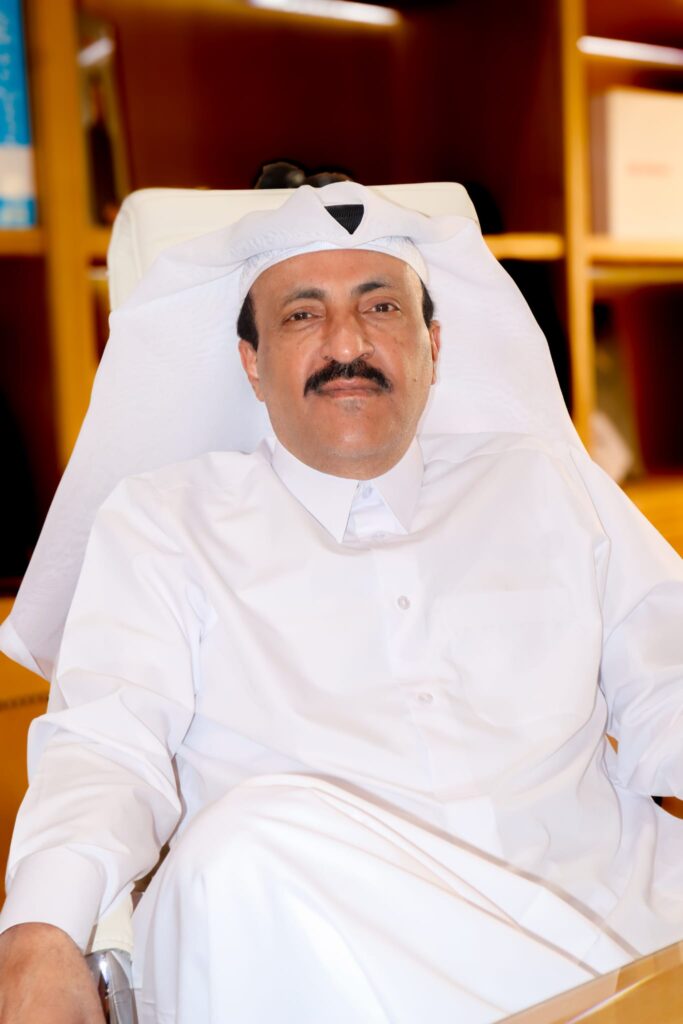
Khalifa Abdulrahman Al Mannai, Chairman of Teyseer Holding, carries forward the legacy of founder Abdulrahman Essa Al Mannai while steering one of Qatar’s longstanding multi-sector groups toward governance, innovation, sustainability and Qatar National Vision 2030. For Khalifa Abdulrahman Al Mannai, Chairman of Teyseer Holding, business was never built on transactions alone. It was built on trust, relationships, service and a deep love for Qatar. Following the legacy of his late father and founder of the group, Abdulrahman Essa Al Mannai, Khalifa Al Mannai has continued to guide Teyseer Holding with a balance of tradition and transformation. Today, the group stands as a multi-sector conglomerate with interests across automotive and mobility, industrial and construction solutions, security and manpower, energy, technology and IT solutions. Rooted in a legacy that began in 1968, Teyseer Holding has grown alongside Qatar’s own development journey. From the country’s early infrastructure growth to its emergence as a modern global economy, the group has remained closely aligned with Qatar’s national progress. “Our goal is not only to grow but to grow responsibly, contributing to the nation’s long-term development,” says Khalifa Al Mannai. A Legacy Built With Purpose Khalifa Al Mannai’s journey with Teyseer Holding began at a young age, working alongside his father, the late Abdulrahman Essa Al Mannai, and his brothers. It was a period that shaped both his business understanding and his personal values. “Each of us carried different responsibilities, but we were united by one purpose: to build, to serve, and to grow something meaningful together,” recalls Khalifa Al Mannai. “I began as director of the service centre, and through that journey, I did not only learn business, but I also honed the values that my father believed in.” For Khalifa Al Mannai, the story of Teyseer Holding is inseparable from the philosophy of its founder. “I witnessed firsthand how my father built Teyseer Holding with his heart and soul. He did not simply establish a company; he created a philosophy and named it Teyseer, meaning ‘facilitation’, because his purpose in life was to make things easier for people. That belief became the foundation of everything we do today,” he says. That founding philosophy continues to define the group’s culture. Teyseer Holding was never positioned merely as a commercial enterprise. It was built as a service-led institution committed to people, partners and the nation. Growing With Qatar As Qatar developed from the 1960s into one of the region’s most dynamic economies, Teyseer Holding evolved with it. The group played a role in supporting key sectors linked to infrastructure, mobility, services and technology, becoming part of the broader story of Qatar business growth. “Teyseer Holding was never built on transactions. It was built on trust, relationships and service to the nation,” says Khalifa Al Mannai. “As Qatar evolved from the 1960s into the global, modern nation that it is today, Teyseer Holding stood as one of its building blocks, growing alongside it and supporting its infrastructure, mobility and technological advancement.” This Qatar-focused growth has enabled Teyseer Holding to become a recognised name across multiple industries. Its sector footprint reflects the group’s ability to operate across strategic areas that remain vital to Qatar’s economy. Teyseer Holding Sector Footprint Each sector represents a strategic pillar in Qatar’s development, driven by specialised subsidiaries operating under a unified framework of values, governance and service excellence. Key sectors include: Automotive and mobilityIndustrial and construction solutionsSecurity and manpowerEnergy solutionsTechnology and IT solutionsInfrastructure servicesBusiness servicesRegional operations and partnerships With more than 18 subsidiaries and over 7,500 employees, Teyseer Holding continues to contribute to Qatar’s economic development while preparing for future scalability. Values That Do Not Change At the heart of Teyseer Holding’s long-standing success are values that have remained consistent across generations: integrity, commitment, unity and service. For Khalifa Al Mannai, these values are not corporate slogans. They are lived principles that shape the way the organisation works, grows and leads. “Teyseer Holding is not just a company but a family,” he says. “And I say with pride that many of our employees have spent their entire lives with us. Loyalty is not demanded at Teyseer Holding; it is earned.” This sense of loyalty has become one of the group’s strongest foundations. It has helped the organisation build long-term relationships with employees, customers, partners and stakeholders across Qatar and beyond. Khalifa Al Mannai’s own transition into leadership reflected the same continuity of purpose. “My transition from director to Chairman was not a sudden shift. It was a continuation of a journey deeply rooted in purpose,” he says. “I was not stepping into a position. I was stepping into a legacy, a legacy that carried my father’s vision. This is not an obligation but my life’s purpose.” The Evolution Into Teyseer Holding A major milestone in the group’s journey was its evolution into Teyseer Holding. The move represented more than a change in name. It reflected a strategic transformation into a more structured, future-focused organisation. Guided by Khalifa Al Mannai, the transition underscored the group’s commitment to stronger governance, disciplined growth and long-term investment across key sectors. “This transition is not just in name, but in mindset: strengthening governance, enhancing strategic oversight and positioning the organisation for the next phase of sustainable growth across sectors,” says Khalifa Al Mannai. The transformation has allowed the group to sharpen its strategic direction while preserving its founding values. “Teyseer Holding reflects how we see the future of the organisation — structured, forward-looking and built for long-term impact. This evolution allows us to strengthen our governance and expand our role as a strategic investor across sectors that support Qatar’s continued growth,” he explains. Future-Ready Sectors And Qatar National Vision 2030 Looking ahead, Teyseer Holding is focused on future-ready sectors aligned with Qatar National Vision 2030. While mobility, infrastructure and technology remain core pillars, the group is also exploring opportunities in sustainability, smart solutions and innovation-driven industries. This forward-looking approach places Teyseer Holding firmly within the wider landscape of Qatar economic policy, Qatar industry news and business growth
Ambition, Drive, Solution-Driven: Capital for a Growth Story
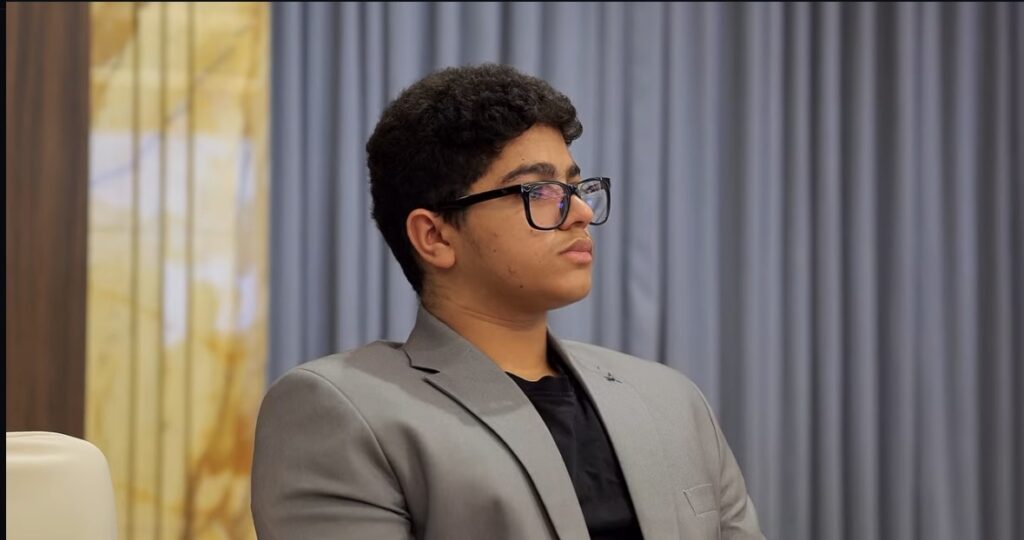
Mohab Mohammed Kamal, Founder and CEO of ConnectED, Doha, Qatar. At 16, Mohab Mohammed Kamal has already done what most founders spend years trying to do — find a real problem, build a real product, and make people care. Meet the founder of ConnectED. By Aparajita Mukherjee About the founder: Mohab Mohammed Kamal, 16 years old. Founder and CEO of ConnectED — a platform connecting high school students, schools, and universities globally. Founded in May 2025. Based in Doha, Qatar. The Problem Nobody Had Solved It started with a feeling every high school student knows — the overwhelming, directionless confusion of figuring out what to do with your life. Mohab Mohammed Kamal was 15 when he felt it. He had questions and nowhere to go for answers. What is my passion? What should I study? How do I even reach out to a university? The platforms that existed were dense, outdated, and built for someone else. Handshake, for example, connects university students to employers. Nobody was connecting high school students to universities — at the moment they needed it most. So Kamal built it himself. “ConnectED is a three-sided marketplace connecting high school students, schools, and universities. The problem exists on every side simultaneously — students are lost, schools have no real infrastructure to guide their students, and universities have no efficient way to reach the right students early. We fix all three in one platform.” After surveying over 200 students who shared the same struggle, the idea became a mission. Built by Gen Z, for Gen Z — the way this process should have always worked. BL: How do schools and universities benefit from ConnectED? Schools finally have a real tool. Right now counsellors are managing hundreds of students with no structured system — they can’t track where each student is in their individual journey, what they need, or where they’re headed. ConnectED gives schools full visibility and control over that entire process. For universities, the benefit is access. They currently spend enormous resources on recruitment with no efficient channel to reach the right students early. ConnectED gives them a direct line to motivated, relevant students at exactly the right moment — before those students have already decided to go somewhere else. BL: With no paid advertising, how are you managing growth? We built something people actually wanted to talk about. 706 users came through word of mouth, competition exposure, and the Web Summit platform. When you solve a real problem and you’re a 16-year-old who built it himself, people share it. That’s not a strategy you can manufacture — it comes from the product being real and the story being genuine. On top of that, we have a full organic marketing strategy ready to execute — social media videos, content, posts — all designed to grow the platform without relying on paid advertising. We’re just getting started on that front. BL: Talk us through your experience at Web Summit 2026. It was something truly amazing — and hopefully we’ll be back next year. Being the youngest exhibitor in the room, surrounded by some of the most serious founders, investors, and operators in the world — and holding our own — was one of the most defining moments of building ConnectED. The video that went viral gave us an enormous push. It made the platform more well-known across Qatar — students, institutions, and people we’d never reached before started finding us. We even had people reaching out wanting serious discussions about the platform off the back of it. That exposure proved that the story resonates well beyond just our immediate network. BL: What do your awards and competition wins mean for the journey ahead? They do two things. First, credibility — when you’re 16 and telling investors and institutions you’ve built something real, third-party validation matters. Winning against 200+ teams at Al Fikra, advancing at INJAZ Mubadara, the Lenabtaker Excellence Award — these aren’t participation trophies, they’re proof points. Second, network. Every competition puts you in a room with mentors, investors, and operators you wouldn’t otherwise have access to. That network compounds over time. BL: Do you plan to take ConnectED beyond Qatar? ConnectED was never a Qatar-only idea. The problem — students navigating university admissions with no real support — exists everywhere. Every country, every education system. Qatar is where we’re starting because it’s where we are, where we have traction, and where we can build the model properly before scaling. But the roadmap is global. The platform, the infrastructure, the marketplace model — it all travels. BL: With 706 registered users, how many have been accepted to a university? The honest context here is important. The 706 students came to the platform when it was still a prototype — when we only had the student side built. There was no school or university side yet, meaning the actual connection between students and institutions hadn’t been made yet. What we proved was demand — students found us and signed up organically. Right now we’re rebuilding the full platform with a professional development agency, adding the school and university layers properly. Before we launch, we’re going out to schools and universities directly to get them onboarded so that when we go live, the full flow is ready from day one. That’s when we’ll be able to track outcomes end-to-end — and it will become one of our strongest proof points. BL: Once you go to university yourself — how do you plan to sustain ConnectED? I have two options — either stay in Qatar and continue running ConnectED from here, or take it with me to whichever university I end up at. Either way, my goal is to have the entire business sorted, structured, and self-sustaining before I head to university. The team, the processes, the partnerships — everything in place so that ConnectED can manage itself whether I’m in Doha or anywhere else in the world. The company shouldn’t depend on me being in one place. That’s
Hope in Action : The UNHCR–Qatar Partnership
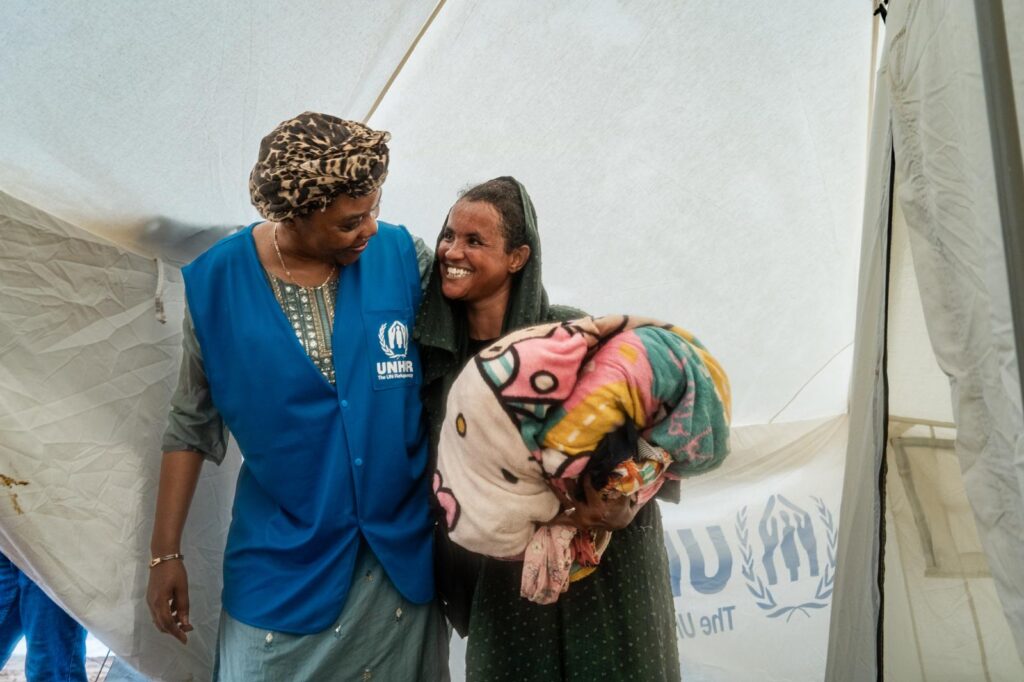
A UNHCR staff member smiles with an internally displaced woman (IDP) inside her tent at an IDP gathering site near Kassala, Sudan. So far, 400 UNHCR tents have been erected at the site, which is expected to host some 800 families newly displaced by severe flooding in the region, as the rainy season sets in. © UNHCR/Aymen Alfadil Driving change for millions — how Qatar’s commitment to the world’s displaced is reshaping humanitarian response. By Aparajita Mukherjee Ahmed Mohsen, UNHCR Representative to the State of Qatar, in conversation with Business Leaders Qatar. BL Talk us through your career path. Ahmed Mohsen My career has been anchored in a strong commitment to human rights and advancing protection for forcibly displaced individuals. With academic degrees in international human rights law, international criminal justice, and risk, crisis, and disaster management, I have always believed that rigorous theory must be reinforced by practical field engagement. I began my journey with UNHCR as a volunteer in Cairo — an experience that shaped my understanding of community-based protection. Over the past two decades, I have served in complex operational contexts including Egypt, Eritrea, Iraq, Jordan, Kenya, South Sudan, Sudan, and Syria, working across managerial, legal, protection and external relations functions. Before assuming my role as UNHCR Representative to Qatar in July 2023, I served as Deputy Representative to the GCC countries in Riyadh. BL As UNHCR Representative in Qatar — one of UNHCR’s top donors — what are the strategic priorities before you? Ahmed Mohsen UNHCR continues its efforts to sustain the long-standing strategic partnership with the State of Qatar and to expand collaboration with Qatari institutions. Qatar has long been one of UNHCR’s major donors, providing predictable and flexible contributions to life-saving programmes in the MENA region and beyond. The Office aims to expand engagement across Qatari NGOs, foundations, philanthropists, and the corporate sector — broadening collaboration to encompass resource mobilisation, advocacy, innovative financing, and sustainable humanitarian responses. “Qatar’s engagement goes beyond financial contributions — it reflects a broader approach grounded in international solidarity and responsibility-sharing.” — AHMED MOHSEN, UNHCR REPRESENTATIVE TO QATAR As winter grips Syria, displaced and returnee families continue to endure freezing conditions in damaged or inadequate shelters. UNHCR is on the ground providing winter kits and cash assistance to help the most vulnerable stay safe and warm. © UNHCR/Hameed Maarouf BL Qatar participated in the 2026 UNHCR Annual Pledging Conference in Geneva. Could you reflect on the pledge Qatar made? Ahmed Mohsen Qatar reaffirmed its support through a multi-year contribution for 2025–26, led by HE Jawhara bint Abdulaziz Al Suwaidi, Deputy Permanent Representative of Qatar to the UN. This renewed commitment comes at a time of growing humanitarian needs and widening funding gaps. For UNHCR, predictable and multi-year support is critical — it allows us to respond to immediate needs, plan more effectively, support durable solutions, and ensure continuity of assistance to the most vulnerable. BL Talk us through the National Asylum System MoU between UNHCR and Qatar. Ahmed Mohsen The MoU signed with Qatar’s Department of Human Rights at the Ministry of Interior signals a shift from access-based to system-based protection, enabling UNHCR to support the implementation of a nationally owned asylum framework aligned with international standards. This partnership positions UNHCR as a trusted technical adviser, incorporating international protection principles into Qatar’s legal and administrative systems. BL Qatar contributes to UNHCR operations in Sudan, Syria, Ukraine and for Rohingya refugees. What light can you throw on these contributions? Ahmed Mohsen Qatar’s overall contributions to UNHCR, exceeding US$440 million (QR1.6 billion) since 2010, have supported more than 9 million forcibly displaced people. These contributions fund education, healthcare, shelter, cash assistance, and livelihoods programmes — all essential to safeguarding the dignity of displaced populations. In 2025, contributions included: access to secondary healthcare for Syrian refugees in Jordan; cash assistance for displaced families in Yemen; core relief items in Chad, Djibouti, and Ghana; and cash and shelter assistance for returnees in Syria. UNHCR Distribution in Adra Saida Governorate in south Lebanon, UNHCR distributed core relief items to displaced families in a collective shelter in Saida. © UNHCR/Houssam Hariri UKRAINE RESPONSE In September 2025, UNHCR signed a US$5 million (QR18.2 million) agreement with Qatar Fund For Development (QFFD) to rehabilitate war-damaged homes and community infrastructure in Ukraine. Over 12 months, this will benefit more than 4,000 internally displaced persons and returnees — helping them return to safe and dignified living conditions. Since February 2022, close to 55,000 war-damaged homes have been repaired as part of UNHCR’s shelter programme. BL Qatar reaffirmed its support for UN refugee efforts in New York. Could you detail the ways Qatar would support this? Ahmed Mohsen During a meeting between HE Sheikha Alya Ahmed bin Saif Al Thani, Qatar’s Permanent Representative to the UN, and UN High Commissioner Dr. Barham Salih in New York in March, Qatar reaffirmed its strong and sustained support for UNHCR’s mandate. Qatar emphasised its continued backing for humanitarian operations, readiness to support global initiatives for displaced communities, and engagement with multilateral partners to address regional displacement challenges. “The High Commissioner welcomed Qatar’s ongoing humanitarian contributions and its constructive role in collective responses to refugee crises worldwide.” — UNHCR, MARCH 2026 BL On a short- to medium-term roadmap for UNHCR in Qatar, what would be the focus action areas? Ahmed Mohsen The 2026 planning figure for forcibly displaced and stateless populations stands at 136 million. UNHCR’s proposed budget for 2026 is US$8.505 billion — a reduction of US$2.1 billion versus 2025, reflecting strategic prioritisation rather than reduced need. In Qatar, focus remains on partnerships and resource mobilisation. Top countries funded by Qatari partners include Yemen, Bangladesh, and Lebanon. UNHCR has expanded Islamic philanthropy tools, including the Refugee Zakat Fund and the Global Islamic Fund for Refugees (GIFR). Since 2018, Qatari private sector partners have contributed over US$130 million (QR473.2 million) to the Refugee Zakat Fund, assisting more than 3.3 million displaced Sudan : Forcibly displaced and host communities go back to school after two years of conflict. © UNHCR/Antonia Vadala
Qatar and the Wider GCC Are Becoming Central Nodes in Global Capital
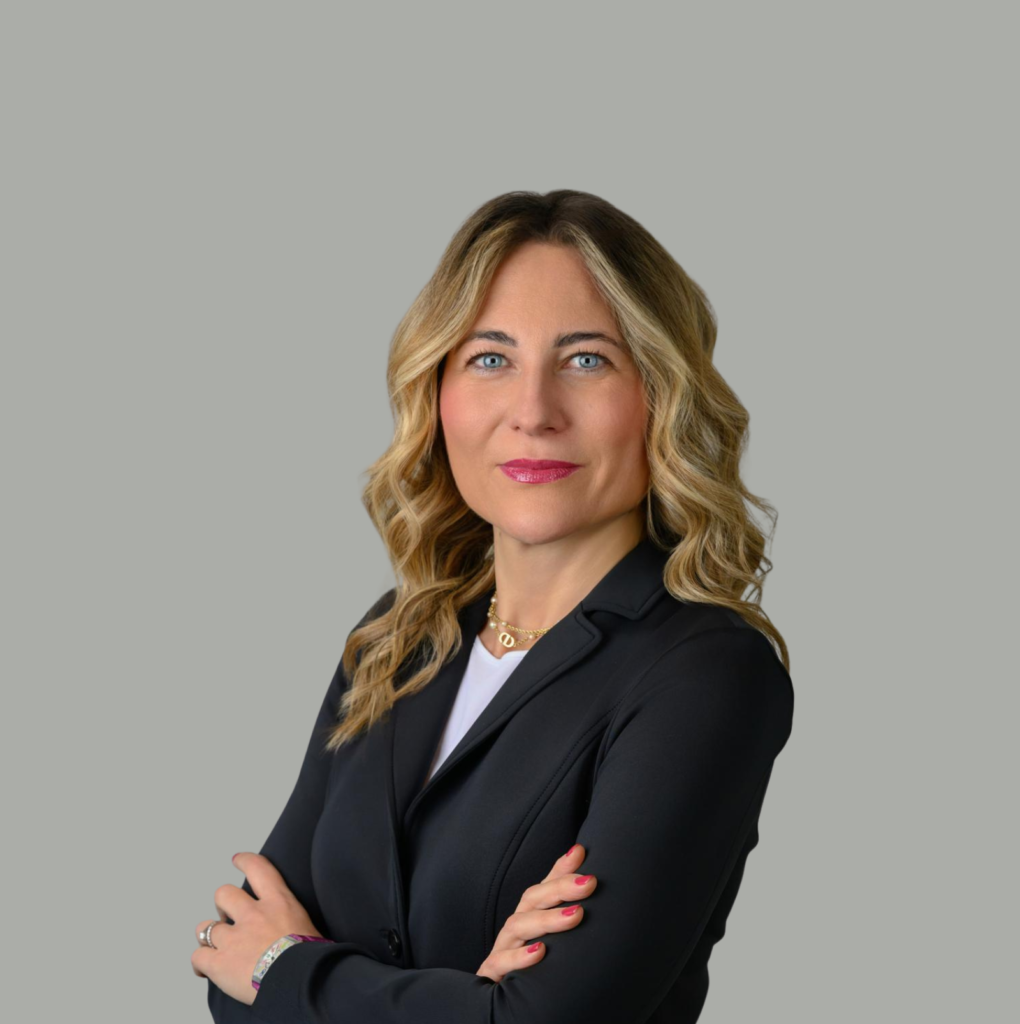
Laura Merlini, Managing Director EMEA, CAIA Association, speaks exclusively to Business Leaders Qatar. CAIA Association’s landmark global study, The World Rewired, reveals how geopolitics, technology, and organisational change are reconstructing the architecture of capital markets — and why Qatar sits at the centre of it all. By Aparajita Mukherjee About the interviewee : Laura Merlini, Managing Director EMEA, CAIA Association. Leading regional strategy since 2012, and a senior alternatives professional and frequent speaker on governance, responsible investing, and industry trends. About the study: CAIA Association — a global network of investment professionals redefining the future of capital allocation — has released a new global study, The World Rewired, highlighting how the investment landscape is undergoing a “wholesale rewiring” as geopolitics, technology, and organisational capabilities reshape how capital is raised, allocated, and managed. BL: How is the investment landscape of today distinct from what it was five years back? Five years ago, most of us still assumed a world of low rates, ample liquidity, and relatively benign globalisation. Today, that framework no longer holds. We are operating with higher and more uncertain real rates, sharper geopolitical fault lines, and a more fragmented map of trade and capital flows. At the same time, what we used to call “alternatives” has moved to the centre of many institutional portfolios. Value creation and governance are increasingly happening in private markets, often long before a company considers listing — if it lists at all. Public and private markets are converging, which challenges traditional 60/40 thinking and pushes us toward a genuine total portfolio mindset. In developing The World Rewired report, we listened closely to senior leaders and CAIA members, and a consistent insight emerged: this is not just another cycle. The underlying logic of how markets work is shifting. BL: How does the troika of geopolitics, technology, and organisational capabilities impact the investment landscape? Geopolitics has moved from background noise to a core input in the investment process. It now influences which deals get done, where firms place talent, and how capital flows across regions. We see regional clusters of capital across the Middle East, Asia Pacific, and Latin America, each with distinct rules and sovereign priorities. Technology is the second force. Two innovations are racing toward the same goal of broadening access to private markets. Semi-liquid fund structures work within today’s infrastructure, while tokenised products could redefine that infrastructure entirely. Whether these approaches ultimately complement each other or collide remains an open question. The third force is organisational capability. Firms are moving toward flatter and more agile models to keep pace with regulatory and technological change. The skills gap is no longer just technical. It is about judgment under complexity, geopolitical awareness, and digital fluency. Many leaders quietly admit their organisations are not fully ready. BL: Coming to Qatar and the wider GCC, what is the outlook on investments and capital raising today? From an EMEA perspective, Qatar and the wider GCC are becoming central nodes in global capital — not peripheral markets. In Qatar, policy anchored in Vision 2030 is channelling capital into technology, health, education, and digital infrastructure, supported by the Qatar Investment Authority and development bank platforms. Recent forecasts point to real GDP growth of around 4 percent in 2025, and above 5 percent in 2026, driven by LNG expansion and diversification into advanced industries, logistics, the digital economy, and financial services. Across the Gulf, sovereign wealth funds have emerged as a new centre of gravity in state capital. In 2025, Gulf sovereign investors deployed approximately US$119 billion (QR422.16 billion) — roughly 43 percent of all capital invested by state-owned funds worldwide. By the end of that year, global sovereign wealth assets stood at around US$15 trillion (QR54.6 trillion), with Gulf-based funds accounting for an estimated US$6 trillion (QR21.8 trillion). When you raise capital from a Gulf sovereign fund, you are aligning with returns, national development, and geopolitical positioning at the same time. The architecture of this capital is also evolving — as seen in Abu Dhabi’s restructuring into a three-pole system with distinct global, industrial, and domestic development mandates. For global investors and issuers, the GCC offers deep and increasingly sophisticated capital, but it demands serious engagement with local mandates and governance. BL: What is the definition of long-term today, given that geopolitics is at its most delicate juncture? In this environment, “long term” is less a fixed number of years and more a mindset and governance choice. It means being willing to stay invested through policy shifts, technological disruption, and geopolitical episodes instead of reacting to every headline. Practically, that requires portfolios and institutions that can absorb shocks without being forced into pro-cyclical behaviour. Robust liquidity planning, diversified funding sources, and the thoughtful use of private markets across regions all play a critical role. We need scenario-based thinking and investment committees empowered to lean into dislocations when risk premia widen. That might include long-dated infrastructure, energy transition projects, or digital assets in reforming markets — always with managers who understand local complexity. Long-term today is about resilience and flexibility. BL: How will the IPO scenario be affected in this climate? Higher rates, valuation discipline, and geopolitical uncertainty have made IPO markets more cyclical and selective. The GCC illustrates this well. In 2025, IPOs in the region raised approximately US$5.1 billion (QR18.6 billion) from around 40 deals — a clear step down from US$13.2 billion (QR48.04 billion) in 2024, despite the number of listings remaining reasonably healthy. The engine is still there, but investors are more demanding on quality and pricing. Looking ahead, the outlook is cautiously positive. The GCC pipeline is broad — spanning energy-adjacent sectors, financials, logistics, technology, and consumer businesses supported by privatisations and family listings. Success will depend on timing, valuation, and post-listing execution. Crucially, IPOs are now one of several liquidity options. Many companies will remain private longer, funded by private equity, venture capital, and sovereign investors. That reinforces a key theme from The World Rewired — public and private markets are converging, and
Qatar’s Window to the Universe

The Blue Horsehead Nebula (IC 4592), captured over seven nights from Sawda Natheel, southern Qatar. Image courtesy: Rabeea Alkuwari / NASA APOD A striking deep-space image captured from Qatar’s desert skies by astrophotographer Rabeea Alkuwari, selected as NASA’s Astronomy Picture of the Day. Qatari astrophotographer Rabeea Alkuwari has once again captured the world’s attention — and NASA’s — after his breathtaking image of the Blue Horsehead Nebula (IC 4592) was selected as NASA’s Astronomy Picture of the Day, marking his third such recognition from the world’s most celebrated space agency. Shot across seven painstaking nights from Sawda Natheel in southern Qatar, the image required two adjacent frames stitched together to capture the nebula’s full scale — a technical feat that reflects both the complexity of deep-sky imaging and the extraordinary clarity of Qatar’s desert skies. The subject, IC 4592 — the Blue Horsehead Nebula — is a reflection nebula in the constellation Scorpius, illuminated by the bright star Nu Scorpii. Its delicate blue hues and vast celestial structure make it one of the most visually striking deep-sky objects, and one of the most technically demanding to photograph. “Being able to share my work from the premium skies of Qatar with the world is always a pleasure.” -RABEEA ALKUWARI, ASTROPHOTOGRAPHER A mechanical engineer by profession and a stargazer by passion, Alkuwari’s achievement is a powerful reminder that world-class scientific artistry can emerge from right here in Qatar — from its silent desert plains, its expansive dark skies, and from the quiet ambition of those who look upward and refuse to stop reaching. WHY THIS MATTERS FOR QATAR Alkuwari’s recognition places Qatar on the global map of scientific and creative achievement — not through imported expertise, but through homegrown talent. His work demonstrates that Qatar’s people are capable of contributing to humanity’s greatest pursuit: understanding the universe. NASA’s Astronomy Picture of the Day programme, running since 1995, features a single image each day selected by professional astronomers for its scientific and artistic merit. To be selected once is remarkable. To be selected three times — from the same patch of desert sky in southern Qatar — is extraordinary. In a nation building its future across technology, science, education and culture, Alkuwari’s lens has become one of Qatar’s most powerful instruments of achievement — pointing not inward, but outward, into the infinite. “World-class scientific artistry can emerge from right here in Qatar.” -BUSINESS LEADERS QATAR
Richard Whitehead MBE: Redefining Possibility, One Stride at a Time
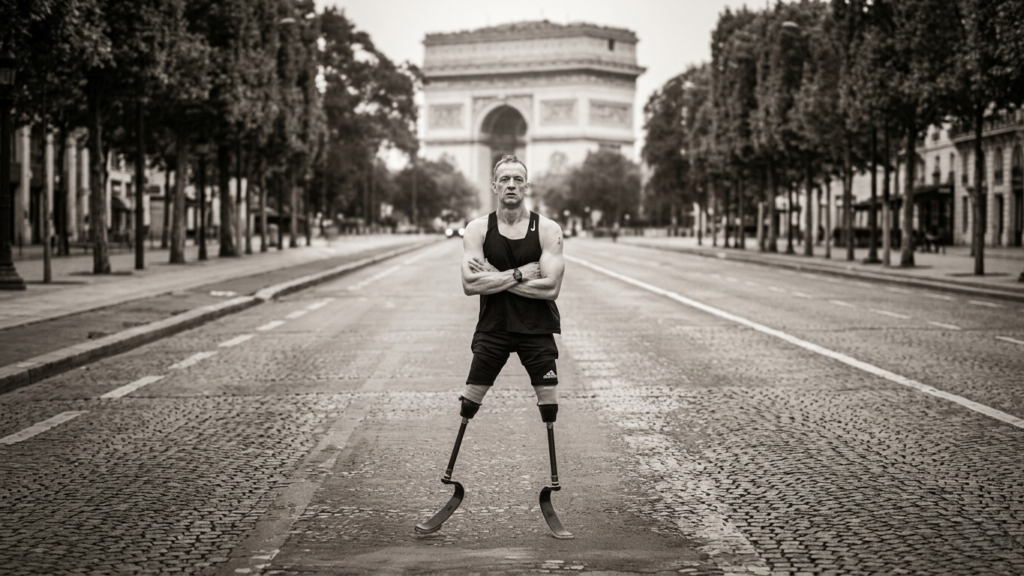
Two-time Paralympic gold medallist. Four-time world champion. The fastest double-amputee marathoner in history. Richard Whitehead MBE has become a global symbol of resilience, inclusion, and the extraordinary power of the human spirit. Born with a double through-knee congenital amputation, Richard Whitehead has spent his life challenging expectations and redefining what athletic achievement looks like. In this exclusive interview with Manu G Parmar, Whitehead opens up about his remarkable journey, the values that drive him, and why Qatar’s inclusive sporting vision resonates deeply with him. From the Pool to the Podium “Sport began for me with swimming and gymnastics — disciplines that taught me balance, agility, and coordination. They built the foundation that later helped me excel across multiple sports,” says Whitehead. His breakthrough came at the Winter Paralympics in Turin in 2006. From there, he transitioned into athletics, competing in London, Rio, and Tokyo — accumulating two gold medals, two silvers, and four world titles along the way. But it was an earlier moment that truly changed everything. “Running the New York Marathon in 2004 was transformative. It proved to me — and to those watching — that I belonged in elite sport. Not as a disabled athlete. As an athlete.” Defining Milestones Of all the sporting firsts associated with Whitehead, two stand above the rest. New York Marathon, 2004 “My first marathon. I didn’t know if I could finish — yet that vulnerability changed my life. It proved that athletes with disabilities deserve equal opportunities to compete at the highest level.” London 2012 Paralympic Gold “Winning in front of 80,000 people wasn’t just a medal moment — it was a platform to showcase the extraordinary potential of people with disabilities.” A Vision Built on Community For Whitehead, personal achievement has always been inseparable from collective responsibility. “Invest in the people around you. Success becomes more powerful when shared — and your platform should uplift the next generation.” It is a philosophy that informs everything he does — on and off the track. Qatar’s Sporting Vision Whitehead speaks about Qatar with genuine admiration, grounded in personal experience. “I’ve competed — and won — in Doha before, and the progress I’ve seen since then is extraordinary. Qatar has world-class infrastructure and a strong commitment to helping young people lead active, healthy lives.” What stands out most to him is Qatar’s approach to inclusion. “Qatar is ensuring that individuals with physical, learning, or hidden disabilities have full access to sport. Physical activity is a fundamental right, and Qatar is leading by example.” When asked what more Qatar needs to become one of the foremost sports-hosting nations in the region, Whitehead believes the foundation is already strong. “Qatar places humanity and the spirit of sport at the centre of its vision. To elevate further, the country should continue amplifying diverse role models — especially those from disability communities. Beyond sport, it’s about strengthening ecosystems in education, employment, and public life so individuals with disabilities can thrive across society.” A Message to Runners Worldwide Whitehead’s message is clear and universal. “Anything is possible. I didn’t start by running 20 marathons a year — it began with one race. The hardest part isn’t the distance; it’s taking that first step towards taking control of your life.” He points to Qatar as a living example of this philosophy in action. “Sport enriches every aspect of who you are. And Qatar demonstrates this beautifully — its running events, triathlons, and challenges such as Samla show how deep the sporting culture runs. Most importantly, sport in Qatar is truly accessible. Everyone has the opportunity to discover their potential.” The Book That Could Be Asked whether he has considered writing a book, Whitehead’s answer is thoughtful and telling. “Yes, I’ve thought about it. A book lets you document not only your achievements, but the possibilities ahead. I wouldn’t write it to showcase success, but to reflect who I am — an athlete, a father, a leader, and a person with multiple layers of identity. I want it to be honest, meaningful, and something I’m truly proud of.” Short Shot Best run: “Every marathon teaches me something. London, New York, Rome, Doha — each one is unique.” Go-to book: “I follow my curiosity — often audiobooks, journalism, history, or Japanese philosophies on wellbeing.” Inspiration from: “People. Everywhere I travel, I see individuals overcoming obstacles in different ways.” Relaxation mode: “Quiet moments, long walks with my kids, music, visualisation, and time for self-reflection.” Lift-me-up quote: “Come the hour, come the man. And of course — Believe. Achieve.” Lessons That Shape a Leader Whitehead identifies two pillars that guide his personal and professional philosophy. Perseverance“Embrace every stage of the journey — the highs and lows. Each experience strengthens your clarity and purpose.” Resilience“Challenges are inevitable. Overcoming them builds the emotional and mental strength needed for future obstacles.” Interview conducted by Manu G Parmar. Richard Whitehead MBE is a two-time Paralympic gold medallist, four-time world champion, and the fastest double-amputee marathoner in history. Photo credit: David Baird (*Black & White)