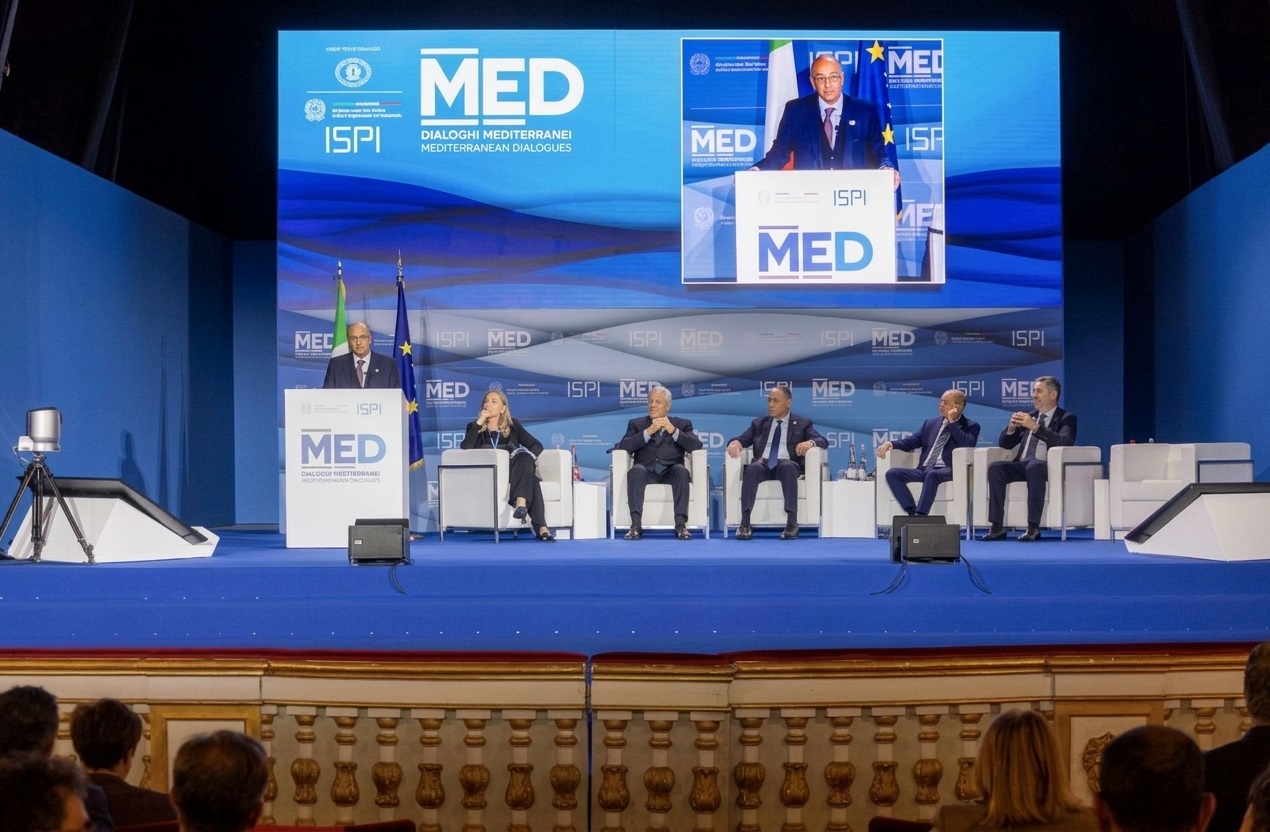

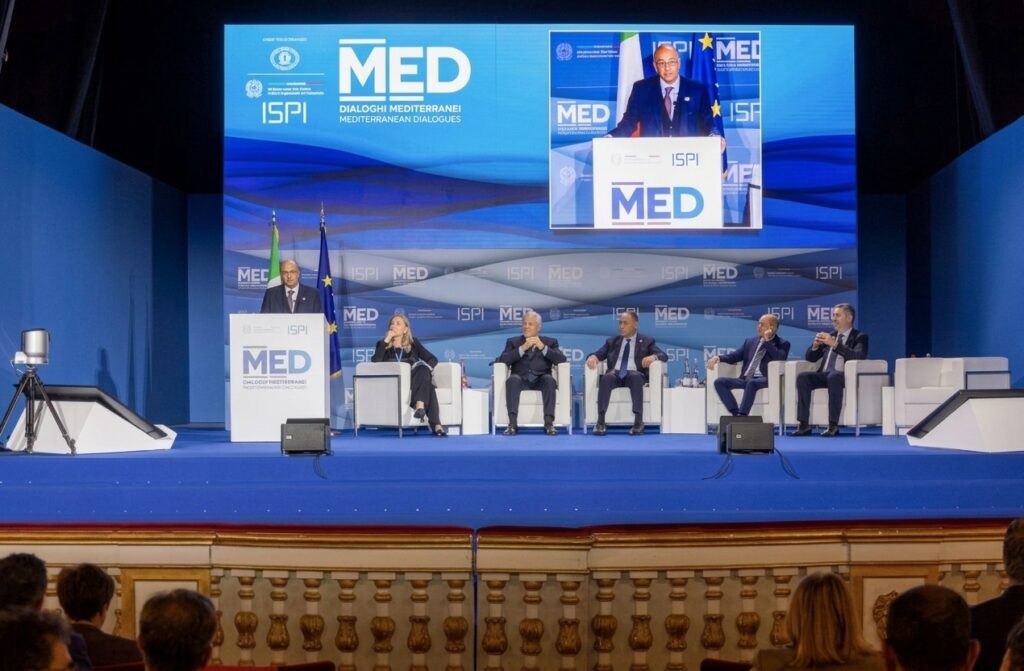
Qatar has reiterated the importance of stepping up international collaboration and investment in diplomacy as well as recommitting to international law in an effort to meet escalating Gulf security concerns and ensure both regional and international stability. Advisor to the Prime Minister and the Official Spokesperson for the Ministry of Foreign Affairs (MoFA) Dr. Majed bin Mohammed Al Ansari spoke on this topic at the Mediterranean Dialogues (MED 2026) conference, which was held in Naples, Italy, between November 19 and 21.
Dr. Al Ansari spoke on panels looking at Gulf security and the security of key sea lanes. He stated that breaches of international law and the weakening of the international rule based system had effects well beyond specific regions, and impacted international energy security as well as trade and economic stability.
In a panel discussion entitled ‘Reframing Security: What’s Next for the Gulf Regional Architecture’, Dr Al Ansari emphasised that states can no longer simply stand by and watch international change occur. He advocated the importance of international collaboration as well as mediation and dispute settlement, alongside defence and security co-operation to improve states’ capacity to effectively manage new security issues.
The panel was chaired by Özgür Ünlühisarcıklı, Managing Director for South and Wider Europe and Regional Director for Türkiye at the German Marshall Fund of the United States. It was attended by high ranking officials and international security specialists to analyse the evolving Gulf strategic landscape. This included Saudi Arabia’s Vice Minister of Foreign Affairs, Waleed Elkhereiji, alongside Chatham House Research Fellow, Farea Al-Muslimi and Non-Resident Senior Fellow at the Atlantic Council, Valbona Zeneli.
Increasing Gulf security concerns were analysed within the discussion, especially in relation to Gulf Cooperation Council (GCC) states and their infrastructure and defence assets having been attacked, as well as recent flare ups in the Red Sea. Such issues have prompted debate around whether the Gulf’s security structure should be re-evaluated to further bolster the defence abilities of GCC states and widen their security collaboration.
Furthermore, the potential impact of deepening defence co-operation and intersecting security alliances was analysed to determine if this would boost or hinder Gulf self-reliance and serve as an effective deterrent, or conversely, produce an even more disjointed and uncertain Gulf security environment.
Dr Al Ansari emphasised that as states are beneficiaries of the international rule based system they also have a duty to actively promote peace, engage in mediation and work to maintain international stability. He stated that the ramifications of Gulf disputes as well as the blockage of the Strait of Hormuz had illustrated how globally interlinked security issues are. These had impacted worldwide energy security, trade and economic stability.
Dr Al Ansari emphasised that joint action was crucial in managing such issues. He added that Gulf security concerns could no longer be analysed in a vacuum without reference to international affairs.
Within the discussion, Dr Al Ansari set out the notion of ‘prosperous states’ which was presented by Prime Minister and Minister of Foreign Affairs H E Sheikh Mohammed bin Abdulrahman bin Jassim Al-Thani when he spoke to the Oxford Union. Prosperous states are those that are robust, affluent and well regarded on the global stage. They allocate a section of their political and economic capital to engage in mediation and to further international peace, he explained.
Dr Al Ansari commented that Qatar believes it is the duty of politically well regarded and economically strong states to engage in mediation to further international peace and stability.
Furthermore, in another panel discussion entitled “The Revenge of Geography: Securing Chokepoints, Rethinking Maritime Security”, Dr Al Ansari analysed the strategic value of sea lanes and the worldwide implications of any disruption to international shipping.
He stated that the ramifications of the blockage to the Strait of Hormuz were not confined to the Gulf and had impacted the global economy and society. Dr Al Ansari emphasised that whilst Gulf related issues were of great significance to the region, they had developed into an international issue which needed a unified global response.
In relation to Qatar’s mediation work between the United States and Iran, he again emphasised that diplomatic processes and negotiations were the most efficient approaches for easing and then maintaining stability.
Dr Al Ansari recognised the joint endeavours of Gulf states to back mediation and to ease strain in the region, in turn boosting security.
Moreover, there was much discussion around the increasing strategic value of key sea lanes – both the Strait of Hormuz and the Red Sea – which are vital for worldwide energy movement as well as trade and trade related logistics.
Debate also ensued concerning the future direction of GCC-Iran relations, the function of international security allies and the potential to further develop a Gulf security structure which would incorporate enhanced national security provisions along with improved international collaboration.
Qatar’s ongoing involvement in the MED Dialogues demonstrates its steadfast dedication to dialogue, diplomacy and mediation as well as positive international collaboration, as integral tools for resolving Gulf security concerns and ensuring stability.