

QATAR’S GLOBAL CARBON COUNCIL SIGNS LANDMARK FOUR-PARTY MOU AT IETA ASIA CLIMATE SUMMIT 2026
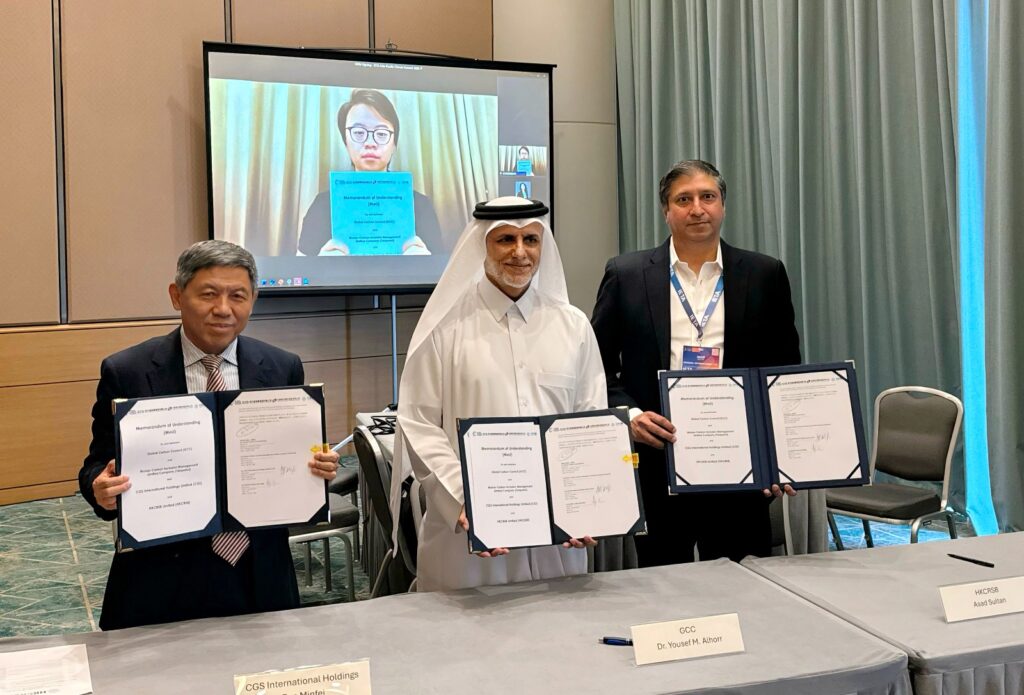
Qatar’s independent carbon standard takes centre stage in Hong Kong as cross-border cooperation reshapes Asia’s voluntary carbon markets In a defining moment for Qatar’s growing influence in the global climate economy, the Global Carbon Council — an independent, internationally recognised carbon standard established in Qatar — signed a landmark four-party Memorandum of Understanding at the IETA Asia Climate Summit 2026, held from 7 to 9 July at the Hong Kong Convention and Exhibition Centre. The agreement, signed alongside Wuhan Carbon Inclusion Management Limited Company, CGS International Holdings Limited, and HKCRSB Limited, establishes a comprehensive cooperation framework spanning cross-border carbon methodology recognition, registry coordination, carbon credit registration, carbon finance facilitation, and transparent data exchange. For Qatar, this is more than a bilateral agreement. It is a statement of global ambition. A QATARI STANDARD GOING GLOBAL The Global Carbon Council was founded in Qatar with a clear mission — to develop high-integrity carbon standards that serve the Global South and emerging markets worldwide. Today, that mission is being realised at the highest level of international climate cooperation. Under the terms of the MoU, GCC-approved methodologies will serve as the international benchmark for urban climate action across participating markets — beginning with Hubei Province in China, with the ambition to scale across Asia and beyond. The agreement also establishes a cross-border methodology committee to review, recommend, and periodically publish approved methodologies, ensuring alignment with international best practices across both voluntary and compliance carbon markets. Speaking at the signing, Dr. Yousef M. Alhorr, Founding Chairman of the Global Carbon Council, said the MoU represents a meaningful step toward strengthening cooperation between international carbon standards, domestic implementation systems, and carbon finance platforms. “By supporting high-integrity methodology development for urban climate action, registry coordination and transparent data exchange, we aim to enhance the credibility, visibility and integrity of carbon market participation — initially in Hubei Province, and contribute to broader climate action across Asia in support of the Paris Agreement,” Dr. Alhorr stated. WHAT THIS MEANS FOR QATAR’S BUSINESS COMMUNITY For business leaders, investors, and sustainability professionals across Qatar and the GCC, the significance of this agreement extends well beyond the signing ceremony. Qatar’s carbon standard is now shaping how emission reductions are measured, verified, and traded across one of the world’s fastest-growing carbon market corridors. As global pressure mounts on corporations to demonstrate credible climate action, having a Qatari institution at the centre of international carbon market architecture positions the country as a trusted bridge between the Global South, the Gulf, and Asia’s rapidly evolving climate economy. The MoU also opens a pathway toward Article 6.2 of the Paris Agreement — the framework for transferring Internationally Transferred Mitigation Outcomes across borders — with Qatar’s Carbon Market Infrastructure potentially playing a central role in that process. In a region increasingly focused on energy transition, economic diversification, and sustainability-aligned investment, the Global Carbon Council’s expanding global footprint reinforces Qatar’s credentials as a serious, forward-looking player in the net-zero economy. LOOKING AHEAD The four parties will now explore deeper data cooperation between the GCC’s Carbon Market Infrastructure and the Wuhan Carbon Inclusion registry system — including project metadata visibility, synchronisation of registration status, and sharing of cancellation records to enhance traceability and prevent double counting across participating markets. As carbon markets evolve from policy ambition to practical implementation, the Global Carbon Council’s growing international reach ensures that Qatar remains not just a participant in that conversation — but one of its most trusted architects.
Education Above All Foundation and Place Vendôme Celebrate Olympic Day in Qatar
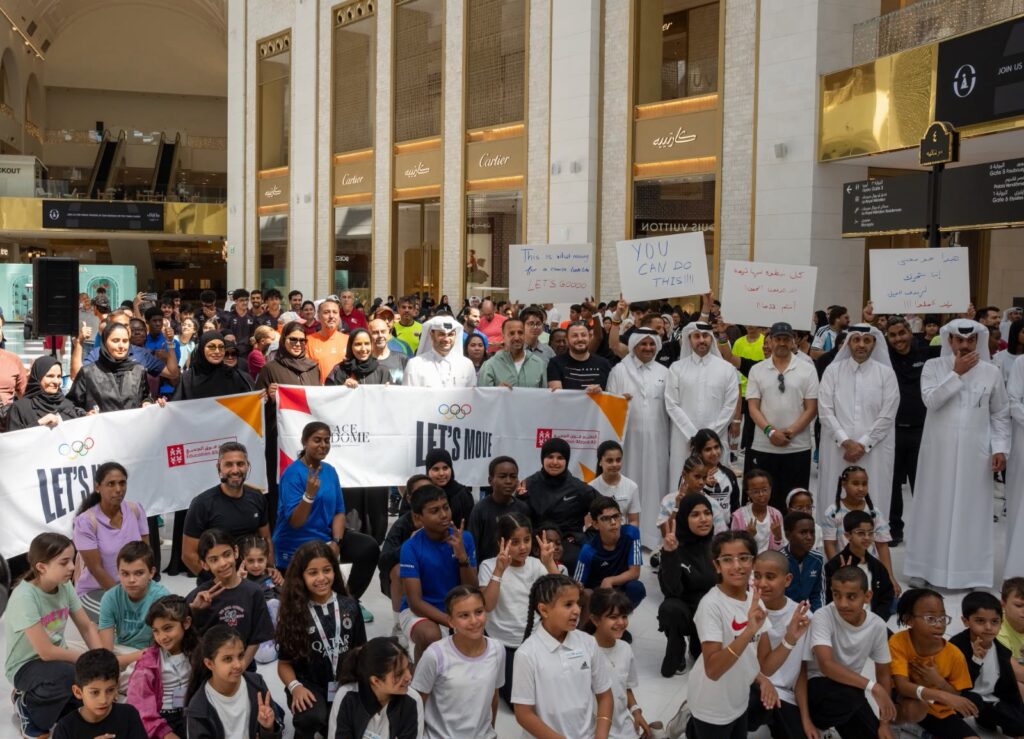
Education Above All Foundation and Place Vendôme Celebrate Olympic Day Through “Let’s Move for Education” Community Walk Education Above All Foundation, in collaboration with Place Vendôme, brought together youth, families, athletes, and community members for an indoor walk and jog celebrating movement, wellbeing, and youth empowerment in Qatar. Education Above All (EAA) Foundation, in collaboration with Place Vendôme, hosted Let’s Move for Education, a community movement activation held in celebration of Olympic Day 2026 and in support of the International Olympic Committee’s global Let’s Move campaign. The event brought together hundreds of participants, including youth, families, Team Qatar athletes, community members, partners, representatives of Education Above All Foundation and Place Vendôme, and invited guests, for an indoor community walk and jog at Place Vendôme Mall. Following a guided warm-up session, participants completed up to five laps around the mall, covering approximately five kilometres. The activation created an inclusive environment where people of different ages and abilities could participate at their own pace, reinforcing the message that every journey begins with a single step. Through its participation in the IOC’s Let’s Move campaign, Education Above All Foundation highlighted the role of sport as more than physical activity. Sport can help young people develop confidence, resilience, teamwork, leadership, and communication skills that support their growth inside and outside the classroom. The event also reflected EAA Foundation’s commitment to innovative partnerships that connect education, sport, and social development, while promoting active lifestyles and stronger community engagement in Qatar. Al Jazi Darwish, Director of Communications & Engagement at the Education Above All Foundation, said: “Sport has the power to bring people together and inspire young people to recognise their potential. Through Let’s Move for Education, we are proud to support a global movement that promotes active lifestyles, wellbeing, and community connection, while reinforcing our belief that education and sport can work together to empower young people and help them build the skills they need for life.” The event also built on EAA Foundation’s collaboration with Qatar Foundation and the International Olympic Committee through the Circle In initiative, which harnesses the power of sport to create safe and inclusive spaces that support learning, healing, and personal growth. Sanjay Mehta, Group Director of Marketing at United Developers, said: “We are pleased to collaborate with Education Above All Foundation in hosting Let’s Move for Education at Place Vendôme. This activation reflects our commitment to providing a welcoming community space where families, young people, and partners can come together to celebrate health, movement, and positive social engagement.” By bringing together sport, education, and community participation, Let’s Move for Education showcased Qatar’s commitment to inclusive community initiatives that promote healthy lifestyles, youth development, and social wellbeing. The activation further strengthens the role of community-focused partnerships in supporting Qatar’s broader social development goals, while positioning education and sport as powerful tools for empowerment, connection, and long-term impact.
Peter Mrkic on the Future of Streaming: Why Customer Experience Will Define the Next Era of Digital Entertainment
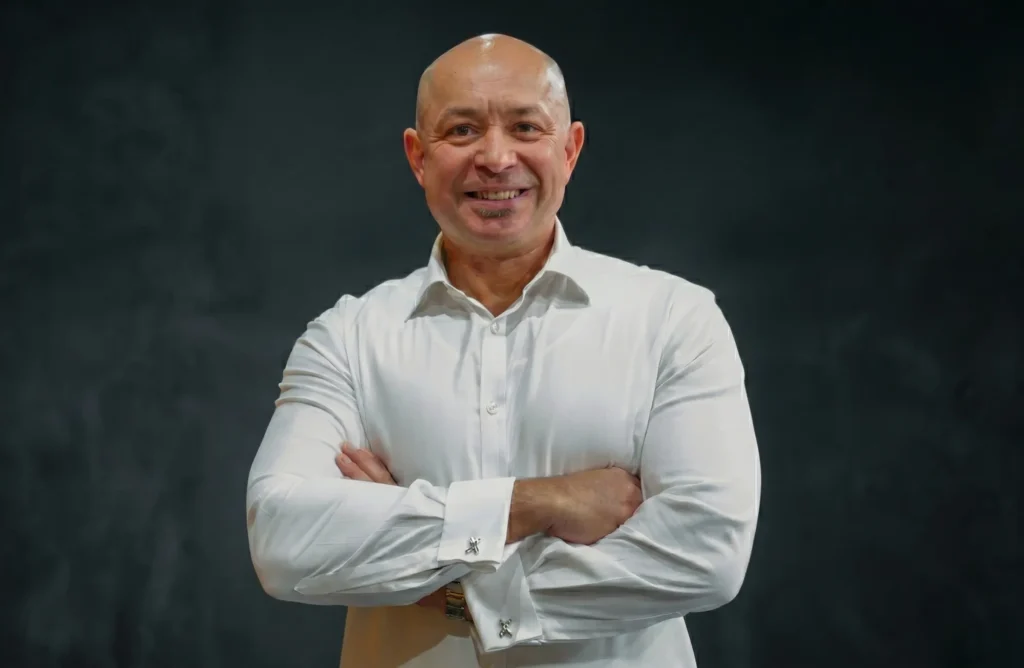
From Technology and Telecommunications to Transforming Digital Entertainment Across MENA Peter Mrkic, Managing Director of TOD by beIN MENA, has built his career at the intersection of technology, media, telecommunications, and business transformation. Throughout his professional journey, a consistent theme has remained: driving growth through innovation and helping organisations navigate periods of significant change. Today, that experience is shaping the future of one of the region’s fastest-growing streaming platforms. As Managing Director of TOD by beIN MENA, Mrkic is focused on strengthening the platform’s position as the leading destination for sports and entertainment streaming across the Middle East and North Africa. “Our ambition is to increase awareness, personalise engagement, deliver continuous platform innovation, and expand TOD by beIN’s footprint across the MENA region through the widest array of sports and entertainment content, while delivering the best product and customer experience,” says Mrkic. The Streaming Industry Is Entering a New Era According to Mrkic, the streaming landscape is evolving at an unprecedented pace. Consumers today expect far more than access to content. They want flexibility, convenience, personalisation, and seamless experiences that fit naturally into their daily lives. “The streaming industry is evolving faster than ever, and audiences are becoming more demanding in the best possible way,” explains Mrkic. “They expect choice, flexibility, seamless access, and content that fits into their lives, whether that’s short-form content, long-form entertainment, live sport, or family-friendly programming.” This shift has fundamentally changed how streaming platforms compete. Success is no longer determined solely by the size of a content library. Instead, platforms must continuously innovate and adapt to changing consumer behaviours. “For us, the priority is to listen, learn, and grow because customers are central to everything we do,” he adds. Beyond Content: The Future of Digital Entertainment For Mrkic, the future of digital entertainment extends beyond simply delivering content online. Modern audiences increasingly expect platforms to provide personalised, interactive, and immersive experiences tailored to individual preferences. “Today, platforms are expected to offer experiences beyond the basic,” says Mrkic. “Audiences are looking for content that is personalised, interactive, seamless, and built around how they actually live.” This philosophy has shaped the evolution of TOD by beIN’s latest innovations. Features such as TOD360, MultiView, FanZone, interactive timelines, and automatic match highlights are designed to give viewers greater control over how they engage with content, particularly live sports. For sports fans, this means watching multiple matches simultaneously, participating in real-time predictions and polls, and becoming active participants rather than passive viewers. Why MENA Is a Strategic Growth Market The opportunity is particularly significant across the MENA region. The region’s population is young, digitally connected, mobile-first, and increasingly demanding sophisticated digital experiences. In Qatar alone, internet penetration has reached approximately 99%, while mobile connections exceed 150% of the population. “With so much of daily life now happening digitally, viewers increasingly expect experiences to match this reality,” says Mrkic. “They want multilingual experiences, personalised recommendations, premium content, and platforms that understand cultures.” This creates significant opportunities for streaming providers capable of delivering highly localised experiences while maintaining global standards of technology and content delivery. The Rise of OTT Platforms Across the Middle East The rapid growth of Over-The-Top (OTT) platforms across the Middle East continues to reshape the entertainment industry. According to Mrkic, changing consumer habits, increasing smartphone penetration, stronger digital infrastructure, and growing demand for on-demand entertainment have accelerated adoption across the region. Consumers now expect premium content to be available anytime, anywhere, and across multiple devices. This transformation has encouraged streaming platforms to move beyond traditional broadcasting models and invest heavily in technology, personalisation, and user experience. “The growth of OTT platforms in the Middle East has been remarkable and continues to accelerate,” says Mrkic. Additional factors such as expanding Smart TV adoption, telecom partnerships, and growing demand for premium sports content are further supporting the sector’s growth trajectory. How AI Is Reshaping Streaming Artificial Intelligence is emerging as one of the most transformative technologies in the streaming industry. Mrkic believes AI is already changing how audiences discover and consume content. AI-powered recommendation engines, content discovery tools, advanced analytics, adaptive streaming technologies, and multilingual capabilities are helping platforms create more personalised experiences. “AI is helping platforms improve personalisation, content discovery, and recommendations, which is clearly what audiences are increasingly seeking,” he explains. AI is also enabling advancements in subtitling and dubbing, allowing viewers to access content in a broader range of languages while improving accessibility across diverse markets. “We are also seeing a clear shift towards more interactive viewing,” says Mrkic. “Looking ahead, streaming will be defined by smarter, more personalised, and more immersive experiences.” Building Deeper Relationships Through Data and Personalisation For streaming platforms, the challenge is no longer providing access to content. The challenge is helping users find the right content quickly and effortlessly. According to Mrkic, audiences no longer want to spend time searching through extensive catalogues. Instead, they expect platforms to understand their preferences and deliver highly relevant recommendations. “The stakes are higher for platforms today,” he says. “We need to understand audience preferences, recommend the right content, and curate more tailored experiences.” This represents a shift from content distribution to relationship building. “The real value lies in using technology to make the experience easier, more intuitive, and more personal while still keeping the viewer in control.” The Evolution of TOD by beIN 2.0 To meet evolving consumer expectations, TOD by beIN recently introduced a significantly enhanced platform experience. The upgraded platform focuses on speed, personalisation, navigation, content discovery, and interactive engagement. “We introduced a faster and more intuitive interface designed to improve navigation, personalisation, and content discovery,” explains Mrkic. Interactive features such as MultiView and FanZone have also been expanded to encourage deeper audience participation and engagement. These innovations reflect a broader industry trend where streaming services are evolving into interactive entertainment ecosystems rather than traditional viewing platforms. Sports Content Remains a Powerful Growth Driver While technology continues to evolve, premium sports content remains one of the strongest drivers of digital subscription growth
Doha Design District Unveils ‘Mada and Sada’: A New Platform Built Around the Creative Process Itself
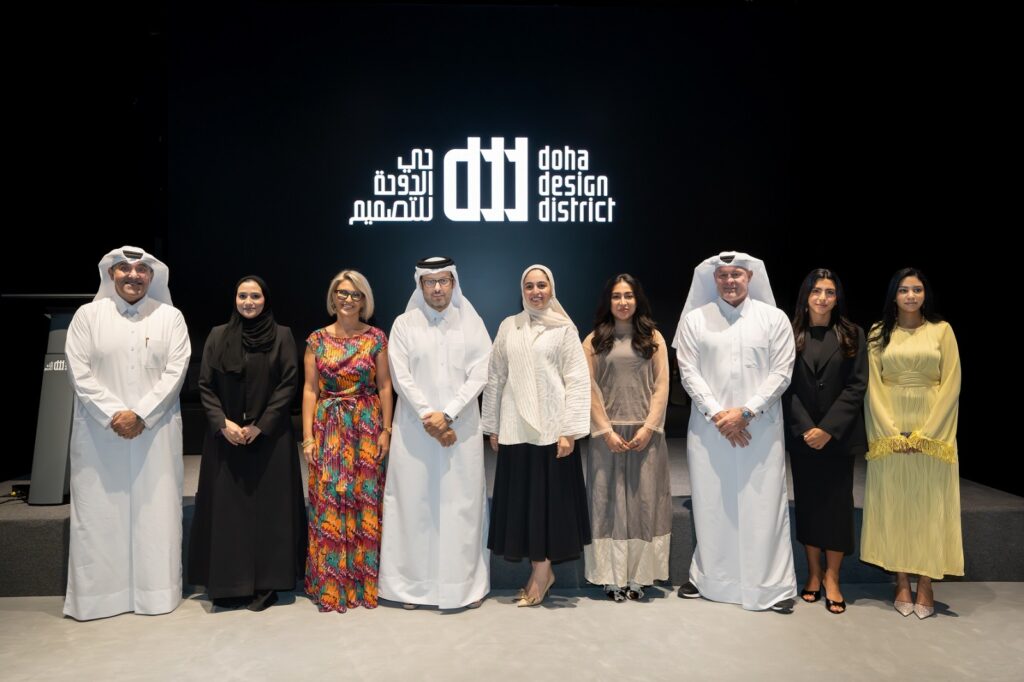
Msheireb’s creative hub opens an immersive experience that puts the making of art — not just the finished work — at the centre of the story. Doha Design District, the creative anchor of Msheireb Downtown Doha, has launched a new spatial platform called “Mada and Sada,” designed to take visitors inside the creative process rather than simply presenting them with a finished result. The concept is built into the name itself: Mada represents the origin — the first spark of an idea — while Sada represents its echo, the moment that idea meets a public audience. Together, the two spaces trace a single continuous journey, from impulse to expression, and visitors are free to move through them as one experience or explore each independently. A Launch Rooted in Music, Identity, and Place The platform opened with the debut of “Msheireb Symphony,” a piece composed by acclaimed Qatari composer and singer-songwriter Dana Alfardan, commissioned specifically to capture the layered identity of Msheireb Downtown Doha — a district built around the dialogue between heritage and modern, sustainable urban life. The symphony set the tone for an evening centred on the relationship between roots and possibility. The event was introduced by Dana Kazic, Director of Doha Design District, alongside Samar Maakaroun, Partner and Creative Director at global design studio Pentagram, who led the visual identity behind Mada and Sada. The design draws directly from the architectural language of Msheireb itself, creating a platform that feels native to its surroundings — an identity rooted in Arab culture and heritage rather than layered on top of it. Inside the Two Spaces Within “Mada,” creators Yasamin Sheikhi and Nada Al Kharashi gave visitors an unfiltered look at their creative practice — sharing not polished final pieces, but the uncertainty, iteration, and discovery that shape work before it’s ready for public view. “Sada,” meanwhile, showcased 20 shortlisted proposals from the District’s Public Art Open Call — a live snapshot of ideas still being shaped, each one competing to reimagine Doha’s public spaces. As Dana Kazic put it, the District is built on the belief that creativity flourishes in environments that are open, collaborative, and constantly evolving. A Platform Designed to Keep Evolving The launch marks the start of an ongoing programme of workshops, exhibitions, and cross-disciplinary collaborations across both spaces — built to support emerging and established creative voices alike, while narrowing the gap between creative process and public engagement. The opening night also featured a session with Samar Maakaroun on Pentagram’s approach to brand identity as a strategic tool — one capable of shaping how an organisation’s story, values, and purpose are communicated visually and verbally, in line with Msheireb Properties’ broader push to support Qatar’s design and creative industries. Part of a Larger Creative Vision “Mada and Sada” extends a wider ambition at Doha Design District: positioning design not as decoration, but as a force that shapes how a city thinks, feels, and grows. Every initiative the District has launched — from open calls to residencies to immersive experiences like this one — reflects an effort to build a genuinely connected creative ecosystem, where designers have real infrastructure to develop their craft and audiences are invited into the process rather than held at a distance. Set within the urban fabric of Msheireb Downtown Doha, the District treats the city itself as a canvas — turning its streets and shared spaces into a living platform for ideas that will continue to shape Qatar’s design landscape.
AI Finance Startup GRO Establishes Doha Headquarters Following GrowthX Capital Investment
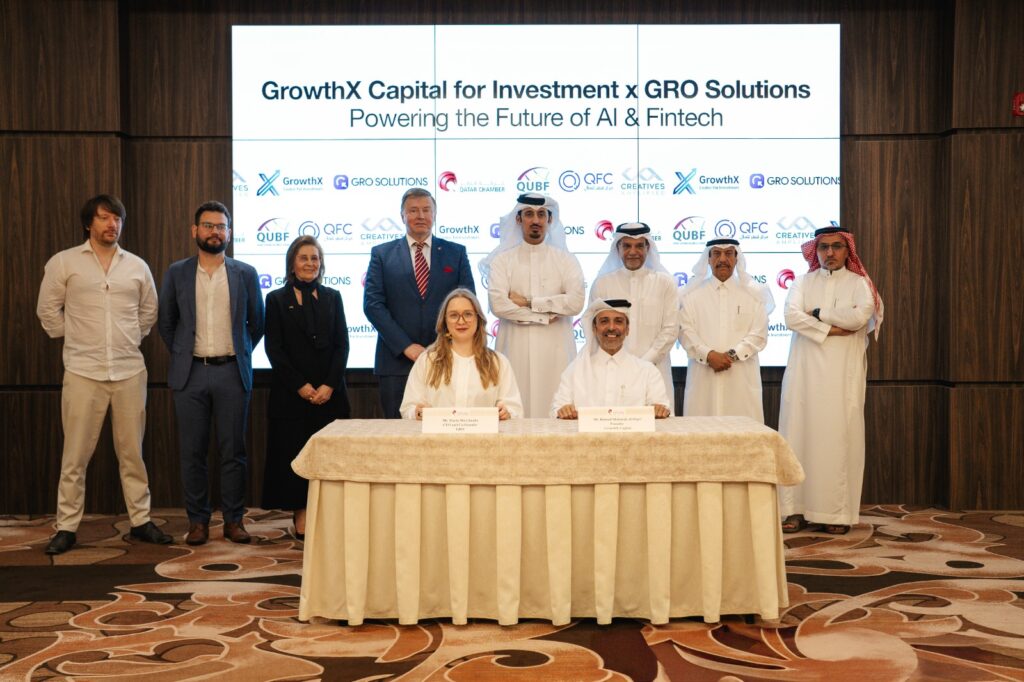
GRO, an emerging artificial intelligence-powered financial wellness platform, has selected Doha as its global headquarters following a pre-seed investment from GrowthX Capital, a newly launched venture capital fund founded by entrepreneur Hamad Al-Hajri. The announcement coincided with the unveiling of GrowthX Capital’s ambitious QAR 500 million investment strategy, aimed at supporting innovative startups and scale-ups over the next five years. The announcement was made during an event hosted at Qatar Chamber and attended by prominent figures from Qatar’s business, investment, and diplomatic communities. Among those present were Qatar Financial Centre (QFC) CEO Mansoor Rashid Al-Khater, Ukraine’s Ambassador to the State of Qatar H.E. Andrii Kuzmenko, and Dr. Olga Revina, Founder and Chairperson of the Qatar–Ukraine Business Forum (QUBF). The investment marks an important milestone for both GRO and Qatar’s growing startup ecosystem, reinforcing the country’s position as a destination for international founders seeking access to regional markets, investment capital, and innovation-driven growth opportunities. From FinTech Incubator to Regional Expansion GRO’s connection with Qatar began through its participation in the Qatar FinTech Hub (QFTH), an accelerator programme developed by Qatar Development Bank (QDB). The startup successfully completed the programme’s seventh cohort and gained recognition after securing the “Best Pitch” award during the final showcase. The achievement opened doors to conversations with investors and ecosystem partners, ultimately leading to support from GrowthX Capital and the company’s decision to anchor its operations in Doha. Founded by Mariia Shevchenko alongside a team of Ukrainian and German entrepreneurs, GRO is focused on leveraging artificial intelligence to simplify personal finance management and improve financial literacy among individuals and families. Redefining Financial Education Through AI The company’s platform combines AI-driven insights with financial education tools designed to help users better understand spending behaviour, improve budgeting habits, and make more informed financial decisions. According to Shevchenko, the vision behind GRO is to make financial knowledge accessible to a broader audience rather than limiting it to those with access to specialised expertise or financial advisers. As financial products and digital payment systems become increasingly sophisticated, GRO aims to equip users with practical tools that help them navigate their financial lives with greater confidence while developing long-term money management skills. Strengthening Qatar–Ukraine Innovation Cooperation GRO’s decision to establish its headquarters in Doha reflects a broader trend of growing collaboration between Qatar and Ukraine in technology, entrepreneurship, and innovation. Recent years have seen increasing engagement between stakeholders from both countries, with organisations such as the Qatar–Ukraine Business Forum actively working to create opportunities for startups, investors, and technology companies. The relationship gained further momentum following high-level diplomatic engagements and growing interest in cross-border innovation partnerships. Dr. Olga Revina noted that the investment demonstrates the strong potential for collaboration between Ukraine’s entrepreneurial talent and Qatar’s rapidly evolving innovation ecosystem. She highlighted the complementary strengths of both countries and the opportunities they create for building globally competitive businesses. Ukraine’s Ambassador to Qatar, H.E. Andrii Kuzmenko, also welcomed the development, describing it as an example of how innovation-driven partnerships can strengthen economic ties and create new opportunities for international cooperation. GrowthX Capital’s Vision for Startup Development The investment in GRO represents the first publicly announced venture backed by GrowthX Capital since the fund’s launch. Founded by Hamad Al-Hajri, the entrepreneur behind Qatar’s technology success story Snoonu, GrowthX Capital has been established to support founders building scalable businesses with regional and global ambitions. The fund plans to deploy up to QAR 500 million across promising ventures operating in sectors such as artificial intelligence, fintech, digital services, and emerging technologies. Al-Hajri expressed confidence in GRO’s growth potential, citing the strength of its leadership team, product vision, and market opportunity. He emphasised that the fund’s objective is to help high-potential startups scale from Qatar while contributing to the country’s innovation economy. Looking Ahead With its headquarters now established in Doha, GRO is preparing for the next phase of growth. The company has launched an early-access programme ahead of its beta release and is actively building partnerships across the financial services, education, and technology sectors. The move adds another international startup to Qatar’s expanding innovation landscape and reflects the country’s continued efforts to attract entrepreneurs, investment, and technology-driven businesses aligned with Qatar National Vision 2030. As Qatar continues to strengthen its position as a regional hub for startups and venture capital, investments such as GrowthX Capital’s backing of GRO highlight the growing confidence in the country’s ability to nurture globally relevant innovation from the heart of the Gulf.
Qatar–Poland Economic Partnership Gains Momentum as Bilateral Trade Reaches US$1.4 Billion
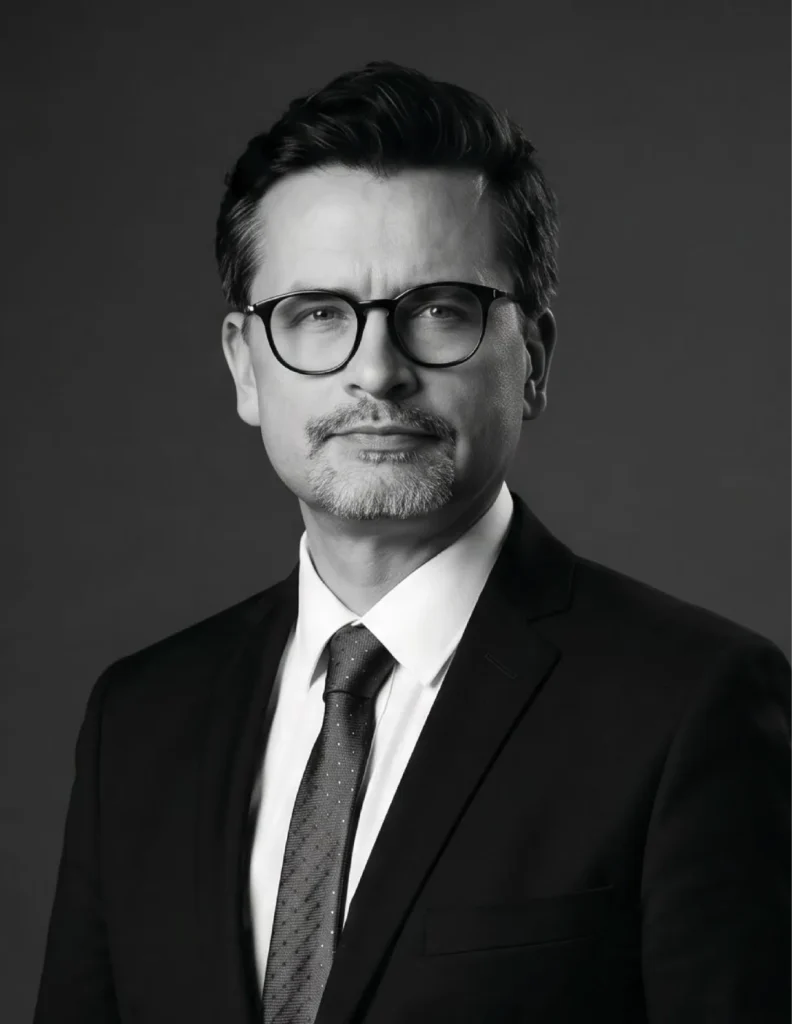
Doha, Qatar: The economic partnership between Qatar and Poland continues to gain momentum, with bilateral trade reaching nearly US$1.4 billion in 2025, reflecting the growing depth of cooperation between the two countries across energy, investment, logistics, tourism, startups and scientific exchange. In an exclusive conversation with Business Leaders Magazine, His Excellency Tomasz Sadziński, Ambassador of the Republic of Poland to the State of Qatar, discussed the strength of Qatar–Poland relations, Poland’s economic rise, the strategic role of LNG cooperation, and the opportunities ahead for both countries. A Stronger Qatar–Poland Business Corridor According to H E Sadziński, the economic partnership between Qatar and Poland remains vibrant and increasingly strategic. Bilateral trade in 2025 reached almost US$1.4 billion, equivalent to approximately QR5.1 billion. Qatari data also showed that exports from Poland to Qatar reached around US$240 million, equivalent to QR873.6 million, during the same year. The Ambassador noted that the relationship between the two countries has grown beyond traditional diplomacy, supported by high-level political engagement, business forums, direct connectivity and stronger private-sector interest. The visit of His Highness The Amir Sheikh Tamim bin Hamad Al Thani to Poland in July 2024, accompanied by a large business forum, marked an important milestone in strengthening bilateral relations. Poland’s Economic Rise Poland has emerged as one of Europe’s strongest economic performers. Since its transition to a market economy in the 1990s, the country has recorded significant long-term growth, supported by its accession to NATO in 1999 and the European Union in 2004. H E Sadziński highlighted that since 1990, Poland’s GDP has increased seven-fold, while exports have grown 30 times in volume. In terms of GDP per capita based on purchasing power parity, Poland has also surpassed the United Kingdom — a development that would have been difficult to imagine decades ago. Despite global uncertainty and geopolitical tensions, Poland’s economy grew by 3.5 percent in 2025, around two percentage points above the EU average. The year also marked a major milestone as Poland joined the group of US$1 trillion economies. Looking ahead, Poland — a market of around 38 million consumers — is expected to be the fastest-growing economy in the European Union in 2026, with growth estimated at 3.7 percent. Energy as the Strategic Cornerstone Energy remains one of the most important pillars of Qatar–Poland cooperation. Poland imports almost 3 billion cubic metres of LNG from Qatar annually, making Qatari LNG a key part of Poland’s energy security strategy. In 2025, the value of LNG delivered from Qatar to Poland exceeded US$960 million, equivalent to approximately QR3.5 billion. H E Sadziński noted that Qatar played an important role in helping Poland diversify its energy supply. Qatar delivered the first non-Russian gas shipment to Poland in December 2015, helping the country move away from full dependence on Russian supplies. Poland is also expanding its LNG import capacity from the current 8 bcm to 14.4 bcm by 2028, underlining the continued importance of LNG in the country’s energy mix. At the same time, the Ambassador pointed to major opportunities for Qatar and Poland to cooperate in renewable energy. Between 2000 and 2023, Poland’s electricity generation from solar and wind rose from zero to 35 TWh, accounting for 21 percent of total electricity production. Poland plans to invest around US$250 billion in its energy sector by 2036, including renewable energy, energy storage, nuclear power and distribution networks. Investment Opportunities Across Key Sectors Beyond energy, Poland and Qatar are looking at new areas of cooperation in investment, logistics, food security and technology. Poland has long been a regional leader in attracting foreign direct investment, receiving around US$400 billion in FDI since 1989. At the same time, Polish outward investment is also rising, exceeding US$40 billion so far. In 2025 alone, Polish companies announced 22 acquisitions in Western Europe, reflecting the growing international confidence and ambition of Polish businesses. H E Sadziński said this is an opportune moment for Qatar and Poland to accelerate joint investments. In November 2025, the Embassy of Poland in Doha hosted the Poland–Qatar Investment Forum, in cooperation with business entities including the Qatari Businessmen Association. During the forum, Invest Qatar and the Polish Investment and Trade Agency signed an MoU to strengthen cooperation. Further momentum followed in 2026, with an Invest Qatar delegation visiting Poland to attend the European Economic Congress and network with Polish businesses in Warsaw. Representatives of Qatar’s investment sector also participated in the ElevenLabs Summit in Warsaw. Food Security and Logistics Food security is another growing area of cooperation between Qatar and Poland. The launch of Lulu Group’s regional sourcing centre in Poland in April 2026 was highlighted as an important sign of Poland’s growing relevance to Qatar’s food security ecosystem. Poland’s logistics ambitions are also gaining attention. The country is developing Port Polska, a major international communications and logistics hub valued at US$32.5 billion, designed to link air, rail and road routes in central Poland. This project could strengthen Poland’s role as a gateway between Europe, the Gulf and wider international markets. Poland’s Startup Strength Poland is also positioning itself as a major startup and innovation hub in Europe. According to H E Sadziński, there are more than 3,500 startups across Central and Eastern Europe, with almost a quarter based in Poland. Since early 2024, early-stage Polish companies have raised more than €165 million, the highest level in the region. By the first quarter of 2025, their combined value had climbed to €58 billion, ahead of neighbouring countries. Poland’s startup ecosystem is supported by a strong technology workforce. The country has around 600,000 software developers, with thousands more entering the labour market every year. In 2023, more than 70,000 students were enrolled in ICT-related disciplines. The Ambassador highlighted successful Polish innovation companies such as ElevenLabs, CD Projekt, Brainly, DocPlanner, Booksy, BLIK, IceEye and InPost as examples of Poland’s growing global technology profile. He said Poland’s ambition is clear: to become the Silicon Valley of Europe. Academic and Scientific Cooperation Education, research and youth mobility are also becoming important
Auto Class Cars Launches Lynk & Co 900 Full-size Flagship PHEV SUV in Qatar
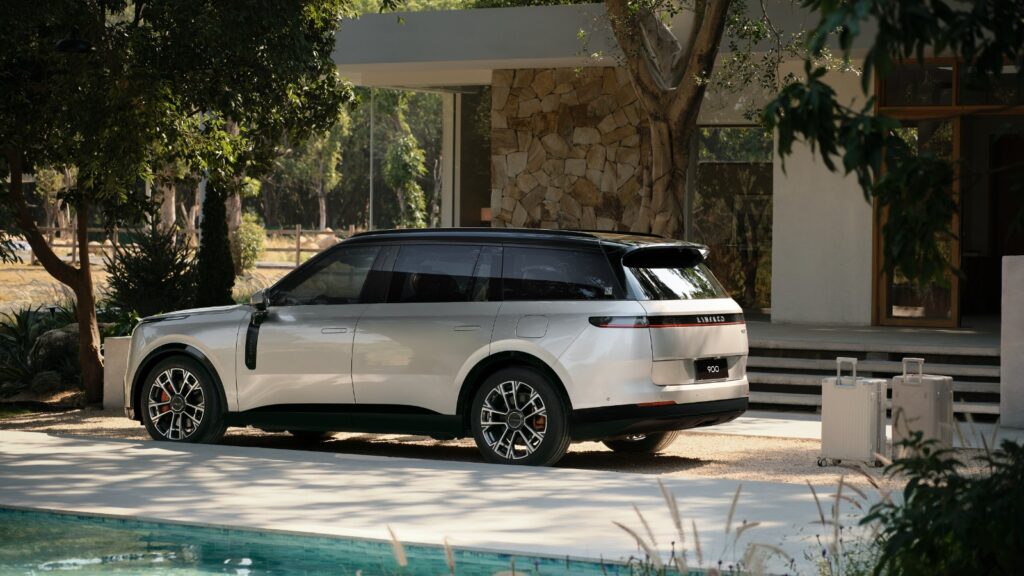
Auto Class Cars, a subsidiary of Nasser Bin Khaled Group and the authorised general distributor of Lynk & Co in Qatar, has officially launched the Lynk & Co 900 Full-size Flagship PHEV SUV in Qatar during a spectacular ceremony held at Rosewood Hotel Doha in Lusail. The launch marks a major milestone for Lynk & Co in the Qatari market, introducing a new benchmark in the luxury plug-in hybrid SUV segment. Combining premium comfort, intelligent technology, advanced safety engineering and high-performance hybrid capability, the Lynk & Co 900 is positioned as one of the brand’s most ambitious vehicles to date. The new model, along with a wider range of Lynk & Co vehicles, is now on display at the Auto Class Cars showroom on Salwa Road. A Landmark Launch for Lynk & Co in Qatar The official unveiling was led by His Excellency Sheikh Nawaf Bin Nasser Bin Khaled Al Thani, Chairman of Nasser Bin Khaled Group, and His Excellency Sheikh Faleh Bin Nawaf Al Thani, Managing Director of the Automotive Sector at Nasser Bin Khaled Group. They were joined by Hani Abdo, CEO of Nasser Bin Khaled Holding Company, Tian Jinjun, Chief Executive Officer and Regional Representative of Lynk & Co Middle East, Frank Zauner, General Manager of Auto Class Cars, Ahmed Azmy, Group Marketing & Communications Manager at NBK Group, and Ahmad Firoozi, Marketing Manager at Auto Class Cars. The event was attended by distinguished guests, stakeholders, members of the media and influencers, who experienced Lynk & Co’s new flagship model through a captivating presentation and showcase. The launch represents a defining new chapter for Lynk & Co in Qatar, as the brand continues to expand its presence in the country’s competitive premium automotive market. A New Era in Mobility Commenting on the launch, H.E. Sheikh Faleh bin Nawaf Al Thani, Managing Director of the Automotive Sector at NBK Group, said the arrival of the Lynk & Co 900 marks an important moment for the future of mobility in Qatar. “Tonight marks a new era in mobility in Qatar. This is a landmark milestone in our journey — one that will reshape perceptions of transportation and meet the expectations of modern drivers seeking a truly futuristic experience,” he said. He added that the launch reflects NBK Group’s broader strategy to bring the latest state-of-the-art products to the Qatari market through Lynk & Co, a brand that is charting its own path beyond conventional competition. Setting a New Standard for Luxury and Innovation Frank Zauner, General Manager of Auto Class Cars, said the Lynk & Co brand has consistently set new standards for reliability, luxury and innovation since its introduction in Qatar. “With the all-new Lynk & Co 900 Ultra PHEV, we are confident it will define this category and become the vehicle of choice for today’s forward-thinking drivers,” he said. Zauner noted that the strong demand already witnessed for the vehicle reflects its status as a flagship model that brings together luxury, technology and modern practicality. “At Auto Class Cars, we are proud of our partnership with Lynk & Co and honoured to be among the first markets in the region to introduce this iconic vehicle,” he added. Redefining the Future of Mobility Tian Jinjun, Chief Executive Officer and Regional Representative of Lynk & Co Middle East, said the Lynk & Co 900 reflects the brand’s vision to redefine the future of mobility. “At Lynk & Co, our vision is to redefine the future of mobility by creating vehicles that seamlessly combine intelligent technology, exceptional design, and real-world practicality,” he said. He added that the Lynk & Co 900 brings together advanced innovation, class-leading safety, premium comfort and high-performance hybrid technology in a vehicle designed to meet the evolving expectations of today’s customers. “We are delighted to introduce the Lynk & Co 900 to Qatar, a market that continues to embrace innovation and excellence, and we look forward to offering customers a new benchmark in the full-size SUV segment,” he said. The Lynk & Co 900 Full-size Flagship PHEV SUV The Lynk & Co 900 is a full-size plug-in hybrid flagship SUV designed for modern families and premium mobility customers. Measuring 5.24 metres in length, the model is built on the flat-floor SPA Evo platform, offering a spacious three-row cabin, rotating second-row seats, advanced entertainment screens and powerful hybrid performance. The vehicle combines European-derived safety engineering with advanced Chinese electric vehicle technology. In its highest specification, the Lynk & Co 900 delivers a combined system output of up to 528 kW, equivalent to 710 hp, enabling acceleration from 0 to 100 km/h in approximately 4.6 seconds. Designed to deliver comfort, performance and practicality, the model also offers impressive electric driving range, rapid charging capability and a refined driving experience across urban and long-distance journeys. Exterior Design and Road Presence The Lynk & Co 900 features a bold exterior design that reflects its flagship positioning. A panoramic fixed glass roof, commanding alloy wheels and strong proportions give the SUV a distinctive road presence. The model is available with 20- and 21-inch alloy wheels, while its novel split tailgate, marketed as the Electric Unbounded Tailgate, opens both upward and downward. The lower section can serve as a shelter or seating platform, adding practicality for family travel and outdoor use. Additional premium features include soft-close doors, heated cameras integrated into the door mirrors, tinted acoustic glass for enhanced noise insulation and approximately 20 cm of ground clearance. A Lounge-like Interior Inside, the Lynk & Co 900 has been designed to create the atmosphere of a luxury lounge on wheels. The cabin features a sweeping 30-inch 6K OLED touchscreen extending from the centre console to the passenger dashboard, supported by a 12.7-inch digital instrument cluster and an expansive 95-inch augmented reality head-up display. Rear passengers benefit from a second 30-inch 6K screen that folds from the ceiling, while the second row also features its own dedicated display. The infotainment system is powered by dual Qualcomm Snapdragon 8295 processors running the Lynk
Arabic Authenticity Is Building a Future While Staying Rooted in Legacy: Dr Khalid Abdulla Al Binali
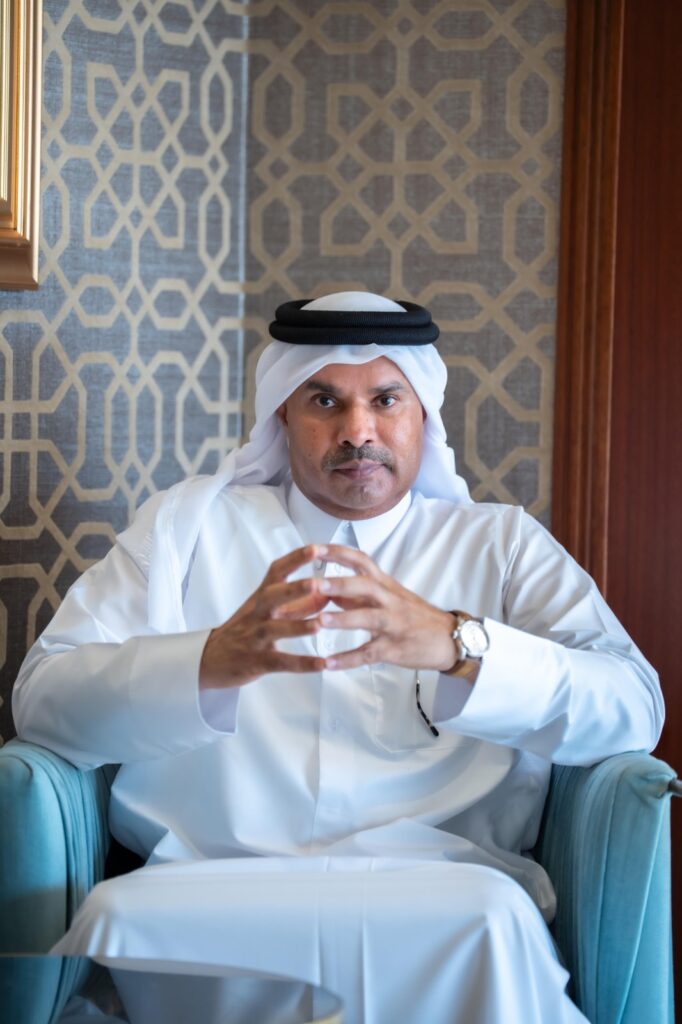
Businessman, philanthropist and cultural ambassador Dr Khalid Abdulla Al Binali speaks to Business Leaders about discipline, leadership, philanthropy, Qatar’s cultural identity and the responsibility of building lasting impact. Dr Khalid Abdulla Al Binali’s journey cannot be defined by one title alone. A businessman, global philanthropist, community leader and passionate ambassador of Qatar’s tourism, art and cultural landscape, he represents a leadership model rooted in purpose, heritage and service. In an exclusive conversation with Business Leaders, Dr Al Binali speaks with Aparajita Mukherjee about the discipline behind running diverse businesses, the role of philanthropy in shaping stronger communities, and why Qatar’s future remains deeply connected to its cultural legacy. An honorary doctorate holder, member of the Human Rights Committee, recipient of the Medal of Honour from Equatorial Guinea, and founder of the FIFA World Cup and Asian Cup visitors’ welcome initiative in Qatar, Dr Al Binali was also honoured with the Qatar Tourism Award in the category of Outstanding Community Contribution, presented by Qatar Tourism in collaboration with UN Tourism. A Journey Defined by Purpose For Dr Al Binali, leadership has never been about a single sector or designation. His career has moved across business, culture, tourism, sport and community initiatives, with each chapter offering a new lesson in impact. “My journey has never been defined by a single title or sector — it has been defined by purpose,” he says. He reflects that some of his most important turning points were not planned. Many opportunities arrived as challenges, requiring him to step into unfamiliar territory and build something meaningful from the ground up. “One consistent thread throughout my journey has been the belief that success becomes more meaningful when it contributes to people, identity and legacy — and above all, earning the contentment of one’s parents,” he says. That guiding question remains central to his work: How can this create lasting value? The Discipline Behind Diverse Business Leadership Running a diverse business portfolio requires more than ambition. For Dr Al Binali, it requires a set of principles that do not change with circumstance. The first is integrity. “Trust is earned over years and lost in moments,” he says. The second is discipline — the belief that consistency matters more than motivation, and that sustainable success is built through habits. His third principle is placing people before process. Great institutions, he believes, are built by empowered individuals. The fourth is long-term thinking, because quick wins may be tempting, but meaningful impact requires patience. The fifth is adaptability. “The world changes rapidly, and leadership today requires humility and the willingness to evolve,” he says. Together, these principles shape the way he approaches business, community work and national contribution. Qatar’s Message to the World As a passionate advocate for Qatar’s tourism, art and cultural identity, Dr Al Binali believes the country carries a powerful message to the world. “The most important message is that Qatar is a nation deeply rooted in heritage while confidently shaping the future,” he says. He notes that many visitors arrive expecting modernity — and they certainly find it. But what stays with them most deeply is authenticity. “Qatar offers something increasingly rare in today’s world: a genuine sense of identity, generosity and cultural pride. We welcome the world while remaining true to who we are.” This balance between progress and heritage has become central to Qatar’s global identity, especially as the country continues to expand its role in tourism, sport, culture, business and international dialogue. The Human Side of Qatar’s Sporting Ambition Dr Al Binali’s role as founder of the visitors’ welcome initiative during the FIFA World Cup and Asian Cup gave him direct insight into the power of sport as a platform for human connection. “One of the greatest lessons was understanding the power of human connection,” he says. He believes major sporting events are often judged by infrastructure, logistics and organisation. Yet what people remember most is emotional: how they were welcomed, how they were treated and how they were made to feel. During the FIFA World Cup and Asian Cup, Qatar’s hospitality, volunteerism and community spirit became part of the country’s global image. “The lesson moving forward is clear: sport should not only entertain — it should unite communities, inspire younger generations, and strengthen national pride while building lasting international relationships,” he says. Philanthropy as Responsibility In uncertain times, philanthropy offers something rare: steadiness. For Dr Al Binali, giving has shaped not only his public work but also his sense of purpose. “Philanthropy teaches humility,” he says. He views giving not simply as financial support, but as a wider responsibility. It includes time, mentorship, opportunity and presence. Communities become stronger, he believes, when people invest in one another — especially during difficult periods. “Leadership is not only about achievement — it is about responsibility,” he says. For him, strong societies are built when people feel seen, supported and valued. Looking Ahead When asked where he sees himself in two years, Dr Al Binali points to continuity rather than reinvention. Professionally, he hopes to continue contributing to initiatives that create long-term impact for Qatar, particularly across culture, tourism, sport and community development. Personally, his focus is balance. “Leadership means little without perspective, family, health and meaningful relationships. Success should expand your sense of purpose — not narrow it,” he says. Quick Fire With Dr Khalid Abdulla Al Binali One line that best describes you — the person, not the title:A builder of ideas, relationships and meaningful impact. If you could rewrite one chapter of your life, what would you change — and why?I believe every chapter — including the difficult ones — carries value. If anything, I would perhaps embrace risk even earlier, because growth often lives outside certainty. The best advice you ever received:“Character will take you where credentials alone cannot.” It was advice I received early in life and have carried with me ever since. Your most memorable holiday:The most memorable experiences are often the ones shared with family and shaped
Why the Lincoln Nautilus Hybrid is the Smart Choice for Modern Luxury
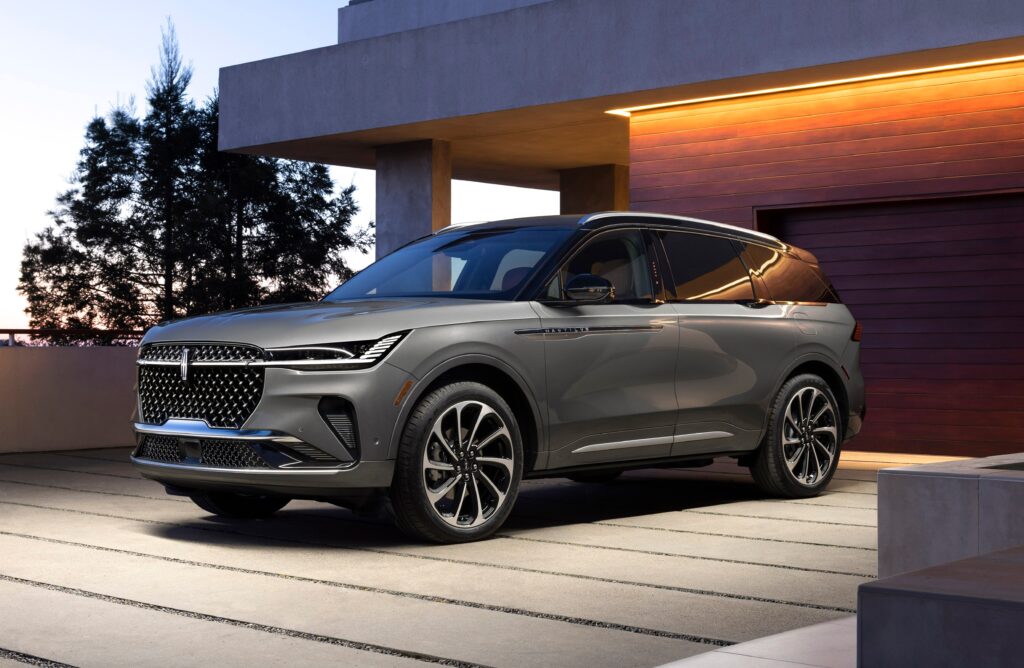
Recently named “Best Luxury Hybrid SUV” by US News & World Report, the Nautilus Hybrid portrays luxury as a smart balance of opulence, efficiency, and everyday usability. Nautilus’ advanced hybrid powertrain delivers an impressive 16.1 km/L, offering significant fuel savings, especially relevant given rising fuel prices. At a time when consumers are seeking more than extravagance, luxury is undergoing a redefinition. It’s now about making smart, informed choices that offer elevated comfort and real-world practicality. And it’s this philosophy that finds expression in the Lincoln Nautilus Hybrid, a vehicle that brings together generous refinement and thoughtful efficiency; especially relevant in a dynamic Middle East region where fluctuating fuel prices remain a consideration. Put simply, Nautilus Hybrid presents a compelling argument for drivers looking to reconcile premium comfort with financial foresight. It also backs up that promise with strong credentials, including recognition as Best Luxury Hybrid SUV by U.S. News & World Report in its 2026 Best Hybrid and Electric Cars awards, which honor vehicles that excel in quality, efficiency, and value. For the Nautilus Hybrid, this accolade independently affirmed Lincoln’s focus on vehicles that meet the changing expectations of today’s luxury buyer. It highlighted a strong balance of luxury, efficiency, and everyday usability, helping it stand out in the competitive luxury hybrid SUV segment. At the heart of its appeal is an advanced hybrid powertrain featuring a 2.0L I-4 turbocharged hybrid engine and a 65kW electric motor, working together to produce 214kW (287hp) and 400Nm of torque. Paired with an Electronic Continuous Variable Transmission (eCVT), the Nautilus Hybrid delivers exceptional fuel economy at 16.1 km/L, offering efficiency without compromising power or driving pleasure. Beyond its efficiency, Nautilus Hybrid remains unequivocally a Lincoln, meaning indulgence is woven into every detail, from the moment you approach, the Lincoln Embrace welcomes you, and the light touch door handles offer effortless entry. Inside, the cabin is a sanctuary of opulence, where ambient lighting, the distinctive piano key gear shifter, and active noise control immediately set a serene tone, while for those seeking ultimate personalization, the digital scents feature offers a choice of curated fragrances like Violet Cashmere, Mystic Forest, and Ozonic Azure, transforming the interior into a bespoke environment. The innovative Lincoln Rejuvenate feature further enhances well-being, creating a harmonious sensory experience designed to refresh and de-stress. Comfort is paramount, with premium leather seats standard across all hybrid trims, featuring heating and ventilation for the first row, additionally elevated in the Reserve and Presidential models which offer 24-way Perfect Position seats with a choice of five massage patterns, ensuring unparalleled comfort on even the longest drives. Technological sophistication is equally impressive with the Lincoln Digital Experience, featuring a 48-inch Panoramic Display with an 11.1-inch center display. Higher trims also offer an immersive 28-speaker Revel Ultima 3D Audio system, providing an auditory experience that rivals any concert hall. Nautilus Hybrid’s design extends to its comprehensive suite of safety and driver-assist technologies, such as the Lincoln Co-Pilot360™ Drive 2.0 system, providing oversight and assistance, including via a 360-degree camera, Adaptive Cruise Control with Lane Centering and Stop-and-Go, Blind Spot Detection with Cross-Traffic Alert, and Pre-Collision Assist with Automatic Emergency Braking. The Lincoln Nautilus Hybrid, offering fuel savings and a reduced environmental footprint without diminishing the Lincoln experience, transcends the traditional definition of a luxury SUV.
Sidra Medicine and Zulal Wellness Resort by Chiva-Som Sign MoU to Elevate Wellness Programs
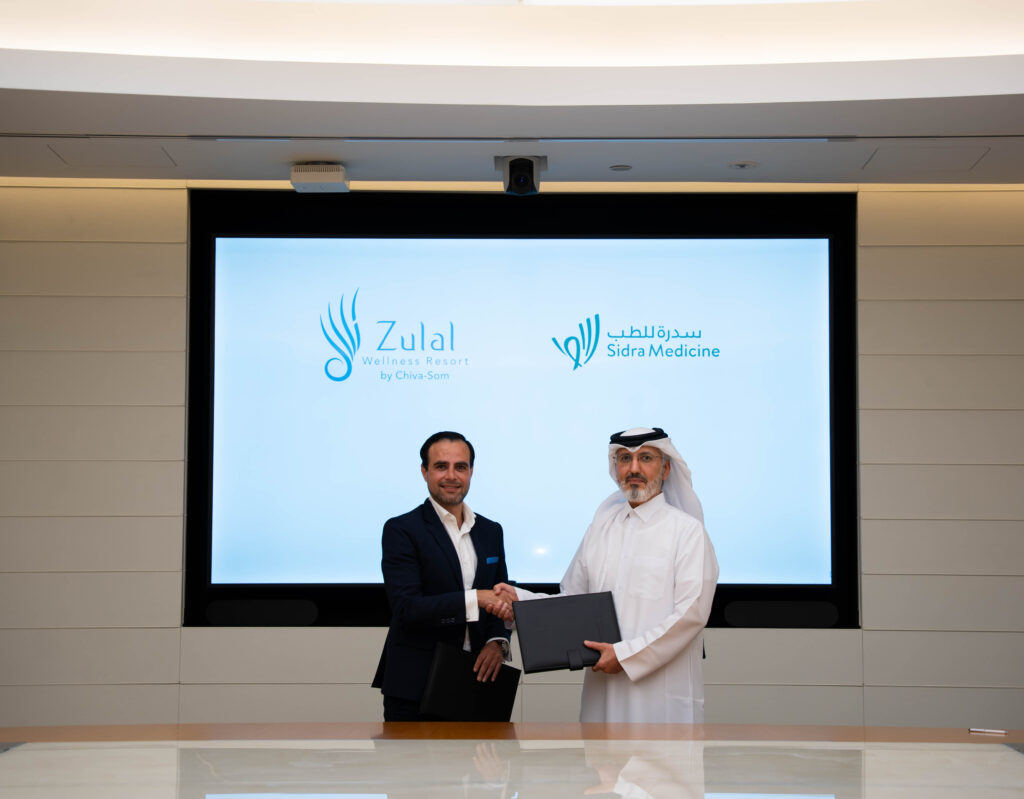
Partnership combines wellness expertise and medical excellence to create transformative health and recovery experiences Sidra Medicine and Zulal Wellness Resort by Chiva-Som, members of Qatar Foundation, officially signed a Memorandum of Understanding (MoU) to collaborate on the development of integrated wellness and preventive health programs. The signing ceremony on 1 June 2026, was attended by Mr. Mohammed Khalid Al Mana, Acting Chief Executive Officer and a Member of the Board of Governors at Sidra Medicine and Mr. Ammar Samad, General Manager of Zulal Wellness Resort by Chiva-Som. The collaboration aims to combine Sidra Medicine’s clinical expertise with Zulal Wellness Resort’s holistic wellness approach to create medically supported wellness and holistic wellbeing programs for Sidra Medicine’s patients. Through this partnership, both organisations will explore opportunities to introduce wellness-focused programs supported by clinical oversight; lifestyle and nutrition initiatives; diagnostic and preventive health services; as well as professional education and training programs. Being the first wellness resort dedicated to Traditional Arabic and Islamic Medicine (TAIM), the partnership with Zulal Wellness Resort will also seek to create a personalized range of wellness, therapeutic and lifestyle enhancement treatments; incorporating TAIM’s healing wisdom with Sidra Medicine’s state-of-the-art health services and therapies. Mr. Mohammed Khalid Al Mana, Acting Chief Executive Officer and a Member of the Board of Governors at Sidra Medicine, said: “Our partnership with Zulal Wellness Resort by Chiva-Som represents an important step in integrating clinical excellence with wellness innovation. By working together, we can further enhance patient and family wellbeing through comprehensive and personalized care experiences.” The first phase of the program, part of an expansion of Sidra Medicine’s Women’s Services, will include postpartum recovery experiences, mental and preventive health services, wellness education, referral pathways, and in-hospital wellness offerings. Mr. Ammar Samad, General Manager of Zulal Wellness Resort by Chiva-Som, said: “This collaboration reflects our shared vision of elevating wellness and preventive healthcare through a holistic and evidence-based approach, aligned with the goals of Qatar National Vision 2030. Together with Sidra Medicine, we aim to create meaningful wellness experiences that support long-term wellbeing for our guests and the wider community.” The MoU marks the beginning of a strategic collaboration focused on advancing wellness, recovery, and preventive healthcare offerings in Qatar while supporting innovation across both medical and wellness sectors.