

Commercial Disputes: Arbitration as the Preferred Resolution Method
In today’s global business environment, the success of major commercial transactions depends not only on how negotiations are conducted, but also on the dispute-resolution strategy agreed before any dispute arises. For entities managing corporate exits, executing FIDIC-governed construction projects, or entering into cross-border SaaS licensing agreements, the choice of forum is a strategic decision. Commercial arbitration offers confidentiality, procedural efficiency, and international enforceability, without reliance on bilateral judicial cooperation treaties, writes Yousif Al-Abdulghani”. THE ADVANTAGES OF ARBITRATION National courts play a fundamental role in the administration of justice and continue to develop specialised expertise in commercial matters. Arbitration nonetheless offers distinct advantages that complement the court system: parties may choose arbitrators with specific industry knowledge, control the procedure itself, including language, timeframes, and venue, and keep hearings and awards confidential, safeguarding trade secrets and sensitive financial information from disclosure. QATAR’S ARBITRATION FRAMEWORK Qatar has established a strong regional model through Law No. (2) of 2017 Promulgating the Civil and Commercial Arbitration Law, based on the UNCITRAL Model Law. The Law confirms that an arbitration clause survives even if the underlying contract is invalid and empowers tribunals to order interim measures to preserve assets pending resolution of the dispute. It is supported by leading institutions: the Qatar International Center for Conciliation and Arbitration (QICCA), which offers integrated digital case management, and the Qatar International Court and Dispute Resolution Centre (QICDRC), which combines international judges with advanced case-management technology. INTERNATIONAL ENFORCEABILITY OF ARBITRAL AWARDS Under the 1958 New York Convention, to which more than 170 states, including Qatar, are party, arbitral awards enjoy broader international enforceability than national court judgments. An award rendered in Qatar may be enforced against a counterparty’s assets in most jurisdictions worldwide, subject only to limited grounds for refusal. DRAFTING RECOMMENDATIONS Boilerplate arbitration clauses often give rise to procedural difficulties. A well-drafted clause should define the scope of disputes covered, designate the chosen institution and rules, such as QICCA or the ICC, and specify the language and seat of arbitration, since the seat determines the governing procedural law. A PREVENTIVE INVESTMENT Such a clause is a preventive investment that protects the business, and limits disruption should a dispute arise. Companies should engage experienced counsel to draft these clauses. Yousif Al-Abdulghani is a Licensed Attorney and Senior Legal Counsel with over 20 years’ experience in the State of Qatar, advising government entities and multinational companies on corporate and commercial law, construction, employment, and dispute resolution. Before founding the Firm, he served as Legal Counsel at the Qatar Free Zones Authority and as Secretary to the Board of Directors of Doha Venture Capital. Earlier, he worked with QatarEnergy LNG on large-scale energy and infrastructure projects.
Decisions Around Spectrum, Research, Standards on 6G Are Need of the Hour
Jawad Jalal Abbassi, head of MENA, GSMA sheds light on future networks and technology programmes that GSMA MENA is working on and with, how Artificial Intelligence is shaping the future networks, how the GSMA ensures sustainable investments in mobile broadband networks and the roadmap ahead for GSMA. By Aparajita Mukherjee “WITH THE VOLUME OF DATA GENERATED ACROSS MODERN NETWORKS, IT IS BECOMING INCREASINGLY DIFFICULT TO MANAGE EVERYTHING THROUGH TRADITIONAL PROCESSES ALONE. AI CAN HELP OPERATORS IDENTIFY PATTERNS MUCH EARLIER, ANTICIPATE FAULTS, FORECAST DEMAND AND OPTIMISE NETWORK CONFIGURATION AND ENERGY USE.” “THE GCC HAS MOVED QUICKLY ON 5G, WITH NEARLY HALF OF MOBILE CONNECTIONS NOW ON 5G. THE NEXT PHASE IS ABOUT EXTENDING THAT CAPABILITY INTO LOGISTICS, UTILITIES, MANUFACTURING, SMART INFRASTRUCTURE AND PUBLIC SERVICES.“ That means continuing the evolution towards 5G Standalone and 5G-Advanced, while building the enterprise capabilities and partnerships needed to turn advanced connectivity into services that businesses can actually use.” FUTURE NETWORKS AND TECHNOLOGY PROGRAMMES UNDER GSMA Abbassi is unequivocal when he says that he would start with the fact that technology deployment is no longer the most interesting question on its own. The more important question is what we can do with that technology once it is there. The GCC has moved quickly on 5G, with nearly half of mobile connections now on 5G. The next phase is about extending that capability into logistics, utilities, manufacturing, smart infrastructure and public services. That means continuing the evolution towards 5G Standalone and 5G-Advanced, while building the enterprise capabilities and partnerships needed to turn advanced connectivity into services that businesses can actually use. “At the same time, we have to look further ahead. Work on 6G is already beginning globally, which means decisions around spectrum, research and standards cannot wait until commercial deployment is around the corner. MENA should be part of those discussions early and bring the experience of this region into them,” asserts Abbassi. A lot of GSMA’s work also sits around the technologies that make this wider ecosystem function, according to Abbassi. “That includes IoT and eSIM specifications for connecting and managing devices at scale, GSMA Open Gateway for standardised access to network capabilities, and work around responsible AI, skills and digital inclusion. Our five-year GSMA Advance partnership with Qatar’s Ministry of Communications and Information Technology to support the Qatar Digital Academy is one example of how technology development and capability-building need to move together. MWC26 Doha will provide another opportunity to bring these conversations together and connect the region’s experience with the wider global industry,” says Abbassi. The measure of progress is not how many new technologies we deploy, but whether they improve productivity, resilience and access in ways that can be sustained, opines Abbassi. AI SHAPING FUTURE NETWORKS AI is already changing how operators make decisions about their networks. With the volume of data generated across modern networks, it is becoming increasingly difficult to manage everything through traditional processes alone. AI can help operators identify patterns much earlier, anticipate faults, forecast demand and optimise network configuration and energy use. “What interests me is the shift from reacting to network conditions to anticipating them. If an operator can identify where congestion is likely to emerge, where equipment may need maintenance or where energy is being used inefficiently before it becomes a problem, that changes both network performance and the economics of running it. As networks become more complex, that capability becomes increasingly valuable,” explains Abbassi. “At the same time, the relationship works in both directions: AI is changing networks, but the growth of AI across industries will also change what we need from those networks, from supporting time-sensitive industrial applications to handling greater demand for computing, edge capabilities and secure connectivity,” adds Abbassi. There is a wider commercial opportunity here as well. MENA operators are investing in data centres, cloud platforms and AI infrastructure, which creates opportunities to support businesses adopting AI rather than simply using it internally. That could include computing infrastructure, secure data services and industry-specific solutions across sectors such as energy, manufacturing, transport and healthcare. Operators do not need to own every part of the AI value chain, but they should be clear about where their infrastructure, scale and customer relationships give them an advantage. Of course, the fundamentals still have to keep pace, according to Abbassi. AI depends on reliable networks, computing capacity, skilled people, strong cybersecurity and responsible data use, and in a region as diverse as MENA, we also need to think about language and accessibility as adoption grows. It’s critical that we do not treat AI as a separate technology layer that we simply add to the network. “It will increasingly influence how networks are planned, operated and invested in, while also creating new demands and opportunities on top of them. The operators that get the most from it will be those that connect AI to real operational and commercial decisions, rather than measuring progress by the number of AI projects they launch,” attests Abbassi. MAIN DEVELOPMENT PARADIGMS IN THE DOMAIN OF INTERNET OF THINGS (IOT) The biggest change in IoT is that we have moved well beyond simply asking how many devices can be connected, says Abbassi, adding, “The question now is what type of connectivity a device actually needs and what outcome that connection is supposed to deliver. An industrial sensor operating for years on limited power has very different requirements from a connected vehicle or a piece of mission-critical equipment. That is why we are seeing a broader mix of technologies, including private networks, 5G-Advanced and RedCap, alongside cloud and edge computing.” At the same time, scale brings a different set of challenges, informs Abbassi. “Connecting ten devices is relatively straightforward; securely provisioning, updating and managing thousands or millions throughout their lifecycle is not. This is where common specifications, eSIM, interoperability and security become critical,” explains Abbassi. “Around 86 percent of MENA operators already offer IoT services, while licensed IoT connections globally are forecast to increase from 2.5 billion in 2022 to 5.3 billion by
Qatar-Sweden: Investment, Innovation and Sustainable Partnerships
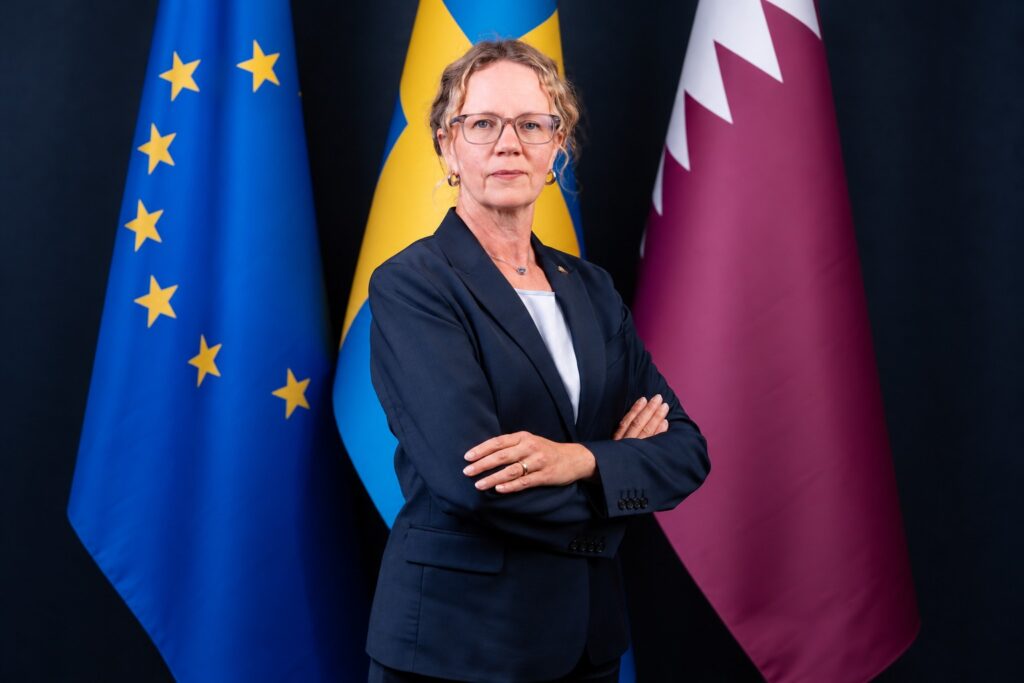
Her Excellency Josefin Simonsson Brodén, Ambassador of Sweden to Qatar, sat down with Manu G Parmar to discuss a swathe of topics – the scope of economic cooperation between Qatar and Sweden, the implementation of the 2024 MoU between Qatar Chamber and Business Sweden, opportunities for Qatari investors in Sweden, and Sweden’s view of Qatar as an investment destination. THE SWEDISH PRESENCE IN QATAR IS ABOUT MUCH MORE THAN CAPITAL OR INDIVIDUAL PRODUCTS AND SERVICES. SWEDISH COMPANIES CONTRIBUTE TECHNOLOGY, EXPERTISE, SKILLS, INNOVATION AND LONG-TERM PARTNERSHIP. THAT IS WHAT WE MEAN BY MADE WITH SWEDEN: NOT SIMPLY WHAT SWEDEN CAN SELL, BUT WHAT SWEDEN AND QATAR CAN BUILD TOGETHER. THE MOU IS AN IMPORTANT FRAMEWORK, BUT IT MUST NOW BE TRANSLATED INTO CONCRETE BUSINESS ACTIVITY AND IMPLEMENTATION. THE QATAR-SWEDEN BUSINESS COUNCIL HAS HELPED CREATE A STRONGER PLATFORM FOR CONTINUED DIALOGUE AND FOLLOW-UP SINCE 2025. Talk us through your career path. Her Excellency Brodén: I am Sweden’s new Ambassador to Qatar, having arrived in Doha only a few weeks ago. I am delighted to be here and am very much looking forward to this posting. I studied law at Uppsala University in Sweden. After university, and after spending a year studying French in Paris, I began my career at the Swedish National Board of Trade. I later joined Sweden’s Ministry for Foreign Affairs, where I have now worked for 27 years. My career has included roles in Stockholm as well as several postings abroad. I have worked across international trade, international law, and foreign and security policy. This posting brings those areas together, which makes Qatar a particularly interesting assignment for me. What is the scope of economic cooperation between Qatar and Sweden and how has that broadened since the establishment of the Embassy of Sweden in Qatar in 2014? Her Excellency Brodén: A great deal has developed since Sweden established its Embassy in Qatar in 2014. Trade was a major part of the embassy’s mandate from the beginning. Trade and cultural promotion remain at the forefront of our activities. At the same time, the bilateral relationship has broadened as political engagement has grown. Regional developments have brought greater attention to mediation, conflict resolution and humanitarian issues. Qatar is an important actor in these areas, and Sweden shares many of these interests. Our work therefore also spans both economic and political engagement. Consular affairs have also expanded as the number of Swedish citizens and people with connections to Sweden in Qatar has increased. Economically, the relationship is moving further towards investment, innovation and sustainable long-term partnerships. We see a strong fit in digitalisation and telecommunications, advanced industry, life sciences and healthcare, sustainable transport and infrastructure, as well as defence, security and resilience. The state visit by His Highness the Amir Sheikh Tamim bin Hamad Al Thani to Sweden in 2024 was an important milestone in the bilateral relationship. It created a strong momentum and gave both countries a valuable platform on which to build further cooperation. According to latest available data, there is a decline of Swedish exports to Qatar. How do you attribute this decline? And what measures are being taken to bolster the figures? Her Excellency Brodén: We have noted the decline, but it is important to place the latest figures within the broader context of a positive economic relationship. Swedish exports were stable in 2025, while the first half of 2026 showed a decline concentrated mainly in areas such as iron ore, raw materials and machinery. Bilateral trade figures can move sharply when large contracts or individual deliveries account for a significant share of the total. Wider regional developments that affect transport and logistics must also be considered. In addition, trade statistics do not fully capture the commercial relationship between Sweden and Qatar. Many Swedish companies serve the Qatari market through regional hubs or through production outside Sweden, and this activity may not appear in direct export data. Our focus is to convert the strong interest we see into more business, investment and long-term partnerships. Taken as a whole, we view the economic relationship positively, while recognising the need to continue strengthening commercial engagement. WE SEE A STRONG FIT IN DIGITALISATION AND TELECOMMUNICATIONS, ADVANCED INDUSTRY, LIFE SCIENCES AND HEALTHCARE, SUSTAINABLE TRANSPORT AND INFRASTRUCTURE, AS WELL AS DEFENCE, SECURITY AND RESILIENCE. Qatar Chamber has reported one year back: “Qatar Chamber (QC) and the Swedish Trade & Invest Council (Business Sweden) signed on Tuesday, September 3, in Stockholm a MoU to bolster cooperation between them across various areas and promote trade and investment opportunities between the countries.” Where do we see this MoU now, on the back of Swedish Minister for International Development Cooperation and Foreign Trade of Sweden Benjamin Arif Dousa’s statement: “We already have several MoUs in place – now the focus is on operationalising them.” Her Excellency Brodén: The MoU is an important framework, but it must now be translated into concrete business activity and implementation. The Qatar-Sweden Business Council has helped create a stronger platform for dialogue and follow-up since 2025. We are also planning a follow-up in Sweden soon. This should provide another opportunity to continue the dialogue and connect the relevant organisations and companies from both countries. The Qatar-Sweden Business Council is particularly important because it allows companies and other stakeholders to identify opportunities and priorities directly. The MoU itself does not award individual business contracts; it provides the framework through which practical cooperation and commercial opportunities can be developed. It has also been reported that Sweden eyes more investments from Qatar – quoting Minister Dousa. What measures are being taken to hike Qatari investments in Sweden? WE PARTICULARLY WANT TO HIGHLIGHT AREAS WHERE SWEDEN AND QATAR ARE WELL ALIGNED. THESE INCLUDE FUNDS, TECHNOLOGY, INDUSTRIAL OPPORTUNITIES, PRIVATE EQUITY, VENTURE CAPITAL, SCALE-UPS AND SMALL AND MEDIUM-SIZED ENTERPRISES. Her Excellency Brodén: We are working to make Swedish investment opportunities more visible and more accessible. We see considerable value in closer dialogue with the Qatar Investment Authority, family offices, private investors and other relevant investment partners. We
Qatar Tourism Hosts Taste of Qatar’s Second Session
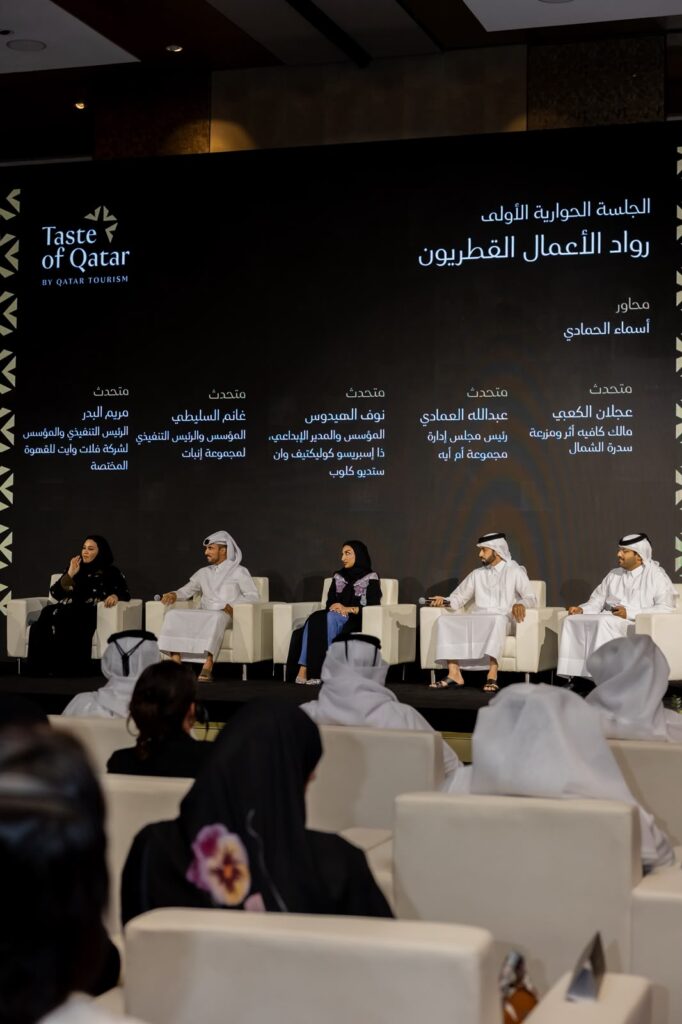
In the presence of HE Saad bin Ali Al Kharji, Chairman of Qatar Tourism, hosted the second session of its “Taste of Qatar: Spotlight on Qatari Entrepreneurs” programme. The event brought together Qatari entrepreneurs and chefs to exchange insights, share experiences and explore opportunities to further advance Qatar’s restaurant and hospitality sector. The session highlighted the contribution of local talent and homegrown brands to Qatar’s evolving culinary landscape, while reinforcing the role of entrepreneurship and innovation in raising sector standards and enriching the visitor experience. Mr. Omar Abdulrahman Al Jaber, Chief of Operations Affairs at Qatar Tourism participated in a dedicated conversation on Qatar Tourism’s vision for the restaurant sector and the role of Qatari entrepreneurs in shaping the country’s culinary offering. He said: “The culinary sector is a genuine expression of Qatar’s identity, culture and time-honoured hospitality, as well as a vital economic sector with promising opportunities for growth and investment. To this end, we are building an integrated ecosystem that supports the sector’s development and instils a culture of excellence, through initiatives and programmes that raise standards of quality and service and enable business owners to develop distinctive, competitive experiences that attract visitors. Qatari restaurants and brands also play an important role in shaping the destination’s story and offering visitors authentic experiences that embody our culture and identity and reflect the wealth of tourism, heritage and cultural assets Qatar has to offer.” Mr. Jassim Al Mahmoud, Director of PR & Communications at Visit Qatar delivered remarks, highlighting the continued development of Qatar’s restaurant and culinary sector. He said: “With this session, we wanted to create a rich space for dialogue and the exchange of views, and to highlight stories of creativity, innovation and entrepreneurship in the restaurant and culinary arts sector. Taste of Qatar, which we launched last year, reinforces this approach by celebrating excellence, encouraging innovation and establishing high-quality standards, helping to elevate the restaurant and hospitality sector and strengthen Qatar’s position as a global culinary destination”. The event featured two panel discussions. The first explored the journey of Qatari entrepreneurs, examining their success stories, the challenges they have navigated and how they have transformed innovative ideas into successful and scalable businesses. The panel brought together Ms. Maryam Al Badr, Founder and CEO of Flat White Specialty Coffee; and Mr. Ghanim Al Sulaiti, Founder and CEO of Inbat Group; Ms. Nouf Al Haidous, Founder and Creative Director of The Espresso Collective and InStudio Club; Mr. Abdulla Al-Emadi, Chairman of MA Group; and Mr. Ajlan Al Kaabi, Founder of Athar Café, Haql Café and Palladium. The second panel, “Qatari Talent”, focused on the contribution of Qatari chefs to preserving the authenticity of local cuisine while introducing contemporary approaches and innovative techniques. Chefs Aisha Al Tamimi, Mohammed Al Abdulla, Noor Al Mazroei and Salman Jaida shared their experiences and perspectives, including international visitors’ responses to Qatari flavours and the role of food in creating cultural connections. The Taste of Qatar initiative reflects Qatar Tourism’s commitment to developing the country’s restaurant and culinary sector as an integral part of the visitor experience. Through the programme, Qatar Tourism is providing a platform to showcase local talent, homegrown brands and Qatar’s distinctive flavours, culture and hospitality to the world.
Imec Appoints Dr. Aymen Adam Mohib as Regional Director
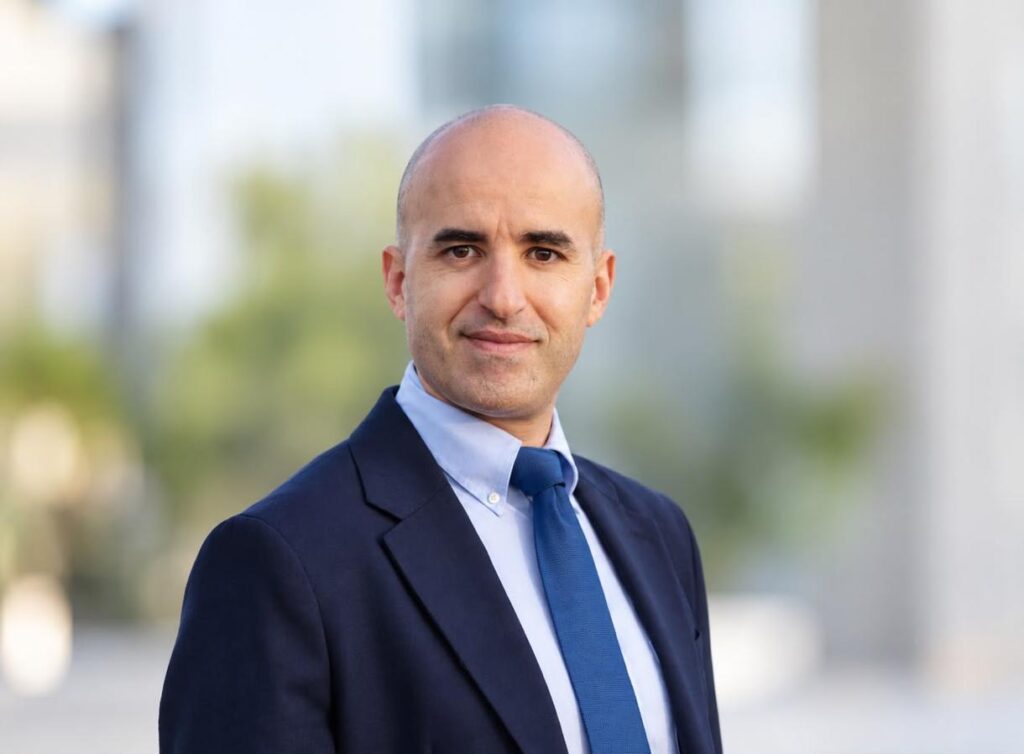
Imec, the world’s leading R&D center for advanced semiconductor technology, has appointed Dr. Aymen Adam Mohib as Regional Managing Director of imec Qatar, effective October 1, 2026. Based at Qatar Science & Technology Park (QSTP), Dr. Aymen Adam Mohib will lead the organization’s operations in Qatar and deepen its engagement across the Middle East.Dr. Aymen brings more than 20 years of leadership experience in strategy, investment, and economic development. Most recently, as a founding executive at Invest Qatar, he led strategic clusters including semiconductors, health and biopharma, and advanced manufacturing. “Dr. Aymen brings the experience and strategic perspective to guide imec Qatar’s next phase of growth, said Patrick Vandenameele, CEO of imec. His appointment reflects our long-term commitment to Qatar and the Middle East. Under his leadership, imec Qatar will deepen strategic partnerships“
Business Leaders Middle East: A Middle East Business Publication
Business in the Middle East is busy right now. New companies keep showing up, older ones are growing, and the people running them are working out how to keep up with customers and markets that don’t stand still. Not all of that gets reported. Business Leaders Middle East is a Middle East business publication that covers the people, companies and developments in the region’s business community. Middle East business news and features Companies don’t just grow through numbers and announcements. There are people, decisions and ideas behind them. A new business gets going. A firm opens in another country. Someone makes a big investment, or builds a company from scratch. We cover these through interviews, features, company updates and leadership insights, across technology, finance, real estate, investment, energy, healthcare, hospitality and entrepreneurship. These stories are useful for what they teach. Readers get a clearer view of how different industries work and where they’re heading. Why we talk to business leaders in the Middle East Business news isn’t just numbers and announcements. People make the decisions, they run into problems, and there’s usually an idea behind the company that gets lost in a short news item. So we speak directly with executives and entrepreneurs and let them describe what they’ve been through, what they plan to do and how they see their industry. Our company features and industry stories help readers follow what’s happening and see how businesses are responding to opportunities across the region. For anyone who wants to keep up with Middle East business news, that mix is more useful than headlines alone. Getting your company seen Say you’ve launched a new project, entered a new market, introduced a service or reached a milestone. Getting that in front of the right readers can make a real difference, and a business publication is one way to do it. More people learn who you are and what you offer. Business Leaders Middle East gives companies and professionals an editorial space to share their work, experience and ideas with readers who care about business in the region. The point is to tell the story clearly, not to run an advert. A good piece gives the reader something worth knowing, and they come away understanding the company behind it. A region that keeps growing Qatar, the UAE, Saudi Arabia and other markets are seeing activity in technology, real estate, finance, tourism, energy and more. Businesses from around the world are watching, and many are investing. If you operate in these markets, being visible and able to explain what you do matters more than it used to. We’re a place for that conversation, and it’s open to large corporations, growing companies and entrepreneurs alike. Publish With Us Have something to share? Take a look at our Publish With Us option. A company announcement, a leadership story, an industry insight, a new project or an achievement all fit. We aim to present each one so it’s relevant to readers and useful to the wider business community. If your organisation wants to introduce its work to a professional audience, publishing with a business-focused platform is a practical way to build awareness and start new conversations. To learn more about Publish With Us, contact the Business Leaders Middle East team.
Qatar Mandates IFRS S1 and S2 for Financial Institutions
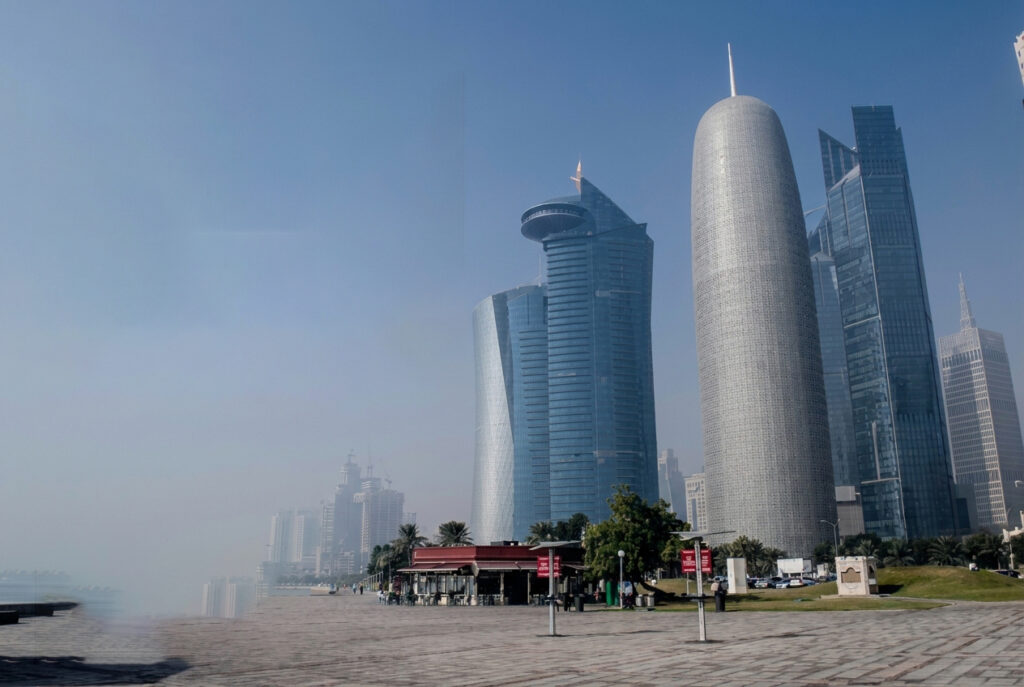
Qatar has positioned itself as one of the earliest movers in the Gulf region’s sustainability reporting landscape, with the Qatar Central Bank mandating the adoption of IFRS S1 and IFRS S2 sustainability disclosure standards for banks and financial institutions effective January 1, 2026. The Sustainability Reporting Framework from Qatar Central Bank, developed in accordance with the ISSB standards, requires covered entities to disclose their governance approach, strategy, risk management practices, and metrics around climate-related risks and opportunities. IFRS S1 establishes general requirements for sustainability-related financial disclosures. IFRS S2 meanwhile addresses climate-specific risks and opportunities, including mandatory reporting of absolute Scope 1, Scope 2, and Scope 3 greenhouse gas emissions. Together, IFRS S1 and IFRS S2 provide a comprehensive framework that connects environmental and sustainability performance directly to financial decision-making. To ensure the regulatory reporting landscape is harmonised across Qatar’s financial system, the Qatar Financial Centre Regulatory Authority (QFCRA) and Qatar Stock Exchange (QSE) have aligned their requirements to IFRS S1 and IFRS S2. The mandatory adoption of ISSB standards aligns Qatar’s financial sector with the country’s National Vision 2030, which prioritises economic diversification, environmental sustainability, and the transition to a knowledge-based economy.
Qatar’s Inward FDI Rises 3.3% to QR172.2bn in Q1 2026
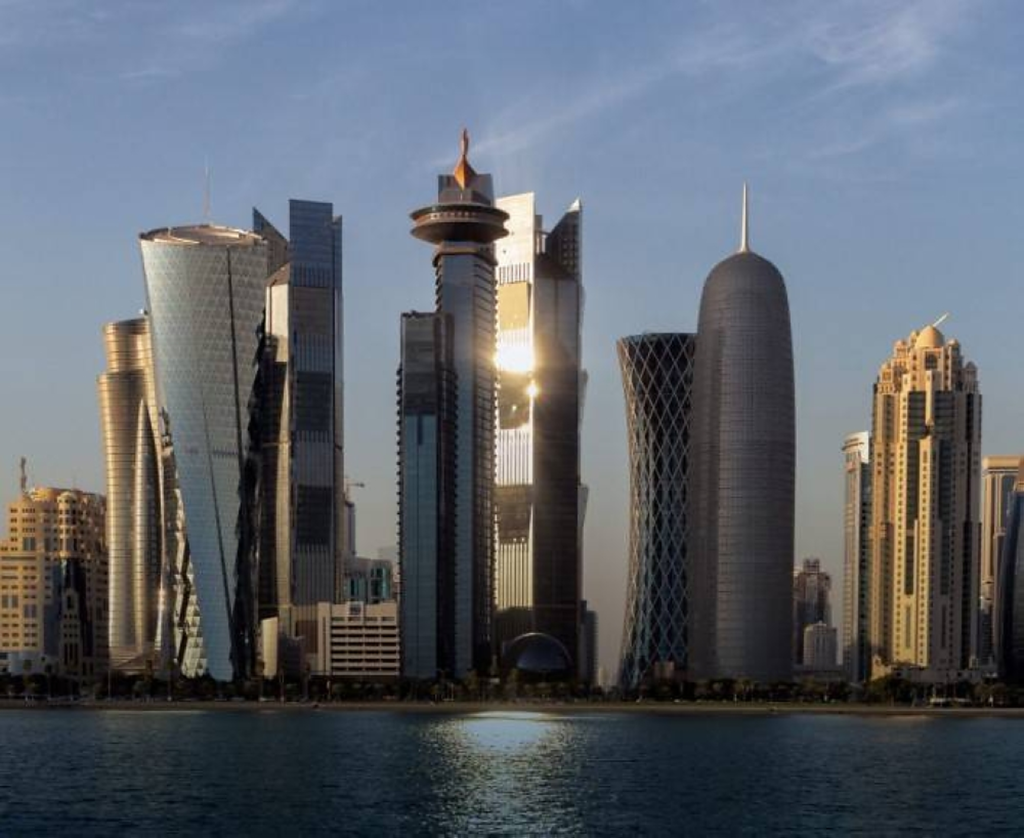
The National Planning Council (NPC), in cooperation with the Qatar Central Bank (QCB), has released the results of the Foreign Direct Investment Survey for the first quarter of 2026. The survey showed continued growth in both inward and outward FDI between January and March, providing a positive indication of the country’s investment momentum. Foreign Direct Investment (FDI) in Qatar continued its upward trajectory during the first quarter of 2026, with the country’s inward FDI position rising 3.3 percent to QR172.2 billion at the end of March, reflecting sustained investor confidence in the Qatari economy and its long-term growth prospects. At the same time, Qatari investments abroad continued to expand, with the outward FDI position increasing 3.5 percent compared with the fourth quarter of 2025 to reach QR221.7 billion. The latest figures underline the growing two-way flow of investment and Qatar’s strengthening position as both an attractive destination for international capital and an increasingly active investor in global markets. Dr Abdulaziz bin Nasser bin Mubarak Al Khalifa, secretary general of the National Planning Council, said the increase in inward FDI during the first quarter was a positive indicator of Qatar’s investment trajectory. He stressed that the country’s investment strategy is focused not only on increasing the volume of investment but also on improving its quality and maximising its contribution to economic diversification, productivity, knowledge and technology transfer, and the development of high-value-added sectors. The Council’s priority in the coming period, he said, would be to further enhance the attractiveness of the Qatari economy to quality investments and accelerate investment growth in non-hydrocarbon sectors. This approach is aligned with the objectives of the Third National Development Strategy and Qatar National Vision 2030. The distribution of inward FDI during the first quarter showed a continued concentration in five major economic activities, which together accounted for more than 90 percent of total inward investment. Mining and quarrying remained the largest recipient, accounting for 45.3 percent of inward FDI, followed by financial and insurance activities with 31.9 percent. Manufacturing accounted for 13 percent, while information and communication activities represented 2.8 percent and professional, scientific and technical activities accounted for 2 percent. The figures highlight the continued importance of Qatar’s energy sector in attracting foreign capital, while also pointing to significant opportunities to broaden the investment base. Increasing the share of FDI flowing into manufacturing, technology, professional services and other non-hydrocarbon activities remains a key element of Qatar’s diversification strategy. A broader distribution of foreign investment across sectors would help strengthen the resilience of the economy, create new business opportunities and support the development of knowledge-intensive and high-value-added industries. Qatar’s outward FDI also recorded solid growth in the first quarter, rising 3.5 percent from the previous quarter to QR221.7 billion. The increase reflects the expanding international presence of Qatari investors and the development of economic and investment partnerships in overseas markets. The growth in outward investment also supports Qatar’s strategy of diversifying its assets geographically and across sectors, while seeking sustainable long-term returns. Financial and insurance activities represented the largest share of outward FDI at 33.5 percent, followed by mining and quarrying at 29.8 percent. Information and communication activities accounted for 10.8 percent, accommodation and food service activities 9.1 percent, and transport and storage 7 percent. Together, these five activities accounted for more than 90 percent of Qatar’s outward FDI, reflecting the broadening international footprint of Qatari capital across financial services, natural resources, technology, hospitality and logistics. The latest FDI figures are also part of the National Planning Council’s broader efforts to enhance the quality, coverage and regularity of Qatar’s economic statistics. The data are intended to provide policymakers, investors and other stakeholders with a clearer picture of investment trends and their contribution to national development.
Shell: Qatar LNG Repairs May Take Until Q1 2027 Again

Maaz AhmedmaazahmedEdit Profile Qatar’s damaged liquefied natural gas (LNG) production could take until the first quarter of 2027 to fully repair, Shell has said. Chief financial officer Sinead Gorman told reporters, as cited by Bloomberg, that sections of Shell’s Pearl gas-to-liquids plant hit by a missile strike during the Middle East conflict should be back in service by the first quarter of 2027. However, unaffected units at the facility could restart as soon as shipping lanes reopen. Despite that, Shell’s guidance for the third quarter assumes zero output from Qatar, a sign of how uncertain the timeline for a full resumption remains. Shell holds a 30 percent stake in QatarEnergy LNG’s fourth expansion train at Ras Laffan, equivalent to 2.4 million tonnes a year of equity production, a facility that has continued operating throughout the disruption. Chief executive Wael Sawan, speaking to Bloomberg Television, described the power cut as a short-term event rather than a structural one, while Ms Gorman had earlier this year flagged Qatar as the single biggest swing factor in the group’s gas output. QatarEnergy shut in production across its LNG facilities on March 2 and later declared force majeure, a step that has weighed heavily on Shell’s Integrated Gas division, where production fell 31 percent quarter-on-quarter, and LNG liquefaction slipped 2 percent.
Qatar Buys Dozens of US LNG Cargoes to Supply Asian Partners

QatarEnergy (QE) bought 33 liquefied natural gas (LNG) spot cargoes from the US this year, with deliveries planned for South Korea, Taiwan, Bangladesh, India, and Japan, Reuters has reported.