

MWC26 Doha Welcomes Over 10,000 Attendees
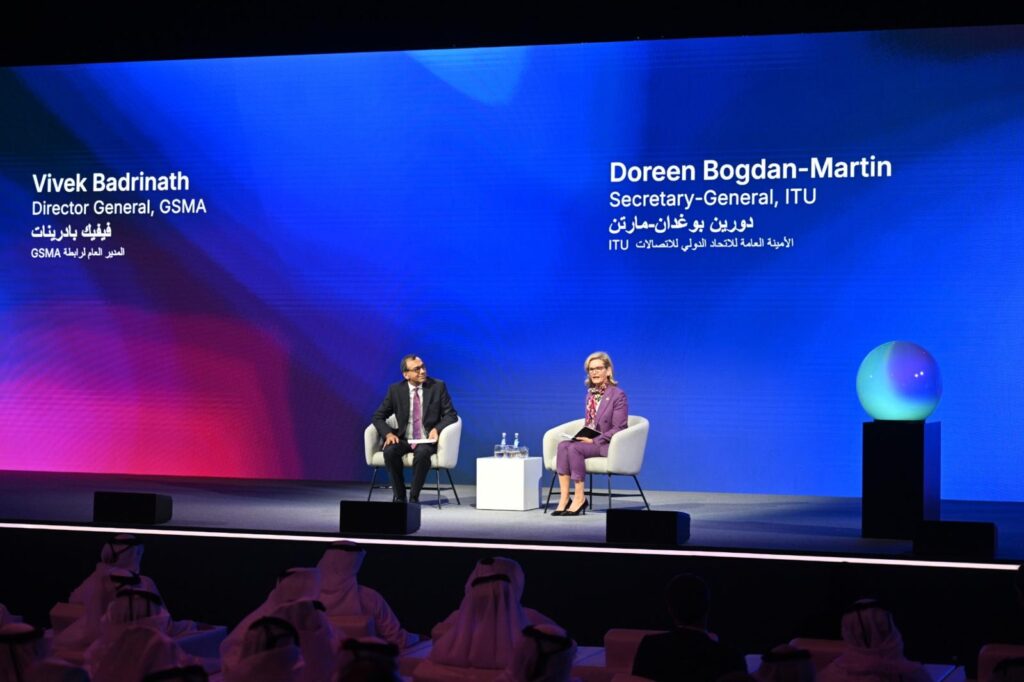
MWC26 Doha brings together industry leaders, policymakers and regulators to exhibit, discuss, connect and do business. A record-breaking number of 36 Ministers and 34 Heads of National Regulatory Authorities participated in the GSMA’s Ministerial Programme. 10 November 2026 – Over 10,000 participants from around the world gathered in Qatar at MWC26 Doha, a truly spectacular showcase of the Middle East and North Africa’s digital growth ambitions. Over three days of keynote sessions, conferences and summits, hosted in partnership with the State of Qatar’s Ministry of Communications and Information Technology (MCIT), participants discussed how smart solutions, cutting-edge infrastructure and robust digital strategies are helping transform the role of the MENA region in the global connectivity landscape. In a true first, MWC26 Doha was held in conjunction with the opening days of the ITU Plenipotentiary Conference (PP-26), the main governing body for the ITU, the United Nations agency for digital technologies. The event occurs every four years and is the most senior decision-making body for the agency, helping define its strategic and financial planning, elect leadership and determine its overall direction. The combination of the two events brought together industry leaders, policymakers and innovators to discuss the key digital issues. Sianne Ryder, CEO, Events and Industry Services, GSMA Ltd said: “This week at MWC26 Doha, policymakers and regulators sat side by side with industry leaders and innovators to debate, connect and shape MENA’s digital future. Co-locating with the opening days of ITU PP-26 created something unique: a place where those setting the global digital agenda could engage directly with the operators, technology companies and investors bringing it to life. The result was sharper conversations, stronger connections and a clearer path from policy to progress. We look forward to seeing the partnerships forged in Doha deliver impact across the region and beyond. Thank you to everyone who joined us – and especially to our hosts at MCIT.” ‘I am excited to see the partnerships formed throughout the event translate into impactful outcomes across the region. Thank you to everyone who attended and our hosts at MCIT.’ MWC26 Doha highlights: Over 10,000 attendees from 100 countries and territories 14% C-suite attendants 37% director level and above 62% from non-core mobile industries The GSMA’s Ministerial Programme brought together 86 delegations, with 36 Ministers and 34 Heads of National Regulatory Authorities attending. Attendees represented 74 countries and 12 intergovernmental bodies 195 speakers from keynote sessions, summits and partner programmes. ~100 exhibitors, sponsors and partners on the showfloor 42 partnerships and announcements made in the Announcement Lounge 220+ media, content creators and analysts onsite MENA’s digital transformation on display Participants saw how intelligent mobile solutions are being used to help emergency services, with Ooredoo Qatar, Ericsson, Eonetics, Hikvision and GSMA Fusion showcasing. The 5G Connectivity for Emergency Response demo showcased how Eonetics’ tethered drone in Melbourne, Australia connected to the GSMA Pavilion in Doha over 12,000km away. The GSMA launched the AI for Impact (AI4I) MENA Initiative. The initiative aims to connect mobile operators, government bodies, international agencies, academic institutions and private sector partners to develop and implement AI-enabled services in the region. This will be supported by strategic partnerships and upskilling. The GSMA also entered into agreements and announced partnerships with Khalifa University and AMD to provide radio frequency foundation models to telecom operators, with the ITU to boost trusted open AI in telecoms, with Axonect to support small businesses using operator led digital marketplaces, a five-year agreement with Applab, an agreement with H.E. Minister of Digital Transition and Technology Innovation of Côte d’Ivoire to increase smartphone affordability, and a partnership with GSMA Foundry and apoQlar to bring spatial computing to connected healthcare. Participants heard from leading speakers including Accenture, Dell Technologies, Ericsson, Google, Huawei, ITU, Mastercard, Microsoft, Nokia Solutions and Networks, Ooredoo, PwC Middle East, SandboxAQ, ServiceNow, VEON, Vodafone Qatar. Exhibitors and sponsors included Accenture, AGIBOT, Cisco, Deloitte, Ericsson, Es’hailSat, Google, HPE, Huawei, Internal Security Force Qatar, Microsoft, Oliver Wyman, Ooredoo, PwC, Qatar University, Scale, strategy&, Veon and Vodafone. Vivek Badrinath, Director General of the GSMA said: “MWC26 Doha remains a central part of our work to bring the mobile ecosystem together around the issues that matter most to its growth, from the global standards that keep networks working across borders to connecting the millions of people who remain offline. With connectivity and digital policy now vital to economic and social progress, this year’s event and our collaboration with Qatar brought regional priorities onto the global stage. The ambition and partnership we have seen in Doha have established a strong foundation, and we will continue to build on them so that digital progress reaches every community across MENA.” We have seen incredible ambition and great partnerships in Doha and we will continue to build on these to ensure digital progress reaches every community across the MENA region. Keynote sessions and highlights can be viewed on demand on the MWC Doha website. For the latest news, updates, B-roll and official imagery please visit the MWC26 Doha Press Zone. MWC26 Doha concludes the 2026 GSMA event series. We are now turning our attention to MWC27 Barcelona on 1-4 March 2027. Registration is now open. We look forward to welcoming the region’s connectivity ecosystem back to Doha from 15-17 November2027. About GSMA The GSMA is a global organisation that unites the mobile industry to realise the potential of connectivity to generate positive change. Our vision is to unleash the full power of connectivity to make the world a better place. We represent mobile operators and organisations within the mobile industry and adjacent industries to deliver for our members. Across three pillars, Connectivity for Good, Industry Services and Solutions and Outreach, we advance policy, solve society’s biggest challenges, provide the underlying technology for mobile to work, and provide the world’s largest platform to unite the mobile industry at our MWC and M360 series of events. Find out more here: GSMA.com
MWC26 Doha Exhibition Showfloor Sold Out Ahead of Final Registration Deadline
CNN announces new speakers for Global Perspectives: In Doha
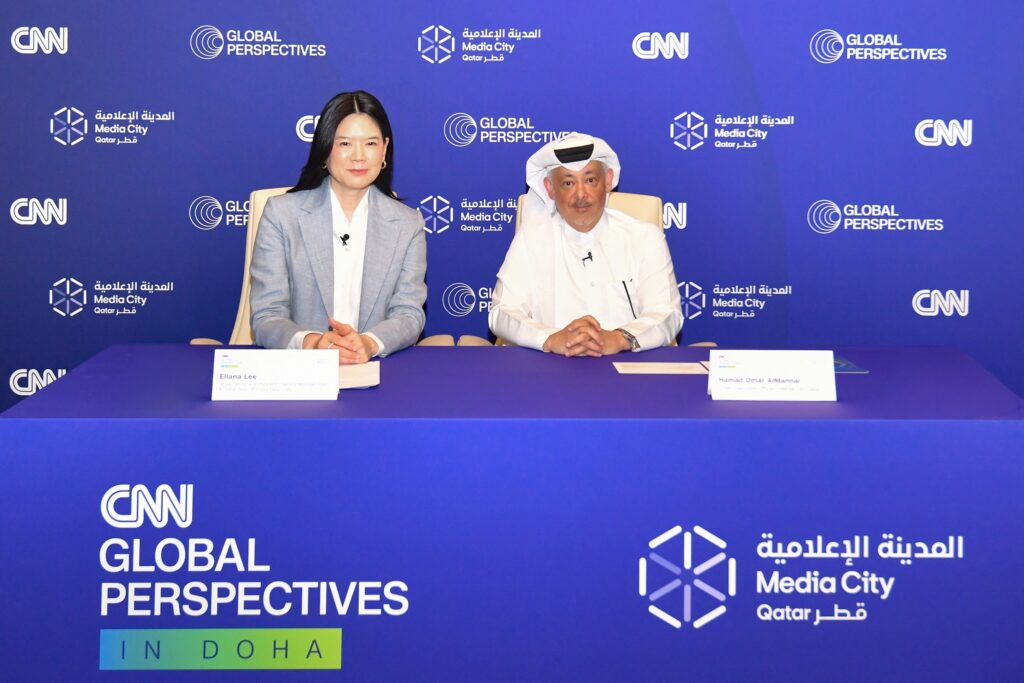
Qatar’s Prime Minister to attend as distinguished guest, with new speakers including H.E. Sheikha Al Mayassa bint Hamad bin Khalifa Al Thani Exploring the concept of ‘The Invisible World’ – examining the forces quietly reshaping how the world works, CNN’s Middle East chapter of its Global Perspectives events franchise will take place in Doha, Qatar, on 29 October 2026. His Excellency Sheikh Mohammed bin Abdulrahman Al-Thani, Prime Minister and Minister of Foreign Affairs of the State of Qatar, will attend the event as a distinguished guest. In addition to previously announced speakers, the prestigious line-up for Global Perspectives: In Doha now also includes: Her Excellency Sheikha Al Mayassa bint Hamad bin Khalifa Al Thani, Chairperson, Qatar Museums, Doha Film Institute, Reach Out to Asia, and Qatar Leadership Centre; and Co-Chairperson, Fashion Trust Arabia His Excellency Dr. Mohamed Farid Saleh, Minister of Investment and Foreign Trade, Arab Republic of Egypt His Excellency Wamkele Mene, Secretary-General, AfCFTA Secretariat Hiba Qasas, Executive Director, Principles for Peace Foundation Martin John Griffiths, Former United Nations Under-Secretary-General for Humanitarian Affairs and Emergency Relief Coordinator Dr. Yifan “David” Li, CEO & Co-founder, Hesai Technology, Co-founder, Sharpa Hing Chao, Chairman, Wah Kwong Maritime Transport Katie Koch, President and CEO, TCW Lei Zhang, Founder & Chairman, Envision Majid Jafar, CEO, Crescent Petroleum Caroline Faraj, Vice President and CNN Arabic Editor-in-Chief, will join as a moderator alongside CNN anchors and correspondents from the Middle East, Europe, and the United States, including Wolf Blitzer, Christiane Amanpour, Richard Quest, Becky Anderson, Eleni Giokos, and Bijan Hosseini. Together, they will lead discussions considering critical issues influencing AI, economics, energy, sport and culture. Editorial content and news-making interviews from Global Perspectives will be featured across CNN platforms. Speaking at a press conference held in Doha today, Ellana Lee, Group Senior Vice President, GM APAC, and Global Head of Productions, CNN, said, “When the world can feel increasingly divided, we believe there’s real value in bringing different people and their unique perspectives together. Global Perspectives is a place where the ideas that are shaping our world can be voiced and shared. It’s a meeting place where CNN’s award-winning journalism can partner with thought leaders to create meaningful dialogue. This is CNN’s first Global Perspectives event here in the Middle East, and it could hardly come at a better time. There’s no better place to host it than here in Qatar, in the heart of the region.” Hamad Omar AlMannai, CEO, Media City Qatar, who spoke alongside Ellana Lee at the press conference, said, “At a time when the region is increasingly at the center of global conversations, our hope is for this event to bring global voices to the region and actually contribute to elevating the region’s voices into these conversations through other CNN platforms.” He added, “There is no better place to host it than in Qatar. As Qatar continues to play an important role as a trusted mediator on the international stage, it is also reinforcing its position as a center for dialogue between regions, cultures, and perspectives. Global Perspectives complements that role by creating a platform where regional perspectives can be heard and elevated alongside global voices.” Global Perspectives: In Doha is hosted in partnership with Media City Qatar and is taking place at the Rosewood Doha. The event also provides opportunities for commercial partners, including previously announced sponsor Dangote, to reach and engage with those attending Global Perspectives, as well as CNN audiences across the world. For the latest agenda and speaker details, please see https://cnnicevents.cnn.com/gpdoha/pcpr
Snoonu has acquired BiteSight, a US-based social commerce startup
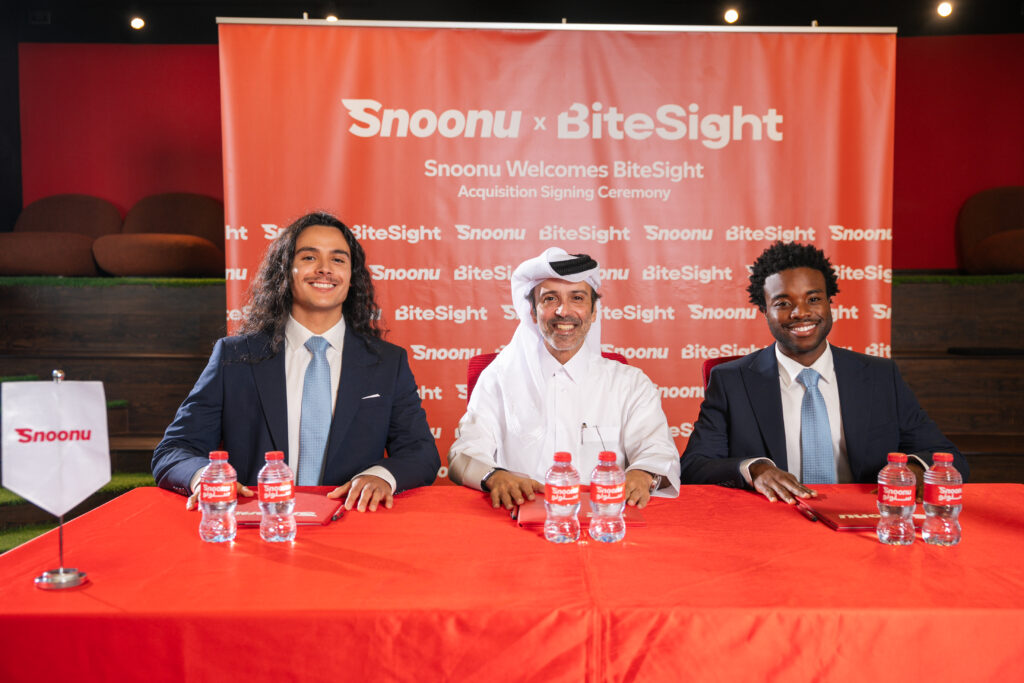
Snoonu has acquired BiteSight, a US-based social commerce startup backed by Y Combinator and SurgePoint Capital. This move brings a new dimension to how consumers discover food and restaurants through digital content. Founded in 2023, BiteSight gained significant traction in the US, recording more than 150,000 downloads and reaching No. 2 in the App Store’s Food & Drink category. Its platform connects short-form food videos with restaurant discovery and ordering, turning the content people enjoy watching into new opportunities for discovery and commerce. The acquisition brings BiteSight’s co-founders, Bernardo Burboa Quiroga and Lucious McDaniel IV, into the Snoonu ecosystem. This marks another step in Snoonu’s evolution from a leading Qatari super-app into a broader technology and commerce platform. Beyond the acquisition itself, the story reflects a wider shift in digital commerce, where content, community and purchasing are increasingly connected. It also highlights Qatar’s growing potential as a base for international founders and technology ventures looking to develop ideas and reach new markets across the region. We welcome the opportunity to support your coverage with interviews with Hamad Al Hajri, Snoonu’s Founder and CEO, or with BiteSight’s co-founders, along with additional quotes and the full press release. We believe this story offers an interesting perspective on the future of digital commerce, cross-border innovation and Qatar’s growing technology ecosystem. Hamad Al Hajri, Founder and CEO of Snoonu, said: “Technology continues to reshape how people discover businesses, make decisions and engage with the brands they love. BiteSight has demonstrated the potential of connecting engaging food content with the ability to act on that discovery. Bringing this capability into Snoonu’s ecosystem is an exciting step in our ambition to build more intuitive, connected digital experiences for customers and merchants across the region. Beyond technology, we are committed to attracting ambitious young innovators and entrepreneurs to Qatar, creating an environment where they can build, scale and bring their ideas to life. We want to help position Qatar as a capital for entrepreneurship, innovation and technology, connecting global talent with the opportunities our ecosystem has to offer.” Bernardo Burboa Quiroga, co-founder of BiteSight, said: “We started BiteSight because food is a shared experience by nature, and we wanted to build a marketplace that reflects how people actually discover their next favourite spot. Joining Snoonu gives us an exciting opportunity to take that vision further, combining our approach to social food discovery with Snoonu’s technology, reach and regional expertise. We’re grateful to be part of this journey and excited to build from Qatar, a market with a growing ambition to shape the future of technology and entrepreneurship.” Lucious McDaniel IV, co-founder of BiteSight, added: “We’re grateful to our users in New York and San Francisco, to the more than 100,000 people on our waitlist, and to the investors who backed us from the beginning. We’re equally excited to begin this next chapter with Snoonu and its team. Building from Qatar opens up new opportunities to grow our vision, reach new audiences and contribute to an ecosystem that is increasingly focused on innovation and entrepreneurship.” The acquisition reinforces Snoonu’s broader ambition to evolve beyond traditional delivery services into a more comprehensive technology and commerce platform. By bringing new discovery capabilities into its ecosystem, Snoonu aims to create additional value for consumers and merchants while exploring opportunities to extend content-driven commerce across its markets. Financial terms of the acquisition were not disclosed.
GSMA MWC26 Doha Reveals New Speakers and Exhibitors
The GSMA has announced an agenda-setting speaker and exhibitor line-up for MWC26 Doha, MENA’s premier connectivity event, which returns to the Doha Exhibition and Convention Center (DECC) on 8-10 November 2026, co-located with the opening days of ITU’s Plenipotentiary Conference (PP-26). The second edition of MWC26 Doha will bring together leaders in 5G, AI, digital infrastructure and policy to define the region’s next phase of connectivity and digital transformation. The programme will feature voices from AI, policy, satellite and digital infrastructure, with speakers from BYD, Es’hailSat – Qatar Satellite Company, Eutelsat Group, ITU, Khalifa University, Napster, Nokia, Oliver Wyman, Ooredoo Group, SAMENA Telecommunications Council, VEON, and Vora. In addition, exhibitors and sponsors – from operators, cloud and AI leaders, to security specialists, satellite providers and infrastructure companies – include Accenture, Cisco Systems, Ericsson, Fadaat Media, Fortinet, Google Cloud, Huawei Technologies, MEEZA, Microsoft Doha, PwC, Qatar University, Scale AI, Strategy&, Trend Micro, and Vodafone Qatar. Vivek Badrinath, Director General, GSMA, said: “As the international connectivity community gathers in Doha for the co-located MWC26 Doha and ITU PP-26, the city will become a focal point for global dialogue on connectivity, AI and digital transformation. Across MENA, momentum around AI, advanced networks and digital infrastructure is accelerating, creating new opportunities for economic growth and societal impact. MWC26 Doha will showcase this progress and foster the partnerships needed Setting the agenda for the IQ Era The MWC agenda will be anchored around The IQ Era, with programme themes that reflect the issues now shaping boardroom and policy conversations across MENA and beyond: AI in Action: Practical AI deployment, from intelligent data centres and AI-ready networks to connected healthcare and new productivity models. Intelligent Economies: How governments and businesses can use technology to support competitiveness, inclusion and national transformation. Connected Infrastructure: The networks, satellite systems and secure digital infrastructure required to support resilient regional growth. In partnership with Qatar’s Ministry of Communications and Information Technology (MCIT), MWC26 Doha will build on a debut edition in 2025 that drew more than 9,000 attendees from 110 countries and territories. GSMA and the International Telecommunication Union (ITU) joining forces MWC26 Doha will run alongside the opening days of the ITU Plenipotentiary Conference (PP-26). Together, they bring industry leaders, policymakers and innovators together to explore critical digital issues transforming society. Separately, and in addition to its exhibition and conference programme, MWC26 Doha will also host the GSMA Ministerial Programme, convening ministers and regulators to shape the next phase of digital growth across the Middle East and beyond. Register now Registration for MWC26 Doha is now open. Media are invited to apply for an MWC Media Pass here and an ITU PP-26 accreditation here.
Invest Qatar, LG NOVA and Aurion Expand MENA Tech Investment
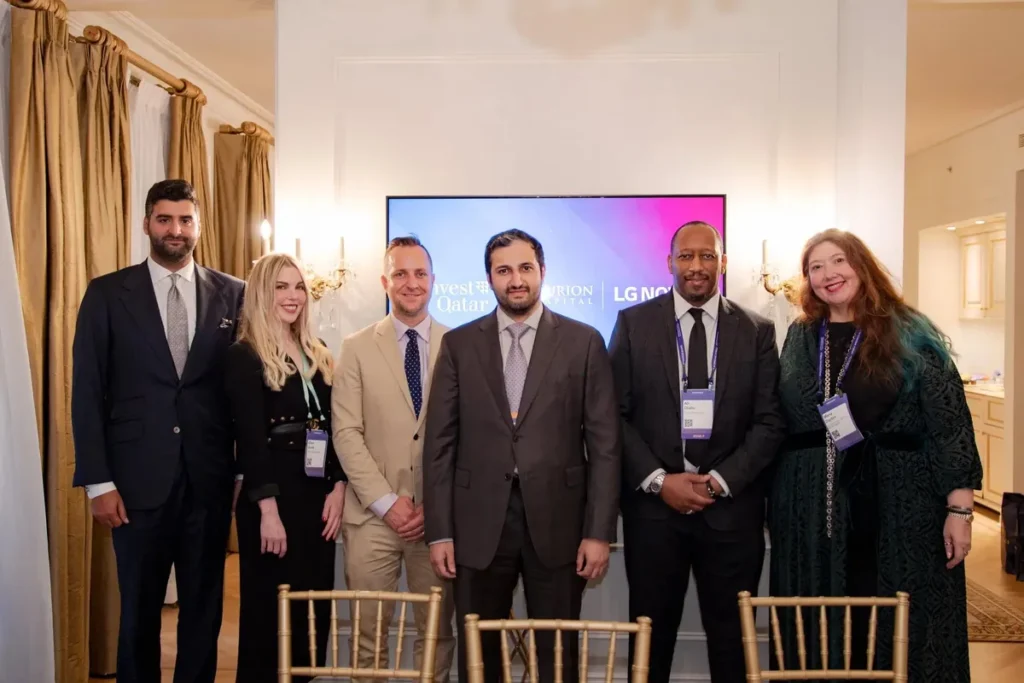
Invest Qatar, Aurion Capital, and LG Nova have entered into a memorandum of understanding (MoU) to explore technology investments and venture-building opportunities in Qatar and across the Middle East.
Parenting in the Age of AI: Navigating New Challenges

From New York Times bestselling author Dana Suskind, a timely, urgent guide to parenting in the age of artificial intelligence (AI) – and protecting what matters most in childhood As AI enters nurseries, playrooms, and classrooms, parents are being sold a “smart” childhood at every turn. This book is a guide to protecting the most important label of all: human raised. Dr. Suskind writes here to set forth some templates about how to keep your parenting (especially) guided toward making human connections, so that your children end up more human-focused than digitally guided people as adults. After all, the goal is not “good kids,” but adults capable of thriving in the world around them. Some folks will likely fault Dr. Suskind’s work because she does not come out flatly against using AI-tools in parenting, including exposing children to the products of AI. While there are valid ethical critiques of many AI-systems, she approaches the situation with the realism that says: “There will be AI, so how do we deal with it?” You have basic guidance on researching AI and what you should and should not use it for. There are several chapters first establishing the very real need for parents and caregivers to be human-first in their interactions with children. Suskind makes plain that imperfect human interaction far supersedes algorithmic perfection. Each chapter in this book ends with a helpful TLDR section, giving you, the reader, the main takeaways from each chapter. One should still read the chapters! However, life gets busy. You will see the value of each chapter as you check these chapters out. If you see this book on a bookstore shelf and want to know if it’s worthwhile, take a peek at any of those chapter endings. Finally, almost worth the price of purchase itself, she walks the reader through an investigative framework using DETEK as an acronym. This shows up in the body of the text starting in chapter 8, but then is helpfully pulled-out into an appendix for easy reference. FOUR GUIDING PRINCIPLES FOR RAISING CHILDREN ALONGSIDE AI Human connection is irreplaceable Own your imperfections Protect the early years Enhance don’t replace connection
Artefact and malomatia Host AI Connect Summit in Doha
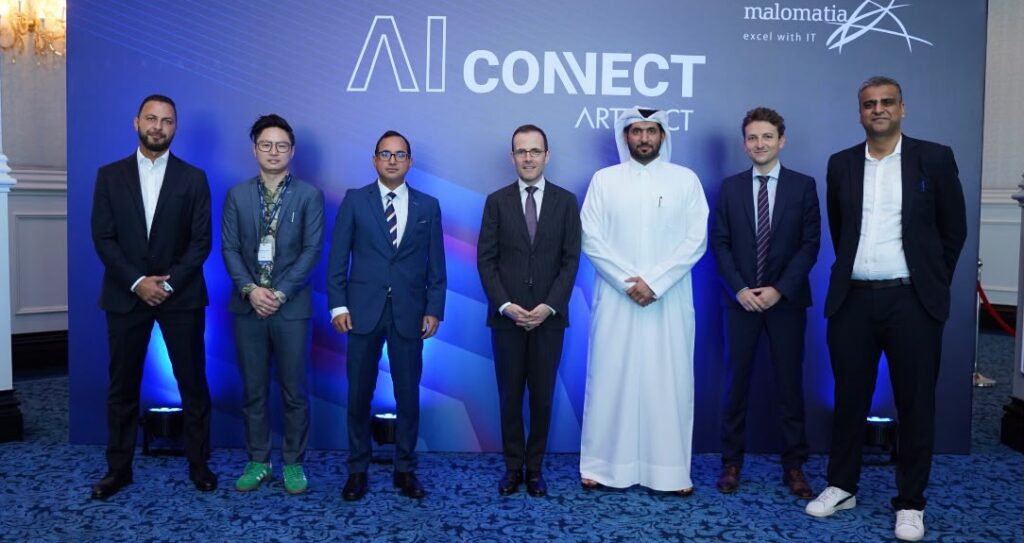
Artefact and Malomatia bring together Qatar’s public and private sector leaders to explore how AI is changing the way governments and businesses operate, make decisions, and redesign services. Artefact, a global leader in data and AI consulting, in partnership with malomatia, Qatar’s leading systems integrator and digital transformation provider, hosted the Artefact AI Connect Summit Doha 2026 at The Ritz-Carlton, Doha. The summit brought together senior government representatives and business leaders to examine how artificial intelligence is changing operations, decision-making, and service delivery across the public and private sectors. In his opening statement, H.E. Arnaud Pescheux, Ambassador of France to Qatar, said: “By bringing its global experience and AI expertise to Doha, Artefact is demonstrating how innovation can create new opportunities, new sources of value and strengthen strategic partnerships across the region. It also reflects the growing momentum of France-Qatar cooperation in technology and innovation fields.” Discussions focused on how AI can strengthen public-sector efficiency, support sound decision-making, and improve citizen services. Leaders also examined how AI is being applied across Qatar’s key industries to address practical opportunities and sector-specific challenges. Rahul Arya, CEO and Managing Partner, Artefact Middle East, Southeast Asia & India, said: “What stood out in Doha is the focus on moving from discussions about AI to where it can actually be put to work. Organizations are looking at practical questions around data, use cases and implementation. That is where Artefact’s experience can help. Artefact AI Connect Doha provided a space for those conversations, where we could share lessons from our work with organizations and hear the perspectives of leaders here in Qatar.” Artefact brings expertise across the data and AI transformation lifecycle, from AI strategy and governance and data foundations to advanced analytics, AI solutions, and deployment at scale. As Qatar’s trusted digital transformation partner, malomatia brings local knowledge and proven delivery capability to support practical and responsible AI adoption. Bassam Fadol, Chief Digital Services, malomatia said: “Our experience designing and running government systems in Qatar shapes how we approach AI. We start with who retains decision authority, where data is processed, and how the system stays correct when policies change. Our partnership with Artefact combines that experience with their data and AI expertise. We build the controls that make these systems trustworthy in everyday use. Our responsibility does not end at go-live.” The summit comes as Qatar accelerates investment in the infrastructure, capabilities, and partnerships required for a data- and AI-driven economy. Under Digital Agenda 2030, Qatar aims to generate approximately QAR 40 billion in cumulative economic impact and create 26,000 jobs in the ICT sector by 2030. Artefact has supported more than 1,000 clients globally. By combining this international experience with malomatia’s expertise as Qatar’s national IT leader, the partnership aims to help organizations identify practical use cases, implement appropriate solutions, and integrate AI responsibly into their operations.
WISE Policy Dialogue Explores AI and Teacher Readiness in K–12 Education
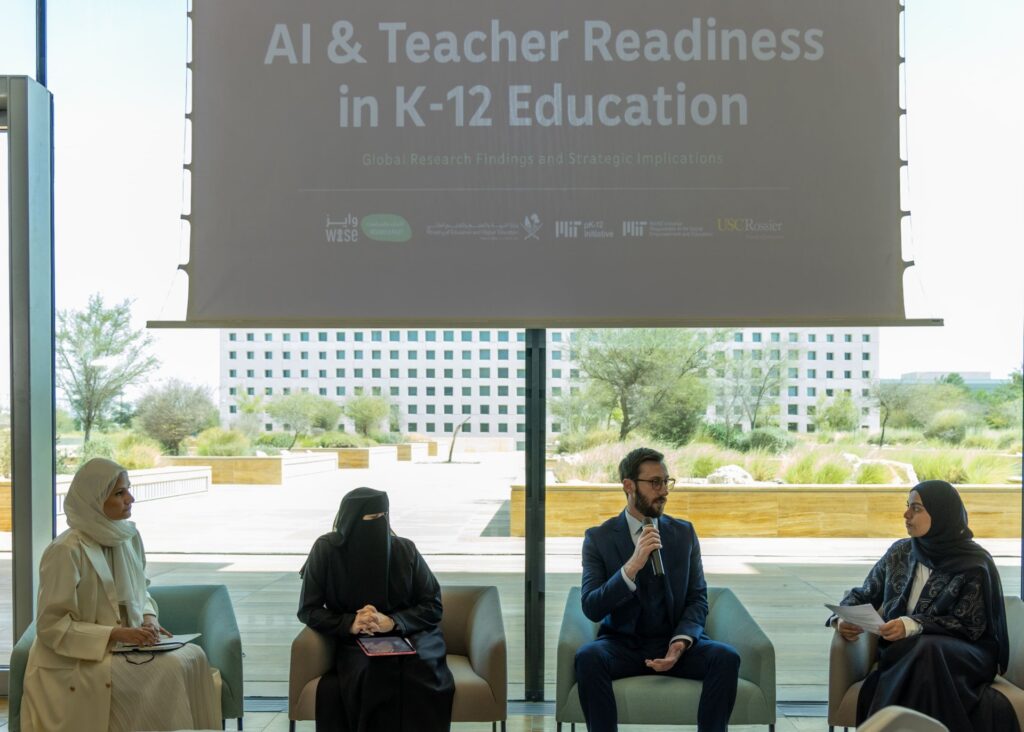
The World Innovation Summit for Education, WISE, an initiative of Qatar Foundation, hosted a policy dialogue event titled “AI & Teacher Readiness in K–12 Education: Global Research Findings and Strategic Implications”, bringing together education experts, policy voices and school practitioners to examine how artificial intelligence standards can be practically implemented in school environments. The discussion focused on one of the most urgent questions facing education systems today: how prepared are teachers to use AI meaningfully, responsibly and effectively in the classroom? As artificial intelligence continues to move rapidly into schools, the event highlighted the need for stronger teacher support, professional development, national evaluation frameworks and AI tools that reflect local language, culture and curriculum needs. AI Is Moving Faster Than Education Policy Opening the dialogue, Selma Talha-Jebril, WISE Research and Policy Director, said artificial intelligence is entering classrooms faster than schools and policy systems have had time to prepare for it. Her remarks set the tone for a discussion that moved beyond the excitement around AI and focused instead on implementation, readiness and long-term educational value. The event examined how teachers are currently engaging with AI, with many using it for administrative or preparatory tasks. However, panelists noted that the real opportunity lies in moving towards deeper, transformational classroom applications that directly support teaching, learning and student innovation. Teacher Agency and Professional Development Take Centre Stage Moderated by Maimoona Junjunia, Research and Policy Associate at WISE, the discussion emphasized the importance of teacher agency in the adoption of AI. Panelists stressed that AI in education cannot succeed through technology deployment alone. Teachers need sustained professional development, clear guidance, trusted tools and the confidence to integrate AI into pedagogy in ways that enhance learning outcomes. The dialogue also addressed the importance of evaluating AI tools rigorously before integrating them into schools at scale. In this context, national initiatives such as the WISE EdTech Testbed were highlighted as essential mechanisms for testing whether education technologies deliver real value in classroom environments. Shahd Dauleh, Innovation Manager at WISE, said the WISE testbed helps move the conversation beyond hype by ensuring that AI tools are genuinely effective for teaching and learning. AI Tools Must Reflect Language, Culture and Values A key theme emerging from the discussion was the need for AI systems in education to be contextually relevant. Lolwa Al-Nuaimi, Assistant Director of the E-Learning & Digital Solutions Department at the Ministry of Education and Higher Education, emphasized that for AI to succeed in education, it must reflect local language, culture and values while equipping teachers with the right tools. This point is particularly important for Qatar’s education sector, where strong digital infrastructure and national innovation ambitions have created a foundation for technology-led transformation. However, the discussion made clear that infrastructure alone is not enough. AI tools must be aligned with curricula, classroom realities, student needs and the cultural context in which learning takes place. Research Must Inform Policy and Practice The event also reinforced the broader purpose of the WISE Research & Policy Dialogue Series: ensuring that research findings do not remain confined to academic publications, but actively inform policy, practice and system-level decision-making. Selma Talha-Jebril noted that research only creates impact when it reaches the people with the power and responsibility to act on it. The dialogue series was positioned as a bridge between evidence, policy and education practice. This approach reflects a wider shift in education reform: moving from research as information to research as a tool for system transformation. From Classrooms to Innovation Labs Practical examples from schools offered a closer look at how AI can support student learning and innovation. Iyad Salameh, Teacher of Robotics and Automation at the Qatar Science and Technology Secondary School for Boys, shared how his students have used AI in hands-on projects. He noted that such projects show how students can use AI to build real-world solutions, turning classrooms into innovation labs. These examples highlighted the potential of AI to move beyond efficiency and automation. When implemented thoughtfully, AI can support creativity, problem-solving, applied learning and student-led innovation. For Qatar’s education ecosystem, this aligns closely with the country’s broader ambitions around digital transformation, innovation and future-ready skills. Qatar’s Teacher Readiness Gap One of the most important insights shared during the dialogue was the gap between teachers’ interest in AI and their understanding of how it works in education. According to Selma Talha-Jebril, WISE research found that 60% of teachers reported that AI helped them tailor instruction to meet diverse student needs. However, in Qatar, only 30% of surveyed teachers reported a strong understanding of how AI works in education. The finding points to a critical challenge for education systems: teachers are not necessarily resistant to AI, but many need tools, training and frameworks that are relevant to their classrooms. For Qatar, a country with advanced digital infrastructure and a strong national commitment to innovation, the opportunity is clear. The next phase of AI in education will depend not only on access to technology, but on building teacher confidence, capability and trust. Why It Matters The WISE policy dialogue placed teacher readiness at the centre of the AI education conversation. As AI becomes increasingly embedded in K–12 education, the success of these tools will depend on how well they serve teachers and students in real classroom settings. For Qatar, the discussion was especially significant. The country has invested heavily in education, digital infrastructure and innovation. The challenge now is to ensure that AI adoption in schools is guided by evidence, cultural relevance, teacher empowerment and measurable learning impact. The message from the dialogue was clear: AI can support the future of education, but only when teachers are prepared, supported and placed at the centre of the transformation.
Snoonu Invests in Qatari Startup HASIF Through Startup Factory Initiative
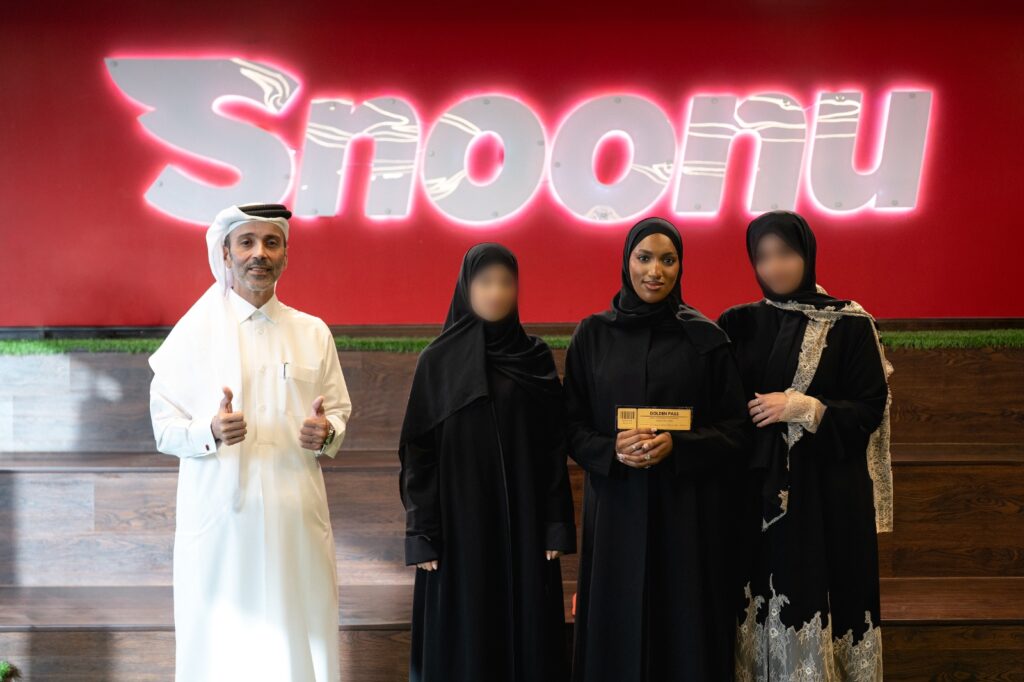
Snoonu has announced its investment in HASIF, a Qatari startup focused on smart accounting and financial compliance solutions for small and medium-sized enterprises (SMEs), as part of the company’s Startup Factory initiative designed to empower entrepreneurs and accelerate innovation in Qatar. The investment follows the successful Startup Factory competition and showcase held in Doha last week, where emerging startups presented technology-driven solutions addressing key business and market challenges across multiple sectors. Founded by Qatar University graduates and young Qatari entrepreneurs Noof Alhbabi, Maryam Eisa, and Dana Alwadaani, HASIF is developing an AI-powered digital platform to simplify financial operations for SMEs. The platform enables businesses to manage accounting, invoicing, financial reporting, and compliance processes more efficiently through automation and intelligent financial tools. In addition to streamlining operations, HASIF connects companies with accounting professionals and helps businesses prepare for future VAT implementation and evolving digital compliance requirements in Qatar and across the region. The investment marks the second startup supported through the Snoonu Startup Factory initiative, following the company’s earlier investment in Sufra AI. The move reflects Snoonu’s broader strategy to strengthen Qatar’s startup ecosystem, support local talent, and contribute to the country’s transition toward a knowledge-based economy aligned with Qatar National Vision 2030. As Qatar continues to position itself as a regional hub for entrepreneurship, technology, and innovation, initiatives such as Startup Factory are playing an increasingly important role in creating opportunities for young founders and in scaling homegrown businesses that address real market needs. The latest investment also highlights growing momentum in Qatar’s startup landscape, particularly in fintech, AI, and SME-focused digital solutions — sectors expected to continue growing as businesses across the Gulf accelerate digital transformation and compliance modernisation. With startups like HASIF entering the spotlight, Qatar’s entrepreneurial ecosystem continues to demonstrate its ability to produce scalable, innovation-driven companies with regional potential.