

GSMA MWC26 Doha: New agenda-setting speaker and exhibitor line-up revealed
The GSMA has announced an agenda-setting speaker and exhibitor line-up for MWC26 Doha, MENA’s premier connectivity event, which returns to the Doha Exhibition and Convention Center (DECC) on 8-10 November 2026, co-located with the opening days of ITU’s Plenipotentiary Conference (PP-26). The second edition of MWC26 Doha will bring together leaders in 5G, AI, digital infrastructure and policy to define the region’s next phase of connectivity and digital transformation. The programme will feature voices from AI, policy, satellite and digital infrastructure, with speakers from BYD, Es’hailSat – Qatar Satellite Company, Eutelsat Group, ITU, Khalifa University, Napster, Nokia, Oliver Wyman, Ooredoo Group, SAMENA Telecommunications Council, VEON, and Vora. In addition, exhibitors and sponsors – from operators, cloud and AI leaders, to security specialists, satellite providers and infrastructure companies – include Accenture, Cisco Systems, Ericsson, Fadaat Media, Fortinet, Google Cloud, Huawei Technologies, MEEZA, Microsoft Doha, PwC, Qatar University, Scale AI, Strategy&, Trend Micro, and Vodafone Qatar. Vivek Badrinath, Director General, GSMA, said: “As the international connectivity community gathers in Doha for the co-located MWC26 Doha and ITU PP-26, the city will become a focal point for global dialogue on connectivity, AI and digital transformation. Across MENA, momentum around AI, advanced networks and digital infrastructure is accelerating, creating new opportunities for economic growth and societal impact. MWC26 Doha will showcase this progress and foster the partnerships needed Setting the agenda for the IQ Era The MWC agenda will be anchored around The IQ Era, with programme themes that reflect the issues now shaping boardroom and policy conversations across MENA and beyond: AI in Action: Practical AI deployment, from intelligent data centres and AI-ready networks to connected healthcare and new productivity models. Intelligent Economies: How governments and businesses can use technology to support competitiveness, inclusion and national transformation. Connected Infrastructure: The networks, satellite systems and secure digital infrastructure required to support resilient regional growth. In partnership with Qatar’s Ministry of Communications and Information Technology (MCIT), MWC26 Doha will build on a debut edition in 2025 that drew more than 9,000 attendees from 110 countries and territories. GSMA and the International Telecommunication Union (ITU) joining forces MWC26 Doha will run alongside the opening days of the ITU Plenipotentiary Conference (PP-26). Together, they bring industry leaders, policymakers and innovators together to explore critical digital issues transforming society. Separately, and in addition to its exhibition and conference programme, MWC26 Doha will also host the GSMA Ministerial Programme, convening ministers and regulators to shape the next phase of digital growth across the Middle East and beyond. Register now Registration for MWC26 Doha is now open. Media are invited to apply for an MWC Media Pass here and an ITU PP-26 accreditation here.
Parenting in the Age of AI: Navigating New Challenges

From New York Times bestselling author Dana Suskind, a timely, urgent guide to parenting in the age of artificial intelligence (AI) – and protecting what matters most in childhood As AI enters nurseries, playrooms, and classrooms, parents are being sold a “smart” childhood at every turn. This book is a guide to protecting the most important label of all: human raised. Dr. Suskind writes here to set forth some templates about how to keep your parenting (especially) guided toward making human connections, so that your children end up more human-focused than digitally guided people as adults. After all, the goal is not “good kids,” but adults capable of thriving in the world around them. Some folks will likely fault Dr. Suskind’s work because she does not come out flatly against using AI-tools in parenting, including exposing children to the products of AI. While there are valid ethical critiques of many AI-systems, she approaches the situation with the realism that says: “There will be AI, so how do we deal with it?” You have basic guidance on researching AI and what you should and should not use it for. There are several chapters first establishing the very real need for parents and caregivers to be human-first in their interactions with children. Suskind makes plain that imperfect human interaction far supersedes algorithmic perfection. Each chapter in this book ends with a helpful TLDR section, giving you, the reader, the main takeaways from each chapter. One should still read the chapters! However, life gets busy. You will see the value of each chapter as you check these chapters out. If you see this book on a bookstore shelf and want to know if it’s worthwhile, take a peek at any of those chapter endings. Finally, almost worth the price of purchase itself, she walks the reader through an investigative framework using DETEK as an acronym. This shows up in the body of the text starting in chapter 8, but then is helpfully pulled-out into an appendix for easy reference. FOUR GUIDING PRINCIPLES FOR RAISING CHILDREN ALONGSIDE AI Human connection is irreplaceable Own your imperfections Protect the early years Enhance don’t replace connection
Artefact and malomatia Host AI Connect Summit in Doha
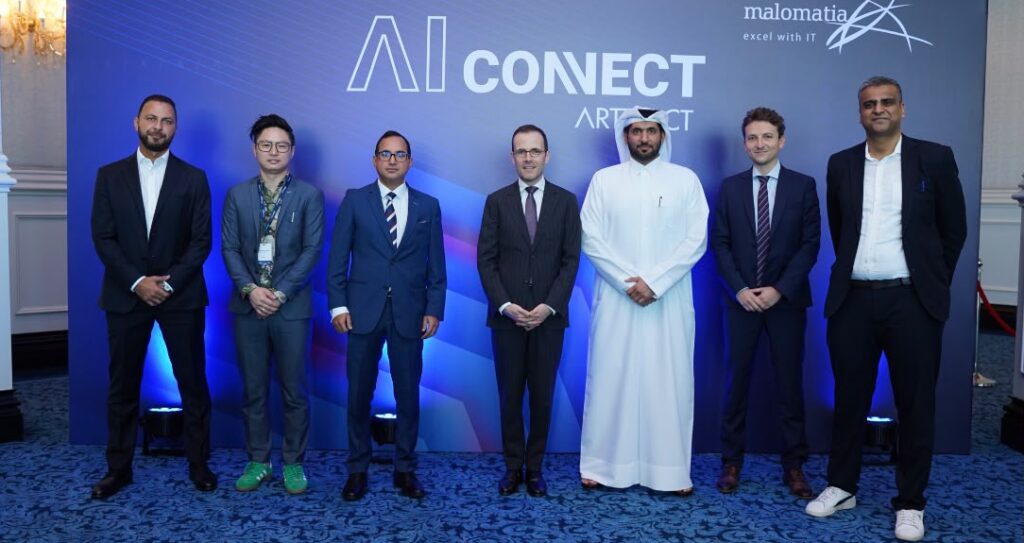
Artefact and Malomatia bring together Qatar’s public and private sector leaders to explore how AI is changing the way governments and businesses operate, make decisions, and redesign services. Artefact, a global leader in data and AI consulting, in partnership with malomatia, Qatar’s leading systems integrator and digital transformation provider, hosted the Artefact AI Connect Summit Doha 2026 at The Ritz-Carlton, Doha. The summit brought together senior government representatives and business leaders to examine how artificial intelligence is changing operations, decision-making, and service delivery across the public and private sectors. In his opening statement, H.E. Arnaud Pescheux, Ambassador of France to Qatar, said: “By bringing its global experience and AI expertise to Doha, Artefact is demonstrating how innovation can create new opportunities, new sources of value and strengthen strategic partnerships across the region. It also reflects the growing momentum of France-Qatar cooperation in technology and innovation fields.” Discussions focused on how AI can strengthen public-sector efficiency, support sound decision-making, and improve citizen services. Leaders also examined how AI is being applied across Qatar’s key industries to address practical opportunities and sector-specific challenges. Rahul Arya, CEO and Managing Partner, Artefact Middle East, Southeast Asia & India, said: “What stood out in Doha is the focus on moving from discussions about AI to where it can actually be put to work. Organizations are looking at practical questions around data, use cases and implementation. That is where Artefact’s experience can help. Artefact AI Connect Doha provided a space for those conversations, where we could share lessons from our work with organizations and hear the perspectives of leaders here in Qatar.” Artefact brings expertise across the data and AI transformation lifecycle, from AI strategy and governance and data foundations to advanced analytics, AI solutions, and deployment at scale. As Qatar’s trusted digital transformation partner, malomatia brings local knowledge and proven delivery capability to support practical and responsible AI adoption. Bassam Fadol, Chief Digital Services, malomatia said: “Our experience designing and running government systems in Qatar shapes how we approach AI. We start with who retains decision authority, where data is processed, and how the system stays correct when policies change. Our partnership with Artefact combines that experience with their data and AI expertise. We build the controls that make these systems trustworthy in everyday use. Our responsibility does not end at go-live.” The summit comes as Qatar accelerates investment in the infrastructure, capabilities, and partnerships required for a data- and AI-driven economy. Under Digital Agenda 2030, Qatar aims to generate approximately QAR 40 billion in cumulative economic impact and create 26,000 jobs in the ICT sector by 2030. Artefact has supported more than 1,000 clients globally. By combining this international experience with malomatia’s expertise as Qatar’s national IT leader, the partnership aims to help organizations identify practical use cases, implement appropriate solutions, and integrate AI responsibly into their operations.
WISE Policy Dialogue Explores AI and Teacher Readiness in K–12 Education
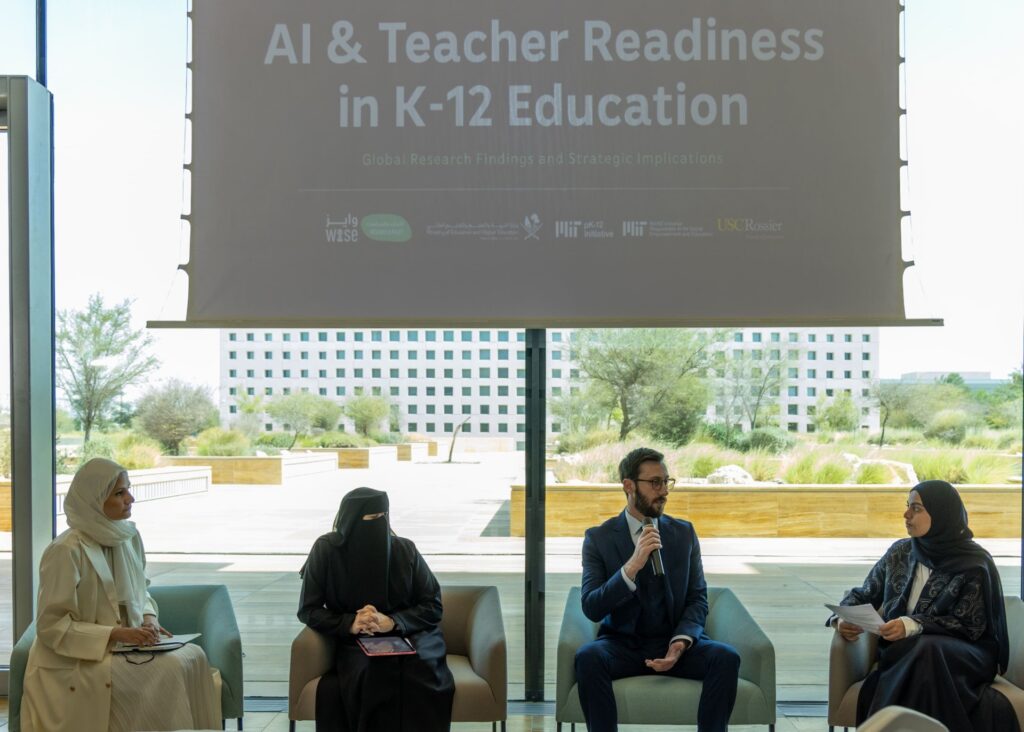
The World Innovation Summit for Education, WISE, an initiative of Qatar Foundation, hosted a policy dialogue event titled “AI & Teacher Readiness in K–12 Education: Global Research Findings and Strategic Implications”, bringing together education experts, policy voices and school practitioners to examine how artificial intelligence standards can be practically implemented in school environments. The discussion focused on one of the most urgent questions facing education systems today: how prepared are teachers to use AI meaningfully, responsibly and effectively in the classroom? As artificial intelligence continues to move rapidly into schools, the event highlighted the need for stronger teacher support, professional development, national evaluation frameworks and AI tools that reflect local language, culture and curriculum needs. AI Is Moving Faster Than Education Policy Opening the dialogue, Selma Talha-Jebril, WISE Research and Policy Director, said artificial intelligence is entering classrooms faster than schools and policy systems have had time to prepare for it. Her remarks set the tone for a discussion that moved beyond the excitement around AI and focused instead on implementation, readiness and long-term educational value. The event examined how teachers are currently engaging with AI, with many using it for administrative or preparatory tasks. However, panelists noted that the real opportunity lies in moving towards deeper, transformational classroom applications that directly support teaching, learning and student innovation. Teacher Agency and Professional Development Take Centre Stage Moderated by Maimoona Junjunia, Research and Policy Associate at WISE, the discussion emphasized the importance of teacher agency in the adoption of AI. Panelists stressed that AI in education cannot succeed through technology deployment alone. Teachers need sustained professional development, clear guidance, trusted tools and the confidence to integrate AI into pedagogy in ways that enhance learning outcomes. The dialogue also addressed the importance of evaluating AI tools rigorously before integrating them into schools at scale. In this context, national initiatives such as the WISE EdTech Testbed were highlighted as essential mechanisms for testing whether education technologies deliver real value in classroom environments. Shahd Dauleh, Innovation Manager at WISE, said the WISE testbed helps move the conversation beyond hype by ensuring that AI tools are genuinely effective for teaching and learning. AI Tools Must Reflect Language, Culture and Values A key theme emerging from the discussion was the need for AI systems in education to be contextually relevant. Lolwa Al-Nuaimi, Assistant Director of the E-Learning & Digital Solutions Department at the Ministry of Education and Higher Education, emphasized that for AI to succeed in education, it must reflect local language, culture and values while equipping teachers with the right tools. This point is particularly important for Qatar’s education sector, where strong digital infrastructure and national innovation ambitions have created a foundation for technology-led transformation. However, the discussion made clear that infrastructure alone is not enough. AI tools must be aligned with curricula, classroom realities, student needs and the cultural context in which learning takes place. Research Must Inform Policy and Practice The event also reinforced the broader purpose of the WISE Research & Policy Dialogue Series: ensuring that research findings do not remain confined to academic publications, but actively inform policy, practice and system-level decision-making. Selma Talha-Jebril noted that research only creates impact when it reaches the people with the power and responsibility to act on it. The dialogue series was positioned as a bridge between evidence, policy and education practice. This approach reflects a wider shift in education reform: moving from research as information to research as a tool for system transformation. From Classrooms to Innovation Labs Practical examples from schools offered a closer look at how AI can support student learning and innovation. Iyad Salameh, Teacher of Robotics and Automation at the Qatar Science and Technology Secondary School for Boys, shared how his students have used AI in hands-on projects. He noted that such projects show how students can use AI to build real-world solutions, turning classrooms into innovation labs. These examples highlighted the potential of AI to move beyond efficiency and automation. When implemented thoughtfully, AI can support creativity, problem-solving, applied learning and student-led innovation. For Qatar’s education ecosystem, this aligns closely with the country’s broader ambitions around digital transformation, innovation and future-ready skills. Qatar’s Teacher Readiness Gap One of the most important insights shared during the dialogue was the gap between teachers’ interest in AI and their understanding of how it works in education. According to Selma Talha-Jebril, WISE research found that 60% of teachers reported that AI helped them tailor instruction to meet diverse student needs. However, in Qatar, only 30% of surveyed teachers reported a strong understanding of how AI works in education. The finding points to a critical challenge for education systems: teachers are not necessarily resistant to AI, but many need tools, training and frameworks that are relevant to their classrooms. For Qatar, a country with advanced digital infrastructure and a strong national commitment to innovation, the opportunity is clear. The next phase of AI in education will depend not only on access to technology, but on building teacher confidence, capability and trust. Why It Matters The WISE policy dialogue placed teacher readiness at the centre of the AI education conversation. As AI becomes increasingly embedded in K–12 education, the success of these tools will depend on how well they serve teachers and students in real classroom settings. For Qatar, the discussion was especially significant. The country has invested heavily in education, digital infrastructure and innovation. The challenge now is to ensure that AI adoption in schools is guided by evidence, cultural relevance, teacher empowerment and measurable learning impact. The message from the dialogue was clear: AI can support the future of education, but only when teachers are prepared, supported and placed at the centre of the transformation.
Snoonu Invests in Qatari Startup HASIF Through Startup Factory Initiative
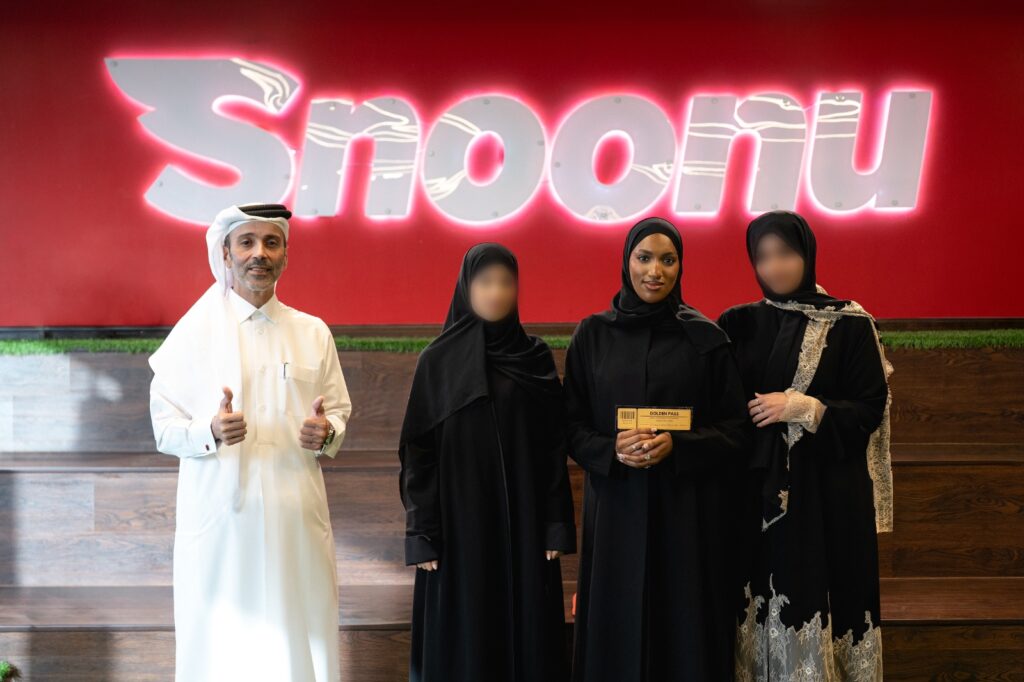
Snoonu has announced its investment in HASIF, a Qatari startup focused on smart accounting and financial compliance solutions for small and medium-sized enterprises (SMEs), as part of the company’s Startup Factory initiative designed to empower entrepreneurs and accelerate innovation in Qatar. The investment follows the successful Startup Factory competition and showcase held in Doha last week, where emerging startups presented technology-driven solutions addressing key business and market challenges across multiple sectors. Founded by Qatar University graduates and young Qatari entrepreneurs Noof Alhbabi, Maryam Eisa, and Dana Alwadaani, HASIF is developing an AI-powered digital platform to simplify financial operations for SMEs. The platform enables businesses to manage accounting, invoicing, financial reporting, and compliance processes more efficiently through automation and intelligent financial tools. In addition to streamlining operations, HASIF connects companies with accounting professionals and helps businesses prepare for future VAT implementation and evolving digital compliance requirements in Qatar and across the region. The investment marks the second startup supported through the Snoonu Startup Factory initiative, following the company’s earlier investment in Sufra AI. The move reflects Snoonu’s broader strategy to strengthen Qatar’s startup ecosystem, support local talent, and contribute to the country’s transition toward a knowledge-based economy aligned with Qatar National Vision 2030. As Qatar continues to position itself as a regional hub for entrepreneurship, technology, and innovation, initiatives such as Startup Factory are playing an increasingly important role in creating opportunities for young founders and in scaling homegrown businesses that address real market needs. The latest investment also highlights growing momentum in Qatar’s startup landscape, particularly in fintech, AI, and SME-focused digital solutions — sectors expected to continue growing as businesses across the Gulf accelerate digital transformation and compliance modernisation. With startups like HASIF entering the spotlight, Qatar’s entrepreneurial ecosystem continues to demonstrate its ability to produce scalable, innovation-driven companies with regional potential.
Qatar’s Window to the Universe

The Blue Horsehead Nebula (IC 4592), captured over seven nights from Sawda Natheel, southern Qatar. Image courtesy: Rabeea Alkuwari / NASA APOD A striking deep-space image captured from Qatar’s desert skies by astrophotographer Rabeea Alkuwari, selected as NASA’s Astronomy Picture of the Day. Qatari astrophotographer Rabeea Alkuwari has once again captured the world’s attention — and NASA’s — after his breathtaking image of the Blue Horsehead Nebula (IC 4592) was selected as NASA’s Astronomy Picture of the Day, marking his third such recognition from the world’s most celebrated space agency. Shot across seven painstaking nights from Sawda Natheel in southern Qatar, the image required two adjacent frames stitched together to capture the nebula’s full scale — a technical feat that reflects both the complexity of deep-sky imaging and the extraordinary clarity of Qatar’s desert skies. The subject, IC 4592 — the Blue Horsehead Nebula — is a reflection nebula in the constellation Scorpius, illuminated by the bright star Nu Scorpii. Its delicate blue hues and vast celestial structure make it one of the most visually striking deep-sky objects, and one of the most technically demanding to photograph. “Being able to share my work from the premium skies of Qatar with the world is always a pleasure.” -RABEEA ALKUWARI, ASTROPHOTOGRAPHER A mechanical engineer by profession and a stargazer by passion, Alkuwari’s achievement is a powerful reminder that world-class scientific artistry can emerge from right here in Qatar — from its silent desert plains, its expansive dark skies, and from the quiet ambition of those who look upward and refuse to stop reaching. WHY THIS MATTERS FOR QATAR Alkuwari’s recognition places Qatar on the global map of scientific and creative achievement — not through imported expertise, but through homegrown talent. His work demonstrates that Qatar’s people are capable of contributing to humanity’s greatest pursuit: understanding the universe. NASA’s Astronomy Picture of the Day programme, running since 1995, features a single image each day selected by professional astronomers for its scientific and artistic merit. To be selected once is remarkable. To be selected three times — from the same patch of desert sky in southern Qatar — is extraordinary. In a nation building its future across technology, science, education and culture, Alkuwari’s lens has become one of Qatar’s most powerful instruments of achievement — pointing not inward, but outward, into the infinite. “World-class scientific artistry can emerge from right here in Qatar.” -BUSINESS LEADERS QATAR
QIA and Goldman Sachs Sign Landmark MoU Targeting $25 Billion Investment, Strengthening Qatar’s Global Financial Influence
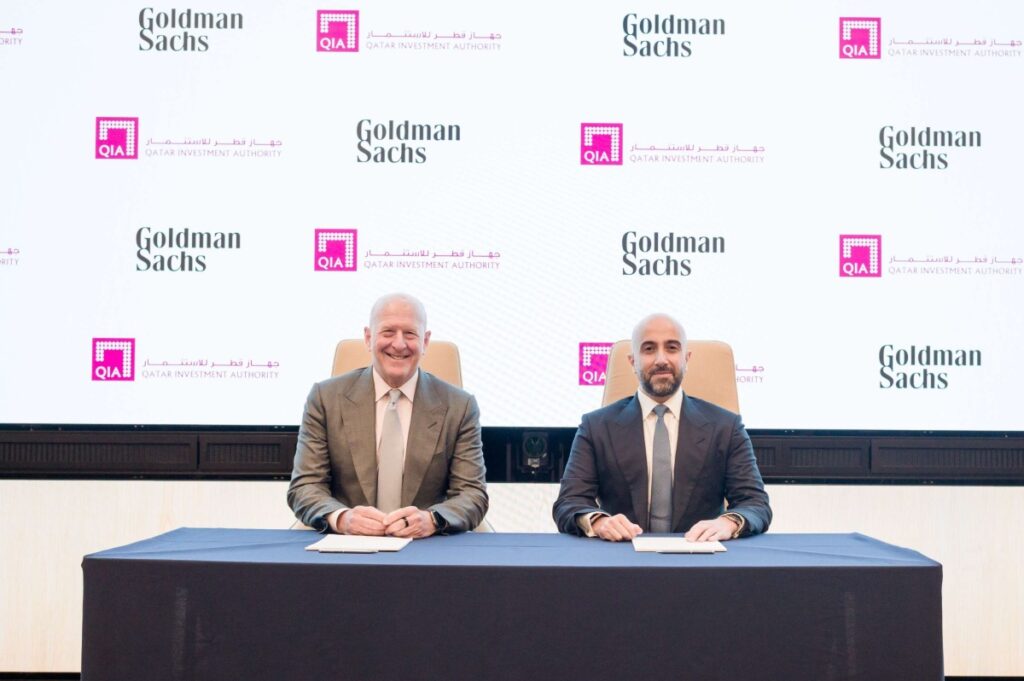
In one of the most significant financial announcements of 2026, the Qatar Investment Authority (QIA) and Goldman Sachs Asset Management have signed a major Memorandum of Understanding (MoU) aimed at expanding their strategic partnership and unlocking a combined investment target of $25 billion. The agreement marks a pivotal moment for Qatar’s growing stature as a regional and global financial hub, reinforcing the nation’s long-term strategy to drive economic diversification, attract foreign investment, and strengthen private-sector growth. According to a statement released by QIA, the sovereign wealth fund intends to commit capital across Goldman Sachs’ flagship funds, innovative alternative investment strategies, and selected co-investment opportunities. The partnership expands QIA’s role as an anchor investor across multiple Goldman Sachs Asset Management platforms, giving Qatar preferential access to global deal flow in future-forward sectors, including: This move solidifies Qatar’s position as a leading institutional investor in high-growth global markets. As part of the expanded cooperation, Goldman Sachs will enhance its presence in Doha, building out its capabilities as a strategic asset management hub for the region. Through its global Value Accelerator network, Goldman Sachs will support Qatar in: This partnership aligns closely with Qatar’s ambitions to become a regional leader in alternative investments, innovation-led industries, and financial services. Commenting on the agreement, Mohammed Saif Al Sowaidi, CEO of QIA, highlighted the strategic importance of the collaboration: “QIA is pleased to partner with Goldman Sachs in this landmark agreement. It provides QIA with premium deal flow in sectors critical to our investment strategy, including AI, fintech, digital infrastructure and private credit. This partnership extends beyond capital deployment and reinforces Doha’s position as a regional financial center.” He further noted that Goldman Sachs’ commitment to expanding its Doha presence will support job creation, specialized skills development, and long-term economic value for Qatar. David Solomon, Chairman and CEO of Goldman Sachs, emphasized Qatar’s strong momentum: “Qatar is on an exciting path of economic diversification, developing its capital markets, strengthening its talent base, and expanding its ecosystem of national champions. This creates substantial opportunity to widen Qatar’s global connectivity and impact as a multi-faceted investment partner.” Goldman Sachs stands among the world’s leading alternative investment managers, with: Its Value Accelerator Network will now work closely with Qatari institutions and the wider ecosystem to build enduring, globally competitive businesses. The QIA–Goldman Sachs MoU represents more than a financial partnership—it positions Doha as a rising global center for asset management, sovereign investment, and cross-border financial collaboration. With a $25 billion target fueling this strategic alliance, Qatar is poised to accelerate high-impact investments and strengthen its role in shaping the future of global finance.
QSTP and Merck Launch FemTech Accelerator to Advance Women’s Health Innovation Across MENA
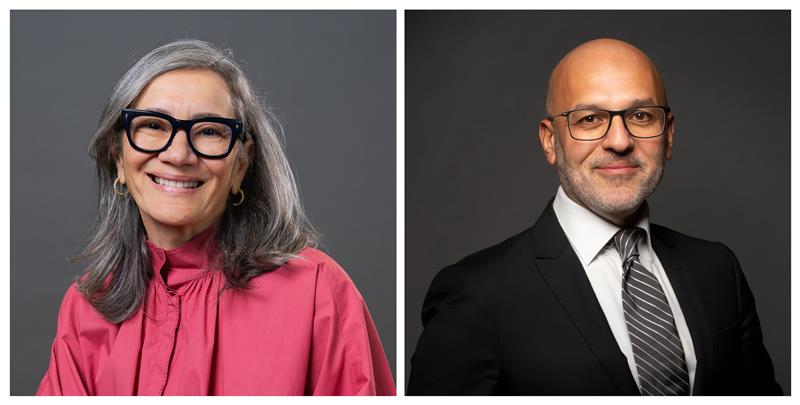
Qatar Science & Technology Park (QSTP), a member of Qatar Foundation, has announced a strategic partnership with Merck to launch the QSTP x Merck FemTech Accelerator—a landmark initiative aimed at accelerating innovation in women’s health across the Middle East and North Africa. The dedicated accelerator will identify and support up to 30 FemTech startups developing deep-tech, impact-driven solutions addressing critical unmet needs in women’s health. The programme focuses on advanced technologies, including artificial intelligence, robotics, and materials science, supporting startups from early validation through to commercial expansion. Selected companies will gain access to QSTP’s innovation ecosystem and Merck’s global scientific and healthcare expertise, benefiting from curated mentorship, clinically aligned pilot opportunities, and structured market-entry pathways into Qatar, with scalability across regional and international markets. The accelerator is designed not only to support individual ventures, but also to generate measurable, trackable impact at scale, aligned with Qatar Foundation’s mission to improve health outcomes for women. Through a multi-country approach, the accelerator enables FemTech solutions to be piloted, validated, and adopted across multiple markets, addressing women’s health challenges at both regional and global levels. Startups will also engage with key stakeholders from Qatar’s healthcare ecosystem, including clinicians, regulators, investors, and innovation leaders. Commenting on the launch, Rama Chakaki, President of QSTP, said the accelerator reflects QSTP’s commitment to inclusive innovation and scalable impact. Meanwhile, Ahmed Aboelfadl, General Manager Gulf at Merck, highlighted the urgent need to address women’s health gaps through science- and technology-led solutions. The programme includes an intensive two-week immersion in Doha, equipping founders with market insights, regulatory understanding, and commercial readiness. Together, QSTP and Merck aim to position Qatar as a regional and global hub for women’s health innovation, advancing one of the fastest-growing sectors in global health technology.
Consulting HAUS Guides Snoonu Through Landmark $245M Acquisition, Marking Qatar’s First Billion-Riyal Tech Exit
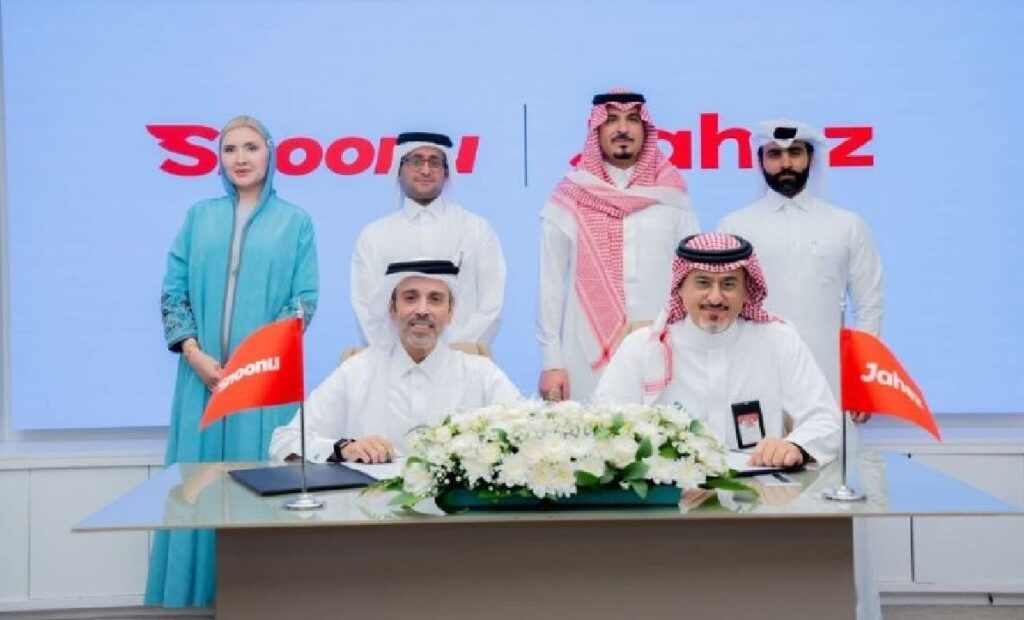
Qatar’s technology and startup ecosystem reached a historic milestone as Snoonu was acquired by Jahez Group in a $245 million transaction, valuing the Doha-born platform at over QAR 1 billion. The deal represents Qatar’s first billion-riyal technology exit and one of the largest private capital infusions in the country’s history. At the centre of this landmark transaction was Consulting HAUS, which acted as exclusive sell-side advisor to Snoonu. The firm played a pivotal role in positioning the company for acquisition, safeguarding shareholder value, and securing favourable terms that reflected Snoonu’s rapid growth and regional ambitions. A Milestone for Qatar’s Tech Ecosystem The acquisition is widely viewed as a breakthrough moment for Qatar’s innovation landscape, signalling the maturity of its startup ecosystem and its growing relevance within the wider GCC technology market. By achieving a billion-riyal valuation, Snoonu has set a powerful precedent for local founders, investors, and emerging tech companies looking to scale beyond national borders. Consulting HAUS began its advisory mandate nearly a year before the transaction’s close, laying the groundwork through detailed business planning, operational readiness, and strategic positioning. This early-stage preparation proved critical in reducing friction during negotiations and ensuring the company entered the transaction process from a position of strength. Strategic Advisory at Every Stage Throughout the deal, Consulting HAUS led transaction execution, working closely with buy-side advisors, legal teams, and auditors. Its role spanned valuation strategy, deal structuring, due diligence coordination, and negotiation support—ensuring transparency, alignment among stakeholders, and disciplined project management at every stage. Commenting on the achievement, Laith Dajani, Managing Partner at Consulting HAUS, said the transaction demonstrates the importance of professional advisory in enabling successful cross-border GCC deals and highlights Qatar’s emergence as a hub for technology innovation. From Snoonu’s perspective, the acquisition represents both scale and continuity. Hamad Al Hajri, CEO of Snoonu, noted that the partnership with Jahez Group brings new investment and regional momentum, while allowing the company to remain anchored in Qatar’s values, vision, and talent base. Setting a New Benchmark Backed by a leadership team with more than 100 years of combined experience, Consulting HAUS continues to play a central role in advancing high-impact transactions across the GCC. Over the past seven years, the firm has delivered multiple landmark projects that support economic diversification, private-sector growth, and cross-border investment. The Snoonu–Jahez transaction now stands as a benchmark deal—not only for Qatar’s tech sector, but for the broader regional startup and M&A landscape—demonstrating what is possible when innovation, ambition, and strategic advisory converge.
VoPay Establishes Global Headquarters in Qatar, Strengthening Doha’s Role as a Global Fintech Infrastructure Hub
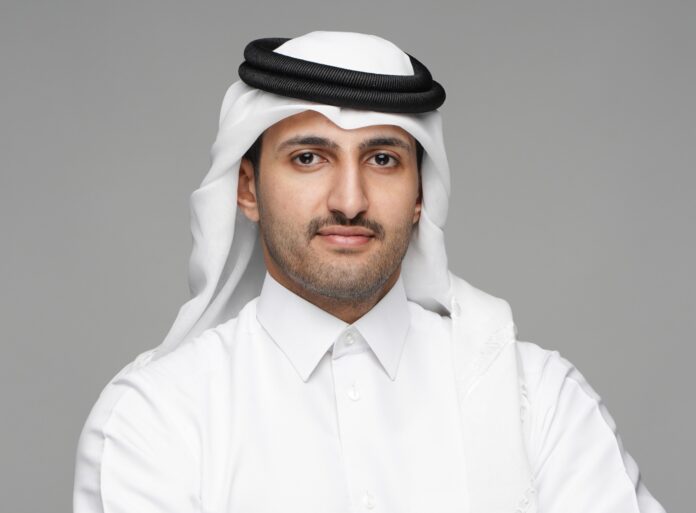
VoPay International Inc., a leading global financial infrastructure platform, has officially established its global headquarters in Qatar, positioning Doha as the company’s primary hub for advancing digital financial infrastructure across MENA, Africa, Southeast Asia, and other high-growth markets, while continuing to support operations in North America, Europe, and Latin America. The strategic move reinforces Qatar’s growing status as a regional and global centre for fintech, cross-border payments, and financial system modernisation, aligned with the country’s long-term economic diversification agenda. Doha as the Engine of VoPay’s Global Expansion From its Doha headquarters, VoPay will expand and operate core financial infrastructure that supports central banks, financial institutions, governments, public-sector entities, and large enterprises. The platform enables institutions to modernise legacy financial systems, improve interoperability, and connect regional markets with global financial ecosystems through secure, scalable, and intelligent infrastructure. As part of its long-term commitment, VoPay plans to hire more than 400 highly skilled professionals in Qatar over the next three years, spanning engineering, technology, cybersecurity, compliance, data, and platform operations—further strengthening Qatar’s role as a sustainable hub for financial infrastructure development. Alignment with Qatar National Vision 2030 VoPay’s decision closely aligns with Qatar National Vision 2030, which prioritises economic diversification, digital transformation, and the development of a knowledge-based economy under the leadership of Sheikh Tamim bin Hamad Al Thani. Commenting on the announcement, VoPay Founder and CEO Hamed Arbabi stated that Qatar offers a unique platform for scaling financial infrastructure that connects regions, institutions, and markets with resilience and intelligence—making it a natural choice for the company’s global headquarters. Strategic Support from Invest Qatar and QFC VoPay’s expansion into Qatar has been supported by Invest Qatar, which played a key role in facilitating the company’s market entry and long-term growth strategy. Operating within the ecosystem of the Qatar Financial Centre, VoPay benefits from a robust regulatory framework designed to attract global financial technology leaders. Sheikh Ali Alwaleed Al-Thani, CEO of Invest Qatar, noted that VoPay’s investment further reinforces Qatar’s commitment to building a diversified, innovation-driven economy and positioning the country as a global hub for advanced financial technologies. Qatar’s Rise as a Global Financial Infrastructure Platform By anchoring its global headquarters in Doha, VoPay is contributing to Qatar’s emergence as a trusted platform for digital financial infrastructure, enabling cross-border financial coordination, institutional collaboration, and large-scale interoperability across regions. The Doha headquarters will serve as a strategic coordination centre for initiatives supporting financial system modernisation throughout the Gulf, MENA, Africa, and Southeast Asia—enhancing capital flows, data connectivity, and secure financial operations across borders. Powering the Future of Finance from Qatar Through applied artificial intelligence, mature infrastructure technology, and global financial connectivity, VoPay’s platform bridges regional financial systems with international banking frameworks. This enables institutions operating from Qatar to integrate seamlessly with global markets, reinforcing Doha’s role as a convening point for resilient, intelligent, and future-ready financial infrastructure. As Qatar continues to attract global fintech leaders, VoPay’s decision marks a significant milestone in the country’s journey toward becoming a world-class hub for digital finance and financial innovation.