

Qatar Expands Digital Access to Business Opportunities
Entrepreneurs and investors from Qatar and abroad can access a range of market information, business data and location-based insights through Qatar Business Map Platform, a digital initiative of the Ministry of Commerce and Industry (MoCI) designed to support market research and more informed business decisions. The platform provides users with access to data and insights that can assist in exploring commercial activities, analysing markets, identifying suitable business locations and discovering investment opportunities across the country, according to MoCI. Designed for people considering establishing a new business as well as those exploring investment opportunities, the platform brings together information that can help users develop a clearer understanding of Qatar’s commercial landscape. Among the information available is the number of businesses and shops in specific areas, giving users an overview of existing commercial activity. The platform also provides information about the demographic composition of areas, allowing entrepreneurs and investors to examine the characteristics of communities when researching potential markets. Another feature helps users identify the areas most aligned with their target audience. This can be relevant for businesses seeking locations that correspond with the customers they intend to serve. Users can also explore the types of existing activities and businesses across different areas, providing insight into the commercial mix in different parts of the country. The platform further maps the geographic distribution of activities and businesses, including points where commercial activity is concentrated. This geographic information allows users to examine business patterns across Qatar and consider different locations as part of their market research. According to infographic shared by the Ministry, the Business Map Platform includes six services aimed at helping users study the market. One of these is AI Map Analysis, which allows users to explore and analyse data in ways intended to provide a clearer understanding of market conditions.
QatarEnergy Secures Long-Term US LNG Supply Deals
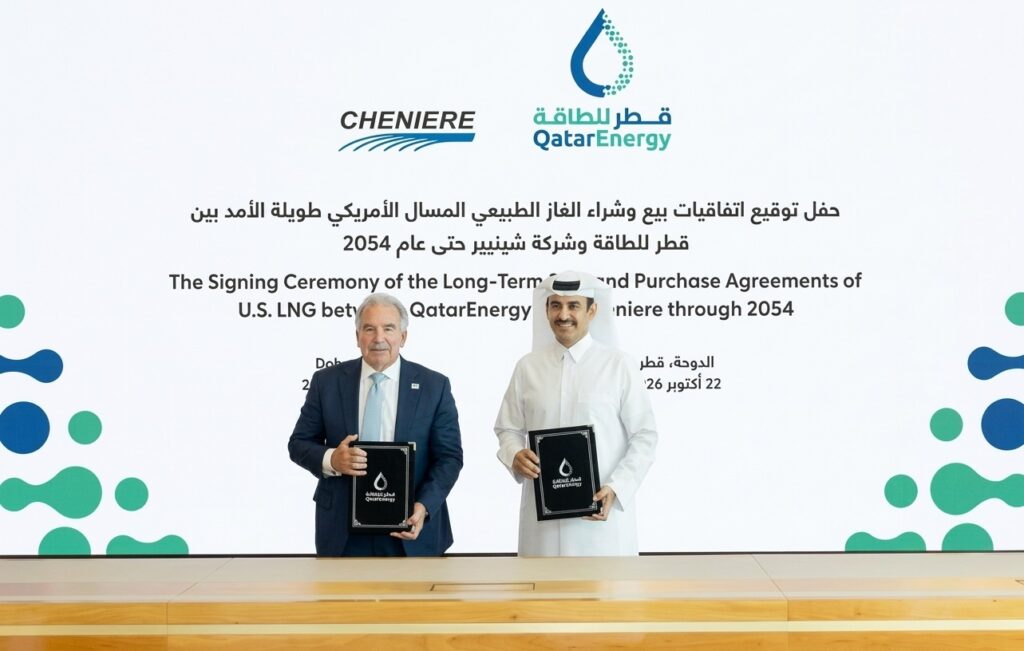
QatarEnergy announced recently that it signed two long-term agreements with US energy company Cheniere to purchase up to 4 million tons of liquefied natural gas (LNG) annually from facilities in Louisiana and Texas through 2054 The agreements cover LNG supplies from Cheniere’s Sabine Pass facility in Louisiana and Corpus Christi facility in Texas, both located along the US Gulf Coast, QatarEnergy said in a statement. Under the agreements, deliveries are expected to begin in 2031 and continue through 2054 on a free-on-board (FOB) basis, meaning QatarEnergy will take responsibility for the LNG shipments at the loading ports. Cheniere said in a separate statement that QatarEnergy would purchase 2 million tons annually from each facility, with prices indexed to the US Henry Hub natural gas benchmark plus a fixed fee. The US company added that 1 million tons annually under the Sabine Pass agreement would be subject to a positive final investment decision on the first phase of its planned expansion project. The agreements were signed by Qatar’s Minister of State for Energy Affairs and QatarEnergy President and CEO Saad Sherida Al Kaabi and Cheniere chairman, President and CEO Jack Fusco. Al Kaabi described the agreements as an important milestone in QatarEnergy’s LNG strategy. “This major long-term purchase will expand and diversify our global LNG portfolio and advance our ability to meet the evolving requirements of the market,” he said. He added that the additional volumes would complement QatarEnergy’s existing LNG supplies, strengthen its trading portfolio and enhance its ability to serve customers worldwide. For his part, Fusco said the agreements represented a major long-term commercial commitment and reinforced Cheniere’s position in the US LNG industry. The deal comes as QatarEnergy seeks to diversify its global LNG supply and trading portfolio while strengthening its position in international energy markets. Cheniere operates the Sabine Pass and Corpus Christi LNG facilities, with a combined production capacity of approximately 56 million tons annually and additional capacity under construction. The company is also developing an expansion of its Sabine Pass facility, which could increase the terminal’s total production capacity to more than 50 million tons annually. The agreements come amid heightened tensions in the Middle East and disruptions to energy shipments through the Strait of Hormuz, a strategic waterway connecting the Gulf with international markets. Qatar, one of the world’s leading LNG exporters, relies heavily on maritime routes through the strait to deliver gas to customers in Asia and Europe. The purchase of US-produced LNG is expected to provide QatarEnergy with additional supply options outside the Gulf, allowing it to diversify its trading portfolio and reduce its reliance on shipments originating from the region. Alongside, Australia’s Woodside Energy will supply QatarEnergy with LNG from its Louisiana project under a 20-year deal, the companies said recently, as the Hormuz blockade and war damage disrupt output at one of the world’s largest LNG producers. The deal gives QatarEnergy, which has been buying US LNG for its customers, a supply source outside the Gulf and helps Woodside sell capacity at its Louisiana project, which has few committed buyers. Under the deal, Woodside will supply LNG on a free-on-board basis from the start-up of Louisiana LNG Train 2, with volumes increasing to 3 million mtpa from the start-up of Train 3. QatarEnergy said deliveries are expected to start in 2030, and that the deal makes it the largest buyer of US LNG.
Lesha Bank Acquires 33 Aircraft from Avolon
Lesha Bank has acquired a portfolio of 33 aircrafts from Dublin-headquartered leasing specialist Avolon, taking its managed fleet to more than 75 aircrafts. The deal was completed through an investment structure on behalf of Lesha Aviation Fund under an agreement for the sale and purchase of the portfolio. Neither company has disclosed the aircraft types, the airlines leasing them or the financial value of the transaction. The purchase marks another step in the developing relationship between the two firms and gives Lesha’s aviation business greater scale and exposure to a diversified group of airline operators. It forms part of the bank’s strategy of building its leasing activities around a portfolio of aircraft and established lessees. Mohammed Ismail Al Emadi, group CEO of Lesha Bank, said the acquisition reflected “the disciplined approach we have taken to building scale in aviation leasing … We expect this portfolio to deliver stable, diversified returns for years to come.” Avolon CEO Andy Cronin described it as a “significant transaction”. He said aircraft trading is a core part of the company’s strategy, allowing it to manage its portfolio, realise value and recycle capital. “This agreement reflects the continued strength of investor demand for aviation assets,” Cronin said. top executives of the firms. Domiciled in the Cayman Islands, the fund – potentially as large as US$1 billion (QR3.64 billion) – would be structured to provide qualified high-net-worth investors in the Gulf Cooperation Council (GCC) countries direct exposure to mainland-listed shares and Hong Kong equities, the companies said.
Brookfield to Open Doha Office for Middle East Expansion
Brookfield Asset Management Ltd. Is opening an office in Qatar, deepening its presence in the region where many countries are grappling with the economic fallout from the war. The office will be anchored by Brookfield’s global credit platform, including Oaktree, the firm said in a statement recently. Brookfield manages about US$20 billion (QR72.8 billion) in assets across private equity, real estate, credit and infrastructure across the six-nation Gulf Cooperation Council. The move builds on its partnership with Qai, Qatar’s artificial intelligence company and a subsidiary of the QIA to invest US$20 billion (QR72.8 billion) in artificial intelligence infrastructure in Qatar and international markets. Qai has since been transferred to Doha Investment, which was unveiled last month to focus on domestic investments and is wholly owned by the QIA. “Establishing our presence in Doha is a natural next step as we continue to grow our business in the region,” said Jad Ellawn, Brookfield’s managing partner and regional head of the Middle East. “We see significant opportunity ahead and look forward to continuing to invest and deepen our collaborations here for the long term”. The expansion is the latest sign of global giants doubling down on the Middle East, which is home to sovereign wealth funds that oversee assets worth trillions of dollars. These investors have become increasingly crucial to financial firms, who’ve been keen to signal their willingness to back Gulf countries during the conflict.
Qatar’s JTA Targets Andorra for Investment
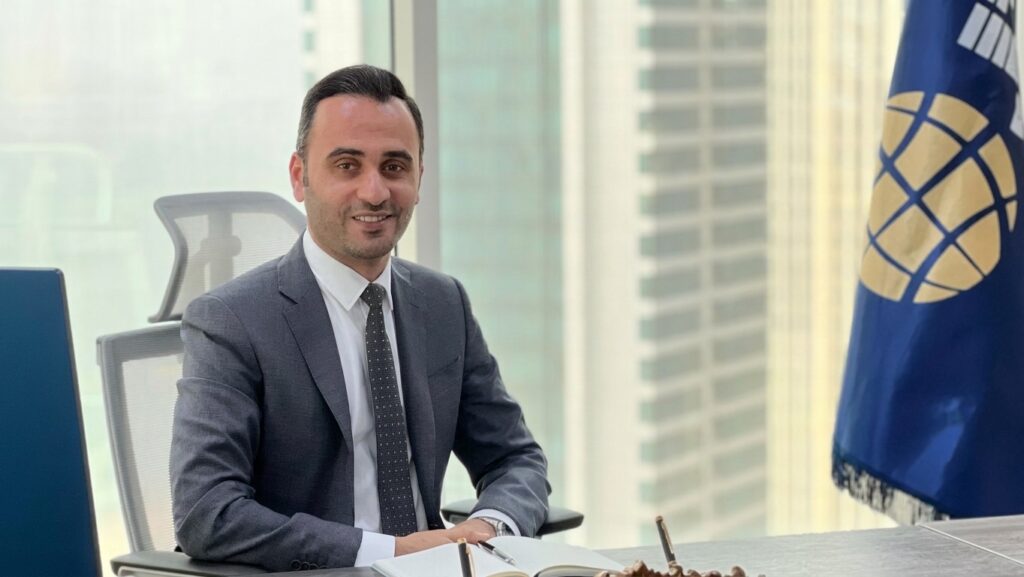
Qatar-based JTA International Investment Holding has turned its attention to Andorra as it looks to boost its international investment portfolio. Amir Ali Salemi Zadeh, founder and CEO of the group, travelled to Andorra in early October for a series of meetings with Prime Minister Xavier Espot and various government ministers, business leaders, organisations and institutions. These included discussions around Andorra’s economic goals, identifying investment opportunities and investment projects. Opportunities for Andorran companies to access the Qatari market were also discussed. Looking to invest in infrastructure, energy and sport JTA is keen to invest in infrastructure, energy and sports projects that can provide sustainable value. The investment group are looking to invest with local Andorran companies. This could give a base to build investments with companies already in place within the Principal. However, no details have been released by JTA around how much money they are planning to invest and what projects may be implemented. JTA appoints representative in Andorra Since visiting Andorra in October, JTA have appointed a new representative to keep them connected with local institutions and businesses.They will manage discussions with potential partners. This indicates that the company intend to keep investing in this market.But any potential investments are still in early stages. Qatar-based group investing in 50 countries JTA International Investment Holding was founded in 2010 specialising in funding, however have since moved into direct investment and acquiring equity. The company now operate in a range of industries such as manufacturing, energy, healthcare, technology, financial services and tourism. They currently operate in around 50 countries (Expansión). They have already invested in a number of international projects including investing 50 million with KZA Medical on a pharmaceutical complex within Turkey and 45 million into Sepidan Drilling Services.They also have interests in Germany, Canada, Indonesia, Greece and Vietnam. Possibly looking to expand into Iberian Peninsula Adding Andorra to their list of investments may signal that they want to expand further into the Iberian Peninsula. They are reportedly looking to invest in Spain as part of phase two. Around one year ago JTA were in talks to buy Spanish football team Getafe CF but this did not go through. Within Andorra they have had meetings with the Prime Minister Xavier Espot and local business representatives to look at opportunities for foreign investment within key economic sectors. However, no particular investment deals or projects have been announced. Appointing a representative could be an important first step in seeing if JTA’s initial interest translates into actual investments within the Principality.
MWC26 Doha Welcomes Over 10,000 Attendees
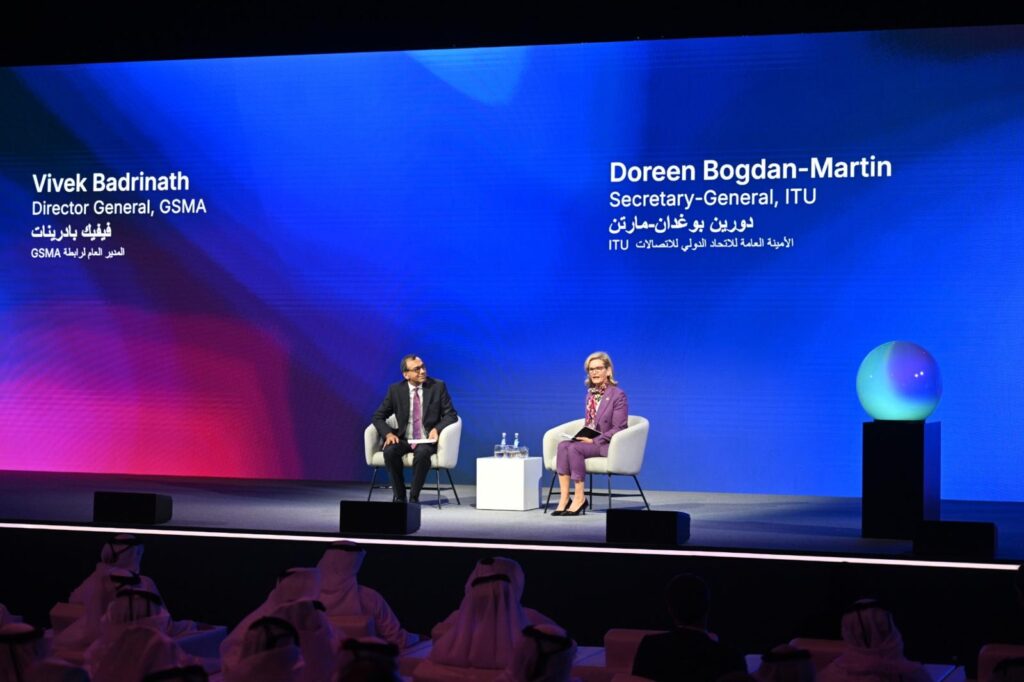
MWC26 Doha brings together industry leaders, policymakers and regulators to exhibit, discuss, connect and do business. A record-breaking number of 36 Ministers and 34 Heads of National Regulatory Authorities participated in the GSMA’s Ministerial Programme. 10 November 2026 – Over 10,000 participants from around the world gathered in Qatar at MWC26 Doha, a truly spectacular showcase of the Middle East and North Africa’s digital growth ambitions. Over three days of keynote sessions, conferences and summits, hosted in partnership with the State of Qatar’s Ministry of Communications and Information Technology (MCIT), participants discussed how smart solutions, cutting-edge infrastructure and robust digital strategies are helping transform the role of the MENA region in the global connectivity landscape. In a true first, MWC26 Doha was held in conjunction with the opening days of the ITU Plenipotentiary Conference (PP-26), the main governing body for the ITU, the United Nations agency for digital technologies. The event occurs every four years and is the most senior decision-making body for the agency, helping define its strategic and financial planning, elect leadership and determine its overall direction. The combination of the two events brought together industry leaders, policymakers and innovators to discuss the key digital issues. Sianne Ryder, CEO, Events and Industry Services, GSMA Ltd said: “This week at MWC26 Doha, policymakers and regulators sat side by side with industry leaders and innovators to debate, connect and shape MENA’s digital future. Co-locating with the opening days of ITU PP-26 created something unique: a place where those setting the global digital agenda could engage directly with the operators, technology companies and investors bringing it to life. The result was sharper conversations, stronger connections and a clearer path from policy to progress. We look forward to seeing the partnerships forged in Doha deliver impact across the region and beyond. Thank you to everyone who joined us – and especially to our hosts at MCIT.” ‘I am excited to see the partnerships formed throughout the event translate into impactful outcomes across the region. Thank you to everyone who attended and our hosts at MCIT.’ MWC26 Doha highlights: Over 10,000 attendees from 100 countries and territories 14% C-suite attendants 37% director level and above 62% from non-core mobile industries The GSMA’s Ministerial Programme brought together 86 delegations, with 36 Ministers and 34 Heads of National Regulatory Authorities attending. Attendees represented 74 countries and 12 intergovernmental bodies 195 speakers from keynote sessions, summits and partner programmes. ~100 exhibitors, sponsors and partners on the showfloor 42 partnerships and announcements made in the Announcement Lounge 220+ media, content creators and analysts onsite MENA’s digital transformation on display Participants saw how intelligent mobile solutions are being used to help emergency services, with Ooredoo Qatar, Ericsson, Eonetics, Hikvision and GSMA Fusion showcasing. The 5G Connectivity for Emergency Response demo showcased how Eonetics’ tethered drone in Melbourne, Australia connected to the GSMA Pavilion in Doha over 12,000km away. The GSMA launched the AI for Impact (AI4I) MENA Initiative. The initiative aims to connect mobile operators, government bodies, international agencies, academic institutions and private sector partners to develop and implement AI-enabled services in the region. This will be supported by strategic partnerships and upskilling. The GSMA also entered into agreements and announced partnerships with Khalifa University and AMD to provide radio frequency foundation models to telecom operators, with the ITU to boost trusted open AI in telecoms, with Axonect to support small businesses using operator led digital marketplaces, a five-year agreement with Applab, an agreement with H.E. Minister of Digital Transition and Technology Innovation of Côte d’Ivoire to increase smartphone affordability, and a partnership with GSMA Foundry and apoQlar to bring spatial computing to connected healthcare. Participants heard from leading speakers including Accenture, Dell Technologies, Ericsson, Google, Huawei, ITU, Mastercard, Microsoft, Nokia Solutions and Networks, Ooredoo, PwC Middle East, SandboxAQ, ServiceNow, VEON, Vodafone Qatar. Exhibitors and sponsors included Accenture, AGIBOT, Cisco, Deloitte, Ericsson, Es’hailSat, Google, HPE, Huawei, Internal Security Force Qatar, Microsoft, Oliver Wyman, Ooredoo, PwC, Qatar University, Scale, strategy&, Veon and Vodafone. Vivek Badrinath, Director General of the GSMA said: “MWC26 Doha remains a central part of our work to bring the mobile ecosystem together around the issues that matter most to its growth, from the global standards that keep networks working across borders to connecting the millions of people who remain offline. With connectivity and digital policy now vital to economic and social progress, this year’s event and our collaboration with Qatar brought regional priorities onto the global stage. The ambition and partnership we have seen in Doha have established a strong foundation, and we will continue to build on them so that digital progress reaches every community across MENA.” We have seen incredible ambition and great partnerships in Doha and we will continue to build on these to ensure digital progress reaches every community across the MENA region. Keynote sessions and highlights can be viewed on demand on the MWC Doha website. For the latest news, updates, B-roll and official imagery please visit the MWC26 Doha Press Zone. MWC26 Doha concludes the 2026 GSMA event series. We are now turning our attention to MWC27 Barcelona on 1-4 March 2027. Registration is now open. We look forward to welcoming the region’s connectivity ecosystem back to Doha from 15-17 November2027. About GSMA The GSMA is a global organisation that unites the mobile industry to realise the potential of connectivity to generate positive change. Our vision is to unleash the full power of connectivity to make the world a better place. We represent mobile operators and organisations within the mobile industry and adjacent industries to deliver for our members. Across three pillars, Connectivity for Good, Industry Services and Solutions and Outreach, we advance policy, solve society’s biggest challenges, provide the underlying technology for mobile to work, and provide the world’s largest platform to unite the mobile industry at our MWC and M360 series of events. Find out more here: GSMA.com
Advancing qatari legal excellence and strengthening its global presence
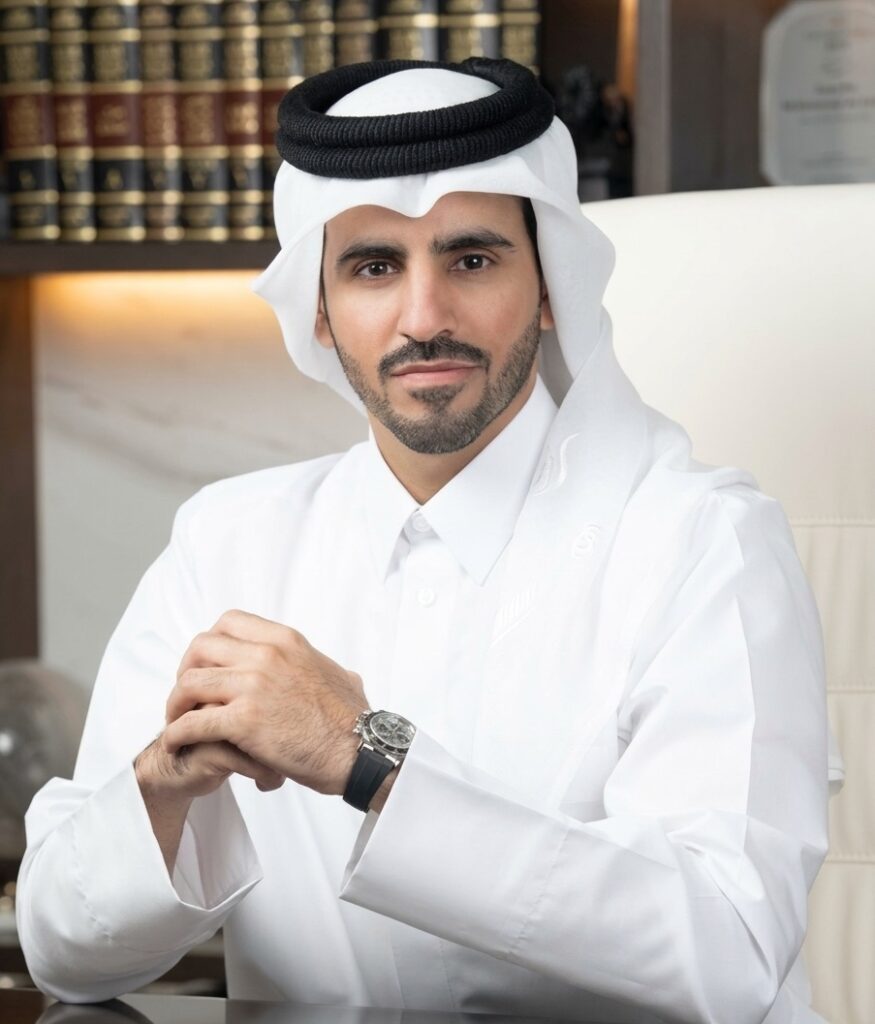
ESSA BIN MOHAMMED AL SULAITI ON ESLF’S FIRST 12 YEARS When Essa Al Sulaiti Law Firm (ESLF) was founded in 2015, Qatar already had an established and competitive legal market. Twelve years on, the firm has developed into a full-service practice distinguished by its investment in technology, an internally developed digital enterprise resource planning system, a client portal, an in-house artificial intelligence (AI) tool, and an expanding international presence through its membership of Interlaw Global. Its achievements include repeated Qatar Law Firm of the Year honours and recognition from leading international legal directories. For its founder, however, the ambition extends beyond professional accolades or individual success. It is about building a lasting institution: a Qatari law firm rooted in local knowledge, operating to international standards and equipped to meet the evolving demands of business. In this conversation with chief publishing officer Manu G Parmar, Essa Al Sulaiti reflects on his professional journey, the transformation of Qatar’s legal landscape, the growing role of arbitration across the GCC, and ESLF’s ambitions for the years ahead. Essa Bin Mohammed Al Sulaiti, Founder & Chairman of Essa Al Sulaiti Law Firm “ESLF”, studied law in the United Kingdom before establishing his career in Qatar’s courts and arbitration community. His professional experience across different legal traditions has informed his approach to legal practice and his vision for developing a firm capable of bridging local expertise and international expectations. “I obtained my LL.B. from Swansea University in the United Kingdom, where I developed a grounding in the common law tradition. That foundation has proved valuable in Qatar, where civil law, common law and international commercial practice frequently intersect.” After returning to Doha, I began practising as a lawyer in 2012. Those early years gave me first-hand experience of the Qatari judicial system and a clearer understanding of the challenges businesses, particularly international investors, sometimes encountered when seeking legal advice that combined local expertise with an international commercial perspective. In 2015, I established ESLF with the intention of addressing that gap. “Today, I am admitted to practice before the Court of Cassation, and my professional experience continues to inform both our approach to client matters and the direction in which we are developing the firm.” Al Sulaiti’s practice has principally focused on dispute resolution, particularly construction and corporate disputes. His experience encompasses litigation and arbitration arising from major projects across Qatar, including stadiums, highways, rail infrastructure, hotels and towers. Alongside his work as counsel, he has developed a parallel practice as an arbitrator. “I sit on the panels of several regional and international arbitration institutions, including the International Court of Arbitration of the International Chamber of Commerce (ICC), the London Court of International Arbitration (LCIA), the Dubai International Arbitration Centre (DIAC), and the Saudi Center for Commercial Arbitration (SCCA), alongside the Qatari International Center for Conciliation and Arbitration (QICCA), the GCC Commercial Arbitration Centre, and the commercial arbitration centres in Kuwait and Oman. I am also a Fellow of the Chartered Institute of Arbitrators (FCIArb) and have served as sole arbitrator, co-arbitrator and chair of arbitral tribunals. I also serve as a Board Member of the Qatar Lawyers Association and the Qatar Arbitrators Association, contributing to the development of the legal and arbitration professions in Qatar.” For Al Sulaiti, professional credentials are only one dimension of building a sustainable legal practice. The firm’s culture, he explains, must be grounded in principles that guide decisions, relationships and the quality of its work. “Our values are integrity, partnership, excellence, practicality, investment in people and innovation. They are not simply statements for a website; they must be reflected in how we advise clients and conduct ourselves.” Integrity comes first. We must provide honest, independent advice, including when the answer is not what a client hoped to hear. Our reputation is one of our most valuable assets, and protecting it requires consistency in our conduct and the quality of our work. We also regard ourselves as partners in our clients’ success, rather than service providers engaged only to address an immediate legal problem. Excellence means technical rigour, careful preparation and attention to detail at every stage of a matter. Practicality means translating legal advice that works commercially. Ultimately, clients need to understand their options, the risks they face and the decisions available to them. “I SAW AN OPPORTUNITY TO STRENGTHEN THE MARKET’S OFFERING THROUGH A QATARI FIRM OPERATING TO INTERNATIONAL STANDARDS. THERE WAS SCOPE TO ENHANCE CLIENT SERVICE, BRING TOGETHER COMPLEMENTARY AREAS OF EXPERTISE AND RETHINK HOW LEGAL SERVICES WERE DELIVERED.” INVESTMENT IN PEOPLE IS CENTRAL “We support our lawyers’ professional development through further education, training, mentoring and appropriate flexibility in the workplace. We are also committed to building a balanced and representative team in which people from different backgrounds can contribute, develop and progress on merit.” Innovation is another defining feature of ESLF’s development. Rather than treating technology as an external service or a peripheral business function, the firm has invested in building its own operational capabilities. “We have established dedicated functions covering finance, human resources, business development, marketing and technology, each led by people with relevant expertise. Over the past three years, our technology team has developed an in-house digital system that integrates key operational functions, including matter and case management, document and knowledge management, financial management, workflow automation, internal reporting and performance monitoring. The system is designed to improve coordination across departments, strengthen oversight, streamline internal processes and provide management with greater visibility over the firm’s operations. By developing these capabilities in-house, we can tailor our digital infrastructure to the specific demands of legal practice and the way we serve our clients.” “We have also developed a client portal and are building an in-house AI drafting and review tool informed by our legal knowledge, precedents and working methods. Our objective is to develop technology around the realities of legal practice, rather than simply adopt generic tools without considering how they fit into our work.” The purpose is straightforward: to support our lawyers, improve operational efficiency and give
How Doha Is Turning Creativity into an Economic Venture

Design Doha returns. Rubaiya Qatar launches. Doha’s creative institutions are expanding from exhibition spaces into incubators, studios and marketplaces. In this edition, chief publishing officer Manu G. Parmar studies this space and analyses how Qatar’s cultural ambitions are evolving into something larger: a creative economy. For two decades, Qatar’s investment in culture has been measured through its museums, its architecture and its international exhibitions. Walk through Doha this November, though, and a different picture begins to emerge. The conversation is no longer only about what Qatar is displaying. It is increasingly about what Qatar is creating, producing, incubating, selling and exporting. That distinction matters. Within a single month, the city opens the second edition of Design Doha, launches its first contemporary art quadrennial, opens a new commercial gallery, stages a fashion retail showcase and hosts a technology summit where design-led founders pitch to investors. Around them sits a dense programme of fashion retrospectives, ancient ceramics, Iraqi modernism and sculpture placed in the landscape. Taken one by one, these are impressive cultural events. Taken together, they describe something more consequential. Qatar has spent years building the institutions a creative economy needs: museums, design districts, studios, residencies and prizes. This season shows those institutions working in concert, and it sends a clear signal to investors, entrepreneurs and talent. Doha intends to be where the region’s ideas are made, not only where they are displayed. exposure through Liberty London in Msheireb and business mentorship from DHL. Qatari finalists include Kahhal1871 and Abdulrahman Al Muftah Studio. “Recognition is only the beginning,” says Design Doha director Fahad Al Obaidly. The prize is built to turn talent into practice, and practice into business. The Design Doha Prize is where that market logic is most visible. Twenty finalists were chosen from more than 500 applications across four categories: craft, product design, furniture design and emerging talent. Four winners were named on November 7 at the Museum of Islamic Art, judged by a 24-member international jury led by architect and designer India Mahdavi. Each winner receives QR200,000, a two-week mentorship at the Vitra Campus in Germany, a year of studio space at Liwan, retail FROM CULTURAL VENUE TO CREATIVE DISTRICT Much of this activity is concentrated in Msheireb Downtown Doha. Doha Design District, part of Msheireb Properties, describes itself as an integrated creative ecosystem supporting the journey from idea and making through to education, exhibition and exchange. Significantly, it also offers retail space for brands and designers, alongside venues for exhibitions, workshops and public programmes. That makes Msheireb more than an attractive backdrop for cultural events. It is becoming infrastructure for a creative cluster. The district opened the season with Designed to Last, an exhibition by Moroccan designer Artsi Ifrah of Maison ARTC, a Fashion Trust Arabia award winner. His 13 one-of-a-kind looks challenge fast fashion and ask what makes a garment worth keeping. A live atelier and talks with Qatari designers turned the show into a working studio as much as a display. QC+ CEO Kirstin Mearns says great art and design “deserve a home with a strong point of view”. For Doha’s creative economy, MIHAD fills a missing link: a dedicated place where local talent meets buyers. The clearest sign of commercial intent arrived on November 4, when QC+ opened MIHAD in Doha Design District. It is a commercial art and design gallery that sells and commissions work for private and corporate collectors. Its opening programme runs to December 31 and includes Beyond the Letters, on Arabic and Persian typography, and Traces of the Desert Light by Sanae Collective, both presented with Design Doha. A Chef-in-Residence programme opens with Mexico’s Elena Reygadas of Panadería Rosetta, named the World’s Best Female Chef in 2023. M7: WHERE FASHION MEETS THE CUSTOMER M7 offers one of the clearest examples of the shift. Qatar Museums describes it as the country’s epicentre for innovation and entrepreneurship in fashion and design, created to accelerate Qatar’s creative economy and give designers the tools to compete. Its November calendar reflects that hybrid cultural and commercial role. Three exhibitions run until December 26. ERDEM: About Time, About Her marks the 20th anniversary of designer Erdem Moralioglu’s fashion house with 150 garments, sketches and archive pieces. Around the World in Jewellery is the largest jewellery presentation ever drawn from Qatar Museums’ collections, with more than 500 pieces, some on public view for the first time. Expanded Tradition shows a new generation of Mexican artisans reworking inherited techniques for contemporary life. Then comes the market. The Edit, now in its fourth edition, stages its second 2026 retail showcase from November 26-30. It gathers a curated selection of regional and international brands, including emerging designers, Fashion Trust Arabia alumni and labels linked to the Years of Culture programme. It gives designers something cultural ecosystems sometimes overlook: direct access to customers. M7 director Maha Al Sulaiti says the season shows how “design can connect the past with the present”. Museum-grade exhibitions, retail and entrepreneurship now share the same address. That is precisely how creative economies develop. LIWAN: WHERE MAKING BECOMES BUSINESS A short walk away, Liwan Design Studios and Labs address another essential part of the equation: production. Liwan is housed in the former Banat El Doha school, Qatar’s first officially-recognised girls’ school. It gives designers studios and facilities for pottery, leatherworking, digital photography and prototyping. The building is an intelligent piece of cultural reuse, with educational heritage turned into productive creative infrastructure. More importantly, Liwan is increasingly linking creative practice with business development. Its Studio Resident programme is aimed at Qatar-based designers whose projects could scale within the local creative economy. Participants receive workspace, technical facilities, professional development and introductions to industry clients. That language of scale, clients and market opportunity is revealing. It marks a shift from supporting creativity for its own sake towards helping practitioners build sustainable businesses. During Design Doha, Liwan presents Bu’ed Nadhar, meaning “beyond immediate vision”: 32 works by 16 artists from the Gulf and neighbouring regions, developed through five residencies. Curated
MWC26 Doha: Shaping a Connected Digital Economy
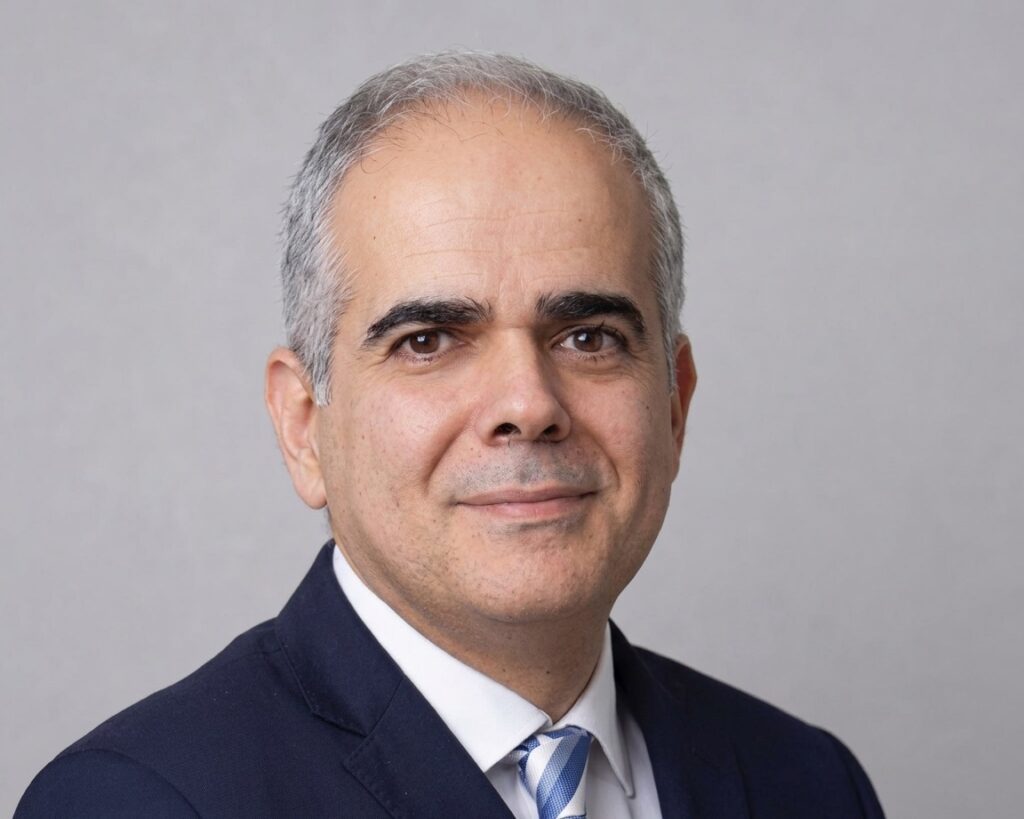
Bassam Hajhamad, country senior partner and consulting leader, PwC Qatar discusses, in a free-wheeling chat with Aparajita Mukherjee, the advantages that a consultant has in Qatar, what strategy change does a consultant need to bring to the table in uncertain times, sharing his insights into the MENA Telecom Sector that could be used by Qatar. “QATAR ALSO HAS THE FINANCIAL CAPACITY AND INFRASTRUCTURE TO SUPPORT ITS AMBITIONS. THE AIM, AS WITH ANY MARKET UNDERGOING SIGNIFICANT TRANSFORMATION, IS ENSURING THAT THESE INVESTMENTS TRANSLATE INTO GREATER PRODUCTIVITY, STRONGER LOCAL CAPABILITIES AND SUSTAINABLE ECONOMIC GROWTH.” Having navigated consulting as a profession for long and in different kinds of economies, what strikes you as advantageous in the case of Qatar? Hajhamad: Qatar has been deliberate in how it approaches economic development. There is a clear national direction, backed by sustained investment in infrastructure, technology and institutional capabilities. Having worked across different markets, I see this alignment as an important advantage. Qatar National Vision 2030 and the Third National Development Strategy provide continuity in economic planning, particularly around diversification, private sector participation and building a knowledge-based economy. For businesses and investors, that level of clarity matters. Qatar also has the financial capacity and infrastructure to support its ambitions. The aim, as with any market undergoing significant transformation, is ensuring that these investments translate into greater productivity, stronger local capabilities and sustainable economic growth. From a consulting perspective, this creates opportunities to partner with organisations on complex priorities, from strengthening competitiveness to developing new clusters, revenue streams and business models. In a region that is facing several economic shifts and strategic challenges, how would you rate the country’s readiness in meeting these challenges? Hajhamad: Qatar is well positioned to navigate the economic and technological shifts affecting the region. Its strong economic fundamentals, sustained investment in infrastructure and clear national priorities provide a solid foundation for continued growth. At the same time, the global environment is becoming more complex. Geopolitical developments, changing trade dynamics and rapid technological advances are reshaping how economies compete for investment and talent. Qatar’s Third National Development Strategy addresses these priorities, with a focus on resilience, productivity, innovation and private sector development. Continued progress will depend on maintaining momentum in implementation, strengthening private sector participation and developing the capabilities needed to support the country’s long-term economic ambitions. What learnings from your earlier stints is coming handy in your current stint at Doha? Hajhamad: Working across different markets in the region and globally has reinforced the importance of understanding the economic and institutional context in which businesses operate. The principles of good strategy may be broadly consistent, but the approach to implementation needs to reflect local market conditions. My experience across consulting, technology, investment and entrepreneurship has also shaped how I approach transformation. Technology can create significant opportunities, but its value depends on the commercial case, the capabilities within an organisation and its ability to implement change. These lessons are relevant to Qatar, where significant investment has already been made in infrastructure and economic development. Many of the priorities today are focused on how to build on that foundation, strengthen organisational capabilities and support the next phase of growth. At PwC, we bring together local market knowledge and experience from across the region and internationally to support clients as they address these priorities from strategy to impactful execution. FOR QATAR, THIS REPRESENTS AN IMPORTANT OPPORTUNITY. THE COUNTRY HAS INVESTED SIGNIFICANTLY IN ADVANCED TELECOMMUNICATIONS INFRASTRUCTURE. THE NEXT STEP IS TO CONTINUE TRANSLATING THAT CONNECTIVITY INTO GREATER PRODUCTIVITY, INNOVATION AND NEW SOURCES OF ECONOMIC VALUE. Building new markets and fostering client relationships in stable times as opposed to those in uncertain times – what strategy change does a consultant need to bring to the table? Hajhamad: In stable times, organisations tend to focus on growth, expansion and long-term investment opportunities. During periods of uncertainty, priorities shift towards resilience, agility and making more informed decisions about where to invest. For consultants, this means moving beyond traditional strategic advice to becoming even more closely involved in helping clients anticipate change, evaluate scenarios and translate decisions into action. One of the most important shifts is from planning for a single expected future to preparing for multiple possible outcomes. Businesses need strategies that are ambitious but flexible, supported by data-driven insights, strong risk management and the ability to respond quickly as circumstances evolve. Equally important is trust. Client relationships are built through consistency, transparency and a deep understanding of the challenges organisations face. In uncertain times, clients value partners who can bring clarity to complexity and help them make difficult decisions with confidence. At PwC, we help clients balance immediate priorities with long-term transformation, enabling them to remain resilient today while preparing for the opportunities of tomorrow. That same philosophy underpins our commitment to Qatar. We continue to invest in the country through both stable and uncertain times, not only as a trusted advisor but as a long-term partner deeply committed to supporting Qatar’s transformation journey and contributing to its sustainable growth and future ambitions. Having played an active role in shaping global digital agendas as a member of the World Economic Forum’s Digital Policy and Governance Council, what would be your recommendations to Qatar for a robust digital transformation strategy that ties in with its national priorities as reflected in the NDS3? Hajhamad: Qatar has made considerable progress in building its digital infrastructure. The next question is how to maximise from that investment. I would focus on three areas. First, prioritise technologies that can make a real difference to the economy. AI, cloud and advanced connectivity all have potential, but the investments need to address clear needs in key sectors such as energy, logistics, financial services and healthcare. Second, build trust into the system. Through my involvement with the World Economic Forum’s Digital Policy and Governance Council, I’ve seen how important it is to have the right safeguards in place. Businesses need confidence in how data is managed, how AI is used and how digital risks are addressed.
Ooredoo Qatar Signs Strategic Transformation Agreement with McKinsey & Company
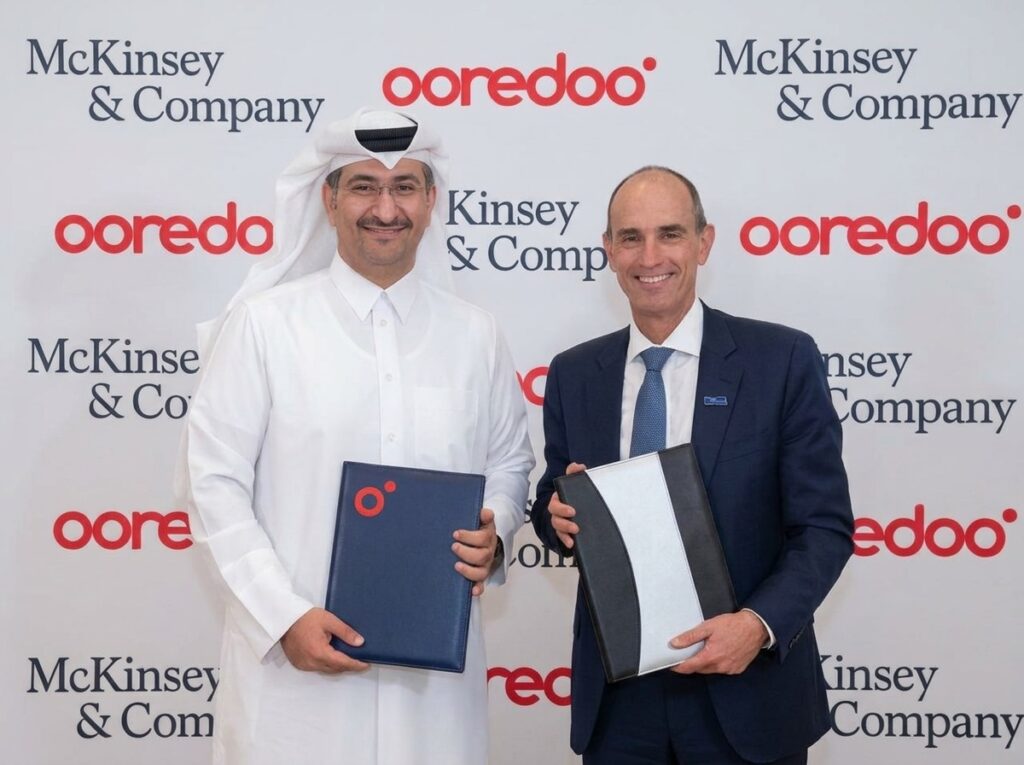
Ooredoo has signed a strategic agreement with McKinsey & Company, marking an important step in the next phase of the company’s transformation journey. The agreement was signed by Sheikh Ali bin Jabor bin Mohammad Al Thani, CEO of Ooredoo Qatar, and Bob Sternfels, global managing partner of McKinsey & Company. The collaboration will support Ooredoo Qatar’s ongoing transformation, with a focus on harnessing the potential of digital and AI and unlocking new opportunities for sustainable growth and long-term value creation. Sheikh Ali said, “As we enter the next phase of our transformation, the right partnerships will be key to accelerating our progress. Our collaboration with McKinsey & Company will enable us to harness digital and AI to deliver lasting value for our customers, employees and partners. Through this engagement, we aim to turn our goals into measurable impact and help shape Qatar’s digital future.” The collaboration reflects Ooredoo’s continued focus on digital and AI transformation. Earlier this year, the company launched its Strategic Digital and AI Transformation Programme, to accelerate AI adoption across its operations, customer engagement, and enterprise services. The collaboration reinforces Ooredoo Qatar’s position as a trusted technology and digital transformation partner and underscores its commitment to the objectives of Qatar National Vision 2030. camper during the camping season, can enjoy its benefits. For businesses, these capabilities provide a foundation for more efficient operations and better-informed decisions. Enhanced network reliability and performance support real-time monitoring, AI-enabled services, and complex digital workloads. Network slicing allows connectivity to be tailored to specific applications, while 5G advanced networks and edge computing can support mission-critical applications that require rapid responses. Expanded IoT capabilities also support industrial sensors, asset trackers, and utility metres, enabling automation, intelligent operations, and future smart city services. Sheikh Ali bin Jabor bin Mohammad Al Thani, CEO of Ooredoo Qatar, said: “The launch of the 5G+ network reflects Ooredoo Qatar’s continued investment in Qatar’s digital future, which depends on infrastructure that is ready for what comes next. With the 5G+ network, we are enhancing everyday digital experiences for our consumers, enabling innovation, and strengthening the competitiveness of businesses across the country. From launching the world’s first 5G network in 2018 to deploying Qatar’s first 5G Standalone core network, we have consistently advanced connectivity. This launch marks the next step in that journey, supporting the next generation of digital services across Qatar.” The launch reinforces Ooredoo Qatar’s commitment to Qatar National Vision 2030 and the Digital Agenda 2030, supporting the country’s digital transformation and strengthening its position as a leading regional digital hub.