

From a board role to a CEO: Dr. Iyabo Tinubu-Karch’s seemingly effortless transition
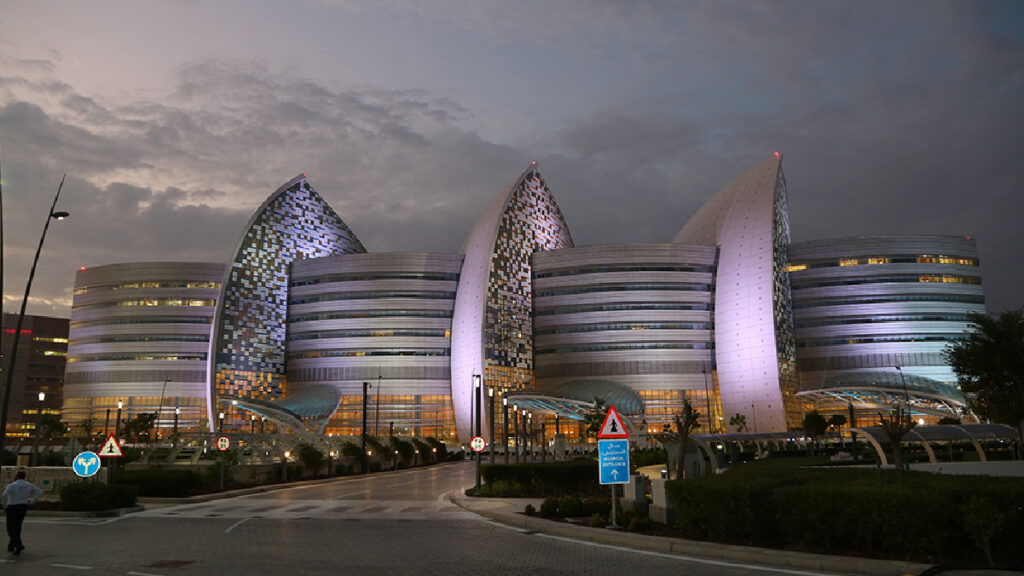
Dr Iyabo Tinubu-Karch, CEO, Sidra Medicine is no stranger to the world of decision-making while being a medical professional. In a candid conversation, Dr Tinubu-Karch talks about the transition to a CEO and the values it demanded inculcated in her, apart from the role technology plays in diagnostics today. “Technology is the cornerstone of our ability to expand and enhance our clinical services, ensuring we provide exceptional care for women and children.“ “Stepping from the boardroom into the CEO role has been an incredible journey. While my board role focused on strategic oversight and high-level decisions, my current position has immersed me in the daily operations of Sidra Medicine. This deeper involvement has provided invaluable insights into the challenges and opportunities we face, which allows me to ensure our teams have the necessary resources to excel in patient care, research, and education,” says Dr Iyabo Tinubu-Karch, CEO, Sidra Medicine. One of the biggest shifts for Dr Tinubu-Karch has been getting to know the people on a deeper level. Witnessing their commitment firsthand is truly inspiring and reinforces her responsibility to foster a collaborative and inclusive work environment, according to Dr Tinubu-Karch, who actively seeks input from diverse perspectives within the organisation, believing as she does that this collective wisdom leads to more informed and effective decision-making. “Healthcare is a dynamic field. As CEO, I need to make sure that we as an institution are agile and adaptable. This means being committed to nurturing a culture of innovation and continuous improvement. By embracing change and fostering a growth mindset, we can ensure that Sidra Medicine remains at the forefront of women’s and children’s healthcare,” informs Dr Tinubu-Karch. On the role that technology plays in advancing clinical care at Sidra Medicine, Dr Tinubu-Karch is forceful about Sidra Medicine’s commitment to embracing the latest technological advancements based as it is on the belief that advanced technology is essential for the institution to remain a leader in patient care, adding, “Technology is the cornerstone of our ability to expand and enhance our clinical services, ensuring we provide exceptional care for women and children.” Dr Tinubu-Karch adds that Sidra Medicine has become a regional pioneer in gene therapy, harnessing the power of technology to revolutionise treatment options for genetic diseases. Our administration of Elevidys for Duchenne Muscular Dystrophy (DMD) and our unique position as the sole provider of gene therapy for Spinal Muscular Atrophy (SMA) in Qatar exemplify this commitment. How has Dr Tinubu-Karch’s background in geriatric medicine shaped your approach to healthcare leadership? Dr Tinubu-Karch informs that her background in geriatric medicine has profoundly influenced her approach to healthcare leadership. She details, “In geriatrics, you learn to consider not only the immediate medical issues but also the broader context of a patient’s life – how their environment, family support, mental well-being, and social circumstances all influence their health. This perspective is essential for providing compassionate, effective care, and it informs how I lead a multidisciplinary team, with a collaborative agenda at a healthcare institution like Sidra Medicine.” Geriatric medicine, Dr Tinubu-Karch adds, emphasises long-term health and quality of life, not just treating immediate symptoms. “This philosophy is central to Sidra Medicine’s approach. We’re not only focused on acute interventions but also on providing sustainable, comprehensive care that supports the overall well-being of our patients and their families. My background has instilled in me a deep respect for the continuity of care, which we strive to deliver at every stage of a patient’s journey here,” says Dr Tinubu-Karch. Innovations in healthcare At Sidra Medicine, innovation is at the heart of our mission to provide exceptional care for children and women. Dr Tinubu-Karch talks about several ways in which Sidra Medicine is constantly striving to achieve new milestones and push the boundaries of healthcare through several key initiatives. One key area is our Clinical Trials Program, which focuses on trials directly benefiting children in the Arab region, informs Dr Tinubu-Karch. The trials could offer children the chance to receive beneficial treatment whether it is a new drug, therapy, device or procedure before it becomes widely available, she says, adding, “Our programme addresses the historical lack of research for the Arab population, enabling us to develop personalised and effective treatments.” In tandem, Sidra Medicine has also established the first pediatric hematopoietic stem cell transplant (HSCT) programme in Qatar, in partnership with the Children’s Hospital of Philadelphia. “Additionally, our precision medicine initiatives leverage genomic data to personalise care plans, using advanced technologies such as Whole Genome Sequencing (WGS) to identify disease-linked genetic variations and Zebrafish Functional Genomics Facility for rapid gene mutation identification. We are strategically integrating Artificial Intelligence (AI) into our operations to empower our patients and optimise our workflow. Global healthcare trends in women’s and children’s health
Qatari AI market projected to reach US$28.04m in 2024

Qatar is in the throes of huge inter-sectoral investments and programmes on artificial intelligence (AI) spanning information technology, telecom, education, venture capital, healthcare, energy and finance with Qatar government’s US$2.5 billion investment in data and AI, outlining its ambition to generate US$11 billion for the national economy and creating 26,000 jobs. While the market size in the AI market is projected to reach US$428.40 million in 2024 with an annual growth rate (CAGR 2024-2030) of 28.66 percent, resulting in a market volume of US$1,943.00 million by 2030, the national investment of US$2.5 billion is tipped to create 26,000 jobs in the country. These data were released by a joint report by Invest Qatar and global consulting firm Accenture at the inaugural World Summit AI – Qatar 2024. The report has furthered that with the thrust on Qatar is aiming to rank among the top 10 globally on the Digital Competitiveness Index by 2023. This investment swing – with active collaboration between the private and the public sectors on transformative initiatives – in AI is Qatar’s push to move its economy away from its over-reliance on hydrocarbons which, according to the International Trade Administration, “has consistently contributed to over 70 percent of the government of Qatar’s total revenues since 2014, as well as over 80 percent of Qatar’s total exports”. Qatar also ranks first in the Gulf Cooperation Council (GCC) for digital governance and mobile internet speeds, supported by Microsoft Azure and Google Cloud, with the launch of AI-specific education programmes and research initiatives, aiming to increase the percentage of highly skilled workers to over 46 percent by 2030. The bedrock laid out by Qatar National Vision 2030 Today’s AI thrust has been a gradual journey that started with the Qatar National Vision 2030 which aimed to create “an advanced society capable of sustaining its development and providing a high standard of living for its people”, a step further taken by the National AI Strategy that was launched in 2019, providing a comprehensive understanding of AI’s pivotal role in shaping the 21st century. The Ministry of Communications and Information Technology (MCIT) has tirelessly championed an environment conducive to AI innovation, resulting in a flourishing landscape. Numbers talk, and they predict annual growth of 17.4 percent, propelling Qatar’s AI market to an estimated US$58.8 million by 2026. What is AI? AI, a branch of computer science, focuses on creating machines able to perform tasks traditionally requiring human intelligence, and includes a wide range of applications, such as speech recognition, image processing, and autonomous vehicles and has seen rapid growth in recent years due to advancements in technology and increased investment. The AI market includes software, hardware, and services that enable organisations to develop and deploy applications and the market is structured into six sub-markets based on the technology: Source: https://www.statista.com/outlook/tmo/artificial-intelligence/qatar