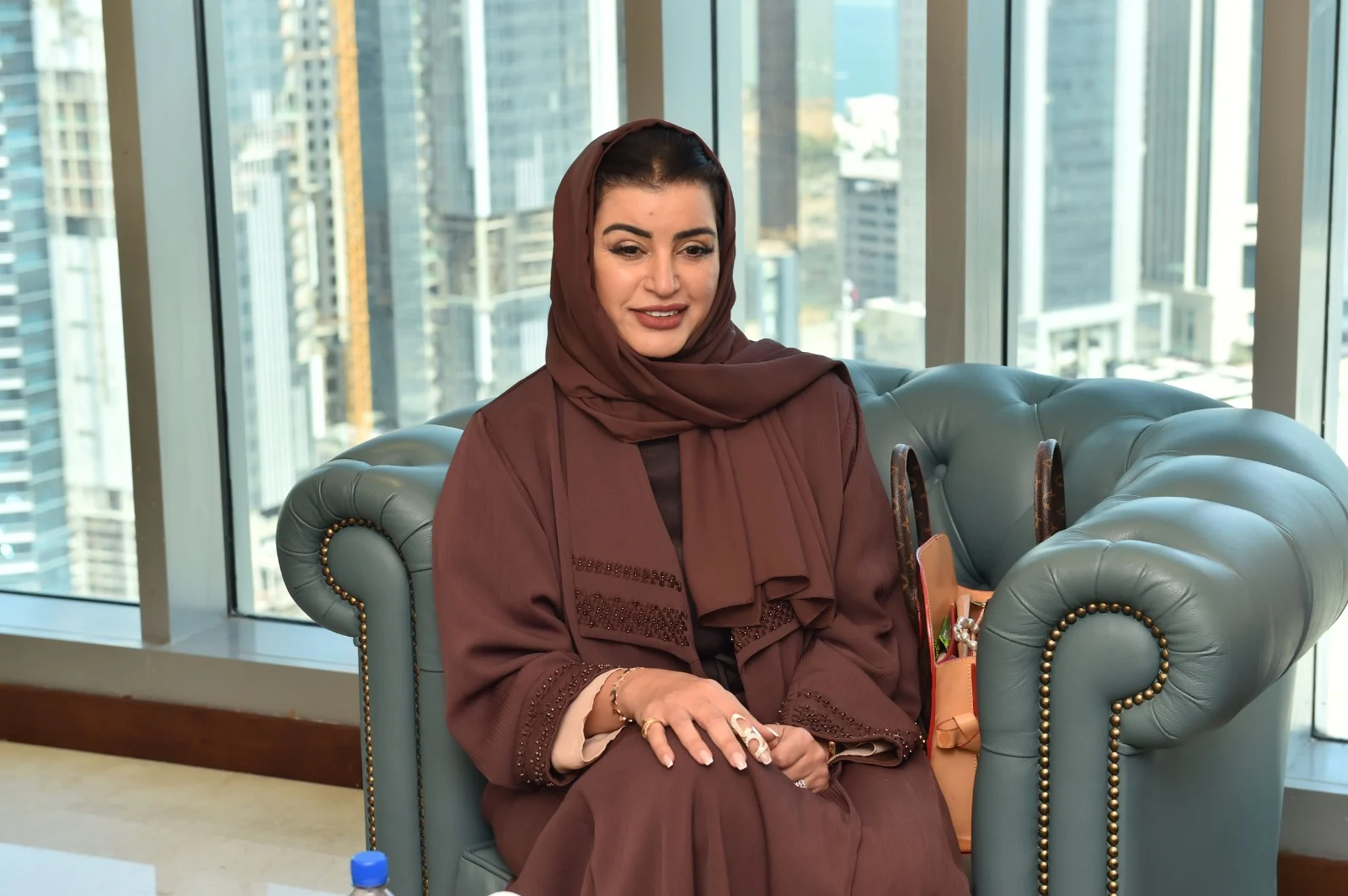

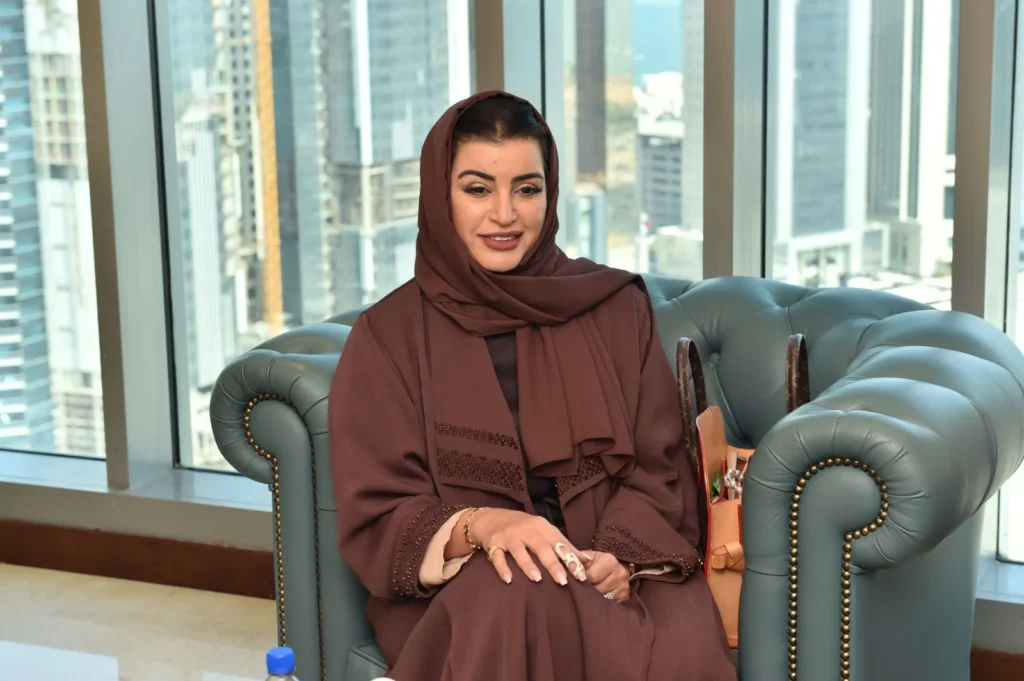
Aisha Hussein Alfardan’s journey was shaped by legacy, discipline, and a deep commitment to women’s empowerment in Qatar. From her early banking career to her leadership role within Alfardan Group and the Qatari Businesswomen Association, she reflected on resilience, institution-building, and the evolving role of women in national development.
Aisha Hussein Alfardan’s career path began with the values instilled by her father, the legendary Hussain Ibrahim Alfardan, founder of Alfardan Group, one of the region’s most prominent family conglomerates. His philosophy was clear: start early, learn from the ground up, and build experience step by step.
According to Alfardan, her father believed that real leadership came from understanding every layer of a business. That principle profoundly shaped her professional journey.
“I began my professional career at the Commercial Bank of Qatar, where I worked for over nine years and progressed to become Ladies Branch Manager,” she said. “That experience gave me firsthand exposure to financial operations, client relations, and institutional discipline. It taught me accountability, structure, and the importance of earning credibility through performance.”
In 2003, Alfardan joined Alfardan Group to work alongside her father and brothers in managing and developing the family business. For her, being part of a legacy enterprise was both an honour and a responsibility.
“My focus has been on contributing to its continued growth while preserving the values upon which it was built,” she said. “Alongside my role within the family business, my work with the Qatari Businesswomen Association has been a central part of my journey, channelling my experience toward empowering women, strengthening their economic participation and contributing to Qatar’s broader economic development.”
A Pioneer in Women’s Empowerment
In Qatar, Alfardan believed that progress had evolved organically and in harmony with cultural values and the national vision. One of the strongest inspirations behind women’s advancement, she noted, had been the vision and leadership of Her Highness Sheikha Moza bint Nasser.
Her longstanding commitment to education, social development, and women’s empowerment laid a strong foundation for women to pursue leadership roles with confidence.
“Her Highness has consistently emphasised that investing in women’s education and capabilities is essential for sustainable national progress,” Alfardan said. “This vision has greatly influenced the environment in which organisations such as QBWA operate, allowing us to build on a national framework that supports inclusion, opportunity, and growth.”
Within that supportive framework, the role of institutions such as the Qatari Businesswomen Association had been to translate vision into action, creating practical pathways for women to access mentorship, partnerships, and economic opportunities.
“By working collaboratively with different entities, private sector partners, and international institutions, we have contributed to fostering an ecosystem where women’s leadership is increasingly recognised as an integral part of Qatar’s development journey,” she explained.
Recognition That Reflected a Wider Movement
In 2006, Alfardan was ranked 24th on the Forbes list of the 50 Top Businesswomen in the Arab World, a recognition that highlighted her success, prominence, and ambition in the business sphere.
For Alfardan, such recognitions were never solely personal. They brought visibility not only to individuals but to entire communities.
“Being ranked among the top Arab businesswomen highlighted the growing role of Qatari women in regional business,” she said. “It reinforced confidence among young women and demonstrated that leadership and ambition are fully compatible with our national identity.”
Gender Parity and the Evolving Glass Ceiling
According to Alfardan, Qatar had made remarkable progress, particularly in education, where women accounted for a significant share of graduates. Women today lead businesses, serve in government, and contribute across key sectors. While parity remained an ongoing global journey, she believed the trajectory in Qatar was strong and aligned with Qatar National Vision 2030.
On the subject of the glass ceiling, Alfardan offered a balanced perspective.
“The concept of the glass ceiling is a global discussion, and it would not be realistic to suggest that any society has eliminated all structural or social challenges,” she said. “Around the world, women continue to navigate complexities related to representation at the highest levels of leadership, balancing professional and personal responsibilities, and accessing certain sectors traditionally dominated by men.”
She noted, however, that Qatar’s landscape had evolved significantly over the past two decades. Women today are highly educated, professionally accomplished, and increasingly visible across government, finance, academia, healthcare, entrepreneurship, and the private sector.
“That said, leadership at the very top, whether in corporate boards, executive positions, or certain industries, remains an area where continued progress is important,” she said. “Breaking perceived ceilings is not only about individual determination; it also requires institutional support, mentorship, confidence-building, and a culture that values diversity in decision-making.”
Her conclusion was both optimistic and grounded.
“I believe that in Qatar, the trajectory is very positive. The glass ceiling, where it exists, is becoming thinner each year as more women demonstrate competence, resilience, and leadership capability. Progress here is evolutionary, built on merit, partnership, and alignment with our national development vision.”
For Alfardan, the formula for breaking barriers was clear: perseverance, competence, and strategic partnership.
“I believe credibility is earned through results and long-term commitment. When women demonstrate excellence, they naturally open doors, not only for themselves but for others.”
International Women’s Day and the Meaning of Empowerment
Alfardan viewed International Women’s Day as both a celebration and a moment of reflection.
“It recognises the achievements of women across all sectors while reminding us that empowerment is an ongoing journey,” she said.
In Qatar, she believed it highlighted the significant progress Qatari women had made in education, leadership, and entrepreneurship, supported by a national vision that viewed women as key partners in development. It also served as an opportunity to inspire younger generations and reaffirm a commitment to inclusive growth and shared success.
“When women are empowered, families, institutions, and societies prosper,” she said.
Resilience, Crisis Handling and Purpose
Reflecting on her journey, Alfardan said resilience began with clarity of purpose.
“My professional journey has taught me that resilience begins with clarity of purpose. When you are guided by strong values and a clear vision, you are better equipped to navigate uncertainty,” she said.
Throughout her career, she had witnessed economic shifts, market fluctuations, and global crises that required adaptability and calm leadership. For her, crisis management was not about reacting emotionally. It was about careful assessment, trusted teams, and thoughtful decisions grounded in long-term strategy.
“It also requires transparency, communication, and collaboration. Strong institutions and partnerships become even more important during challenging times,” she added.
Most importantly, resilience was about learning. Every challenge carried lessons that strengthened leadership, refined judgement, and reinforced the importance of preparedness and flexibility.
Over time, she came.