

HEC Paris, Doha Welcomes Diverse Executive MBA Class of 2026
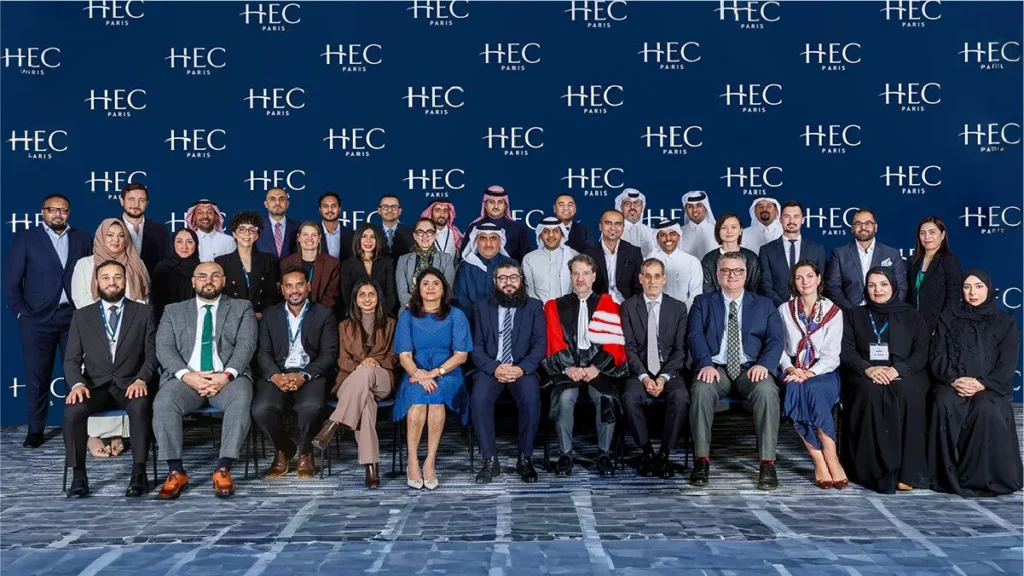
Reading Time: 3 minutesDoha, Qatar – 24 February 2025: HEC Paris, the world’s top-ranked business school for Executive Education, proudly welcomes its Executive MBA (EMBA) Class of 2026 to its Doha campus. This cohort represents one of the most diverse groups in the program’s local history, featuring professionals from 16 nationalities across Qatar, the Middle East, Europe, Asia, and North America. Together, they bring rich expertise from industries including banking, education, and healthcare. Notably, the program’s commitment to gender diversity is reflected in the large number of female participants, accounting for approximately 40% of the cohort. “The EMBA Class of 2026 reflects the strength that comes from bringing together very diverse people who all share a desire to become a better version of themselves,” said Dr. Pablo Martin de Holan, Dean of HEC Paris, Doha. “What unites them is the love of learning and the desire to grow personally and professionally, and to make a difference – in their organizations, communities, and beyond. The richness of their backgrounds helps them learn from one another and provides innovative solutions to real-world problems.” He added: “Our Executive MBA attracts professionals from across the Gulf and beyond. This group represents the spirit of curiosity, collaboration, and purpose that defines HEC Paris. By helping participants build strong leadership and strategic thinking skills, we prepare them to create a lasting impact, not just in their careers but in their families, in their communities, and in the societies they serve. Over the next 18 months, participants will embark on a transformative journey to refine their leadership and strategic decision-making skills. The program’s curriculum is closely aligned with Qatar’s Third National Development Strategy, the final phase of Qatar National Vision 2030. This roadmap focuses on sustainable economic growth, workforce diversification, financial resilience, and sustainability. The HEC Paris Executive MBA provides participants with a global edge, offering nine specializations taught by world-renowned faculty in Doha, Paris, and other international hubs. Delivered from the state-of-the-art Doha campus, the program provides the tools and insights required to lead organizations effectively in a rapidly evolving global economy. “Ultimately, the EMBA is not just an academic journey – it’s a personal one,” Dr. Martin de Holan concluded. “Through this experience, participants gain the skills, the tools, and the confidence to lead with purpose and ethics and to adapt to change. With each step, they carry the lessons forward, shaping a brighter future for us all. Learning should never stop.” Participants in the program are eager to apply their learnings to real-world challenges: “The program’s unique blend of core business fundamentals and leadership development is what drew me here. Moreover, the Capstone Project will allow me to directly apply what I learn to elevate my organization’s strategic initiatives,” said Abdulaziz Al-Thani, an EMBA participant.” Dr. Muna Altamimi, another participant, shared her perspective, “I chose this program because of its strong emphasis on immediate real-world application. I look forward to each module providing cutting-edge tools and strategic frameworks that I will be able to implement in my organization right away. The interactive learning environment, combined with insights from world-class faculty and diverse peers, will not only strengthen my leadership abilities but also broaden my perspective on global business challenges. This experience will equip me with the confidence and expertise to navigate complexity, drive innovation, and create a lasting impact in my field.” Graduates of the EMBA Class of 2026 will join the prestigious HEC Paris alumni network, which includes over 1,400 alumni who graduated from the Doha campus and more than 83,000 influential leaders worldwide. Locally, the alumni network boasts 61% Qatari membership, reflecting the institution’s strong ties to Qatar’s business community. Globally, it offers unparalleled opportunities for professional growth, collaboration, and innovation. In addition to the Doha Track, the HEC Paris EMBA program is also welcoming a new cohort in Riyadh, further expanding the program’s reach, and fostering the development of leaders across the region. A third cohort, offered in partnership with the Public Investment Fund, is set to launch in April this year. The HEC Paris EMBA, now with four tracks in the GCC, allows professionals from across the region to build their networks, and to gain the tools and insights needed to lead with impact. With its rigorous curriculum, commitment to diversity, and alignment with Qatar National Vision 2030, the HEC Paris EMBA Class of 2026 is poised to lead change, spur innovation, and contribute to building a thriving, sustainable economy.
Cristiano Ronaldo attends Premier Padel tournament in Riyadh

Reading Time: 2 minutesRiaydh, – 10 February 2025 – Padel continues to capture the attention of global sports icons, with Cristiano Ronaldo among the spectators at the Riyadh Season Premier Padel P1, enjoying the top-level action on court. The Portuguese football legend followed the matches closely and celebrated the victory of his compatriots Miguel and Nuno Deus, who secured their place in the main draw with an impressive performance in the final round of qualifying. Ronaldo is the latest in a growing list of global sports stars drawn to Premier Padel and its elite-level competition. Last year, Neymar Jr. attended the Riyadh Premier Padel P1, while other football greats including Zlatan Ibrahimović, Esteban Cambiasso, Leandro Paredes, and Paulo Dybala have also shown their passion for the sport by recently attending tournaments. Beyond football, combat sports icons Khabib Nurmagomedov and Ilia Topuria have also attended Premier Padel tournaments. During the Qatar Grand Prix in 2024, sporting legends including Novak Djokovic, F1 world champion Max Verstappen, drivers Lando Norris, George Russell and Oscar Piastri, footballers Luis Figo and Marco Materazzi, and basketball’s Tony Parker attended a sporting legends tournament during the event, further highlighting Premier Padel’s appeal. The Riyadh Season Premier Padel P1 is the first tournament of the 2025 season, following an exceptional 2024 campaign that featured 24 tournaments across 16 countries. As part of Premier Padel’s continued global expansion, the event brings world-class padel to Saudi Arabia, with top international players battling for valuable ranking points and the first title of the season.
GORD develops Gulf region’s first Sustainable Construction Code
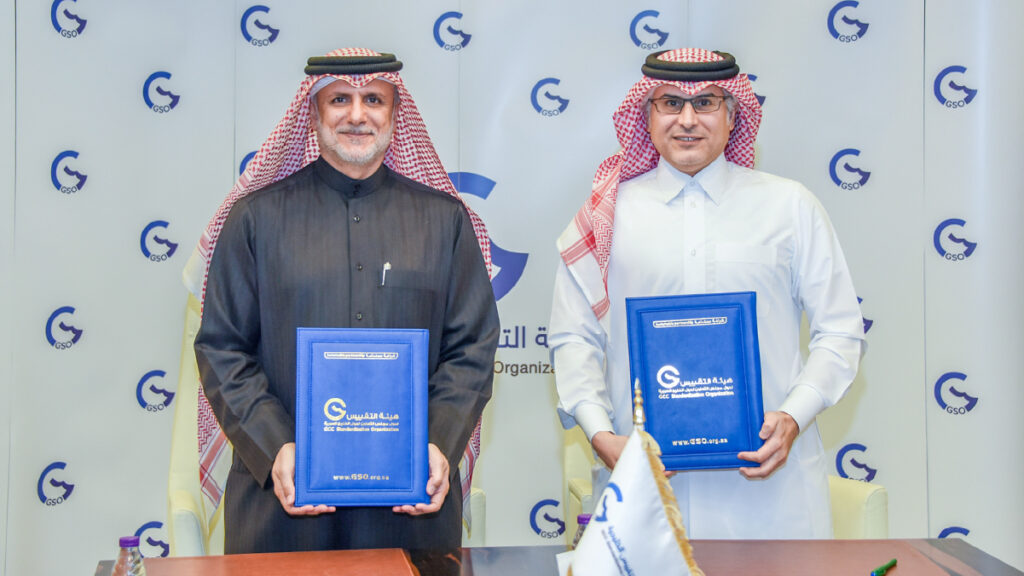
Reading Time: 3 minutesRiyadh, KSA – February 04, 2025: Having developed the GCC region’s first-ever Sustainable Construction Code, the Gulf Organisation for Research & Development (GORD) — a subsidiary of Qatari Diar Real estate Investment Company — has signed an agreement with the GCC Standardization Organization (GSO) for integrating the code into the wider Gulf Building Code. The agreement was formalized by Dr. Yousef Bin Mohammed Alhorr, Founding Chairman of GORD, and His Excellency Engineer Nawaf bin Ibrahim Al-Hamad Al-Mana, President of GSO, at GSO headquarters in Riyadh, Saudi Arabia. The Gulf Building Code, endorsed by the Ministries of Municipalities and Urban Planning in Gulf States, serves as a comprehensive framework guiding building and construction practices across the Gulf region. The newly developed Sustainable Construction Code, created by experts at GORD -headquartered at Qatar Science & Technology Park- draws on the success of GORD’s flagship Global Sustainability Assessment System (GSAS), developed as the first performance based green buildings rating system in MENA region, will significantly contribute to the Gulf’s transition to more sustainable urban landscapes. The Sustainable Construction Code serves as a vital intergovernmental tool, aiming to promote sustainable practices across a broad spectrum. It establishes a baseline set of green building criteria for a diverse range of construction projects, addressing various facets of sustainability. Initially conceived in 2010, the project was entrusted to GORD, leveraging its extensive expertise and leadership in the sustainability domain. Speaking about the document, Dr. Yousef Alhorr, Founding Chairman of GORD, said, “We take immense pride in GORD’s instrumental contribution to the Gulf Building Code by developing the first unified Sustainable Construction Code for the region. This achievement marks a significant milestone in our commitment to advancing sustainability and promoting a more environmentally conscious future for the Gulf nations. The Code is designed to ensure wider accessibility and adoption, ultimately promoting the creation of sustainable urban landscapes throughout the region. At the same time, it serves as a starting point toward a holistic green building framework in the future, where sustainability becomes deeply integrated into every facet of the regional building and construction industry.” His Excellency Engineer Nawaf bin Ibrahim Al-Hamad Al-Mana, President of GSO, said, “Green buildings play a crucial role in helping the GCC region achieve its climate goals by significantly reducing energy consumption, carbon emissions and resource use. To this end, the Sustainable Construction Code represents GCC countries’ vision for a greener, more sustainable future. We are certain that this unified framework will pave the way for a region-wide transformation of the construction industry, where sustainability is not just an option, but an integral part of every project.” Covering over 115 pages, the Sustainable Construction Code offers a multifaceted approach with the flexibility of both prescriptive and performance-based assessments. While its core principles are derived from the Global Sustainability Assessment System (GSAS) green building framework, Sustainable Construction Code represents a simplified version with reduced requirements. The 55 criteria are narrowed down to 22, each representing key performance indicators (KPI’s) for sustainable buildings. This deliberate simplification ensures ease of adoption and enforceability across all Gulf countries. The Code is designed to be accessible to a broad audience, reducing the need for specialized expertise and complex simulations. The Code is structured into six core chapters. These chapters cover various aspects of sustainable construction, including guidelines for efficient land utilization and infrastructure planning in Site Planning and Use, recommendations for sustainable and eco-friendly building materials in Material Selection, strategies to optimize energy usage within buildings and promote energy efficiency in Energy Conservation and Efficiency, guidelines for water resource conservation and efficient water use in Water Conservation and Efficiency, a focus on ensuring healthy and comfortable indoor environments in Indoor Environmental Quality, and an emphasis on preserving cultural and historical aspects in building design and construction in Heritage and Cultural Identity. As the Gulf Cooperation Council (GCC) endeavors to transition towards a more sustainable and environmentally conscious future, the Sustainable Construction Code represents a pivotal element in these efforts, shaping the future of construction in the region. At the same time, it underscores the commitment of the GORD and GSO to promote sustainability, advance regional development, and secure a more sustainable future for the Gulf region.