

Qatar’s Women Are Already Building the Nation Today, Alongside Men
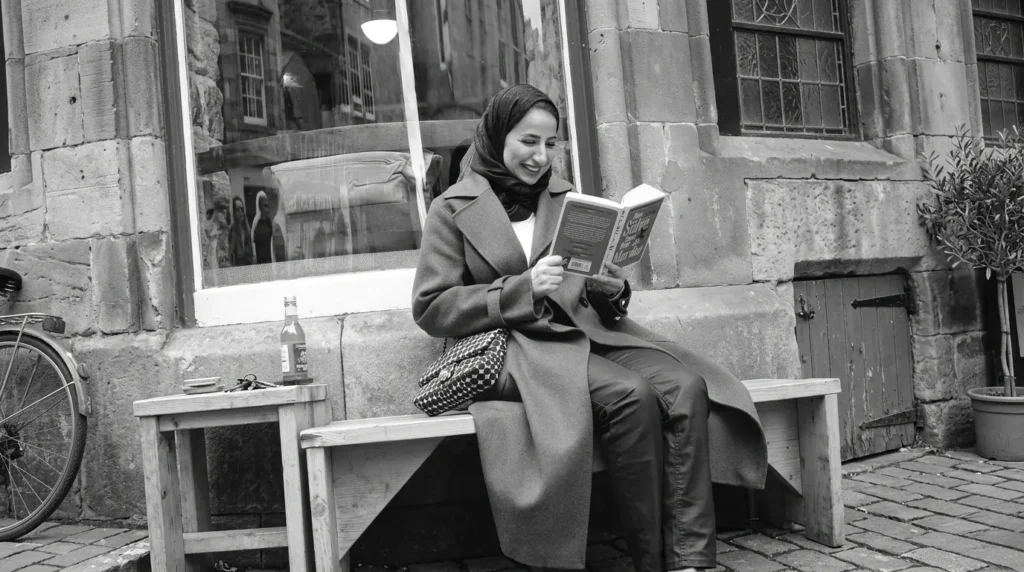
Reading Time: 4 minutesDr Buthaina Al Janahi, Media Relations & Communications Senior Manager at Visit Qatar, shares her journey across research, partnerships, culture, and tourism — and explains why Qatari women are not waiting for empowerment, but are already shaping the nation’s future. In Qatar’s evolving professional landscape, women continue to play a central role in shaping institutions, industries, and national progress. Among them is Dr Buthaina Al Janahi, Media Relations & Communications Senior Manager at Visit Qatar, whose career reflects a powerful blend of research, strategic partnerships, cultural understanding, and public communication. With a career path spanning research, stakeholder engagement, culture, and tourism, Dr Al Janahi represents a modern Qatari professional who balances intellectual depth with practical impact. In this conversation with Business Leaders, she discusses the lessons that have shaped her journey, the advice she offers to younger women, and why she believes Qatari women are already building the nation side by side with men. A Career Built on Research, Strategy, and Cultural Understanding Dr Al Janahi says her career began in research, where she developed a strong interest in analytical work, particularly in understanding institutional structures and state-level reforms through a strategic and research-driven lens. That early stage shapes the way she approaches systems, governance, and long-term transformation. After several years, she moves into partnerships, a role that broadens her perspective on how institutions collaborate and build sustainable stakeholder relationships, whether for short-term initiatives or long-term strategic alliances. She explains that this stage strengthens her communication skills, sharpens her outlook, and teaches her how to navigate complex stakeholder environments with greater confidence. Her academic and professional interests continue to centre on research, particularly in the fields of culture and social development. She is drawn to understanding internal social transformation and to exploring culture through fresh, multidimensional perspectives. Her eventual transition into tourism marks an important turning point. In that sector, culture becomes something she not only studies but also communicates in practical and public-facing ways. Through tourism, she translates cultural understanding into impact by storytelling, positioning, and national representation. International Women’s Day Is More Than One Day For Dr Al Janahi, International Women’s Day carries a meaning far deeper than a single annual occasion. She says she personally sees it as “Women’s Days” rather than one day, because women’s contributions are visible everywhere — at home, in society, and across every professional field. She strongly believes in women’s intellectual strength, their ability to compete effectively, and the value they bring through multitasking and balancing multiple roles. She also describes women as strategic thinkers by nature, often long-term in their planning, building, and leading. For that reason, she believes women’s strength and impact deserve recognition every day. The Role That Teaches Her the Most Reflecting on the positions that shape her most, Dr Al Janahi says that communications, especially within the tourism sector, teach her the most professionally. She describes it as a highly dynamic environment that requires constant adaptability to the project, the audience, and the broader strategic objective. It also demands a careful balance between flexibility and the protection of brand identity, often across multiple departments and cross-functional teams. On a personal level, she identifies her experience in partnerships as a key turning point. That phase helps her understand different perspectives, appreciate stakeholder priorities, and build essential professional skills from the ground up. It also marks the beginning of her managerial growth and lays the foundation for the leadership journey that follows in communications at Visit Qatar. Her Message to Younger Women As a Qatari woman and published author of three books, including a self-development memoir, Dr Al Janahi offers a message of strength, balance, and self-preservation to younger women. She says one of the strongest lessons she shares is that women are capable of managing many roles while still making space for their own growth. A woman may be a professional, a mother, a daughter, and a sister, wearing many hats at once. While that brings commitment and responsibility, it can also mean temporarily setting aside parts of oneself. But she stresses, that does not mean losing oneself. Dr Al Janahi believes it is important for women to preserve space to express themselves, rediscover who they are, and return to their own ambitions and identity. In her view, it is entirely possible to build a life of responsibility while still creating room for self-development and self-expression. Qatari Women Are Already Building the Nation When asked about the role of women in nation-building over the next decade, Dr Al Janahi offers one of the most powerful insights of the conversation. She says Qatar is not waiting for women to be empowered in nation-building — women are already building the nation today, alongside men. She points to the visibility of women leaders, executives, entrepreneurs, and board members across Qatar, noting that women contribute not only through participation but also through strategic planning and support for the national vision. According to her, the work being done today is already creating the foundation for the next decade. Rather than speaking of women’s future role as something distant, she makes it clear that this reality is already unfolding now. Looking Ahead Looking two years ahead, Dr Al Janahi says she sees herself professionally as a continuous learner — someone eager to grow, challenge herself, and develop through complex situations. She aims to deepen her mastery in her area of expertise while strengthening her strategic thinking through multiple perspectives. On a personal level, she sees herself as an influencer, particularly in the power of culture and language. She believes words shape identity, narratives, and even the way people analyse life. For her, developing one’s own voice and perspective is a way of defining strength, intellectual power, and purpose. Quick Insights from Dr Buthaina Al Janahi Best advice received:Be yourself — and learn every day. Learning never stops. Go-to book in a crisis:What They Don’t Teach You at Harvard Business School by Mark H. McCormack. Role models:A small number of people across personal and
Aisha Hussein Alfardan: Leading with Legacy, Purpose and Impact
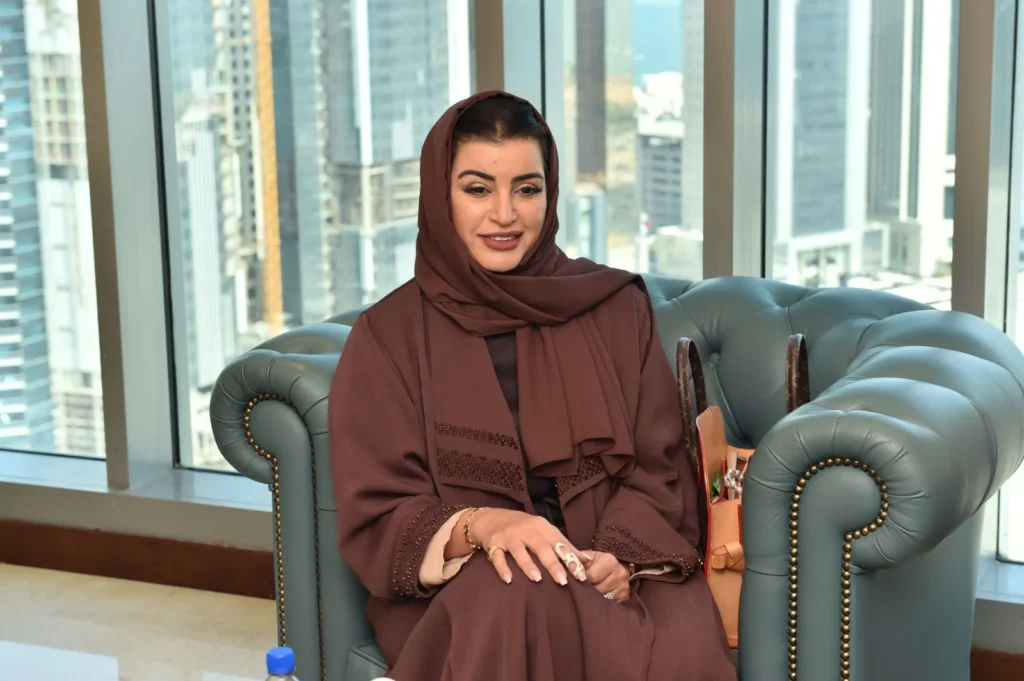
Reading Time: 4 minutesAisha Hussein Alfardan’s journey was shaped by legacy, discipline, and a deep commitment to women’s empowerment in Qatar. From her early banking career to her leadership role within Alfardan Group and the Qatari Businesswomen Association, she reflected on resilience, institution-building, and the evolving role of women in national development. Aisha Hussein Alfardan’s career path began with the values instilled by her father, the legendary Hussain Ibrahim Alfardan, founder of Alfardan Group, one of the region’s most prominent family conglomerates. His philosophy was clear: start early, learn from the ground up, and build experience step by step. According to Alfardan, her father believed that real leadership came from understanding every layer of a business. That principle profoundly shaped her professional journey. “I began my professional career at the Commercial Bank of Qatar, where I worked for over nine years and progressed to become Ladies Branch Manager,” she said. “That experience gave me firsthand exposure to financial operations, client relations, and institutional discipline. It taught me accountability, structure, and the importance of earning credibility through performance.” In 2003, Alfardan joined Alfardan Group to work alongside her father and brothers in managing and developing the family business. For her, being part of a legacy enterprise was both an honour and a responsibility. “My focus has been on contributing to its continued growth while preserving the values upon which it was built,” she said. “Alongside my role within the family business, my work with the Qatari Businesswomen Association has been a central part of my journey, channelling my experience toward empowering women, strengthening their economic participation and contributing to Qatar’s broader economic development.” A Pioneer in Women’s Empowerment In Qatar, Alfardan believed that progress had evolved organically and in harmony with cultural values and the national vision. One of the strongest inspirations behind women’s advancement, she noted, had been the vision and leadership of Her Highness Sheikha Moza bint Nasser. Her longstanding commitment to education, social development, and women’s empowerment laid a strong foundation for women to pursue leadership roles with confidence. “Her Highness has consistently emphasised that investing in women’s education and capabilities is essential for sustainable national progress,” Alfardan said. “This vision has greatly influenced the environment in which organisations such as QBWA operate, allowing us to build on a national framework that supports inclusion, opportunity, and growth.” Within that supportive framework, the role of institutions such as the Qatari Businesswomen Association had been to translate vision into action, creating practical pathways for women to access mentorship, partnerships, and economic opportunities. “By working collaboratively with different entities, private sector partners, and international institutions, we have contributed to fostering an ecosystem where women’s leadership is increasingly recognised as an integral part of Qatar’s development journey,” she explained. Recognition That Reflected a Wider Movement In 2006, Alfardan was ranked 24th on the Forbes list of the 50 Top Businesswomen in the Arab World, a recognition that highlighted her success, prominence, and ambition in the business sphere. For Alfardan, such recognitions were never solely personal. They brought visibility not only to individuals but to entire communities. “Being ranked among the top Arab businesswomen highlighted the growing role of Qatari women in regional business,” she said. “It reinforced confidence among young women and demonstrated that leadership and ambition are fully compatible with our national identity.” Gender Parity and the Evolving Glass Ceiling According to Alfardan, Qatar had made remarkable progress, particularly in education, where women accounted for a significant share of graduates. Women today lead businesses, serve in government, and contribute across key sectors. While parity remained an ongoing global journey, she believed the trajectory in Qatar was strong and aligned with Qatar National Vision 2030. On the subject of the glass ceiling, Alfardan offered a balanced perspective. “The concept of the glass ceiling is a global discussion, and it would not be realistic to suggest that any society has eliminated all structural or social challenges,” she said. “Around the world, women continue to navigate complexities related to representation at the highest levels of leadership, balancing professional and personal responsibilities, and accessing certain sectors traditionally dominated by men.” She noted, however, that Qatar’s landscape had evolved significantly over the past two decades. Women today are highly educated, professionally accomplished, and increasingly visible across government, finance, academia, healthcare, entrepreneurship, and the private sector. “That said, leadership at the very top, whether in corporate boards, executive positions, or certain industries, remains an area where continued progress is important,” she said. “Breaking perceived ceilings is not only about individual determination; it also requires institutional support, mentorship, confidence-building, and a culture that values diversity in decision-making.” Her conclusion was both optimistic and grounded. “I believe that in Qatar, the trajectory is very positive. The glass ceiling, where it exists, is becoming thinner each year as more women demonstrate competence, resilience, and leadership capability. Progress here is evolutionary, built on merit, partnership, and alignment with our national development vision.” For Alfardan, the formula for breaking barriers was clear: perseverance, competence, and strategic partnership. “I believe credibility is earned through results and long-term commitment. When women demonstrate excellence, they naturally open doors, not only for themselves but for others.” International Women’s Day and the Meaning of Empowerment Alfardan viewed International Women’s Day as both a celebration and a moment of reflection. “It recognises the achievements of women across all sectors while reminding us that empowerment is an ongoing journey,” she said. In Qatar, she believed it highlighted the significant progress Qatari women had made in education, leadership, and entrepreneurship, supported by a national vision that viewed women as key partners in development. It also served as an opportunity to inspire younger generations and reaffirm a commitment to inclusive growth and shared success. “When women are empowered, families, institutions, and societies prosper,” she said. Resilience, Crisis Handling and Purpose Reflecting on her journey, Alfardan said resilience began with clarity of purpose. “My professional journey has taught me that resilience begins with clarity of purpose. When you are guided by strong values and