

Aisha Hussein Alfardan: Leading with Legacy, Purpose and Impact

Reading Time: 4 minutesAisha Hussein Alfardan’s journey was shaped by legacy, discipline, and a deep commitment to women’s empowerment in Qatar. From her early banking career to her leadership role within Alfardan Group and the Qatari Businesswomen Association, she reflected on resilience, institution-building, and the evolving role of women in national development. Aisha Hussein Alfardan’s career path began with the values instilled by her father, the legendary Hussain Ibrahim Alfardan, founder of Alfardan Group, one of the region’s most prominent family conglomerates. His philosophy was clear: start early, learn from the ground up, and build experience step by step. According to Alfardan, her father believed that real leadership came from understanding every layer of a business. That principle profoundly shaped her professional journey. “I began my professional career at the Commercial Bank of Qatar, where I worked for over nine years and progressed to become Ladies Branch Manager,” she said. “That experience gave me firsthand exposure to financial operations, client relations, and institutional discipline. It taught me accountability, structure, and the importance of earning credibility through performance.” In 2003, Alfardan joined Alfardan Group to work alongside her father and brothers in managing and developing the family business. For her, being part of a legacy enterprise was both an honour and a responsibility. “My focus has been on contributing to its continued growth while preserving the values upon which it was built,” she said. “Alongside my role within the family business, my work with the Qatari Businesswomen Association has been a central part of my journey, channelling my experience toward empowering women, strengthening their economic participation and contributing to Qatar’s broader economic development.” A Pioneer in Women’s Empowerment In Qatar, Alfardan believed that progress had evolved organically and in harmony with cultural values and the national vision. One of the strongest inspirations behind women’s advancement, she noted, had been the vision and leadership of Her Highness Sheikha Moza bint Nasser. Her longstanding commitment to education, social development, and women’s empowerment laid a strong foundation for women to pursue leadership roles with confidence. “Her Highness has consistently emphasised that investing in women’s education and capabilities is essential for sustainable national progress,” Alfardan said. “This vision has greatly influenced the environment in which organisations such as QBWA operate, allowing us to build on a national framework that supports inclusion, opportunity, and growth.” Within that supportive framework, the role of institutions such as the Qatari Businesswomen Association had been to translate vision into action, creating practical pathways for women to access mentorship, partnerships, and economic opportunities. “By working collaboratively with different entities, private sector partners, and international institutions, we have contributed to fostering an ecosystem where women’s leadership is increasingly recognised as an integral part of Qatar’s development journey,” she explained. Recognition That Reflected a Wider Movement In 2006, Alfardan was ranked 24th on the Forbes list of the 50 Top Businesswomen in the Arab World, a recognition that highlighted her success, prominence, and ambition in the business sphere. For Alfardan, such recognitions were never solely personal. They brought visibility not only to individuals but to entire communities. “Being ranked among the top Arab businesswomen highlighted the growing role of Qatari women in regional business,” she said. “It reinforced confidence among young women and demonstrated that leadership and ambition are fully compatible with our national identity.” Gender Parity and the Evolving Glass Ceiling According to Alfardan, Qatar had made remarkable progress, particularly in education, where women accounted for a significant share of graduates. Women today lead businesses, serve in government, and contribute across key sectors. While parity remained an ongoing global journey, she believed the trajectory in Qatar was strong and aligned with Qatar National Vision 2030. On the subject of the glass ceiling, Alfardan offered a balanced perspective. “The concept of the glass ceiling is a global discussion, and it would not be realistic to suggest that any society has eliminated all structural or social challenges,” she said. “Around the world, women continue to navigate complexities related to representation at the highest levels of leadership, balancing professional and personal responsibilities, and accessing certain sectors traditionally dominated by men.” She noted, however, that Qatar’s landscape had evolved significantly over the past two decades. Women today are highly educated, professionally accomplished, and increasingly visible across government, finance, academia, healthcare, entrepreneurship, and the private sector. “That said, leadership at the very top, whether in corporate boards, executive positions, or certain industries, remains an area where continued progress is important,” she said. “Breaking perceived ceilings is not only about individual determination; it also requires institutional support, mentorship, confidence-building, and a culture that values diversity in decision-making.” Her conclusion was both optimistic and grounded. “I believe that in Qatar, the trajectory is very positive. The glass ceiling, where it exists, is becoming thinner each year as more women demonstrate competence, resilience, and leadership capability. Progress here is evolutionary, built on merit, partnership, and alignment with our national development vision.” For Alfardan, the formula for breaking barriers was clear: perseverance, competence, and strategic partnership. “I believe credibility is earned through results and long-term commitment. When women demonstrate excellence, they naturally open doors, not only for themselves but for others.” International Women’s Day and the Meaning of Empowerment Alfardan viewed International Women’s Day as both a celebration and a moment of reflection. “It recognises the achievements of women across all sectors while reminding us that empowerment is an ongoing journey,” she said. In Qatar, she believed it highlighted the significant progress Qatari women had made in education, leadership, and entrepreneurship, supported by a national vision that viewed women as key partners in development. It also served as an opportunity to inspire younger generations and reaffirm a commitment to inclusive growth and shared success. “When women are empowered, families, institutions, and societies prosper,” she said. Resilience, Crisis Handling and Purpose Reflecting on her journey, Alfardan said resilience began with clarity of purpose. “My professional journey has taught me that resilience begins with clarity of purpose. When you are guided by strong values and
Minister of Communications and Information Technology visits DECC for Final Checks Ahead of Web Summit Qatar 2025
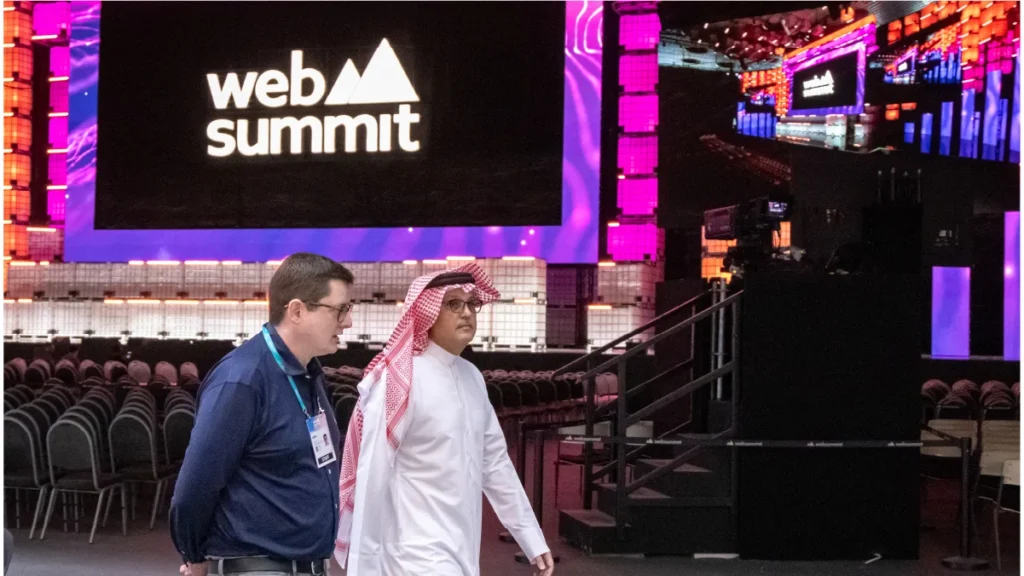
Reading Time: 2 minutesH.E. Mr. Mohammed bin Ali Al Mannai, Minister of Communications and Information Technology, conducted a visit today to oversee the final preparations for the second edition of Web Summit Qatar 2025, which is set to take place tomorrow, Sunday, February 23. The summit will feature over 1,540 startups, marking a 50% increase from last year’s edition, along with 651 investors from more than 80 countries. On this occasion, H.E. Mr. Mohammed bin Ali Al Mannai expressed his sincere appreciation to the organizing committee and the Web Summit team for their significant efforts in ensuring the success of this global event. During his tour, H.E. emphasized the importance of the summit in solidifying Qatar’s role as a regional hub for entrepreneurship and innovation. He also praised the meticulous preparations made to deliver an exceptional experience for participants through dedicated platforms and networking opportunities. Web Summit Qatar 2025 serves as a strategic platform to discuss the latest advancements in digital transformation, artificial intelligence, and tech entrepreneurship, while also highlighting promising investment opportunities in Qatar’s technology sector. The summit plays a crucial role in supporting startups and fostering a dynamic digital innovation ecosystem. This event aligns with national efforts to accelerate digital transformation and enable a knowledge-based economy, in line with Qatar National Vision 2030 and the Third National Development Strategy. The summit is expected to enhance international partnerships and attract technology investments, further strengthening Qatar’s position as a global leader in the digital economy.
Huawei to Showcase Cutting-Edge Cloud and AI Innovations at Web Summit Qatar 2025
Reading Time: 4 minutesAI Pioneer Accelerates Intelligence with Everything as a Service Doha, Qatar – February 18, 2025 – Huawei, a leading global provider of information and communications technology (ICT) infrastructure, is set to showcase its latest Cloud and AI solutions at Web Summit Qatar 2025, taking place from February 23 to 26 at the Doha Exhibition and Convention Center (DECC). Under the theme “Accelerate Intelligence with Everything as a Service,” Huawei will demonstrate how its advanced technologies enable businesses and industries to harness the power of cloud computing, artificial intelligence, and digital transformation to drive unprecedented innovation and efficiency. Following the success of its inaugural edition in 2024, Web Summit Qatar returns for its second year, solidifying Qatar’s position as a global technology and innovation hub. The event brings together world-leading technology companies, policymakers, entrepreneurs, and investors, fostering discussions on the future of AI, cloud computing, and digital transformation. As an AI pioneer in industry applications, Huawei Cloud is driving industry intelligence by providing full-stack AI capabilities, including infrastructure, computing power, algorithms, development frameworks, and its advanced Pangu Large Models. Leveraging its CloudMatrix AI-native infrastructure, Huawei Cloud Stack, and Ascend AI cloud services, Huawei delivers massive AI computing power with unparalleled efficiency, offering flexible deployment options tailored to diverse enterprise needs. Huawei Cloud Stack provides an on-premise deployment mode for enterprises or governments that prefer to save data locally and develop foundation models independently. Meanwhile, Ascend AI cloud services offer a public cloud alternative for organizations that want to avoid the complexities of building and maintaining their data centers. The newly launched Pangu Large Model 5.0 offers advancements in multimodal capabilities, reasoning, and real-world applications across sectors such as autonomous driving, intelligent cities, robotics, industrial design, and drug R&D, solidifying Huawei Cloud’s position as a leader in AI-driven digital transformation. Building on these technical strengths, Huawei is redefining innovation through its “Everything as a Service” strategy, which offers fully digital, cloud-based, and AI-powered solutions across three key pillars: Infrastructure as a Service, Technology as a Service, and Expertise as a Service. At Web Summit Qatar, the company will showcase how this approach enables scalable, secure, and high-performance solutions tailored to the needs of governments, enterprises, and industries, empowering them to accelerate their digital transformation journeys. Rico Lin, President of Huawei Gulf North Region, stated: “At Huawei, we are committed to accelerating intelligence and enabling businesses to thrive in the digital era. Our participation at Web Summit Qatar 2025 underscores our dedication to providing innovative Cloud and AI solutions that empower industries to operate smarter, scale faster, and drive greater efficiency. As Qatar moves toward a knowledge-based economy, we look forward to collaborating with industry leaders, government stakeholders, and technology pioneers to support the country’s digital ambitions and shape the future of AI-driven innovation.” Under Infrastructure as a Service, Huawei Cloud’s KooVerse, which consists of 96 availability zones (AZs) in 33 regions, provides a unified architecture serving customers in more than 170 countries and regions to meet their diverse application scenarios through different modes of public cloud, private cloud, and edge cloud. Technology as a Service solutions enable businesses to innovate easily and modernize applications through Huawei’s R&D advances, delivered to customers, partners, and developers through cloud services. Huawei Cloud has built development production lines designed to accelerate enterprise application modernization. These include ModelArts, a one-stop AI platform that empowers developers and data scientists to rapidly develop and deploy models, driving intelligent upgrades across industries. DataArts, on the other hand, is a comprehensive data lifecycle management platform that provides end-to-end governance of databases, warehouses, data lakes, and AI, unlocking the full value of data. CodeArts is an all-in-one DevSecOps platform offering out-of-the-box cloud services for requirement delivery, code commit, testing, building, verification, deployment, and release throughout the entire software development lifecycle. Meanwhile, MetaStudio delivers cutting-edge tools for virtual avatar video production, livestreaming, and intelligent interaction, revolutionizing content creation across industries. Beyond technology, Huawei Cloud’s Expertise as a Service will highlight shared excellence and cloud-enabled industries. Huawei Cloud MacroVerse aPaaS opens up Huawei’s years of innovation and digitalization experience so that industry developers no longer need to reinvent the wheel, enabling industry scenario-based innovation in more than 10 vertical industries, such as government, finance, manufacturing, transportation, and meteorology. A key focus of Huawei’s participation will be introducing industry-specific AI applications, demonstrating real-world scenarios where AI and cloud technologies drive innovation. From AI-powered diagnostics in healthcare that improve accuracy and speed to predictive maintenance in manufacturing that reduces downtime and enhances productivity, Huawei’s solutions are transforming industries. The financial sector also benefits from Huawei’s AI-driven risk assessment and fraud detection capabilities, while the transportation industry is leveraging AI-powered logistics and fleet management to optimize routes and enhance efficiency. Huawei’s AI for Industries initiative is set to redefine the future of business operations by embedding AI into core decision-making processes. By integrating AI-driven automation across sectors, enterprises can increase efficiency, reduce operational costs, and unlock new growth opportunities. Whether through smart urban planning, intelligent infrastructure, or AI-powered governance models, Huawei is pioneering the use of artificial intelligence to shape the future of digital economies. This aligns with Qatar’s digital transformation agenda, which aims to harness AI, big data, and cloud computing to enhance public services, drive economic competitiveness, and build a sustainable, knowledge-based economy. As Qatar strengthens its role as a digital powerhouse, Huawei remains committed to working alongside local enterprises, government entities, and global partners to build an ecosystem where cloud and AI technologies drive meaningful transformation. Huawei’s presence at Web Summit Qatar reinforces its commitment to supporting Qatar’s national digital agenda, aligning with Qatar National Vision 2030, which prioritizes economic diversification, digital innovation, and smart infrastructure as key pillars for sustainable growth. Huawei invites attendees to its booth number E503 to experience live demonstrations, engage with industry experts, and explore how Cloud and AI technologies can transform businesses and industries.
2025 Qatar Economic Forum to take place May 20-22, Preliminary Speakers Confirmed
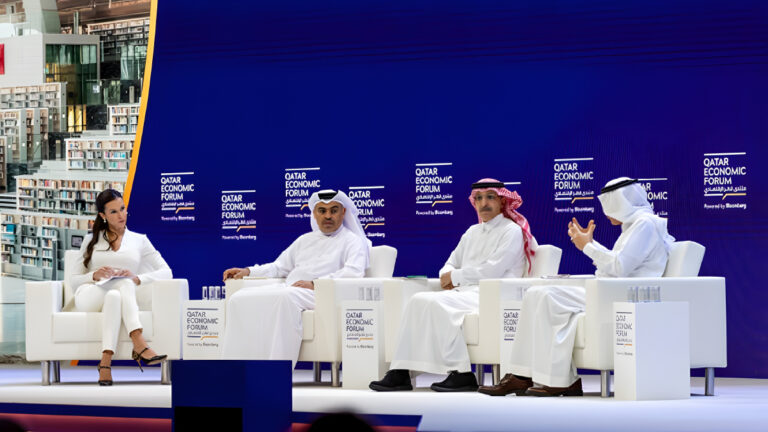
Reading Time: 3 minutesDoha, 9 February, 2025 – Entering its fifth year, the annual “Qatar Economic Forum, Powered by Bloomberg” (QEF), held in collaboration with Media City Qatar, will take place from May 20-22, 2025 in Doha. This year’s Forum, held under the theme ‘The Road to 2030: Transforming the Global Economy’, will once again convene Heads of State, influential government officials, international CEOs and investors in Doha, to create an international platform for meaningful deal-making conversations and connections. As 2025 marks the final stretch towards the 2030 national visions of Qatar, Saudi Arabia, Abu Dhabi, and Bahrain, QEF will focus on how strategic decisions in the Gulf are influencing global economic trends. At a time of shifting geopolitical alliances and economic uncertainty, this year’s Forum will explore the next phase of regional transformation and its impact on global markets. Discussions at QEF will revolve around the following thematic areas: Geopolitics, Globalization & TradeGCC economies are rewriting the rules of global trade and investment with ambitious national visions and development strategies. Discussions will explore how the final stages of these economic transformations will progress in the face of regional security pressures and a new policy environment in the United States. Energy Supplies & SecurityThe Forum will host high-energy conversations with the power brokers setting our global relationship with oil, gas and the long-term transition to renewables. Technology Hype & RealityArtificial intelligence has become the dominant buzzword of the era, but separating hype from reality is essential. Conversations will examine how AI applications are delivering tangible benefits today and explore where AI-native startups are set to disrupt entire industries. Business & Investment OutlookThe biggest names in global business and investment will share insights on how they are achieving market-beating growth while sidestepping the major hurdles facing the global economy. Sports & EntertainmentSports investing used to be a play-thing for the super-rich. Now it’s a serious asset class attracting big money from hard-nosed investors. Players, leagues, owners and investors reveal the next wave of disruption poised to hit this multi-trillion dollar industry. Confirmed speakers include HRH Prince Khaled bin Alwaleed bin Talal Al Saud, Founder & CEO, KBW Ventures; Huda Al-Lawati, Founder & CEO, Aliph Capital; Henadi Al-Saleh, Chairperson, Agility; Samia Bouazza, Group CEO & Managing Director, Multiply Group; Mathieu Chabran, Co-founder, Tikehau Capital; William E. Ford, Chairman & CEO, General Atlantic; Goodwin Gaw, Chairman, Managing Principal, Member of Investment Committee & Co-Founder, Gaw Capital; Jayne Hrdlicka, CEO, Virgin Australia; Markus Krebber, CEO, RWE AG; Ryan M. Lance, Chairman & CEO, ConocoPhillips; Tope Lawani, Managing Partner, Helios Investment Partners; Chee Koon Lee, Group CEO, CapitaLand Investment Ltd.; Ted Leonsis, Founder, Chairman, Managing Partner & CEO, Monumental Sports & Entertainment; Rajeev Misra, CEO & Co-Founder, One Investment Management; David H. Petraeus (US Army, Ret.), Partner, Chairman of the Global Institute, KKR; with more to follow. Karen Saltser, CEO of Bloomberg Media, said “As we approach the fifth edition of QEF, we’re seeing the Gulf’s economic transformation reach a pivotal moment. With national visions approaching key milestones and global markets in flux, the conversations we’ll have in Doha will be more important than ever. This Forum remains a key global platform for leaders to come together to discuss, debate and define what’s next for business and investment worldwide.” Eng. Jassim Mohamed Al Khori, CEO of Media City Qatar, said: “Since its inception, ‘the Qatar Economic Forum, Powered by Bloomberg’ has been a cornerstone for global dialogue, where pivotal decisions influence the future of the economy. With 2030 on the horizon, regional countries continue striving toward their national aspirations, while the world stands at a crossroads of shifting markets, evolving policies, and new economic realities. This Forum is where leaders can come together to navigate complexity, forge new strategies, and shape what comes next. In Qatar, we look forward to facilitating these critical discussions.” Produced by Bloomberg Live Experiences and editorially programmed by Bloomberg News, the Forum will be available on the Bloomberg Terminal, Bloomberg TV and bloomberg.com. Additional speaker and agenda details for the “Qatar Economic Forum, Powered by Bloomberg” will be announced at a later date. For more information and to register interest, please visit QatarEconomicForum.com.
2025 eCommerce revenue pegged at US$3,795.00 million
Reading Time: 5 minutesWith one of the highest data penetration rates at 99 percent, Qatar has a savvy population who are active social media users. According to DataReportal, 97.8 percent of the population are active social media users. Prior to Covid-19, it was estimated that only about 14 percent of the population made online purchases; however, this has increased significantly since March 2020 when the eCommerce market boomed. Fitch Solutions has estimated that the eCommerce market in Qatar which was worth close to US$1.5 billion in 2019 has not only grown since then but there has been a very sharp increase In Qatar’s small and medium enterprises’ (SME) acceptance of credit cards, which are widely used in Qatar. While these retail trends are more than apparent, there’s robust regulatory preparation with active systemic changes to support this transition. As Qatar continues to move towards a cashless economy, the Qatar Central Bank (QCB) launched the “Qatar Mobile Payment System” (QMPS) enabling the use of electronic wallets to further develop the country’s electronic payment environment and access to a high-level national payment system. Qatar Central Bank (QCB) also issued unified specifications and standards for the QR code that enables users to make payments by scanning the response code (QR Code) through mobile phones at points of sale and public transportation. QCB issued the Payment Services Regulation to license and regulate payment service providers (PSPs) in Qatar. In tandem, QCB launched the National Fintech Strategy, to integrate digital innovations like blockchain, Islamic banking, insurance technology, and education technology. Cryptocurrencies remain banned under the new strategy with the aim that through the new strategy, it will serve as a regulator and an enabler to accommodate emerging fintech models. The central bank started introducing a licensing regime for all new and existing fintech services operating in the country, including Payment Services Providers (PSPs), “buy now pay later” (BNPL) and insurance price comparison websites. The National Strategy and several other related documents remain unavailable in sufficient details leading to opacity and bureaucratic challenge. Recent data from QCB has shown that Qatar’s point of sale (POS) and eCommerce transactions saw an upward trajectory in December 2024. The surge was registered as POS transactions were valued at QR9.49 billion in December 2024 compared to QR7.90 billion in December 2023 and QR2.755 billion in December 2022 recording a growth of 20 percent and 25 percent respectively. The volume of POS transactions stood at 43.97 million in December 2024, while it was 33.85 million in December 2023 and 32.06 million in the same month in 2022 recording an increase of 30 percent and 37 percent respectively. Challenges Facing Digital RetailersWhile the e-commerce sector in Qatar is experiencing speedy growth and expansion, virtual retailers additionally encounter numerous challenges specific to the market. Here are a number of the essential challenges in dealing with digital shops in Qatar: Logistics and last-mile delivery: Qatar’s geographical landscape and infrastructure pose logistical challenges for e-commerce shops, particularly in ensuring timely and efficient closing-mile transport of orders to clients throughout the country. Limited delivery networks and congested urban areas can hinder delivery operations, leading to delays and client dissatisfaction. Payment methods and security concerns: Despite the growing adoption of virtual bills, concerns about charge security and fraud remain universal amongst Qatari customers. Digital retailers ought to deal with those issues by imposing robust price safety features, offering secure payment gateways, and building acceptance with clients to inspire online transactions. Competition from traditional retail: Traditional brick-and-mortar shops continue to dominate the retail panorama in Qatar, posing stiff opposition to digital shops. Established retail chains and purchasing shops entice a full-size part of purchaser spending, making it hard for e-commerce players to compete on charge, convenience, and brand recognition. Customer trust and brand reputation: Building agreement with and credibility with customers is important for virtual stores to achieve Qatar’s e-commerce market. Establishing a reputable brand image, turning in notable products and services, and imparting first-rate customer support is critical for earning and preserving consumer agreement in a competitive online market. Digital skills and talent acquisition: Recruiting and keeping skilled professionals with an understanding of e-commerce, digital advertising, and technology can be difficult for outlets in Qatar. The demand for digital skills exceeds neighborhood delivery, leading to skills shortages and competency gaps that restrict the implementation of effective e-commerce market growth strategies and tasks. Cross-border trade and customs regulations: eCommerce retailers seeking to expand their reach beyond Qatar’s borders face challenges associated with cross-border trade and customs regulations. Complex import/export tactics, customs obligations, and regulatory compliance requirements can increase the cost and complexity of international e-commerce operations, impacting profitability and scalability. https://www.statista.com/outlook/emo/ecommerce/qatar#revenue Number crunching• Revenue in the eCommerce Market is projected to reach US$3,795.00 million in 2025.• Revenue is expected to show an annual growth rate (CAGR 2025-2029) of 8.15 percent, resulting in a projected market volume of US$5,192.00 million by 2029.• With a projected market volume of US$1,773.00 billion in 2025, most revenue is generated in China.• In the eCommerce Market, the number of users is expected to amount to 1,609.0k users by 2029.• User penetration will be 45.1 percent in 2025 and is expected to hit 57.9 percent by 2029.• The average revenue per user (ARPU) is expected to amount to US$3.12k.Source: https://www.statista.com/outlook/emo/ecommerce/qatar eCommerce Trends in QatarE-commerce in Qatar is experiencing a substantial surge, driven by various developments shaping the virtual retail landscape within the country. Here are a few prominent e-commerce traits reflected in Qatar’s eCommerce market growth: Cellphone dominance: Qatar has one of the highest cellphone penetration costs globally, which is reflected in the dominance of mobile commerce. Rise of online marketplaces: Marketplaces such as Souq.Com, Jazp.Com, and Lulu Hypermarket’s online stores are witnessing accelerated traction, presenting purchasers with a handy buying experience and getting entry to various merchandise. Demand for fast and reliable delivery: eCommerce shops in Qatar invest in efficient logistics and last-mile delivery solutions to ensure well-timed shipping of orders, improving consumer delight and loyalty and maximising eCommerce market growth. Personalised shopping experiences: AI-controlled