

QIA’s US$1 billion investment in VC funds upped Qatar as a startup hub
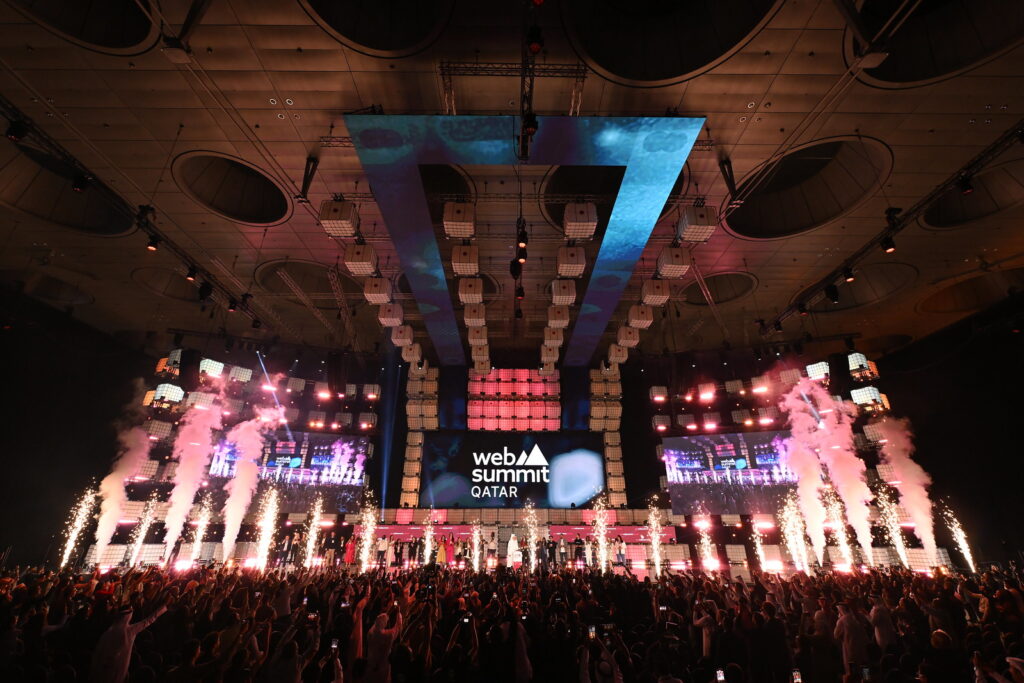
Dima Wahbeh, deputy country manager, Qatar at Web Summit, in conversation with Aparajita Mukherjee details what the maiden edition achieved for the venture capital market, analysing what’s up the sleeve of Web Summit in 2025 especially in the realm of policy making. “For the second year, many of the biggest wealth funds and VCs in the world will be at Web Summit Qatar to connect with 15,000 attendees, 1,000 startups, 400 investors and global leaders in Doha.” In its inaugural year, Web Summit Qatar gathered the largest and most globally diverse cohort of startups to ever gather in the region – more than 1,000 startups from 80 countries – to connect with a new generation of investors and partners hailing from countries such as Qatar, the US, Egypt, Brazil, Italy, Nigeria, the UK, India, and beyond, discloses Dima Wahbeh, deputy country manager, Qatar at Web Summit. Naming the prominent names at the last edition of Web Summit Qatar 2024, Wahbeh says, with unbeatable confidence, “There were Qatar Investment Authority (QIA), Tik Tok, Snap, Microsoft, AWS, Meta, and more that took part: and we expect to see the same calibre of international tech companies, including Open AI, Amazon and Microsoft – as well as thousands of young promising entrepreneurs from around the world – join us in Doha in February 2025.” Many of these startups from Web Summit Qatar 2024 have received funding off the back of connections made at Web Summit Qatar, according to Wahbeh. According to Crunchbase, a cumulative $243m+ has been raised by Blend, Colendi, OTO, YoLa Fresh, Kebotix, Chowdeck, Intron Health, PairedWorld, ORA Technologies, and KalPay. Web Summit Qatar offers an incredible platform to startups, and we are excited to see the next generation of startups join us in Doha again next February, she says. For the second year, many of the biggest wealth funds and VCs in the world will be at Web Summit Qatar to connect with 15,000 attendees, 1,000 startups, 400 investors and global leaders in Doha. Increasingly, some of the most active players in the technology industry are sovereign wealth funds, the most active of which are in the Middle East, and all of them will be at Web Summit Qatar 2025. “So, if you’re a fast-growing company thinking about your next funding round, a reasonable place to spend a day or two is Web Summit Qatar,” discloses Wahbeh, adding, “We recently announced our first 25 speakers for Web Summit Qatar 2025 and will be announcing more shortly. We look forward to sharing more details about Web Summit Qatar in the weeks ahead.” What transpired at Web Summit 2024 Discussing the details of what impact the maiden edition of Web Summit 2024 could achieve, Wahbeh says that the team were delighted to see many impactful events take place at Web Summit Qatar 2024 showcasing the potential of the country’s startup ecosystem. She adds, “On Opening Night at Web Summit Qatar 2024, HE Sheikh Mohammed bin Abdulrahman bin Jassim Al Thani, Prime Minister and Minister of Foreign Affairs of Qatar, announced that the QIA would be investing US$1 billion in venture capital funds to support entrepreneurs and startups in Qatar. This announcement demonstrated Qatar’s dedication to becoming an attractive destination for startups to establish themselves and grow, and cements Qatar’s status as a global startup hub.” Wahbeh informs that 24 memoranda of understanding were signed at Web Summit Qatar 2024: and the event saw the successful registration of more than 200 companies through the Startup Qatar initiative. The Ministry of Communications and Information Technology also launched the Digital Agenda 2030 live on stage, outlining a roadmap for a knowledge-based economy in Qatar, she discloses. Analysing the impact of these measures, Wahbeh says, “The announcements and initiatives have had a hugely positive impact on the Qatar startup ecosystem, and we believe that this will continue to grow in the years ahead and during Web Summit Qatar’s tenure in Doha.” In your experience of holding such summits all over, do policy changes happen as a result of holding such events? Is there some monitoring mechanism that Web Summit have? In Wahbeh’s opinion, host cities play a crucial role in Web Summit events, collaborating closely with organisers to enhance the experience for attendees and bolster the city’s positioning as a global startup hub. “Naturally we work with host cities to assess that impact, and demonstrate the success we can help deliver.” She goes on to cite the example of Lisbon’s, adding that its position as a global innovation hub has grown significantly since it began hosting Web Summit, with Web Summit helping to attract investment and connect Portugal to international markets. Inward investment in Portugal has soared over the past decade: Web Summit partners that have opened offices in Portugal include Google, BMW, Amazon, Daimler, Huawei and Cloudflare. “There are now 4,073 startups in Portugal, up from 821 startups in 2016, when the first Web Summit Lisbon took place – an increase of 496% over this period. The number of unicorns in Portugal has grown from 1 to 7 between 2016 and 2022: all have attended Web Summit. Additionally, the economic impact Web Summit has had in Lisbon has been significant, with the data showing Web Summit generating more than €200 million worth of economic activity the week of the event,” discloses Wahbeh, concluding that host cities are motivated to host events like Web Summit to position themselves as key players in the global tech community, ultimately driving local economic growth and innovation. Impact on the economic front Talking us through some of the highlights of the impact of the Summit on the Qatar economy, Wahbeh says that hosting a Web Summit event has a significant impact on the local economy, bringing attendees from across the world to a host city for a number of days. “For Web Summit Qatar 2024, over 15,000 attendees came to Doha, booking over 38,000 nights in Doha hotels, and 19,000 flight segments. The average stay in Doha for an attendee
MENA Fintech Festival 2024 Concludes in Doha, Paving the Way for Fintech Innovation in the MENA Region

Doha, Qatar – December 8, 2024 The MENA Fintech Festival 2024 successfully concluded its third edition on December 5 at the Qatar National Convention Centre (QNCC) in Doha. The three-day event, held from December 3 to 5, brought together industry leaders, innovators, and stakeholders to explore the latest trends and future opportunities in the financial technology sector. Building upon the success of its previous editions, the festival evolved from a traditional forum into a dynamic B2B matchmaking platform, fostering collaboration among startups, investors, corporate entities, regulators, incubators, and accelerators. This transformation underscores the event’s commitment to advancing fintech and financial inclusion across the MENA region. The opening ceremony featured a keynote address by H.E. Sheikh Ahmed bin Khalid Al-Thani, Assistant Governor for Financial Instruments and Payment Systems at Qatar Central Bank (QCB). He emphasized the pivotal role of financial technology as a fundamental pillar of modern financial services, highlighting QCB’s initiatives to establish an innovation-driven ecosystem aligned with Qatar National Vision 2030. Sheikh Ahmed noted, “Technology has reshaped the way businesses are conducted around the world, empowering individuals and creating new opportunities to enhance economic growth.” QNA The festival’s agenda included keynote speeches, panel discussions, and workshops addressing challenges and opportunities within the fintech industry, particularly in the MENA region. Discussions centered on the transformative impact of fintech in expanding access to financial services, the importance of tailored financial solutions, supportive regulatory frameworks, and the role of public-private partnerships in fostering financial inclusion. Malik Shishtawi, President of the MENA Fintech Festival, stated, “Qatar’s FinTech ecosystem exemplifies the impact of visionary leadership and strategic investment. Driven by the progressive policies of the Qatar Central Bank and bolstered by the support of key stakeholders, we are witnessing a profound transformation in financial services—one that is shaping the present and laying a solid foundation for generations to come.” The festival also provided a platform for networking and collaboration, with participants expressing optimism about the future of fintech in the MENA region. The event’s success reflects Qatar’s commitment to positioning itself as a global fintech hub, fostering innovation, and driving economic growth through financial technology. For more information about the MENA Fintech Festival and future events, please visit menafintechfestival.com.