

Qumra Master Darius Khondji underlines the power of storytelling through light – or the lack of it – to deliver authentic works of art
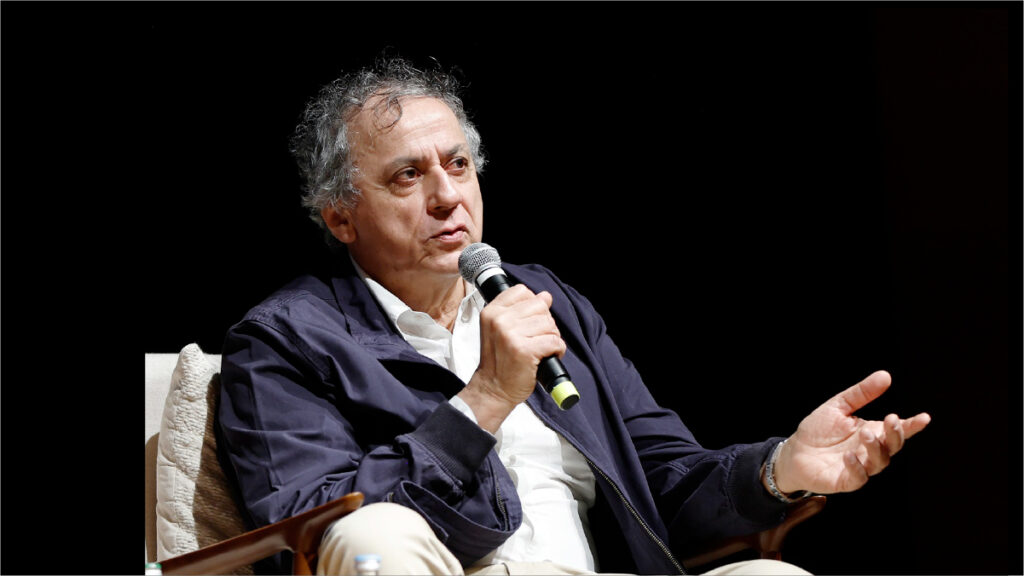
Doha, Qatar; April 6, 2024: Qumra Master Darius Khondji, the acclaimed Iranian-French cinematographer whose body of work (Se7en, Delicatessen, Uncut Gems, Mickey 17) has defined some of the most memorable visual experiences in contemporary cinema, highlighted the power of light and its its vital role in the composition of authentic art. Reflecting on his first collaboration with Qumra 2025, the annual industry incubator event by Doha Film Institute, he stated: “The institute is fantastic for filmmakers. I wish we had this in other countries.” During his two-hour master class, Khondji took audiences behind the scenes of his celebrated projects, including acclaimed filmmaker Shireen Nishat’s Tooba, a compelling work of art that “explores the movement of people from their homeland to an imagined utopia.” The powerful allegories about life that Khondji captured on screen for Tooba, he says, “come from the director. I remember her words when she was describing to me what she wanted to make with the film, and I just photographed. As cinematographers, we are like musicians, playing the sound and music given by the composer.” Khondji’s frames—dark and broody in Se7en (1995) hopeful and effervescent in Okja (2017)—all stem from his early passion for photography. “I remember going to the Louvre and taking pictures of the statues and looking at the light on them. I was very interested in minimalism and I was always reducing things to the most simple [forms] with light.” A two-time Oscar nominee, Khondji perfects his craft with a creative approach overtechnical, constantly innovating in a way that defies categorisation. His impressive versatility as a cinematographer is evident in The Lost City of Z (2016), capturing the darkness of the jungle in natural light, contrasted with the spellbinding climax in flames, and in the frenetic Uncut Gems (2019), shot in available light inside an apartment. Khondji—whose father owned several movie theatres—said his early memories of cinema revolved around “listening to soundtracks of Egyptian films, Italian neorealist films, mainstream European films, and Indian films. I remember having this background of sound and feelingTo this day, music is crucial to his work. “If I don’t like the music, we do some okay photography, but my mind won’t be in it.” By the time Khondji was 12, he was already making films. Fascinated by horror flicks such as Dracula and wanted to be a director, but eventually realized hi calling as a cinematographer. As a director of photography, his diverse journey also includes the music video for Madonna’s Frozen, for director Chris Cunningham. “Every frame was in his mind, and Madonna and I were just doing what he wanted. It was a great way to play with the medium, to experiment,” observed Khondji. Khondji says that “films have a painterly quality; it is all about how you translate your story onto the screen—whether using film or digital.” With regards to AI, he commented: “I love making film with people—I love having people around me, having a crew, having a director, men and women, and making films together. However, I don’t want to limit people’s minds; people should always continue discovering. “ Asked about his advice for emerging filmmakers who strive to stand out, he said that everyone has a distinct inner voice. “It’s important to understand and accept your difference. If I had to make a film myself today—and I’m not a young filmmaker—even for me, it would be difficult to have a unique voice. We have to find it within ourselves, then put it on screen.” On accepting his own differences, he added: “When I was a child, I wanted to be like everyone else. I wanted to look French or Parisian. It was only later that I realized I was different and accepted that my difference can be a good thing.” Whether working on his breakthrough black comedy Delicatessen (1991) with Jean-Pierre Jeunet and Marc Caro, or capturing the haunting visuals of David Fincher’s Se7en, Khondji believes that cinematography must serve a higher purpose: “It’s not just pretty photography, but storytelling.” This guides his approach across four decades of groundbreaking work, from arthouse classics to enduring contemporary masterpieces.
Doha Film Institute Announces Visionaries Lav Diaz, Darius Khondji, Walter Salles, Anna Terrazas and Johnnie To as 2025 Qumra Masters

Doha, Qatar; 25 February 2025: Doha Film Institute has announced the five renowned global film luminaries who will be the Qumra Masters of its eleventh annual industry event, set to run from April 4-9, 2025. A groundbreaking talent incubator in the Arab world that drives the success of first and second-time filmmakers from the region and beyond, Qumra connects emerging filmmakers with celebrated cinematic masters and provides invaluable industry networking and collaboration opportunities. With a wealth of diverse perspectives from across the global film community, Qumra Masters provide participants with one-on-one mentorship to equip filmmakers with essential tools to hone their craft and refine their projects to realise their artistic visions. Doha Film Institute will welcome this year’s Qumra Masters Lav Diaz, Darius Khondji, Walter Salles, Anna Terrazas and Johnnie To to share the visionary perspectives they have gained throughout their luminous careers and inspire the next wave of creators who will shape the trajectory of cinema. Slow cinema pioneer filmmaker Lav Diaz (The Woman Who Left, Evolution of a Filipino Family) is renowned for his profound explorations of the human condition and the struggles of his homeland in his signature black-and-white frames; Darius Khondji’s (Amour, The Immigrant) innate ability to blend light, shadow, and composition has firmly established him as one of contemporary cinema’s most revered visual storytellers.; Walter Salles (The Motorcycle Diaries; I’m Still Here) is one of filmmaking’s most compelling storytellers who often explores themes of displacement, memory, and identity with his signature sense of humanity; Anna Terrazas (Roma, Spectre) blends cultural authenticity and creative innovation by working with local artisans and top filmmakers, and stands out as one of the most dynamic costume designers of her generation; and celebrated genre-defying filmmaker Johnnie To (Exiled, Election) is a master of gripping narratives in his collaborative approach to deep explorations of loyalty, fate, and morality. Fatma Hassan Alremaihi, Chief Executive Officer of the Doha Film Institute, stated: “We are truly honoured to welcome some of the world’s most celebrated creatives Lav Diaz, Darius Khondji, Walter Salles, Anna Terrazas and Johnnie To as Qumra Masters, joining the legacy of iconic storytellers who have supported us on our mission to empower important voices in film. Their artistry, innovation, and commitment to storytelling have left an indelible mark on world cinema. By sharing their knowledge and experience with our Qumra participants, they will inspire a new generation to refine their craft, and tell bold enduring stories that will shape the future of cinema.” Elia Suleiman, Artistic Advisor at Doha Film Institute, said “Cinema is not just the stories we tell, but the silences in between—the spaces where meaning lingers. At Qumra, these silences resonate loudly, where emerging voices are amplified by the wisdom of the Qumra Masters. It is a place of transformation, where the future of film is not dictated, but discovered.” Over the past decade, Qumra has cemented its position as a cornerstone of the global filmmaking industry, supporting important independent voices in cinema and providing groundbreaking opportunities for participants to elevate their craft and creative process. In the 11th edition of Qumra, Masterclasses for up and coming filmmakers from the region and around the world will provide unparalleled creative development and mentorship opportunities. Participants also receive mentorship from and key business meetings with leading global film industry experts. Additional programme and guest details will be announced soon. 2025 Qumra Masters: Lavrente Indico Diaz aka Lav Diaz is widely celebrated for his profound portrayals of the human condition and historical struggles of his homeland. A pioneer of slow cinema, as writer, director, producer, editor, cinematographer, production designer, actor, and composer, his unflinching portrayal of sociopolitical issues challenge conventional cinematic norms. Diaz delves into grief, survival, resistance, and social injustice through meditative masterpieces—from the nearly 11-hour magnum opus ‘Evolution of a Filipino Family’ (2004) and ‘Norte, the End of History’ (2013) selected in Cannes Un Certain Regard to his Venice Golden Lion-winner ‘The Woman Who Left’ (2016), the “ideological father of the New Philippine Cinema” has inspired an entire generation of filmmakers to embrace bold, uncompromising approaches to storytelling. With a career spanning over four decades, Darius Khondji’s work is celebrated for its versatility, innovation, and profound emotional resonance. He earned his first César Award nomination for his breakthrough film ‘Delicatessen’ (1991) by Jean-Pierre Jeunet and Marc Caro. Khondji has worked on Michael Haneke’s Academy-Award-winning ‘Amour’ (2012), James Gray’s ‘The Immigrant’ (2013) and ‘The Lost City of Z’ (2016), David Fincher’s ‘Se7en’ (1995) and ‘Panic Room’ (2002) and Bong Joon Ho’s ‘Okja’ (2017). His work on Alejandro G. Iñárritu’s ‘Bardo: False Chronicle of a Handful of Truths’ (2022) earned him an Academy Award nomination, an ASC nomination, and a Silver Frog at Camerimage. Khondji’s accolades to date include two Academy Award nominations, a BAFTA nomination and multiple César Award nominations along with receiving the prestigious Pierre Angénieux Tribute at the Cannes Film Festival in 2022. Director and documentarian Walter Salles brings an instinctive eye for capturing human resilience on film. Salles gained global recognition with a Golden Bear at the Berlin International Film Festival, a Golden Globe and a BAFTA and two Oscar nominations for ‘Central Station’ (1998), and over 30 international awards including seven BAFTA nominations and two wins for his biopic feature, ‘The Motorcycle Diaries’ (2004). His recent ‘I’m Still Here’ (2024) earned three Oscar nominations, Best Screenplay award at the Venice Film Festival and the Golden Globe for Best Actress for Fernanda Torres. Salles has also been recognised with the Robert Bresson Prize at the Venice Film Festival (2009) and the Marcus Aurelius Award for Lifetime Achievement at the Rome Film Festival (2014). Anna Terrazas is an award-winning costume designer who skilfully blends cultural preservation and creative innovation. With an impressive career spanning across film, television and theatre, Terrazas’ aesthetic was inspired by her painter father and textile-loving mother. From her beginnings in fashion design and theatre to transitioning to film with Gael García Bernal’s ‘Déficit’ (2007), she continues to work with some of the most influential storytellers of our