

Msheireb Downtown Doha Welcomes More Than 1500 Attendees to Qatar’s Largest Outdoor Cybersecurity Event
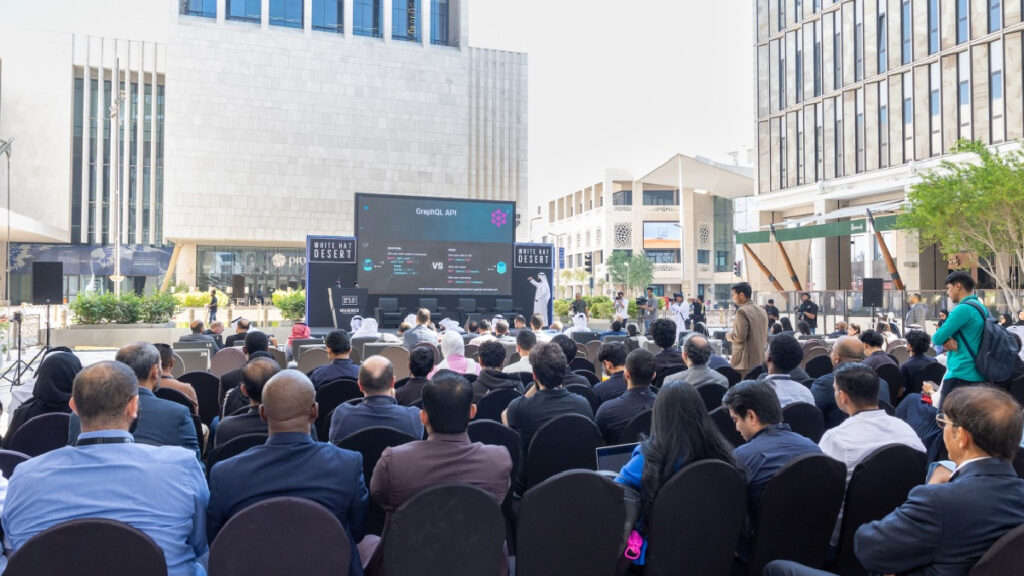
Msheireb Properties’ first-ever outdoor cybersecurity conference, held in partnership with White Hat Desert (WHD), brought more than 1500 participants from across multiple sectors to Barahat Msheireb yesterday. The event featured 15 speakers, five specialized Cybersecurity Villages, and CTF “Capture the flag” competition to Barahat Msheireb, and representation from energy, banking, construction, healthcare, and broadcasting companies, setting a new benchmark for cybersecurity events in Qatar. “As a smart tech leader in Qatar, hosting this groundbreaking cybersecurity is part of our commitment to introducing technological innovation and digital safety among the community,” said Eng. Ahmed Al Korbi, Senior ICT Manager at Msheireb Properties, during his welcome remarks. “Through our sophisticated network of over 650,000 connected IoT devices and state-of-the-art Command and Control Centre, we understand firsthand the critical importance of cybersecurity in modern urban environments. This event demonstrates our dedication to sharing this knowledge with both industry professionals and general public in Qatar.” The morning industry session delivered comprehensive insights across four key themes: Emerging Threats, Artificial Intelligence, Risk Management, and Cyber Strategy. The event featured five distinct Cybersecurity Villages, each offering specialised experiences. The Digital Forensics & Incident Response village provided hands-on training with security experts, while the Application Security section offered a fundamental understanding of secure development practices. Participants engaged with offensive security methods in the Penetration Testing area and explored malware analysis in the Reverse Engineering section. The WHD Clinic served as a community hub for networking, while the Qatar Scientific Club showcased innovative demonstrations in robotics and electronics. The evening session transformed Barahat Msheireb into an interactive technology playground, featuring exciting competitions and demonstrations. Attendees witnessed Sumo Robot battles and high-speed drone racing competitions. Gaming enthusiasts participated in an intense Fortnite tournament while aspiring technologists engaged in circuit board-building workshops. Live hacking demonstrations captured the audience’s attention, providing real-world examples of cyber threats and defense mechanisms. “The diversity of activities and depth of expertise shared today reflects our commitment to making cybersecurity accessible to everyone,” added Eng. Al Korbi. “From the technical discussions about AI-driven attacks and ransomware in the morning sessions to the engaging family activities in the evening, we’ve succeeded in creating a comprehensive platform for cybersecurity awareness and education.” The event was supported by leading technology companies, with Malomatia, Microsoft, Google, TrendMicro and Zscaler among the key sponsors showcasing cutting-edge security solutions. The success of this inaugural outdoor cybersecurity event has already led to discussions about making it an annual fixture in Qatar’s technology calendar.
Startup Qatar Investment program announces successful applicants, with $12 million in funding
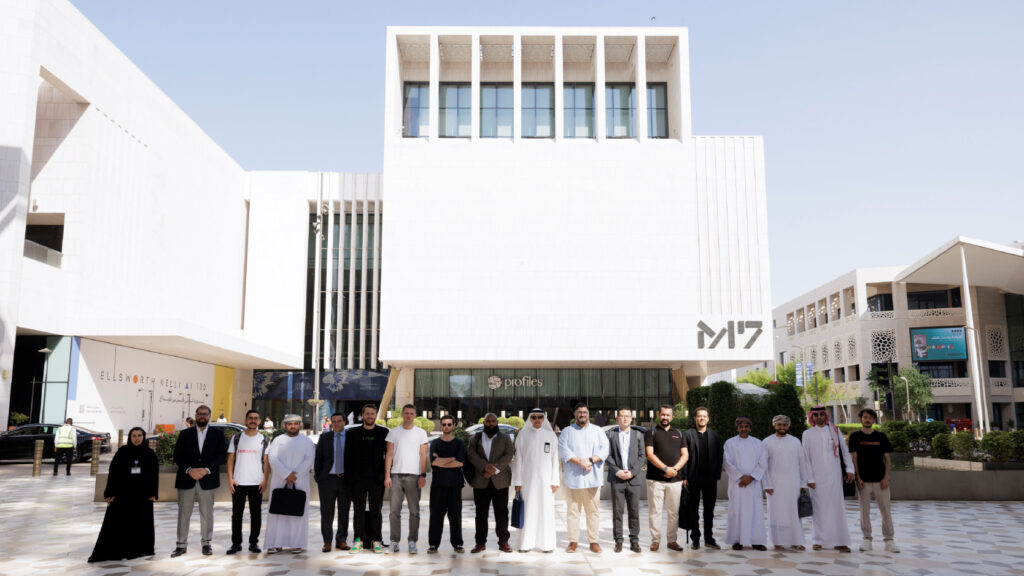
Startup Qatar has announced the first cohort of successful applicants of its Investment Program during a press conference at Web Summit Lisbon. Successful applicants will receive a total of QAR 43.8 million (USD 12 million) in funding and benefits such as access to a shared office space in one of Qatar’s leading local incubators, accommodation and free entrepreneur visas to support them in establishing and expanding operations in Qatar. In its first edition, the Startup Qatar Investment Program attracted nearly 2,000 applications from around the world, including the United States, Canada, the United Kingdom, Turkey and India, among others. Following a competitive selection process, a total of 11 applicants were selected based on their innovative ideas and potential for impact. These include Ynmo, Stemly, Sekgames, Huupe, Nafasaria, PaintIt.ai, Realyze Intelligence, Polymerize, Wahed, Nybl and Byanat. These startups represent a diverse range of industries, including e-gaming, edtech, sportstech, cleantech, proptech, healthtech, fintech and B2B SaaS, showcasing the diverse talent and creativity within the global entrepreneurial landscape. Speaking at the press conference announcement, Hamad Rashid Al-Naimi, Strategy Manager at Invest Qatar, commented: “We are pleased to see such high levels of engagement from promising international startups eager to establish their presence in Qatar. The Startup Qatar Investment Program highlights the country’s commitment to advancing the innovation and entrepreneurship ecosystem and supporting Qatar’s transition to a knowledge-based economy.” Launched earlier this year, the Startup Qatar Investment Program falls under Invest Qatar’s Startup Qatar Initiative, introduced ahead of the inaugural Web Summit Qatar, the region’s largest technology event. The initiative is a one-stop online comprehensive national resource for information, support and opportunities offered to startups and entrepreneurs. Successful applicants of the Startup Qatar Investment Program will benefit from seed or growth funding, with up to USD 500,000 to establish themselves in Qatar and up to USD 5 million to expand operations within the Qatari market. The selected companies are poised to make significant contributions to their fields in Qatar by establishing R&D offices, supporting local startups, and enhancing the country’s AI and machine learning ecosystem. They aim to collaborate with local universities, support graduates and play a key role in advancing Qatar’s material innovation strategy, all while striving to position the country as a global tech hub. “These selected startups represent a diverse array of industries and bring innovative solutions that align with Qatar’s vision for a vibrant entrepreneurial landscape. We look forward to fostering their growth and contributing to the development of a thriving startup ecosystem in the country,” added Al-Naimi. Qatar continues to strengthen its position as a leading technology hub, making a significant impact at Web Summit Lisbon 2024. The Qatar Pavilion showcased the country’s rapid advancements in the technology sector, emphasising the government’s strong support for startups and innovation, alongside substantial investments in IT infrastructure and a strategic focus on emerging technologies, particularly artificial intelligence. Attendees were also introduced to Qatar’s favourable business environment. As Qatar prepares to host the second edition of Web Summit Qatar in February 2025, it aims to build on the record success of its inaugural event in 2024, which welcomed over 15,000 attendees from 118 countries and showcased 1,043 startups. Web Summit Qatar 2025 will take place from 23 to 26 February 2025. Book your tickets now: www.startupqatar.qa/web-summit Startups and entrepreneurs interested in applying for the next round of the Startup Qatar Investment Program can visit www.startupqatar.qa.
WCM-Q conference discusses impact of new technologies on medical education
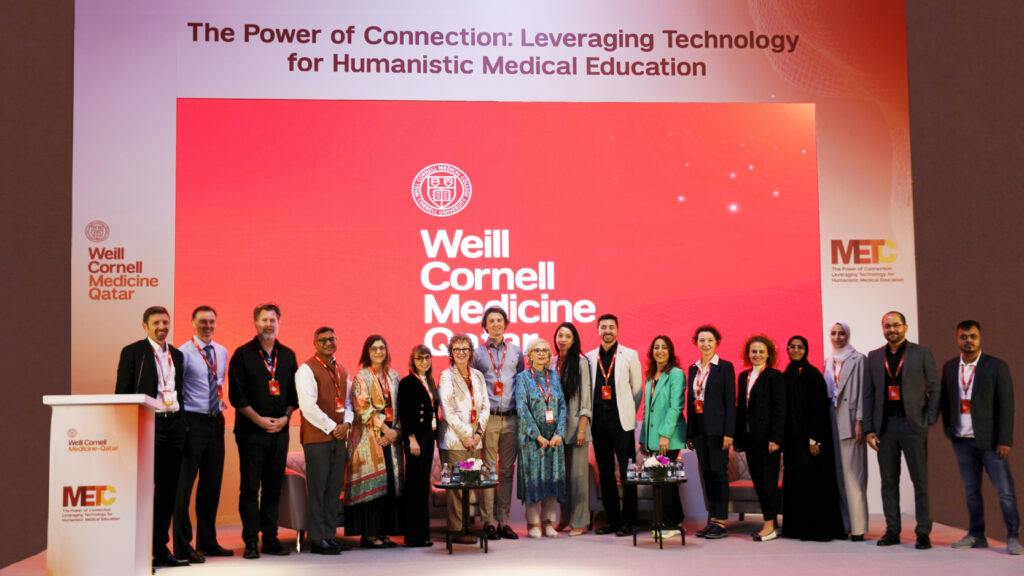
Doha – November 13, 2024: A conference hosted by Weill Cornell Medicine-Qatar (WCM-Q) convened experts in medical education from across the globe to examine the potential for new technologies to enhance the way medicine is taught. The two-day Medical Education Technology Conference (METC) presented thought leaders in medical education from institutions in Qatar, Switzerland, the US and the UK to explore the potential for technologies like artificial intelligence (AI), virtual reality (VR), and augmented reality (AR) to provide personalized learning and immersive training tools for healthcare practitioners. The conference also examined the intersection between technology and humanistic science, and explored ways to ensure that medical education programs cultivate empathy, compassion and creativity in future physicians in the era of AI and rapid technological change. The conference further discussed the impact of emerging technologies on medical ethics and the challenges of ensuring patient privacy, informed consent, and inclusivity in the metaverse. Other features of the conference were two panel discussions, a poster presentation of research projects, Q&A sessions, a series of expert-led presentations, and opportunities for attendees to gain hands-on interactive experiences with technologies such as immersive content creation and VR simulations. Subjects covered by speakers on the first day of the event included precision education and lifelong learning in medicine, AI and medical ethics in education, designing the next generation of learning delivery systems, medical ethics in the metaverse, and the integration of AI into medical education programs to optimize learning outcomes and clinical training. The second day featured presentations on diversity and inclusion in the metaverse, the intersection between art and medicine, and the role of social determinants of health in the age of AI. The second day also offered five workshops, which covered strategies for designing inclusive and accessible virtual environments for patients and healthcare professionals, telling stories in 3D virtual environments using cutting-edge digital tools, utilizing technology to enhance empathy among caregivers, how to create immersive 360-degree videos, and developments in AI-based simulation technologies. One of the many highlights of the event was an artistic performance given by renowned artist and director Abdulaziz Yousef which blended art, AI and virtual reality technology. The event drew participants from all over the world, with healthcare professionals, educators and students in attendance from Qatar, the wider MENA region, the US, Europe, India and elsewhere. Speaking at the conclusion of the event, Dr. Thurayya Arayssi, vice dean for academic and curricular affairs said: “This is a truly exciting time in medicine and medical education as cutting-edge technologies like AI, VR and AR are already revolutionizing the way medicine is practiced, taught and experienced. This conference was a fantastic way to explore how these new technologies can best be implemented to enhance medical education and patient care while simultaneously protecting the rights and safety of patients.” Dr. Javaid Sheikh, dean of WCM-Q, said: “This conference has done a marvelous job of placing new technologies within the context of the humanistic art and science of medicine. Our guiding principle at WCM-Q is to promote the use of emergent technologies to advance world-class healthcare, while also ensuring that the foundational caregiving attributes of compassion, empathy, humility and responsibility to one’s patients are preserved and enhanced by these new developments.” The conference was accredited locally by the Ministry of Public Health’s Department of Healthcare Professions – Accreditation Section and internationally by the Accreditation Council for Continuing Medical Education (ACCME).
Qatar Partners With Microsoft To Expand Cloud Data Centres

Data analytics and AI services have onboarded the partnership between 43 government and semi-government entities to Azure Cloud, a cloud computing platform developed by Microsoft. Azure Cloud is witnessing sharp growth due to the company’s heavy investment in AI and its access to the coveted technologies of ChatGPT maker OpenAI through their strategic partnership. Sami Al Shammari, the Assistant Undersecretary for Infrastructure and Operations Affairs at MCIT, has lauded the collaboration and said: “The expansion of Microsoft’s cloud data centre region in the country is a testament to the ministry’s steadfast commitment to empowering all government entities with the latest technologies, especially new AI-based technologies.” “Through these partnerships, we aim to keep pace with the latest developments in artificial intelligence and localise them across various sectors, thereby achieving the Digital Agenda 2030 and Qatar National Vision 2030 goals, which aim to enhance Qatar’s position as a hub for innovation and technology,” Al Shammari added highlighting that 1,393 individuals have trained in Artificial Intelligence techniques over the past three years, while 143 government and semi-government entities have shifted to Azure cloud. “The expansion of Microsoft’s cloud data centre region in the country is a testament to the ministry’s steadfast commitment to empowering all government entities with the latest technologies, especially new AI-based technologies.” – Sami Al Shammari, assistant undersecretary for Infrastructure and Operations Affairs, MCIT, Ahead of 2022, Microsoft and MCIT launched the National Skilling Programme, with the to train 50,000 people in Qatar through digital skills acquisition programmes over the next four years.
