

WCM-Q conference discusses impact of new technologies on medical education
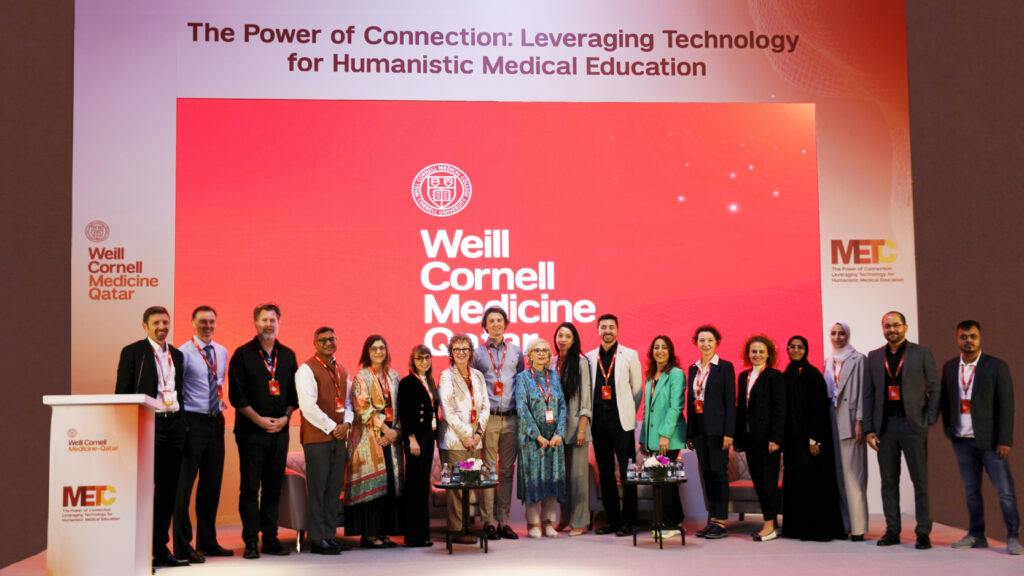
Doha – November 13, 2024: A conference hosted by Weill Cornell Medicine-Qatar (WCM-Q) convened experts in medical education from across the globe to examine the potential for new technologies to enhance the way medicine is taught. The two-day Medical Education Technology Conference (METC) presented thought leaders in medical education from institutions in Qatar, Switzerland, the US and the UK to explore the potential for technologies like artificial intelligence (AI), virtual reality (VR), and augmented reality (AR) to provide personalized learning and immersive training tools for healthcare practitioners. The conference also examined the intersection between technology and humanistic science, and explored ways to ensure that medical education programs cultivate empathy, compassion and creativity in future physicians in the era of AI and rapid technological change. The conference further discussed the impact of emerging technologies on medical ethics and the challenges of ensuring patient privacy, informed consent, and inclusivity in the metaverse. Other features of the conference were two panel discussions, a poster presentation of research projects, Q&A sessions, a series of expert-led presentations, and opportunities for attendees to gain hands-on interactive experiences with technologies such as immersive content creation and VR simulations. Subjects covered by speakers on the first day of the event included precision education and lifelong learning in medicine, AI and medical ethics in education, designing the next generation of learning delivery systems, medical ethics in the metaverse, and the integration of AI into medical education programs to optimize learning outcomes and clinical training. The second day featured presentations on diversity and inclusion in the metaverse, the intersection between art and medicine, and the role of social determinants of health in the age of AI. The second day also offered five workshops, which covered strategies for designing inclusive and accessible virtual environments for patients and healthcare professionals, telling stories in 3D virtual environments using cutting-edge digital tools, utilizing technology to enhance empathy among caregivers, how to create immersive 360-degree videos, and developments in AI-based simulation technologies. One of the many highlights of the event was an artistic performance given by renowned artist and director Abdulaziz Yousef which blended art, AI and virtual reality technology. The event drew participants from all over the world, with healthcare professionals, educators and students in attendance from Qatar, the wider MENA region, the US, Europe, India and elsewhere. Speaking at the conclusion of the event, Dr. Thurayya Arayssi, vice dean for academic and curricular affairs said: “This is a truly exciting time in medicine and medical education as cutting-edge technologies like AI, VR and AR are already revolutionizing the way medicine is practiced, taught and experienced. This conference was a fantastic way to explore how these new technologies can best be implemented to enhance medical education and patient care while simultaneously protecting the rights and safety of patients.” Dr. Javaid Sheikh, dean of WCM-Q, said: “This conference has done a marvelous job of placing new technologies within the context of the humanistic art and science of medicine. Our guiding principle at WCM-Q is to promote the use of emergent technologies to advance world-class healthcare, while also ensuring that the foundational caregiving attributes of compassion, empathy, humility and responsibility to one’s patients are preserved and enhanced by these new developments.” The conference was accredited locally by the Ministry of Public Health’s Department of Healthcare Professions – Accreditation Section and internationally by the Accreditation Council for Continuing Medical Education (ACCME).
International Padel Federation launches Ryder Cup and Laver Cup of padel with new Inter-Continental Cup competition set for 2025 season

11 November 2024 – The International Padel Federation (FIP) today announced the launch of an inaugural new inter-continental cup competition – the equivalent of tennis’ Laver Cup and golf’s Ryder Cup – which will take place biennially, seeing top and emerging players from the Amercias compete against Europe in some of the most compelling venues of sport, starting with the first competition in 2025. Following the record-breaking success of the 2024 FIP World Championship earlier this month, the new inter-continental cup – yet to be formally named – will showcase the best global talent and provide new opportunities for players from emerging padel nations to join the elite level of the world’s fastest growing sport. The new competition also signals padel’s readiness for inclusion in the Olympics, as the sport’s rapid democratization and professionalization under FIP aligns with the International Olympic Committee’s values and support for globally diverse and modern sports that help develop the pyramid. The new format will also be organized with the support of FIP’s continental federations Padel Europe and Padel America. A men’s and women’s competition will be run simultaneously – with a record-breaking prize purse of €700,000 and equal prize money distributed across the winning men’s and women’s teams. These unprecedented winnings reflect a continued commitment by the FIP to grow and develop the sport internationally, continually raising the profile of professional padel. Hosting will rotate between venues across the Americas and Europe, bringing padel to both established and emerging fan bases in incredible locations across the globe. Tenders for locations, branding, promoters and partnerships starting shortly. Commenting on new competition, the President of the International Padel Federation, Luigi Carraro, who was unanimously re-elected for a new Presidential mandate in October 2024, stated: “The new inter-continental cup competition responds to the incredible worldwide popularity of padel and an unprecedented demand for new competition formats from both established and emerging padel fanbases, players and partners. The overwhelming success of the FIP Padel World Championships 2024 and the Premier Padel professional tour demonstrate how padel has rapidly become a major international sport and innovations such as the new inter-continental competition are key to continually driving the development of padel – especially in new regions of the world. We cannot wait to realize this competition next year, and already know of enormous demand to host and partner in padel’s equivalent of the Laver and Ryder Cup, which will continue the globalization of padel as we aspire to form part of the Olympic Movement as soon as possible.”
WCM-Q Equips Health Professionals With Mixed-Methods Research Skill
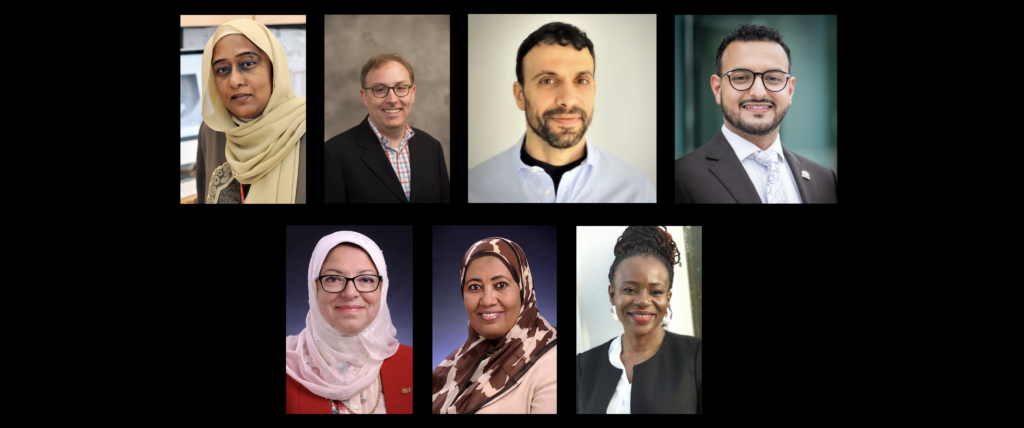
The Division of Continuing Professional Development (CPD) at Weill Cornell Medicine-Qatar (WCM-Q) recently hosted a three-day virtual workshop on mixed methods research (MMR). The workshop, titled “Learning and Applying Essentials of Mixed Methods Research (MMR),” employed an interactive and participatory educational approach. Participants were guided through the key features of well-integrated MMR studies, learning how to identify and apply them to their own research, and respond effectively to peer-review feedback. MMR integrates qualitative and quantitative data to provide a comprehensive understanding of complex phenomena, making it invaluable for healthcare research. The workshop attracted a diverse group of attendees, including physicians, allied health professionals, dentists, nurses, pharmacists, researchers, educators, students, and trainees. Dr. Timothy C. Guetterman, assistant professor and associate director of the Mixed Methods Program at the University of Michigan, and Dr. Amal Khidir, associate professor of pediatrics and vice-chair of the Institutional Review Board (IRB) at WCM-Q, directed and presented the workshop. They were joined by esteemed experts Dr. Sergi Fàbregues, associate professor of psychology and education at the Universitat Oberta de Catalunya, Spain, and core faculty of the Mixed Methods Program at the University of Michigan, and Dr. Meshari F. Alwashmi, associate member of the Mixed Methods Program at the University of Michigan. The workshop was facilitated by Dr. Maha Elnashar, director of the Center for Cultural Competence in Healthcare (CCCHC) at WCM-Q’s Institute for Population Health (IPH); Huda Abdelrahim, senior specialist in cultural competence in healthcare at CCCHC; and Dr. Phyllis Muffuh Navti, assistant director of CPD at WCM-Q. Highlighting the workshop’s impact, Dr. Khidir said: “Participants had a unique opportunity to learn about MMR concepts and designs and apply some of the concepts through Mixed Methods Treasure Hunt exercises, which led to gaining foundational understanding and practical experience. The positive feedback from attendees underscores the value of such important training, and we look forward to offering similar sessions in the future.” She emphasized the importance of MMR in contemporary healthcare research, noting that integrating qualitative and quantitative methods allows for a more nuanced and complete understanding of research findings, ultimately leading to more effective healthcare solutions. The workshop was accredited locally by the Ministry of Public Health’s Department of Healthcare Professions – Accreditation Section and internationally by the Accreditation Council for Continuing Medical Education (ACCME). About Weill Cornell Medicine-Qatar Weill Cornell Medicine-Qatar is a partnership between Cornell University and Qatar Foundation. It offers a comprehensive six-year medical program leading to the Cornell University M.D. degree with teaching by Cornell and Weill Cornell faculty and by physicians at Hamad Medical Corporation (HMC), Aspetar Orthopedic and Sports Medicine Hospital, the Primary Health Care Corporation, the Feto Maternal Center, and Sidra Medicine, who hold Weill Cornell appointments. Through its biomedical research program, WCM-Q is building a sustainable research community in Qatar while advancing basic science and clinical research. Through its medical college, WCM-Q seeks to provide the finest education possible for medical students, to improve health care both now and for future generations, and to provide high quality health care to the Qatari population.
Qatar Partners With Microsoft To Expand Cloud Data Centres

Data analytics and AI services have onboarded the partnership between 43 government and semi-government entities to Azure Cloud, a cloud computing platform developed by Microsoft. Azure Cloud is witnessing sharp growth due to the company’s heavy investment in AI and its access to the coveted technologies of ChatGPT maker OpenAI through their strategic partnership. Sami Al Shammari, the Assistant Undersecretary for Infrastructure and Operations Affairs at MCIT, has lauded the collaboration and said: “The expansion of Microsoft’s cloud data centre region in the country is a testament to the ministry’s steadfast commitment to empowering all government entities with the latest technologies, especially new AI-based technologies.” “Through these partnerships, we aim to keep pace with the latest developments in artificial intelligence and localise them across various sectors, thereby achieving the Digital Agenda 2030 and Qatar National Vision 2030 goals, which aim to enhance Qatar’s position as a hub for innovation and technology,” Al Shammari added highlighting that 1,393 individuals have trained in Artificial Intelligence techniques over the past three years, while 143 government and semi-government entities have shifted to Azure cloud. “The expansion of Microsoft’s cloud data centre region in the country is a testament to the ministry’s steadfast commitment to empowering all government entities with the latest technologies, especially new AI-based technologies.” – Sami Al Shammari, assistant undersecretary for Infrastructure and Operations Affairs, MCIT, Ahead of 2022, Microsoft and MCIT launched the National Skilling Programme, with the to train 50,000 people in Qatar through digital skills acquisition programmes over the next four years.