

QEWC Rebrands as Nebras Energy, Marking a New Era of Growth in Qatar’s Energy Sector
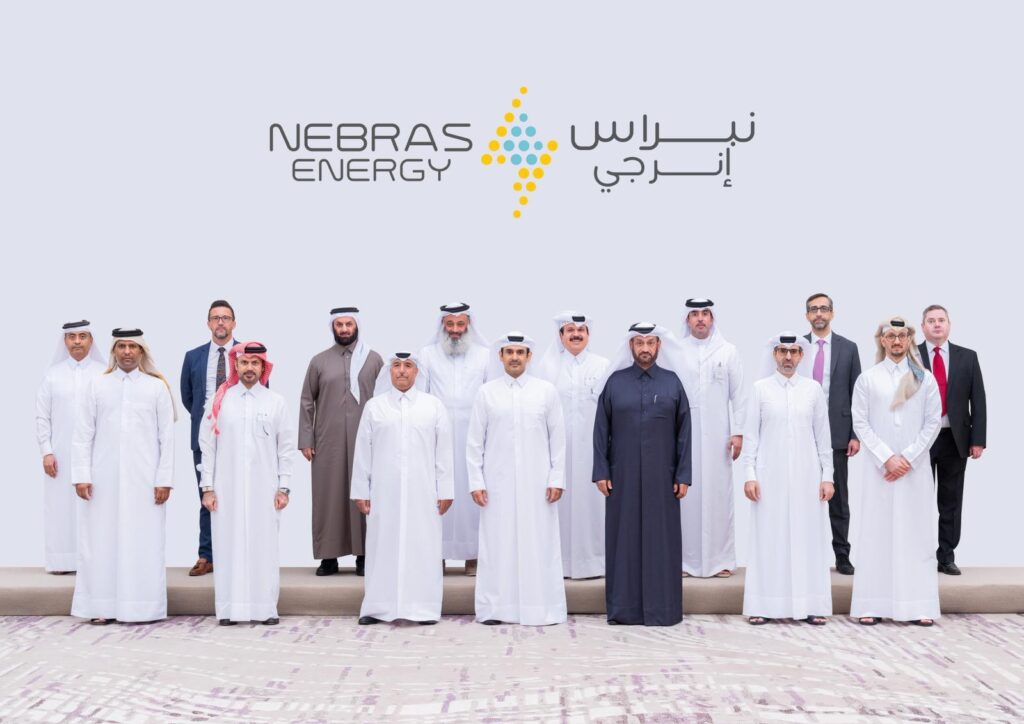
Qatar Electricity & Water Company (QEWC) has officially rebranded as Nebras Energy, signalling a major strategic evolution built on a 35-year legacy of powering Qatar’s electricity and water security and more than a decade of international expansion. Listed on the Qatar Stock Exchange, the transformation represents more than a name change. It reflects a forward-looking vision designed to position Nebras Energy as a more agile, globally oriented energy company while preserving continuity, stability, and stakeholder trust. From National Utility to Global Energy Platform Established by Amiri Decree No. 58 of 1990, QEWC has played a foundational role in supporting Qatar’s rapid economic and social development. Over the past three decades, it has grown into one of the largest power and water utility companies in the MENA region, with a diversified asset base spanning domestic and international markets. Under its new identity, Nebras Energy emerges as a brand that reflects flexibility, resilience, and long-term ambition—aligning with Qatar’s broader energy transition and global investment strategy. Leadership Vision for the Next Chapter Commenting on the rebranding, H.E. Saad Sherida Al-Kaabi, Minister of State for Energy Affairs and Chairman of Nebras Energy, said the company has been a cornerstone of Qatar’s electricity and water security for more than three decades, extending its reach across global markets. He noted that the move to Nebras Energy represents a decisive step toward broader horizons of growth and development, supported by a new visual identity that clearly reflects the company’s future vision. He also praised the leadership, executive management, and employees for their continued commitment to strengthening Qatar’s international energy partnerships and advancing sustainable growth. Ensuring Continuity While Accelerating Growth Marking this pivotal milestone, Managing Director and CEO Mohammed Nasser Al-Hajri emphasised that the rebranding reinforces the company’s core mission while positioning it for long-term success. He highlighted that the transition ensures seamless business continuity, honours all existing commitments, and strengthens the company’s role in advancing Qatar’s electricity and water sector. Strong Assets, Global Reach Nebras Energy’s portfolio in Qatar reflects a robust and diversified production base, supported by joint ventures and Nebras Power, its wholly owned international investment arm. The company’s operational capacity currently stands at: These assets underpin Qatar’s energy and water security while supporting Nebras Energy’s growing international footprint. Governance and Next Steps The company’s new visual identity and rebranding will be presented to shareholders at an Extraordinary General Assembly meeting on 8 January 2026, where final approval will be sought. A Future-Focused Energy Leader As Nebras Energy, the company enters a new chapter aligned with Qatar’s long-term economic and energy objectives—focused on sustainable growth, international investment, and reliable infrastructure delivery. The transformation reinforces Qatar’s position as a trusted global energy partner and highlights how legacy institutions can evolve to meet the demands of a rapidly changing energy landscape.
Msheireb Properties’ CEO Wins “Sustainability Leader of the Year” at Big 5 Global Impact Awards 2025
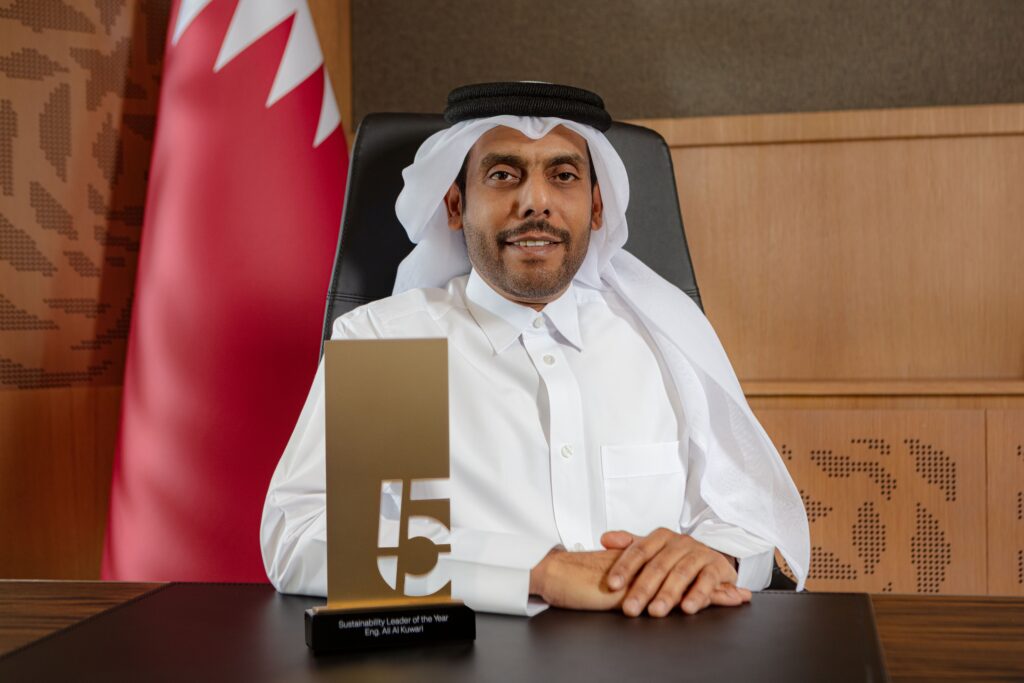
Msheireb Properties — Qatar’s trailblazing sustainable real estate developer — has once again raised the benchmark for the global built-environment sector. The company’s Chief Executive Officer, Eng. Ali Al Kuwari has been honoured as “Sustainability Leader of the Year” at the Big 5 Global Impact Awards 2025, held at Address Sky View in Downtown Dubai. The Big 5 Global Impact Awards, aligned with the UN Sustainable Development Goals, celebrate global excellence in green construction, digital transformation, smart cities, and innovation. The accolade is judged by an independent international panel that recognises projects and leaders shaping the future of the built environment. A Visionary at the Helm of Qatar’s Greenest Urban Development The award recognises Eng. Al Kuwari’s pivotal leadership in driving Msheireb Properties’ sustainability vision—including the creation of Msheireb Downtown Doha, the world’s first fully sustainable downtown regeneration project, and one of the most ambitious smart city models globally. Speaking on the award, Eng. Al Kuwari said: “Sustainability is not a goal—it is the foundation of everything we design, build and preserve. From mobility and urban planning to heritage conservation and community wellbeing, our mission is to create spaces that are resilient, inclusive, intelligent and future-ready. This recognition reflects Msheireb Properties’ belief that sustainability is a holistic commitment embedded into every brick, every story and every experience we curate.” A Continued Legacy of Global Recognition This milestone builds on Msheireb Properties’ historic achievements at the 2024 Big 5 Global Impact Awards, where: Together, these accomplishments reaffirm Msheireb Properties’ role as a global leader in sustainable urban development, cultural preservation, and smart-city innovation. Driving Qatar’s Decarbonisation and Smart City Transformation Under Eng. Al Kuwari’s leadership, 2025 saw the launch of Qatar’s first large-scale portfolio decarbonisation strategy, covering over 100 buildings across Msheireb Downtown Doha. This transformative initiative accelerates Qatar’s path toward: Msheireb Downtown Doha has become a global showcase for: Its pioneering model is now referenced across the Middle East, Europe, and Asia as a blueprint for future-ready cities. A Moment of Pride for Qatar The award reinforces Qatar’s rise as a regional sustainability leader, fully aligned with Qatar National Vision 2030, and positions Msheireb Properties as a key catalyst advancing: • • Innovation-led economic growth
MWC25 Doha Spotlights MENA’s Rising Global Influence in Digital Transformation
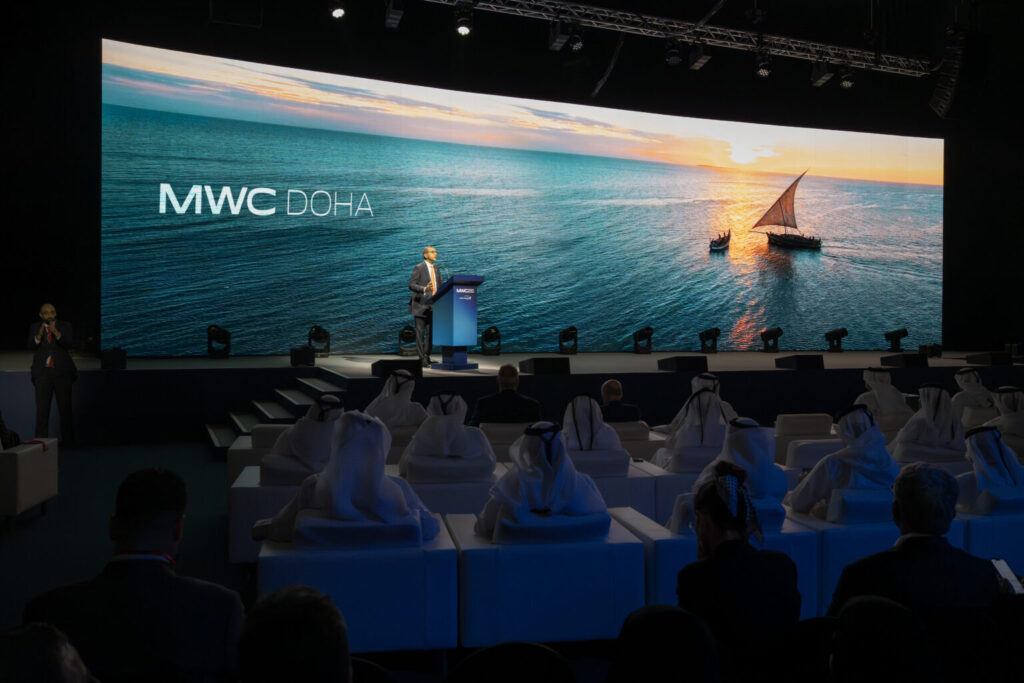
The inaugural GSMA MWC25 Doha, held in partnership with Qatar’s Ministry of Communications and Information Technology (MCIT), has officially opened, uniting global leaders across government, technology, telecommunications, AI, and digital infrastructure. The landmark event underscores the Middle East and North Africa region’s accelerating digital transformation—projected to unlock US$470 billion in economic value by 2030. Held under the esteemed patronage of His Excellency Sheikh Mohammed bin Abdulrahman bin Jassim Al Thani, Prime Minister and Minister of Foreign Affairs, MWC Doha was inaugurated with an official ceremony attended by the GSMA’s Vivek Badrinath and John Hoffman, marking the first-ever MWC edition hosted in the MENA region. A Defining Moment for MENA’s Digital Future Across the Gulf and wider MENA region, governments and enterprises are driving sweeping digital transformation strategies powered by AI, 5G, cloud computing, satellite networks, and intelligent infrastructure.MWC25 Doha serves as a dynamic hub for collaboration, business acceleration, and future-focused dialogue—bringing together the world’s most influential technology companies, innovators, policymakers, and digital economy leaders. On the show floor and in expert-led summits, discussions spotlight how next-generation technologies are reshaping key sectors including: GSMA Leadership Remarks Vivek Badrinath, Director General, GSMA, emphasized regional momentum:“MWC Doha represents a major moment for MENA and the global connectivity community. Across the region, we see world-class investment in networks, AI, and digital services. This ambition is creating new opportunities for societies and economies. At the same time, large parts of the region remain offline, and closing that gap must be a shared priority.” Qatar’s Vision for Global Digital Leadership H.E. Mohammed bin Ali Al Mannai, Minister of Communications and Information Technology, reinforced the significance of hosting MWC in Doha:“MWC25 Doha reaffirms the growing prominence of the Middle East and North Africa within the global telecommunications landscape. It provides a wider platform for engagement with industry leaders, enabling alignment with cutting-edge advancements that will strengthen the region’s readiness for the next phase of connectivity.” Key Insights from GSMA’s Newly Released Reports Two flagship GSMA reports launched at MWC25 Doha—the Mobile Economy MENA 2025 report and Accelerating Digital Industries in the GCC & MENA—highlight transformative trends: Major Findings The insights confirm that Qatar ranks among the world’s highest adopters of AI, big data, and private 5G within enterprises. Driving an Inclusive Digital Economy While Gulf nations lead globally in advanced connectivity, more than 340 million people across MENA remain offline despite coverage availability.MWC25 Doha serves as a platform to accelerate digital inclusion through: Through its GSMA Mobile for Development initiatives, the GSMA continues to work with governments and industry stakeholders to bridge digital divides and empower underserved communities.
The Ministry of Municipality and Mowasalat (Karwa) Collaborate on a Tree-Planting Initiative to Foster Environmental Sustainability
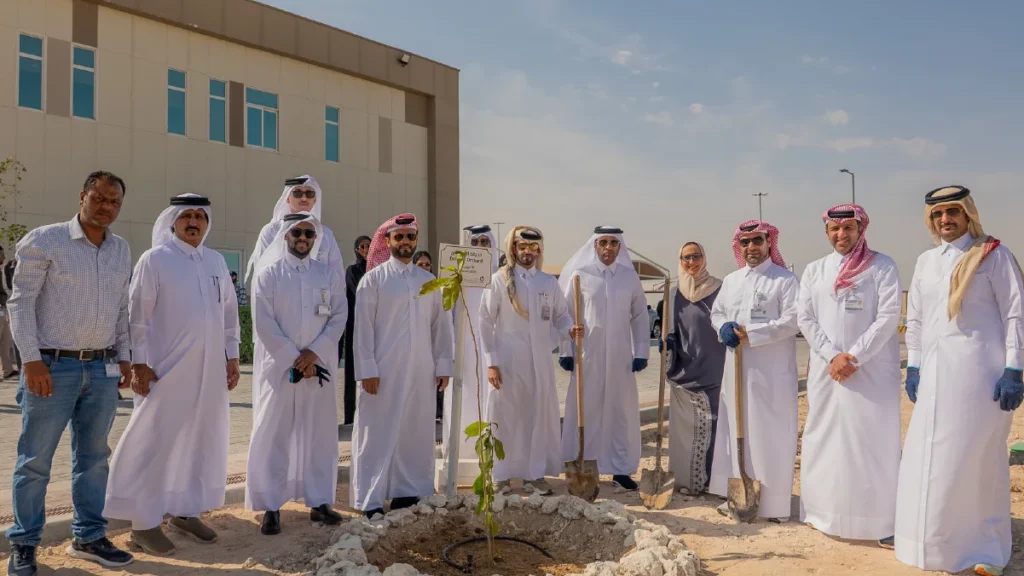
As part of Mowasalat (Karwa)’s commitment to environmental sustainability and the enhancement of green spaces, the company, in collaboration with the Ministry of Municipality, organized a tree-planting event at Mesaimeer bus depot. The event was held on Wednesday, 19 February 2025, in the presence of HE Sheikh Suhaim Al-Thani, the Senior Representative of the Municipality and Environment, Public Parks Department, and Mr. Khalid Al Kaabi, Mowasalat (Karwa) HSSE Director. This initiative aims to increase green spaces and raise environmental awareness int the society. It is part of Mowasalat (Karwa) endeavours to reduce carbon emissions, as 350 trees of different types have been planted to help absorb large amounts of carbon dioxide and improve air quality. The trees planted were carefully selected to include species suitable for the local environment, such as sidr and jujube trees, Assyrian plum, mulberry, Indian almond, lemon, tamarind, and other plant species. These trees contribute to providing shade, lowering temperatures in surrounding areas, as well as promoting biodiversity and supporting wildlife. This initiative garnered significant participation from Mowasalat (Karwa) drivers, who made a concerted effort to plant the trees themselves. Additionally, they showed a strong interest in understanding the essential information about tree varieties and the best care practices, demonstrating their commitment to environmental and social responsibility and their role in the success of the initiative. To ensure maximum benefit from the initiative, identification plaques were installed for each tree using weather-resistant materials, to spread awareness and knowledge about the types of trees planted and their role in improving the quality of life. This event embodies our dedication to sustainability and preserving the environment, forming an essential part of our vision for a greener future for the coming generations.
GORD develops Gulf region’s first Sustainable Construction Code
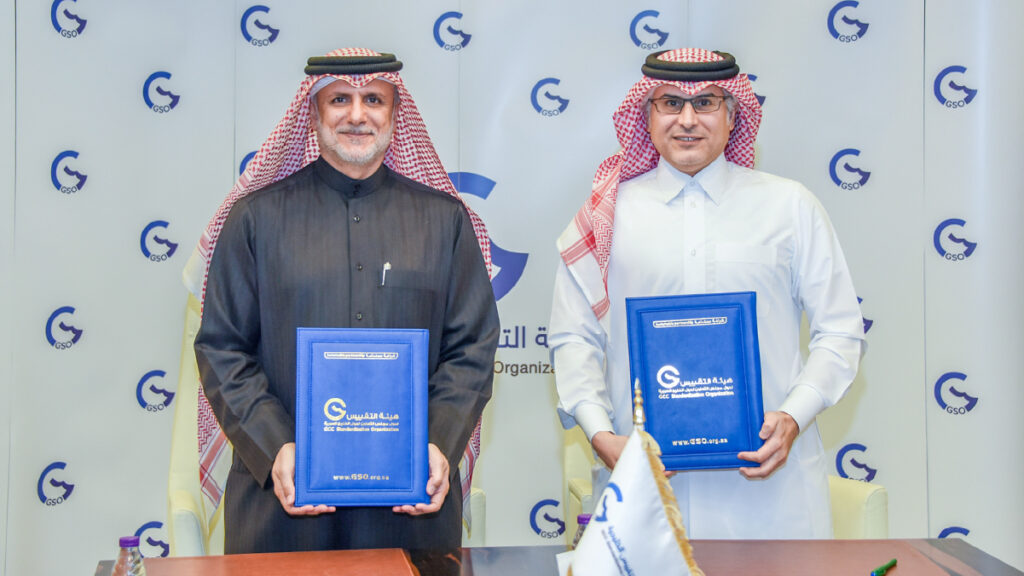
Riyadh, KSA – February 04, 2025: Having developed the GCC region’s first-ever Sustainable Construction Code, the Gulf Organisation for Research & Development (GORD) — a subsidiary of Qatari Diar Real estate Investment Company — has signed an agreement with the GCC Standardization Organization (GSO) for integrating the code into the wider Gulf Building Code. The agreement was formalized by Dr. Yousef Bin Mohammed Alhorr, Founding Chairman of GORD, and His Excellency Engineer Nawaf bin Ibrahim Al-Hamad Al-Mana, President of GSO, at GSO headquarters in Riyadh, Saudi Arabia. The Gulf Building Code, endorsed by the Ministries of Municipalities and Urban Planning in Gulf States, serves as a comprehensive framework guiding building and construction practices across the Gulf region. The newly developed Sustainable Construction Code, created by experts at GORD -headquartered at Qatar Science & Technology Park- draws on the success of GORD’s flagship Global Sustainability Assessment System (GSAS), developed as the first performance based green buildings rating system in MENA region, will significantly contribute to the Gulf’s transition to more sustainable urban landscapes. The Sustainable Construction Code serves as a vital intergovernmental tool, aiming to promote sustainable practices across a broad spectrum. It establishes a baseline set of green building criteria for a diverse range of construction projects, addressing various facets of sustainability. Initially conceived in 2010, the project was entrusted to GORD, leveraging its extensive expertise and leadership in the sustainability domain. Speaking about the document, Dr. Yousef Alhorr, Founding Chairman of GORD, said, “We take immense pride in GORD’s instrumental contribution to the Gulf Building Code by developing the first unified Sustainable Construction Code for the region. This achievement marks a significant milestone in our commitment to advancing sustainability and promoting a more environmentally conscious future for the Gulf nations. The Code is designed to ensure wider accessibility and adoption, ultimately promoting the creation of sustainable urban landscapes throughout the region. At the same time, it serves as a starting point toward a holistic green building framework in the future, where sustainability becomes deeply integrated into every facet of the regional building and construction industry.” His Excellency Engineer Nawaf bin Ibrahim Al-Hamad Al-Mana, President of GSO, said, “Green buildings play a crucial role in helping the GCC region achieve its climate goals by significantly reducing energy consumption, carbon emissions and resource use. To this end, the Sustainable Construction Code represents GCC countries’ vision for a greener, more sustainable future. We are certain that this unified framework will pave the way for a region-wide transformation of the construction industry, where sustainability is not just an option, but an integral part of every project.” Covering over 115 pages, the Sustainable Construction Code offers a multifaceted approach with the flexibility of both prescriptive and performance-based assessments. While its core principles are derived from the Global Sustainability Assessment System (GSAS) green building framework, Sustainable Construction Code represents a simplified version with reduced requirements. The 55 criteria are narrowed down to 22, each representing key performance indicators (KPI’s) for sustainable buildings. This deliberate simplification ensures ease of adoption and enforceability across all Gulf countries. The Code is designed to be accessible to a broad audience, reducing the need for specialized expertise and complex simulations. The Code is structured into six core chapters. These chapters cover various aspects of sustainable construction, including guidelines for efficient land utilization and infrastructure planning in Site Planning and Use, recommendations for sustainable and eco-friendly building materials in Material Selection, strategies to optimize energy usage within buildings and promote energy efficiency in Energy Conservation and Efficiency, guidelines for water resource conservation and efficient water use in Water Conservation and Efficiency, a focus on ensuring healthy and comfortable indoor environments in Indoor Environmental Quality, and an emphasis on preserving cultural and historical aspects in building design and construction in Heritage and Cultural Identity. As the Gulf Cooperation Council (GCC) endeavors to transition towards a more sustainable and environmentally conscious future, the Sustainable Construction Code represents a pivotal element in these efforts, shaping the future of construction in the region. At the same time, it underscores the commitment of the GORD and GSO to promote sustainability, advance regional development, and secure a more sustainable future for the Gulf region.