

Dubai Supreme Council of Energy launches 5th Emirates Energy Award 2023–2025 in Doha
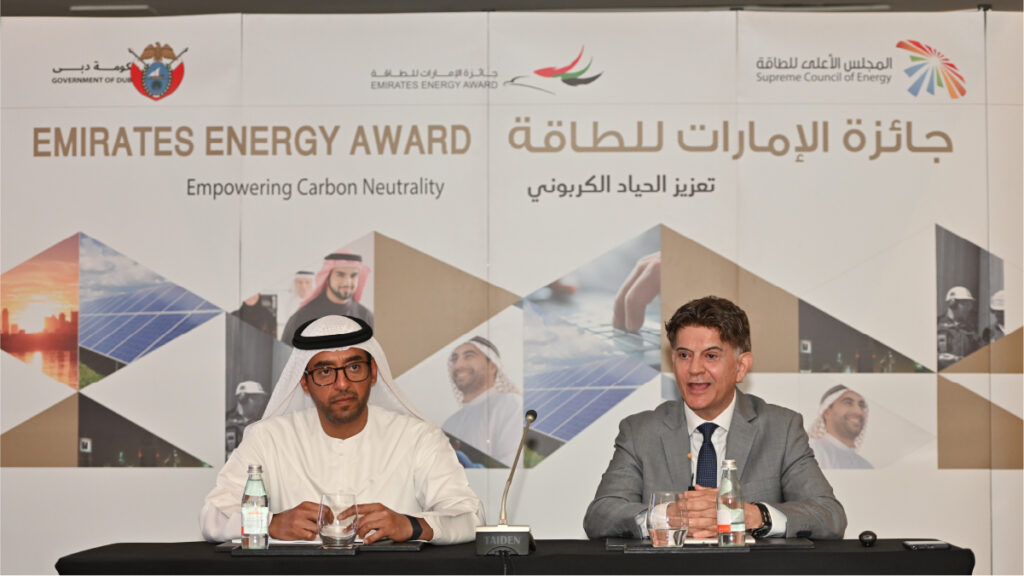
Doha, Qatar – Dubai, United Arab Emirates, February 12, 2025: The Dubai Supreme Council of Energy announced today the launch of the 5th cycle of the Emirates Energy Award (2023–2025) in Qatar during a press conference held at The St. Regis Doha. The conference was attended by Mr. Hussein Al Naqbi, Head of the Economic, Political, and Media Section at the UAE Embassy in Qatar, along with representatives from the energy and environmental sectors, private and academic institutions, and various media outlets. Also participating in the conference were Mr. Taher Diab, Secretary-General of the Emirates Energy Award, and Mr. Ali Al Suwaidi, Senior Manager, Corporate Communications and Media, Dubai Supreme Council of Energy, Vice Chairman of the Marketing and Events Committee of Emirates Energy Award (EEA). HE Ahmad Buti Al Muhairbi, Secretary General of the Dubai Supreme Council of Energy, and Vice Chairman of the Executive Committee of Emirates Energy Award (EEA), stated: “We are pleased to launch the 5th cycle of the Emirates Energy Award (2023–2025) under the theme ‘Empowering Carbon Neutrality’ in Qatar, a country that plays a pivotal role in supporting regional and global efforts to accelerate the transition to clean and renewable energy. This initiative aligns with the award’s objectives of fostering innovation and promoting the use of creative technologies to address climate change challenges and enhance sustainability.” His Excellency added: “The Emirates Energy Award has successfully attracted outstanding submissions from various countries, with Qatar contributing a significant share of innovative energy solutions. We look forward to receiving more valuable projects from Qatar in this new cycle, further supporting efforts to tackle climate change challenges and promote sustainable development.” During the conference, Mr. Ali Al Suwaidi highlighted the importance of the Emirates Energy Award in recognizing the efforts of both the public and private sectors in the fields of energy efficiency, sustainable energy projects, education, and scientific research, while also encouraging key contributors in this vital sector. Al Suwaidi concluded by expressing his gratitude and appreciation to all attendees, including officials, institutions, partners, and media representatives. He also commended Qatar’s pivotal role in supporting sustainability and renewable energy initiatives at the regional and international levels. For his part, Mr. Taher Diab provided a detailed overview of the Emirates Energy Award, its objectives, and its various categories, which have established it as a global platform in the energy sector. He explained that the award aims to highlight best practices in energy efficiency and innovation, promote the use of renewable energy, and drive positive economic and environmental impact. The Emirates Energy Award serves as a global platform for public and private institutions, as well as individuals, to showcase their achievements and initiatives in energy management and conservation, while highlighting their contributions to the use of clean and renewable energy sources. It also seeks to support development and innovation in the energy sector and raise awareness of the importance of environmental sustainability. The Emirates Energy Award has invited the public and private sectors, as well as the academic community and youth in Qatar, to participate in its 5th cycle. Applications can be submitted through the official website: https://emiratesenergyaward.com/ . Additionally, details about the award categories can be accessed via the following link: https://emiratesenergyaward.com/ar/about-eea/#award-categories-about .
GORD develops Gulf region’s first Sustainable Construction Code
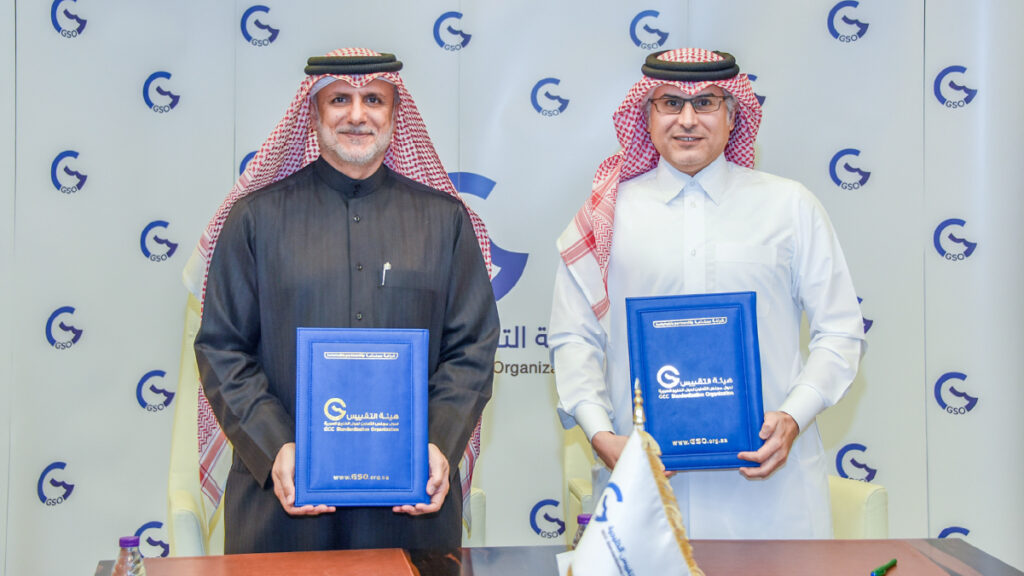
Riyadh, KSA – February 04, 2025: Having developed the GCC region’s first-ever Sustainable Construction Code, the Gulf Organisation for Research & Development (GORD) — a subsidiary of Qatari Diar Real estate Investment Company — has signed an agreement with the GCC Standardization Organization (GSO) for integrating the code into the wider Gulf Building Code. The agreement was formalized by Dr. Yousef Bin Mohammed Alhorr, Founding Chairman of GORD, and His Excellency Engineer Nawaf bin Ibrahim Al-Hamad Al-Mana, President of GSO, at GSO headquarters in Riyadh, Saudi Arabia. The Gulf Building Code, endorsed by the Ministries of Municipalities and Urban Planning in Gulf States, serves as a comprehensive framework guiding building and construction practices across the Gulf region. The newly developed Sustainable Construction Code, created by experts at GORD -headquartered at Qatar Science & Technology Park- draws on the success of GORD’s flagship Global Sustainability Assessment System (GSAS), developed as the first performance based green buildings rating system in MENA region, will significantly contribute to the Gulf’s transition to more sustainable urban landscapes. The Sustainable Construction Code serves as a vital intergovernmental tool, aiming to promote sustainable practices across a broad spectrum. It establishes a baseline set of green building criteria for a diverse range of construction projects, addressing various facets of sustainability. Initially conceived in 2010, the project was entrusted to GORD, leveraging its extensive expertise and leadership in the sustainability domain. Speaking about the document, Dr. Yousef Alhorr, Founding Chairman of GORD, said, “We take immense pride in GORD’s instrumental contribution to the Gulf Building Code by developing the first unified Sustainable Construction Code for the region. This achievement marks a significant milestone in our commitment to advancing sustainability and promoting a more environmentally conscious future for the Gulf nations. The Code is designed to ensure wider accessibility and adoption, ultimately promoting the creation of sustainable urban landscapes throughout the region. At the same time, it serves as a starting point toward a holistic green building framework in the future, where sustainability becomes deeply integrated into every facet of the regional building and construction industry.” His Excellency Engineer Nawaf bin Ibrahim Al-Hamad Al-Mana, President of GSO, said, “Green buildings play a crucial role in helping the GCC region achieve its climate goals by significantly reducing energy consumption, carbon emissions and resource use. To this end, the Sustainable Construction Code represents GCC countries’ vision for a greener, more sustainable future. We are certain that this unified framework will pave the way for a region-wide transformation of the construction industry, where sustainability is not just an option, but an integral part of every project.” Covering over 115 pages, the Sustainable Construction Code offers a multifaceted approach with the flexibility of both prescriptive and performance-based assessments. While its core principles are derived from the Global Sustainability Assessment System (GSAS) green building framework, Sustainable Construction Code represents a simplified version with reduced requirements. The 55 criteria are narrowed down to 22, each representing key performance indicators (KPI’s) for sustainable buildings. This deliberate simplification ensures ease of adoption and enforceability across all Gulf countries. The Code is designed to be accessible to a broad audience, reducing the need for specialized expertise and complex simulations. The Code is structured into six core chapters. These chapters cover various aspects of sustainable construction, including guidelines for efficient land utilization and infrastructure planning in Site Planning and Use, recommendations for sustainable and eco-friendly building materials in Material Selection, strategies to optimize energy usage within buildings and promote energy efficiency in Energy Conservation and Efficiency, guidelines for water resource conservation and efficient water use in Water Conservation and Efficiency, a focus on ensuring healthy and comfortable indoor environments in Indoor Environmental Quality, and an emphasis on preserving cultural and historical aspects in building design and construction in Heritage and Cultural Identity. As the Gulf Cooperation Council (GCC) endeavors to transition towards a more sustainable and environmentally conscious future, the Sustainable Construction Code represents a pivotal element in these efforts, shaping the future of construction in the region. At the same time, it underscores the commitment of the GORD and GSO to promote sustainability, advance regional development, and secure a more sustainable future for the Gulf region.
Qatar’s Economy Projected to Grow 2% in 2024, Driven by Tourism and Construction

Doha: Qatar’s economy is forecasted to grow by 2% in 2024, bolstered by stability in the hydrocarbon sector and robust growth in non-oil industries such as tourism and construction, according to Roberta Gatti, the World Bank’s Chief Economist for the Middle East and North Africa (MENA). Gatti attributed the growth to a strong start to the year in the tourism sector and the pivotal role of construction in driving non-oil economic activity. Qatar’s ongoing diversification initiatives, aligned with its third National Development Plan, are targeting sectors like tourism and IT to broaden the country’s economic base. Hydrocarbon Sector and LNG ExpansionWhile hydrocarbons remain a cornerstone of Qatar’s economy, Gatti highlighted the sector’s anticipated surge starting in 2026, when new liquefied natural gas (LNG) projects begin production. These developments are expected to significantly enhance Qatar’s long-term economic growth. Regional Growth OutlookFor the broader MENA region, the World Bank projects a moderate growth rate of 2.2% in 2024, up from 1.8% in 2023, with the Gulf Cooperation Council (GCC) countries leading the uptick. GCC economies are expected to see growth rise to 1.9% in 2024, driven by non-oil sector expansion, despite ongoing oil production cuts. Key Regional Highlights:Saudi Arabia: Non-oil private sector growth is projected at 4.4%, contributing to 51% of its economy in 2024.Developing Oil Importers: Growth is expected to slow to 2.1% in 2024, compared to 3.2% in 2023.Developing Oil Exporters: Growth is forecasted to decline from 3.2% in 2023 to 2.7% in 2024, with recovery expected in 2025.Challenges and Long-Term ProspectsGatti warned of challenges, including oil production limits, global economic uncertainties, and potential regional conflicts, which could dampen short-term growth. However, she forecasts an acceleration in MENA’s overall growth to 3.8% in 2025, driven by strengthened GCC economies, expected to grow at 4.2%. Qatar’s Diversified Growth PathQatar’s focus on developing its non-oil sectors, coupled with its strategic investments in LNG expansion, positions the country for sustained economic resilience and long-term growth. credit by SyndiGate Media Inc. (Syndigate.info).
Qatar Takes Leap To Expand LNG Output By 85%

CEO Saad Sherida Al Kaabi QatarEnergy has said an assessment programme had concluded that the productive layers of the country’s North Field that extends towards the west could yeild an additional gas reserve of 240 tonne/cubc feet (tcf). This will result in upping Qatar’s overall gas reserves to more than 2,000 Tcf. “These are very important results of great dimensions that will take Qatar’s gas industry to new horizons,” Al Kabbi has said. He added that the additional reserves would allow the company to move forward with the 16 million metric tons/year (mmty) North Field West (NFW) liquefaction project in Ras Laffan in the north of Qatar. Along with the multi-billion dollar North Field East (NFE) and North Field South (NFS) projects that were sanctioned in 2021, NFW would boost Qatar’s liquefied natural gas production capacity to 142 mmty by the end of the decade. QatarEnergy has already started construction on the North Field expansion project, bringing aboad TotalEnergies (which has been present in Qatar since 1936 and is active in all areas of the country’s oil and gas sector, from exploration and production through to refining, petrochemicals, lubricants marketing, and renewable energies), Shell (whose Qatar presence started in 20026 and at present, the scope of Shell’s partnership with QatarEnergy covers the entire value chain of the oil and gas business: liquefied natural gas – LNG; gas to liquids – GTL; shipping, exploration and petrochemicals) and ConocoPhilips (whose Qatar presence started with the QatarEnergy’s LNG N(3) joint venture) to partner in both NFE and NFS.
Growth For Non-Oil Sectors In H2 2024 Pegged Optimistically

Augmenting Qatar’s resilient economy, many industries are poised for “stronger-than-expected” growth in the remaining months of 2024. The Gross Domestic Product (GDP) figures have shown a growth of 1.2 percent y-o-y during the third quarter of 2023. Hydrocarbon witnessed a boost of 2.3 percent y-o-y. In comparison, the non-oil economy grew by 0.6 percent y-o-y during Q3 2022, the Planning and Statistics Authority has revealed. “We have long argued that Qatar’s economic growth will accelerate in 2024 as lower inflation, stronger tourism activity and investment in construction and infrastructure projects causes the non-oil sector to recover.” – Fitch analysts Fitch market experts have clarified that the growth in the hydrocarbon sector was according to their expectations and the third quarter of 2023 headline growth surprised the upside due to stronger-than-expected non-oil activity. It’s been stressed by analysts that this comes on the back of Qatar hosting the FIFA 2022 World Cup that spiralled potent activity in industry during the latter half of the year, in preparation for the tournament. Fitch Solutions has noted its estimation for the growth in 2023 from 1 percent to 1.4 percent and hence forecasted a vital growth of 2 percent to 2.2 percent in 2024 commenting: “We have long argued that Qatar’s economic growth will accelerate in 2024 as lower inflation, stronger tourism activity and investment in construction and infrastructure projects causes the non-oil sector to recover. Supporting our view, high-frequency data for Q1 2024 such as Purchasing Manager’s Indices, new building permits, and tourist arrivals all point to stronger non-oil activity so far in 2024.